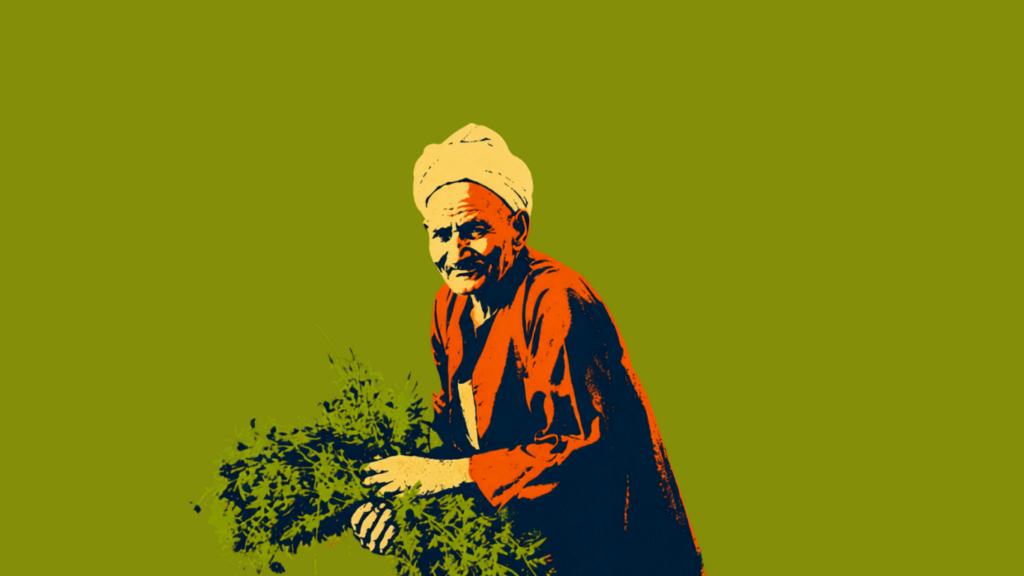
Small farmers stand at the first line of food security: in a country that is the world’s largest wheat importer and must secure food for more than one hundred million citizens, they cultivate more than 84% of the land according to the most recent agricultural census. Yet their holdings are fragmenting, institutional support has disappeared, and all that remains of material support is a fertilizer allocation that shrinks year after year.
While the Director-General of the Food and Agriculture Organization (FAO), Qu Dongyu, in recommendations issued with the release of the organization’s report on the state of food security and nutrition in the world for 2026, dated July 21, called on governments to guarantee farmers access to fertilizers, high-quality seeds, water, credit, and other essential inputs before taking decisions related to irreversible planting operations, the reality of Egypt’s small farmer reveals how far that recommendation remains from being fulfilled.
Small farmers are defined as those who own or rent less than 3 feddans. According to the most recent agricultural census, 48.3% of farmers own less than one feddan, 24.1% own between one and two feddans, and 12% own between two and three feddans, all small holdings whose fate is directly linked to food security in a country of more than 100 million people.
Recommended Reading: Farmers Facing Water Poverty: Groundwater Wells Out of Fear of Government Decisions
Why Do Small Farmers Touch Egypt’s Food Security?
The danger of small farmers’ crises lies in the fact that they strike at the heart of Egypt’s food equation. Egypt usually imports approximately ten million tons of wheat annually, with consumption approaching 20 million tons against domestic production of around ten million tons, the gap between them bridged through imports, while approximately 70 million citizens benefit from the subsidized bread program. Any decline in land productivity or farmers’ abandonment of their land widens that gap and increases the country’s dependence on international markets, which, as experts say, makes supporting the small farmer a form of food security support for all Egyptians.
This comes within a global context that offers no reassurance. The FAO report, issued with the participation of the International Fund for Agricultural Development, UNICEF, the World Food Programme, and the World Health Organization, confirmed progress for the third consecutive year in reducing hunger rates, but described this progress as fragile, uneven, and insufficient to achieve the Sustainable Development Goals by 2030.
According to the report, 7.8% of the world’s population, approximately 645 million people, suffered from hunger in 2025, including 309 million in Africa alone at 20% of its population, the highest in the world. More than a quarter of the world’s population at 25.8%, approximately 2.1 billion people, suffer from moderate or severe food insecurity, including more than half of Africa’s population at 56.6%. The report projects that, given the conflict underway in the Middle East and its impact on food, energy, and fertilizer price inflation, between 510 and 520 million people will remain hungry in 2030, compared to lower pre-conflict scenario projections of 503 million, without accounting for other factors such as extreme weather phenomena like El Niño in 2026 and 2027. The global average cost of a healthy dietary pattern also registered $4.28 per person per day in 2025, a threshold that 2.69 billion people representing 32.7% of the world’s population cannot afford, the majority in Africa where 66.6% of its population cannot meet it.
On the Global Hunger Index for 2025, Egypt ranks 57th out of 123 countries, recording 10.5 points, a level at which hunger in Egypt is classified as “moderate.”
Egypt in Light of the FAO Recommendation
According to Ministry of Agriculture data, Egypt’s agricultural area amounts to approximately 9.7 million feddans, while the crop area amounts to approximately 17.5 million feddans across seasons, with the agricultural sector contributing approximately 17% of commodity exports, approximately 15% of GDP, and employing approximately 25% of the total labor force.
Regarding the FAO Director’s recommendation as it applies to Egypt, agricultural economics expert Dr. Jamal Siam told Zawia3 that the road is still long and must be covered as quickly as possible, affirming that agriculture is a national security issue and a livelihood source for rural residents who represent 50% of Egypt’s population, and that supporting the small farmer is a form of food security support for all Egyptians.
Siam says the only support the government provides to small farmers is subsidized nitrogen fertilizer, allocating three bags per feddan at 250 Egyptian pounds ($4.81) per bag, while the market price exceeds 1,000 Egyptian pounds ($19.23), bringing the per-feddan subsidy to approximately 2,250 Egyptian pounds ($43.27), totaling a subsidy of approximately 50 billion Egyptian pounds ($961.54 million) for all eligible recipients. However, this support faces problems that impede its reaching those who need it.
This is confirmed by Sayed Maawouz, a farmer and president of the Atfih Farmers Union, who told Zawia3 that the three bags allocated to a feddan that actually needs eight bags for the land to yield its full output never arrive in full, with the farmer receiving only one or two, and during crisis periods the support may be delayed until the end of the season, leaving the farmer to bear the full cost.
Siam explains that if the soil does not receive the necessary fertilizer, its productivity falls by 30% per feddan. If a wheat feddan’s productivity reaches 20 ardabs, without fertilizer it may drop to only 12 or 13 ardabs, meaning fertilizer is a food security matter.
Recently, the government decided to eliminate fertilizer subsidies from horticultural crops (vegetables and fruit) and restrict them to traditional grain crops such as wheat, corn, and rice. It is also studying replacing in-kind support with cash support under which the farmer receives a sum to purchase inputs at the market price.
In this regard, MP Amir Al-Jazzar submitted a parliamentary inquiry to the Prime Minister and Minister of Agriculture concerning the halting of subsidized fertilizer disbursement for horticultural crops and its negative impacts on production, exports, and the conditions of small farmers, calling for suspension of the decision or its temporary postponement pending a dialogue with farmers’ representatives, a study of economic and social impacts, and the provision of fair alternatives for small and medium farmers.
When news of the cancellation of subsidized fertilizer disbursement spread, the Ministry of Agriculture issued a statement affirming that the subsidized fertilizer distribution system continues in full without any impact on wheat, rice, corn, and the majority of field crop quotas, noting that 5 million farmers hold a smart card to obtain their allotments. As for the halting of disbursement for some crops, it attributed this to the orientation toward rationalizing the use of nitrogen fertilizers due to their negative effects on soil and population health, explaining that soil analysis showed a significant accumulation of urea and nitrates requiring a scientific re-orientation of fertilization to prevent deterioration in yields and disruption of the soil’s chemical balance.
Sayed Maawouz comments on the Ministry’s justification, saying that the government only disburses nitrogen fertilizer, which is a gas whose excess evaporates, and that a farmer can wash the soil completely of any fertilizers by irrigating it twice in succession without fertilizer, while crops that retain fertilizer in the soil, such as clover, are factored into the farmer’s calculations for the next planting. Nevertheless, improper use of nitrogen fertilizers can lead to some nitrogen being lost to the environment, as a gas or by leaching into groundwater, contaminating water with nitrates and altering soil acidity, which is why adherence to appropriate doses and the use of organic fertilizers alongside nitrogen fertilizers is recommended.
Siam explains that the state moved to eliminate support from horticultural crops because they generate good profits compared to grains, while the shift from in-kind to cash support comes from the problems arising from two prices for the same product, subsidized and free-market, as some circumvent the system by obtaining subsidized fertilizer and selling it at the market price, so the support reaches those who do not deserve it. He affirms the necessity of retaining support for small farmers in any form, and linking it to the inflation rate if the shift to cash support occurs, saying: “The state may give the farmer 2,000 Egyptian pounds ($38.46) in support per feddan currently, and in the future with rising inflation it will have no value, meaning further poverty for the small farmer,” alongside guaranteeing that the full support allocation reaches every farmer.
Siam also addressed the crisis of fertilizer companies that the government requires to sell 50 or 55% of their production on the domestic market and export the rest, but they delay delivering the domestic quota in pursuit of export gains, particularly during global crises and price rises. Due to the American-Israeli war on Iran, fertilizer prices jumped to approximately $850 per ton compared to $450 before the crisis, before gradually declining after the end of the buying wave at the season’s end. Despite Egypt’s capacity to produce nitrogen fertilizers at double its consumption, the import of energy needed for production raises prices, and global price rises tempt producers to export at the expense of the domestic market, so the subsidized quota never reaches the small farmer in full.
As a result, the Minister of Investment and Foreign Trade decided to impose $90 in fees on every ton of exported nitrogen fertilizer for three months at the peak of export season, to reduce its attractiveness and push producers toward the domestic market, before the fees were revised to 10% of export value, before being eliminated entirely as prices fell, a scene that reflects the state of tug-of-war between the state and major fertilizer producers.
Institutional Support: Non-Existent
Siam points to another form of support that costs the state little but no longer exists despite its importance: institutional support in the form of agricultural extension, the activation of cooperative associations, contract farming, and the modernization of agricultural research. He adds that agricultural extension has been abolished and the state no longer appoints specialists in it, that cooperative associations are going through their worst period due to the obsolescence of the Agricultural Cooperation Law issued in 1980, and that contract farming, which saves the state much and helps farmers through factories contracting with farmers to provide financing and extension, is absent.
Hassan Al-Husari, president of the Gharbia Farmers Union, confirmed to Zawia3 that, with the exception of the fertilizer support that does not arrive in full, there is no other support for farmers such as agricultural extension and production marketing. Sayed Maawouz adds that the absence of the role of cooperative associations has led the free market to control everything the farmer purchases, from seeds and pesticides to fertilizer, leaving him not knowing what to plant, and potentially seeking lower-cost crops regardless of their strategic importance. The absence of extension has also led to the absence of oversight over medicines and pesticides, according to Maawouz, who says: “Farmers do not have sufficient awareness of pesticide and medicine use, and using them incorrectly can damage crops and soil.”
According to a report by the Central Agency for Public Mobilization and Statistics on Sustainable Development Indicator 1.4.2 titled “Percentage of Agricultural Area Designated for Productive and Sustainable Agriculture” for 2023, 45% of farms adopt at least four measures to mitigate environmental risks associated with fertilizer use, compared to 21% adopting at least two measures, and 34% adopting fewer than two measures. In the pesticide management axis, the indicator revealed that 51% of farms use no pesticides and comply with all health measures and at least four environmental measures, 23% use only medium or low-risk pesticides with at least two measures, while 26% use highly hazardous or illegal pesticides, or medium and low-risk ones without adequate measures.
According to a study titled “Opinion on a Crisis: A New Model for Agricultural Cooperatives in Egypt That Achieves the Required Developmental Momentum,” issued by the Egyptian Center for Economic Studies in 2021, the cooperative association model plays a central role in driving social and economic development, particularly in poor communities. The study argues that the failure to reform agricultural cooperatives institutionally and legislatively, alongside changing agricultural policies, has left them operating with an outdated mentality and tools that stripped them of their capacity to serve farmers. It attributed the deterioration of their role to their transformation into a government instrument for managing the sector through the monopoly of fertilizer and seed distribution rather than being independent institutions, to the failure to keep pace with agricultural reforms, to weak development financing that relied on short-term loans, to the multiplicity of supervisory bodies and centralization of decision-making and weak capacities, until they lost the purpose for which they were created: confronting holding fragmentation by aggregating farmers and improving their negotiating power and collective marketing.
Recommended Reading: Government Decisions Exacerbate Egypt’s Sugar Crisis
The Farmer and Consumer Both Bear the Burdens
A former Ministry of Agriculture official, who preferred not to be named, told Zawia3 that the small farmer benefits least from his production while the consumer pays the most, with intermediaries between them reaping the greatest benefit. The kilogram of tomatoes sold at the farm for one pound reaches the consumer at ten pounds, and the nine-pound difference goes to transportation and distribution intermediary chains.
The president of the Atfih Farmers Union affirms that the farmer incurs a loss on most crops, with the exception of wheat because its production cost equals its return, explaining: “Wheat is planted once a year in a cycle that takes 6 months plus two months of preparation and harvest, meaning a single planting occupies two-thirds of the year, at a cost of approximately 50,000 Egyptian pounds ($961.54) per feddan, of which 30,000 pounds ($576.92) is rent over 8 months and 20,000 pounds ($384.62) covers seeds, fertilizer, pesticides, and fuel. The feddan produces approximately 20 ardabs, which the government takes at 2,500 Egyptian pounds ($48.08) per ardab, for a total of 50,000 pounds ($961.54). So if the farmer owns the land, his profit is only the value of the rent, because had he leased it he would have received the same amount without the effort of farming.” He adds that other strategic crops such as corn generate losses unless prices happen to rise during the harvest season, which has pushed many to abandon their land or treat it as a “base” that helps with subsistence while seeking other work, saying: “The agricultural crisis is not limited to crops, but the rise in meat and poultry prices is also caused by the farmer’s poverty, his abandonment of his land, and his neglect of other areas such as cattle grazing and poultry farming.”
Fragmentation of Holdings, Water, and Climate
The former Ministry of Agriculture official says that among the most notable characteristics of Delta and Valley lands is the fragmentation of holdings into small areas that affect production volume and consequently food security, and that although some countries have attended to this point, it has not been addressed in Egypt.
According to a study prepared under FAO supervision using 2010 agricultural census statistics, titled “Study on Small-Scale Family Farming in the Near East and North Africa Region, Case Study: Arab Republic of Egypt,” holding fragmentation has several negative effects, including a decline in the technical and economic efficiency of production, as fragmentation deprives farmers of economies of scale, raising poverty levels due to the failure to achieve sufficient income. The study notes that the smallness of the holding makes farmers unable to produce sufficient marketable surpluses, leading many families to diversify their income sources outside agriculture, which requires broader policies for rural development and social protection.
According to a study by researchers at the Agricultural Economics Department of the Desert Research Center titled “The Phenomenon of Holdings Fragmentation and Its Impact on Agricultural Production on New Lands,” among the causes of the phenomenon’s growth are inheritance-driven fragmentation, whereby inheritance distribution laws have divided lands over decades into ever smaller plots; the agricultural reform laws that historically distributed lands at 2 to 5 feddans per family; and the confinement of cultivable area in Upper Egypt to a narrow strip around the Nile compared to the broad expanse of Delta plains, making fragmentation in Upper Egypt far greater than in the Delta.
The FAO study affirmed that excessive fragmentation of holdings and the proliferation of sub-minimal holdings, given that 48.3% of farmers own less than one feddan, represent a genuine threat that must be confronted with policies to limit fragmentation, including encouraging the aggregation of holdings, supporting cooperation among small farmers, improving their access to finance and extension, and developing policies that help them achieve economies of scale.
Siam adds that water represents another problem in the cost of agriculture, particularly during periods of water scarcity. A feddan of citrus, for example, consumes approximately 7,000 cubic meters of water annually and produces 10 tons. To date, farmers do not calculate the cost of water as part of the cost of production because they obtain it for free, while the future holds a water crisis that must be addressed early. He notes that the state exports between 6 and 8 million tons of agricultural exports, mostly vegetables and fruit, generating approximately $5 billion, but these returns may turn into losses if the cost of water is added.
Sayed Maawouz points to climate change as another problem, explaining that rising temperatures and unusual weather phenomena reduce production: “In the past two years we have lost approximately 25% of our agricultural yields due to climate conditions.”
Small farmers remain, despite all of this, the first line of defense for the food of more than one hundred million Egyptians. Every feddan that leaves production, and every farmer who abandons his land, widens the gap between what Egypt produces and what it consumes, and increases its dependence on the import of wheat of which it is already the world’s largest importer. The FAO’s recommendation, to support the farmer before irreversible planting decisions, begins here: with a fertilizer quota that arrives in full, with extension that returns, with cooperatives that are revived, and with holdings that are consolidated. Otherwise, the losses, as Jamal Siam warns, may soon exceed our capacity to solve them.