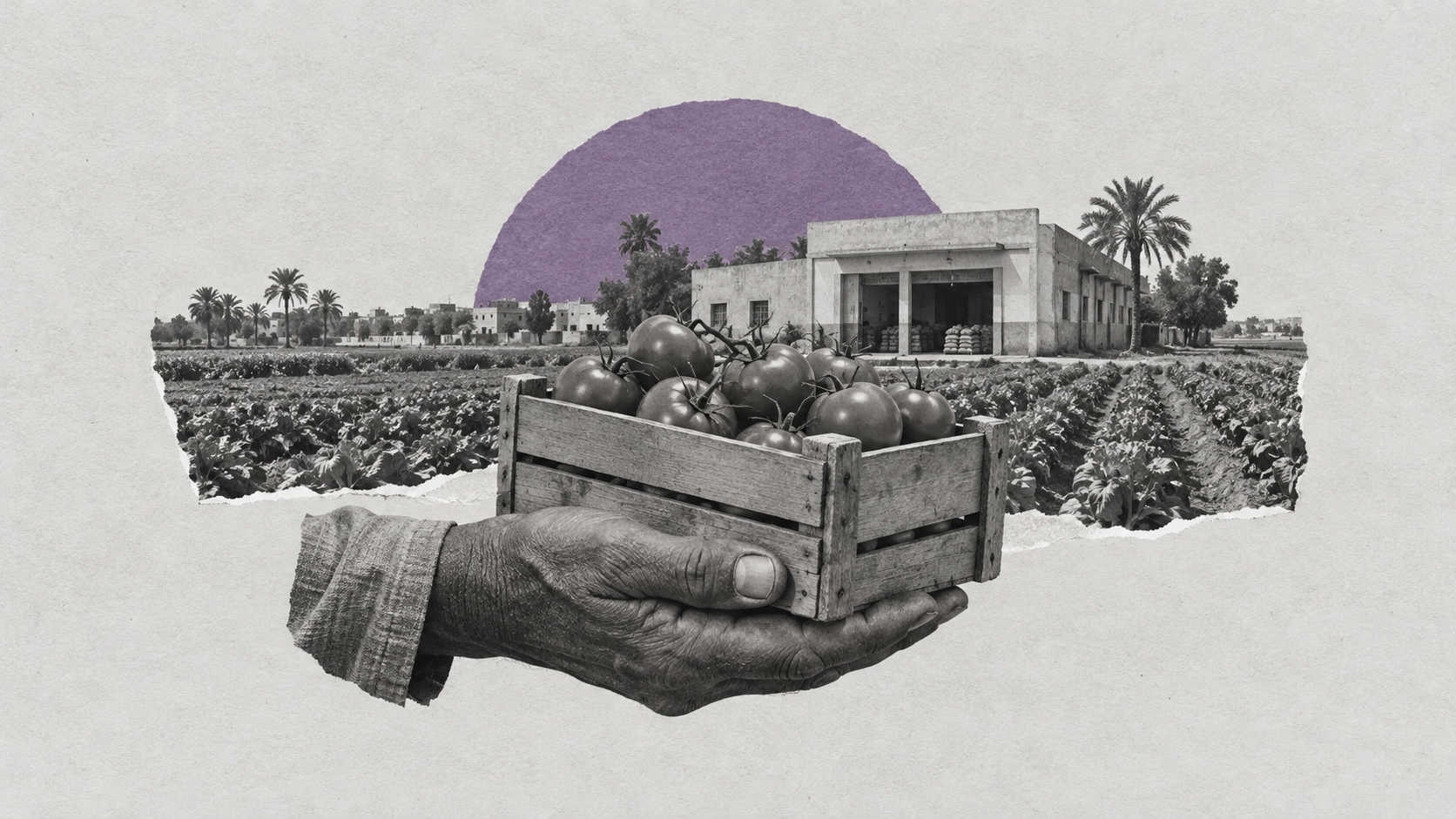


On 2 March 2025, residents of Ras El-Hekma found Deputy Prime Minister Kamel El-Wazir arriving in their neighbourhood with demolition equipment and security forces. With him were Matrouh Governor Khaled Shoaib and Brigadier General Hossam El-Sisi, the Transport Ministry official assigned to negotiate with residents.
Videos circulating online showed the confrontation as the authorities moved to clear homes for the new Ras El-Hekma development, part of the investment agreement Egypt signed with the United Arab Emirates in February 2024. Some residents refused to leave, demanding fair compensation and fulfilment of the government’s promises to protect their rights.
El-Wazir had met residents about two weeks earlier. According to accounts cited in the report, he told them a broad demolition campaign would begin on the second day of Ramadan as part of the project’s first phase. Residents argued that their homes and land were protected by registered contracts and ownership documents.
Reported government compensation rates included EGP 300,000 per feddan of land and EGP 2,000–5,000 per square metre of residential buildings. Residents interviewed by Zawia3 considered the offers far below their properties’ value.
The fact-checking platform Matsada2sh described footage showing clashes between residents and police, a police transport vehicle and at least five armoured vehicles. A loader began demolishing a house and a villa’s boundary wall while El-Wazir sat in his vehicle with aides. Some residents threw stones at the armoured vehicles.
The homes were in El-Hashima, within the first-phase area on the Ras El-Hekma coast in Matrouh governorate, along a stretch of shore described as approximately two kilometres long.
“We want a fair agreement”
Zawia3 spoke to several residents, including witnesses to the confrontation. They said they would not give up their homes and land without fair terms, accusing the authorities of failing to pay agreed compensation and offering sums far below market prices.
Mohamed, a pseudonym, says the government wanted to buy his seafront land for EGP 150,000 per feddan, while he valued it at more than EGP 1 million. His account concerns the offer he says he received, rather than establishing a uniform compensation rate for every property.
Islam, another resident speaking under a pseudonym, attended several meetings with officials during the preceding months, most recently a mid-February meeting with El-Wazir. He says residents made clear that they were dissatisfied with the compensation offers, after which the government sought to compel them to leave.
The confrontation on 2 March did not frighten residents into abandoning their land, he says. They remain willing to negotiate, but want an agreement that recognises the value of property they say they own under legally registered contracts.
Residents are seeking a fair agreement, Islam says. Without adequate compensation, an investment project risks becoming a forced displacement that deepens anger and distrust.
Islam says his own home was demolished about a month earlier, but he had still not received the compensation due to him at the time of the interview. Delays by the responsible authorities, he argues, have made other families less willing to trust assurances that leaving will serve their interests.
The government presents a different picture of the programme’s progress. On 25 February 2025, cabinet spokesperson Mohamed El-Homsani said more than EGP 6 billion in compensation had been paid.
He also reported advanced progress on infrastructure at Shams El-Hekma, the alternative residential area for affected families, including water, sanitation and main and subsidiary roads. The statement did not resolve the individual payment disputes described by residents interviewed for this report.
When compensation leaves no real choice
Talaat Khalil, general coordinator of the Civil Democratic Movement and a member of the Conservative Party’s presidential council, sees the dispute as part of a broader pattern in the government’s handling of residents’ property.
He tells Zawia3 that the authorities take homes and land while leaving people with no practical option other than accepting compensation that does not reflect their properties’ value. In his assessment, the absence of a meaningful choice makes this forced displacement even when money changes hands.
Khalil points to similar disputes on Warraq Island, around Cairo’s Ring Road and in parts of Port Said and Ismailia. He rejects the argument that transferring residents’ property to a foreign investor necessarily constitutes a public benefit simply because it is presented as development.
He argues that forced displacement conflicts with Egypt’s legal and constitutional commitments and the international agreements it has signed. The government should have negotiated with residents and considered their interests before attempting to remove them, he says.
“So far, the Ras El-Hekma project’s contours and details remain unclear,” Khalil says. “Are we giving another country an entire city? We do not know the nature of the contract: is it a joint investment, a usufruct arrangement or management?” He describes the approach as heavy-handed and warns of its consequences.
His criticism concerns transparency and residents’ access to the terms affecting them. Public announcements had identified the investment’s broad structure, including development rights and an Egyptian stake, but did not answer all the questions raised by affected households.
Human-rights lawyer Malek Adly, director of the Egyptian Center for Economic and Social Rights, likewise criticises what he considers a systemic problem in the government’s approach to occupied land. Agreements with investors, he says, are being concluded before fair settlements are reached with the people who live there.
Adly cites Ras El-Hekma and Warraq Island as examples of what he describes as misuse of public-benefit expropriation powers. Those powers should serve genuine public needs, such as essential infrastructure or services benefiting society, he argues, rather than merely transfer property from residents to investors.
For residents, the dispute is about more than the price of a house. It concerns whether they can protect a home, a livelihood and a way of life when development arrives.
Egypt’s expropriation law includes procedural and financial safeguards. Under Law 10 of 1990, as amended, a public-benefit decision must be supported by project documentation and plans. Compensation is assessed by a designated committee at prevailing prices, with 20% added to the valuation. The requesting authority must deposit the full compensation within three months of the decision; delay attracts additional compensation linked to the Central Bank’s announced interest rate. Payment in kind requires the owners’ agreement.
Legal clarification: lawful expropriation does not always require the owner’s consent. It is distinct from an unlawful forced eviction and is subject to public-benefit requirements, fair compensation, due process and avenues to challenge the decision or valuation. The legal criticism voiced by interviewees concerns whether those safeguards and purposes are being respected in practice.
A landmark deal, contested on the ground
In February 2024, Egypt and the UAE announced an agreement to transform Ras El-Hekma, on the Mediterranean coast, into a major tourism, residential and business destination. Plans envisaged luxury resorts, hotels, a financial and business centre, and marinas across roughly 170 million square metres.
The headline investment package was USD 35 billion. ADQ’s announcement broke this down into USD 24 billion for development rights and the conversion of USD 11 billion in Emirati deposits into investments in Egypt. The full USD 35 billion was therefore not entirely new cash entering the country.
The deal came amid an acute foreign-currency and financial crisis. Prime Minister Mostafa Madbouly described it as Egypt’s largest direct-investment agreement, projecting eventual investment of USD 150 billion and eight million additional tourists. Those were official expectations for the project, rather than benefits already realised.
Ministers and members of parliament defended the agreement as an opportunity to attract foreign capital, strengthen the pound and relieve inflationary pressure. Critics questioned its economic value and the limited disclosure of contractual details; for some, it recalled the controversy surrounding Tiran and Sanafir.
Ras El-Hekma lies east of Marsa Matrouh and approximately 350 kilometres northwest of Cairo. It is part of Matrouh governorate, whose 2023 population was given in the original reporting as 538,546. That figure refers to the governorate, not the population of Ras El-Hekma itself.
Adly says compensation must account for the real value of land and the lives built around it. In his view, the problem extends beyond a disagreement over valuation: people are being pressured to sell when they do not wish to leave.
He questions the suitability of replacing a Bedouin family’s land and livelihood with an apartment. A person whose work depends on grazing or fishing, he argues, cannot recover that way of life simply by receiving a unit in a residential block.
In February 2025, Modon Holding announced progress on Ras El-Hekma’s master plan since October 2024. ADQ, owned by the Abu Dhabi government, had appointed Modon the master developer in October. The announced structure retained a 35% Egyptian government stake in the development.
The land had passed through a series of state-allocation arrangements. The original reporting describes Presidential Decree 226 of 2023 as covering a 40,697.59-feddan tract, labelled A, and earlier transfers between the New Urban Communities Authority and the armed forces.
It also lists allocations of 1,499.089 feddans to Matrouh governorate, 20,128.51 feddans to the armed forces, and separate Transport Ministry sites: 2,421.85 feddans for the high-speed railway route, 111.88 feddans for its Ras El-Hekma station and 25.47 feddans for a diesel railway station.
Those earlier arrangements do not, by themselves, describe the position at this report’s publication. Presidential Decree 55 of 2024, issued on 23 February 2024, allocated 170.8 million square metres to the New Urban Communities Authority to establish New Ras El-Hekma, transferring the land from the armed forces.
Development without residents at the table
Adly says any urban-development plan should begin with serious consultation between the government and representatives genuinely chosen by affected communities. Decisions imposed without that process, he argues, produce protest and confrontation.
He describes the current approach as amounting to forced eviction and insists that investment does not remove the state’s obligation to protect property rights or provide fair compensation. He distinguishes essential public purposes—such as health, infrastructure and national security—from clearing land solely for profitable investment.
In his assessment, the philosophy of expropriation has shifted from necessary interventions towards an increasingly arbitrary means of moving residents out for investors. The texts of the expropriation and new urban communities laws contain safeguards, he says; the failure lies in how the authorities apply them.
Adly also asks why affected residents cannot share in the returns generated by the projects replacing their homes. Where the state retains a stake in a large development, he suggests, it could offer residents a share of the proceeds in exchange for their land rather than require them to leave for compensation they consider inadequate.
He describes a stark gap between the low sums offered to residents and the much higher values anticipated once their land is developed. In his view, the families bearing the disruption should receive a fair share of the economic gains.
The state has the right to invest and pursue development, Adly says, but should do so without sacrificing residents’ rights. He calls for a review of expropriation practices, fairer compensation and meaningful community participation.
For the government, Ras El-Hekma promises investment, tourism and jobs. For the residents resisting removal, it poses immediate questions about housing, unpaid compensation and the future of their livelihoods. The confrontation exposes an unresolved test: whether development can proceed through fair negotiation, or will reproduce earlier conflicts over land and displacement.