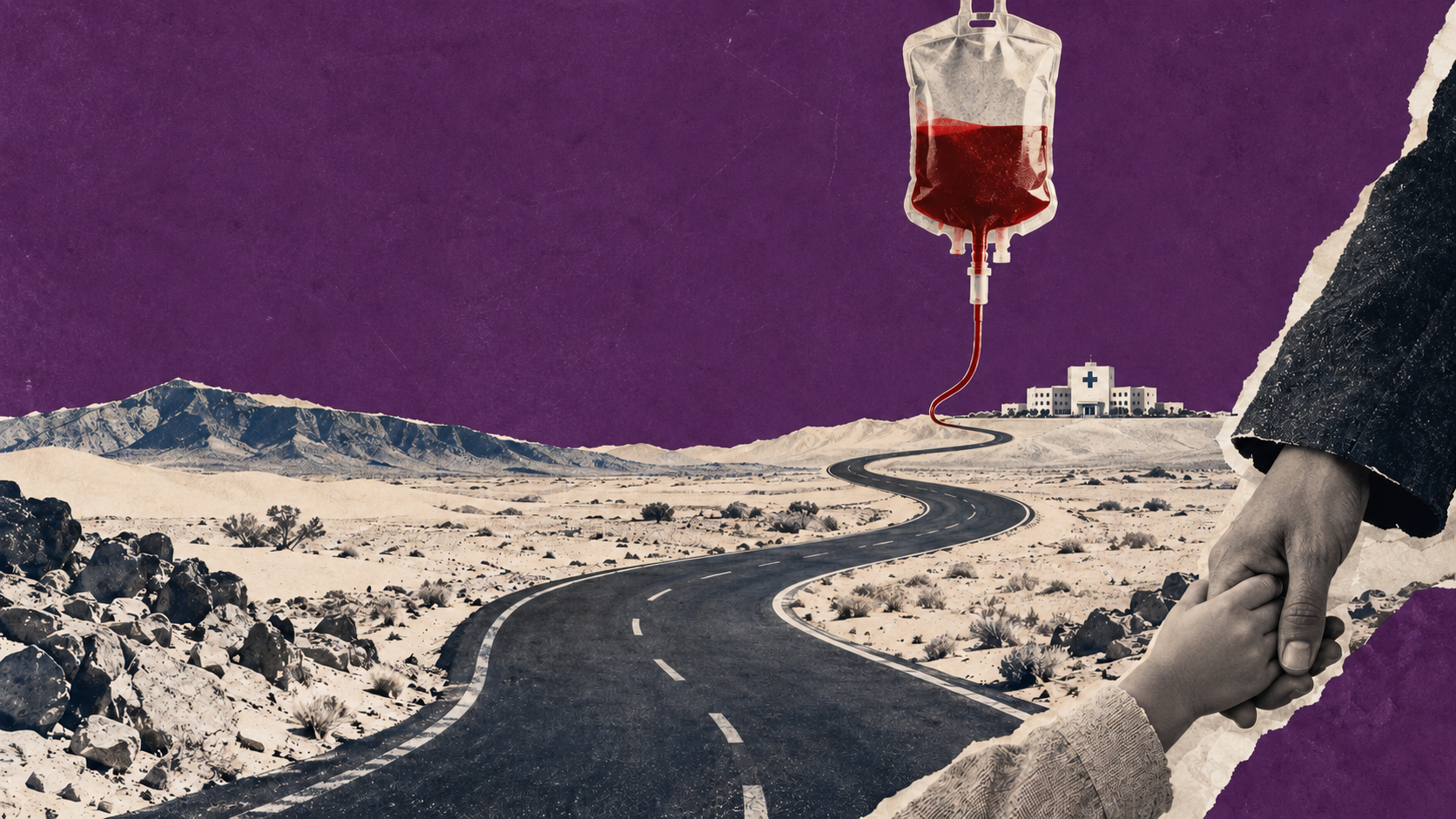


Egypt’s press and media bodies are holding a widening series of discussions with professional unions, public figures and industry representatives to develop a plan for reforming the sector.
The initiative follows President Abdel Fattah El Sisi’s 10 August 2025 meeting with Prime Minister Mostafa Madbouly and media officials. The presidency said the aim was to improve Egyptian media’s effectiveness, adapt to global changes and develop a comprehensive strategy. Sisi also spoke of freedom of expression, diverse national viewpoints, opportunities for younger professionals and training that combines new technology with awareness of national-security issues.
The National Press Authority has begun consultations with senior journalists and union representatives. It oversees state-owned press institutions under Law 179 of 2018 and is distinct from the National Media Authority, which oversees state-owned broadcasting institutions under Law 178 of 2018.
The Supreme Council for Media Regulation, governed by Law 180 of 2018, has also met satellite-channel executives and presenters to discuss content and professional standards. Its remit includes broadcast, digital and print media.
The Journalists’ Syndicate revisits its reform proposals
The call for a roadmap follows repeated appeals from the Journalists’ Syndicate and senior journalists to restore the profession’s role and lift restrictions that, they say, have constrained it for almost a decade. Demands intensified after the 2016 police raid on the syndicate and the arrest of journalists Amr Badr and Mahmoud El Sakka on accusations of spreading false news.
The syndicate’s sixth general conference, held in December 2024, called for journalists to be able to work without harassment, a review of media legislation and meaningful guarantees of editorial independence.
Syndicate head Khaled El Balshy tells Zawia3 that saving journalism is a collective responsibility shared by the state, the syndicate, news organisations and civil society. Reform must begin, he says, with clear guarantees allowing journalists to cover public affairs and express opinions without fear.
El Balshy describes the conference recommendations and general assembly’s demands as a comprehensive prescription built around four priorities.
The first is urgent action: releasing imprisoned journalists and prisoners of conscience not implicated in violence, with safeguards against adding others to pretrial-detention lists. It also includes renewing state-owned press institutions by appointing long-serving temporary staff and outstanding media graduates, recognising the syndicate membership card as sufficient authorisation for fieldwork, and unblocking news websites.
The second is legislative reform: an access-to-information law implementing Article 68 of the Constitution, an end to custodial penalties for publishing offences, and changes to media laws that secure institutional independence and remove restrictions on expression.
The third concerns economic survival. El Balshy calls for customs exemptions on printing supplies, cancellation of interest on state-owned institutions’ debts, fair wage rules ensuring a decent minimum income, and arrangements to resolve the social-insurance status of hundreds of unemployed journalists.
The fourth is a wider opening of public life. He argues that media development requires greater freedom of expression, an end to interference in union affairs and space for unions, parties and civil society to operate and engage with one another.
“Press freedom is not a sectional demand confined to people in the profession. It is a lifeline for society as a whole,” says El Balshy.
He describes free journalism as an essential guarantee of political and social openness and of a country with room for everyone.
Why reform the media now?
Former syndicate head Yehia Qallash, who took part in the National Press Authority’s discussions, hopes the initiative reflects serious political will to restore journalism’s influence. He warns against allowing it to become a diversion that wastes an opportunity.
He argues that the weakened role of Egyptian media has harmed major national causes and the country’s ability to confront domestic and external challenges. Restoring that role, he says, is necessary for national security and an informed public.
Qallash says journalism must be treated as a partner in solving problems, with legislative and professional support. Reform that leaves freedom and journalists’ economic and social rights unaddressed would offer only temporary relief.
He urges policymakers to use the sixth general conference’s recommendations, developed through broad participation by journalists and experts. Such conferences have helped shape policies and legislation since the first was held in 1964, he notes, with some recommendations influencing constitutional principles.
Karem Mahmoud, a former syndicate secretary-general and media academic, identifies two reasons the issue has become urgent. The first is the pressure of regional and international political, military and economic developments, which he believes has led some within the authorities to recognise a need to loosen restrictions and build broader national support.
The second, he argues, is the pressure on citizens after years of hardship. He compares society to a pressure cooker: either space is created for people to express themselves, or tensions risk escalating.
Mahmoud hopes the initiative will not become a delaying tactic or follow what he sees as the unproductive path of the National Dialogue. He wants it to lead to tangible change.
Freedom, livelihoods and a workable reform plan
Journalists interviewed by Zawia3 outline a reform agenda spanning press freedom, working conditions, content, support for public and private institutions, and digital change.
For this report, Zawia3 contacted National Press Authority head Abdel Sadek El Shorbagy and National Media Authority head Ahmed El Moslemany to ask about the reform plan, its budget and practical implementation. Neither had responded by publication.
Mahmoud argues that media cannot develop in a closed environment without an open public sphere and a legal right to information.
“The media breathes freedom,” says Mahmoud. Improving content will accomplish little, he argues, without legislation and a political environment that protect expression and multiple voices.
Without that space, he says, national and opposition voices turn to social media because they cannot find a platform in mainstream outlets that should reflect society.
He criticises what he describes as predetermined boundaries and constant monitoring across state, private and party media. Similar headlines and television discussions, he says, drive audiences towards sources offering different perspectives. In his view, outlets too often avoid the issues that most directly affect people’s lives.
His prescription is to open public life, protect expression and enact an access-to-information law. With those conditions in place, he argues, journalism has the capacity to renew itself without top-down intervention.
Qallash likewise sees freedom as essential to the industry’s survival. “When the media became official bulletins, audiences turned away,” he says. Credibility declined, followed by advertising and circulation, undermining institutions’ future.
He describes informal censorship as an especially difficult challenge. Rather than a single identifiable censor, journalists face shifting red lines imposed by actors ranging from ministers to businesspeople, creating uncertainty about what can be reported.
Qallash calls journalists’ deteriorating livelihoods a time bomb for any reform effort. The technology allowance, intended to supplement pay, has become a substitute for salaries, he says. Some journalists cannot afford the transport fare to reach their workplace.
“How can that journalist lead a process of development while unable to meet the most basic needs?” he asks.
He also calls for legislation that gives practical effect to constitutional protections for journalism and access to information. Interviewees’ demand to end imprisonment for publishing offences goes beyond the exceptions retained in the constitutional text; their proposals are presented here as reform demands.
Rebuilding the relationship between the state and the press
Syndicate board member Eman Auf says reform requires a new relationship between the state and the media, including better economic and social conditions. She calls for a clear timetable to implement the minimum wage in press institutions and a technology allowance that keeps pace with living costs.
She argues that official statements welcoming diversity have not been reflected in practice. At the time of her interview, she counted 23 journalists in custody, including sixteen in pretrial detention.
“Proof of good intentions begins with releasing our imprisoned colleagues,” she says, calling for coordination with the syndicate.
Auf wants restrictive legislation reviewed, including Law 180 of 2018 and its Article 12 provisions affecting field reporting and photography. She also calls for an access-to-information law and effective protection for journalistic sources. Her concern is that rights written into law are not consistently protected in practice.
Hussein El Zanaty, the syndicate’s first deputy head and editor of Alaa El Din magazine, also participated in the consultations. He calls for journalism to move beyond relaying statements and return to investigation, scrutiny and diverse opinion.
He advocates regular coordination among the syndicate, the National Press Authority and the Supreme Council for Media Regulation, with the council supporting private and party newspapers rather than limiting its role to licences and compliance.
El Zanaty also proposes legislative changes allowing the syndicate to develop independent revenue. Any discussion of its governing law, he says, should include assurances that existing gains will be preserved while adapting to changes in the profession.
Include younger journalists and build digital capacity
Auf identifies two essential conditions for a credible reform dialogue. The first is the syndicate’s full participation as the representative of the journalists who produce the work. It should help organise discussions and choose professional representatives, rather than merely attend.
The second is participation across generations. Younger journalists produce much of the daily content, she says, and cannot be excluded from the process in favour of established figures alone.
El Zanaty submitted a paper to the National Press Authority outlining a vision for influential, sustainable journalism. He argues that improving content begins with developing the people who produce it through continuous training at every career stage and a free, professional working environment.
He also recommends separating editorial work from commercial management, improving digital-content marketing and rebuilding specialist journalism as a means of attracting audiences and providing value.
Reform must include the departments supporting editorial work—advertising, circulation, exhibitions and conferences—so that institutions can remain financially viable.
Continuing the dialogue—and protecting the value of journalism
On Monday, 8 September, El Balshy hosted a meeting at the syndicate to discuss the reform roadmap and journalists’ conditions, with press and media officials and journalists in attendance.
Media Syndicate head Tarek Saada said digital change presents serious challenges at a difficult moment for the profession. He welcomed the presidential initiative and argued that discussions involving institutions, experts and academics could help develop an effective strategy.
Saada also said the plan should reflect the religious, educational and social values he regards as integral to Egyptian society.
Alaa El Ghatrify, editor-in-chief of Al Masry Al Youm, proposed a joint working group between the Journalists’ Syndicate and the Supreme Council for Media Regulation. It would represent publishers in negotiations with major technology companies such as Google over payment for journalistic content.
He identified three main challenges: improving content and competing for audiences; keeping pace with technology; and the collapse of traditional business models alongside concentrated control of technology and advertising markets.
El Ghatrify called for a common framework to address the licensing of journalism used by internet companies. He also advocated diversified income streams and a digital-led publishing model, while preserving public-service institutions such as state-owned newspapers and Maspero as assets belonging to the public.
The consultations have brought long-standing demands back to the centre of debate: freedom, professional rights, viable institutions and dignified working conditions. Whether they become a genuine reform programme or another dialogue without implementation will depend on the decisions that follow.