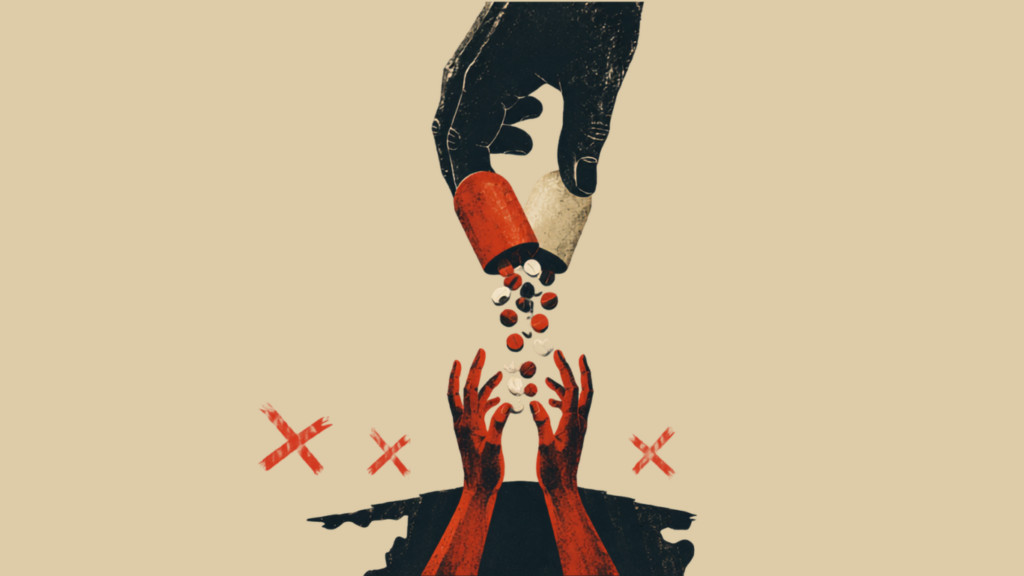

On 26 June 2026, the Medicine for All charitable foundation’s activities were suspended and its premises sealed. An Egyptian Drug Authority committee ordered it to stop receiving or dispensing medicines until further notice. Pharmacists and civil-society organisations expressed alarm about the consequences for patients unable to pay, outside insurance and state-funded treatment coverage, or unable to find essential medicines in pharmacies.
The foundation began as a 2006 initiative to reduce medicine waste and help patients who could not afford treatment. Registered with the Social Solidarity Ministry in 2013, it expanded to eight branches, organising donated medicines and redirecting them to people in need.
Earlier this year, the ministry asked it to regularise its position with the Drug Authority, the body responsible for medicine circulation. The foundation proposed ways to place its work under authority supervision and continue legally, before the suspension arrived.
Pharmacist Walid Shawky, chair of Medicine for All, says the authority told charities involved in medicine to stop receiving and distributing it without providing an alternative for patients. It also closed their accounts on distributors’ electronic systems, preventing transactions, and barred dispensing existing stock as well as receiving donations.
He says the inspection committee filed a report accusing the foundation of running an unlicensed warehouse, possessing medicines of unknown origin and holding scheduled narcotic medicines. The case remained before prosecutors at publication; these were allegations, not findings of guilt.
“We asked the Drug Authority to impose whatever supervisory conditions it considered necessary for medicine quality and circulation, but received no response,” Shawky tells Zawia3. “When we asked what would happen to patients, we were simply told: stop working now and we will discuss it later.”
He says the foundation, supervised by the Social Solidarity Ministry, had served at least 10,000 patients monthly over around thirteen years, charging administrative fees equivalent to only 10% of medicine value. It also supplied medical convoys, health initiatives and shelters. Many recipients had diabetes, hypertension or heart disease and lacked insurance, lacked coverage for the medicines needed or faced shortages in public services.
Shawky says the foundation inspected packaging and expiry dates, rejected refrigerated products where storage conditions could not be established, destroyed expired medicines and followed patients’ health to assess treatment effectiveness.
Its supply combined cash and medicine donations. Monthly distributions averaged roughly EGP 4 million in value, he says, while direct purchases accounted for only about EGP 400,000. Most supply therefore came through donated medicines; pharmaceutical-company donations were limited, often slow-moving or near expiry, making operation without public donations impracticable.
The foundation proposed collection boxes in pharmacies under Drug Authority inspectors’ direct supervision and full oversight of collection, sorting and distribution. Shawky says those proposals were rejected.
After suspension, it tried using its limited funds to buy replacement stock, but its access to distributor systems was blocked. The authority required an application for a cooperative-association pharmacy licence, which the foundation began at an initial cost of at least EGP 150,000. Shawky says this does not resolve what to do with surplus medicines people want to donate.
A cooperative pharmacy would allow distributor purchases but not provide a route for medicines left after recovery or death—the supply that had formed an important part of the foundation’s work after checks. He calls for a safe alternative preserving access and avoiding needless waste.
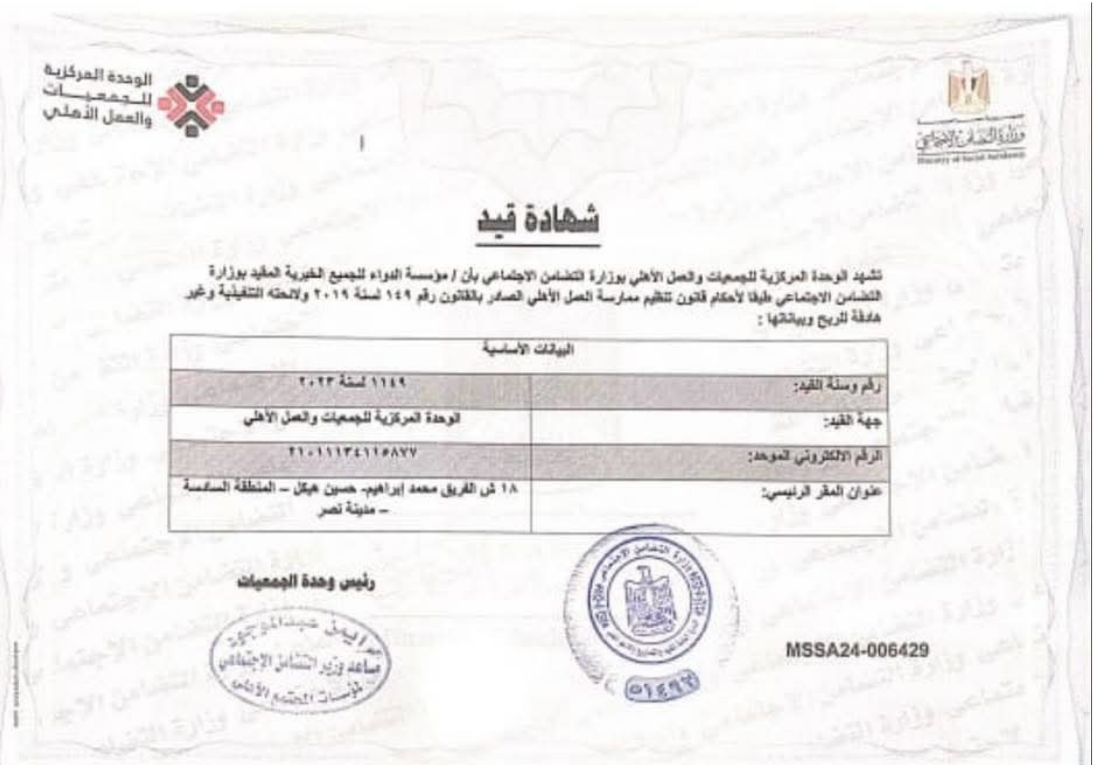
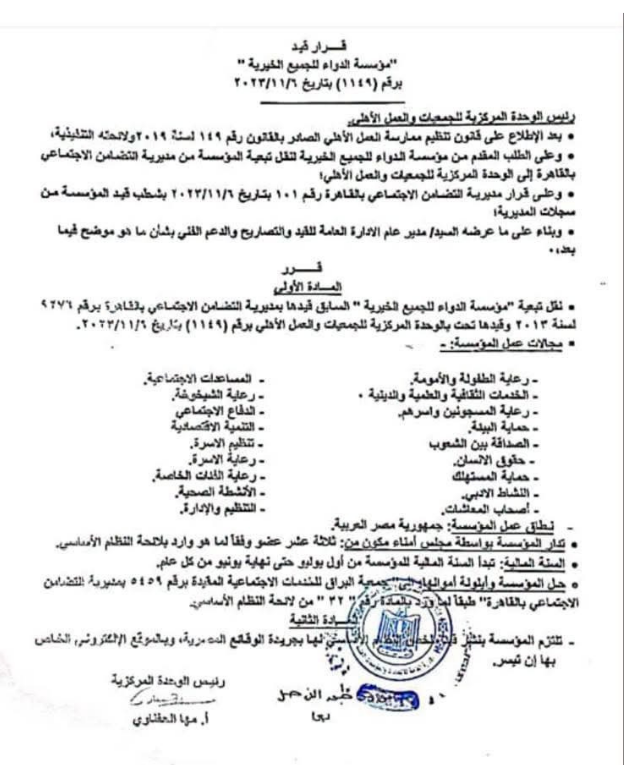
The dispute stems from unpublished official correspondence by the ministry’s Central Unit for Associations and Civil Work, conveying recommendations from a 26 April 2026 meeting with the Drug Authority on charity medicine distribution.
The recommendations directed social-solidarity directorates and charities to exclude medicine and medicine-donation activity from future association statutes. Existing organisations were told to regularise their status and conduct no collection or distribution without necessary Drug Authority licences, while entities in the field were to be identified for legal action.
Treatment stops for thousands of patients
In May, Egyptian Social Democratic Party MP Ahmed Alaa Fayed raised the threat of interrupted treatment for thousands of poorer patients, particularly those with chronic illnesses, in a parliamentary question to the prime minister and social-solidarity minister.
He said the April meeting required licences but some charities found no mechanism for obtaining them and were told to change their activities. That halted monthly free or low-cost supplies on which patients depended amid difficult living conditions and higher medicine prices.
“Without an appropriate transition period and a clear, announced route to regularisation, these institutions face either immediately stopping services or continuing under threat of legal liability,” he said. He questioned whether regulatory, technical or legislative considerations prevented licences and why no clear framework had been published.
Fayed requested an explanation, national totals of affected organisations and beneficiaries, a flexible regulatory framework and adequate transition time so chronic patients would not lose treatment.
He tells Zawia3 the Social Solidarity Ministry gave no clear answer on the decision or implementation. Drug Authority head Ali al-Ghamrawy told him organisations observing professional rules would not be harmed, while expressing concerns about donated medicines’ storage, origin and suitability.
“Those concerns deserve attention, but do not justify stopping the activity entirely,” Fayed says. He sees a coordination failure requiring supervision that secures medicine safety and access rather than a complete prohibition.
Rising prices and shortages require practical treatment-access solutions, he adds. He had received no answer about a government alternative to close the gap left by charities’ suspension.
MP Naglaa al-Assily, a member of parliament’s Social Solidarity, Family and Persons with Disabilities Committee, says the executive arrangement between the ministry and authority was not presented to parliament, so the committee had not discussed it. Any suspension of an established activity should allow time to complete licensing, she argues.
“The state has the right to regulate charities handling medicines to protect patients, but it must clearly announce how those charities can regularise their position and continue lawfully,” she tells Zawia3.
Al-Assily asks both bodies to identify the licensing authority, requirements and supervisory arrangements, and explain whether surplus medicines will be collected by a government body or regularised charities. A prohibition without a practical alternative would remove an important patient resource, she warns.
She also asks how the government will cover gaps for people outside insurance and state-funded care or whose medicines are unavailable publicly, and who will receive usable medicines donated after recovery or death rather than letting them go to waste.
Al-Assily says she intends to submit a parliamentary question about licensing, oversight, donated medicines and continuity of treatment for those unable to pay.
The report cites about 69 million people registered in health insurance and more than 5.4 million in the newer universal health insurance system, against a domestic population of 109 million in mid-2026. These registration totals are not added together here because they do not establish distinct, non-overlapping coverage groups.
State-funded treatment decisions benefited around 2.4 million people during 2025, and 922,675 during the first quarter of 2026, according to the official figures cited in the report.
Time to regularise charitable services
Mahmoud Fouad, head of the Right to Medicine Association, opposes abrupt closure of organisations serving patients and calls for time to regularise their activities by partnering with licensed pharmacies or establishing compliant pharmacies. He wants service continuity without breaking the law or compromising safety.
Providing medicines, particularly for uninsured patients, should be coordinated with official bodies, he says. He asks the Drug Authority to set technical requirements and help charities comply, but firmly rejects collecting household medicines for redistribution.
Fouad distinguishes such collection initiatives from charities operating hospitals or licensed pharmacies that buy directly from distributors, as major medical institutions do. Formal procurement supports quality, storage and traceability.
“Receiving surplus medicines from citizens and redistributing them is humane, but carries serious risks,” he says. Storage conditions, heat, humidity, suitability and origin may be impossible to verify, and open or unknown packages may endanger patients.
He recommends that medicine assistance operate through a licensed pharmacist-run pharmacy obtaining products from manufacturers or distributors with official invoices, then selling at reduced prices or providing them free under quality and safety standards.
Under the licensing procedures cited in Decision No. 1 of 2010 and Ministerial Decision No. 380 of 2009, a cooperative-association pharmacy application is made by its chair or director. Such pharmacies follow general pharmacy requirements except the 100-metre separation condition in Article 30 and serve association members. Applications are submitted through the authority’s licensing system or health-affairs directorates.
Storage safety and professional supervision
Pharmacist Hanaa Mohamed, founder of the Providing Medicine initiative, warns that handling medicines outside professional oversight can endanger patients despite the harm caused by service interruptions. Technical expertise is essential.
Some medicines require refrigeration and some become unsuitable after a particular period following opening, she says. A well-intentioned donation can lose effectiveness or safety. Licensed pharmacies face requirements for storage equipment, refrigeration, temperature and inspections that may be absent in charities without qualified pharmacists.
“A pharmacist does more than dispense: they explain storage and use,” she tells Zawia3. “Some products require protection from light or specific temperatures, details non-specialists may overlook. My voluntary initiative therefore relies on full pharmaceutical supervision.”
She wants charities’ social role to continue with specialist oversight, suggesting volunteer or employed pharmacists to inspect, store and distribute medicines and balance humanitarian assistance with safety.
Treatment for those unable to pay is a human necessity, she says, but cannot come at the cost of patient safety. Professional supervision should ensure appropriate storage, product suitability and clear usage advice.
Some charities already employ volunteer pharmacists and professional standards, Mohamed adds, providing a model to develop rather than assigning medicine handling to people without the necessary scientific background.
Ali Abdullah, director of the Egyptian Centre for Pharmaceutical Studies and Statistics, argues that all medicine circulation must follow professional law and regulation. Every dispensed package should pass through a licensed pharmacy system under pharmacist supervision, with sales outside pharmaceutical institutions—including through apps—controlled.
He considers affordable treatment primarily a state responsibility, with charities supporting patients financially to buy medicines from licensed pharmacies rather than independently storing or distributing stock.
Medicine for All’s experience is humane and distinctive but outside the regulated framework, he says. Charities should cooperate with doctors and pharmacies: verify a patient’s need, cover all or part of the cost, and have the medicine dispensed through a licensed pharmacy.
“The standard should be the same for everyone: medicines should not be collected in a mosque, church or charity, and dispensing should occur only through licensed pharmaceutical institutions,” Abdullah says. He notes that many pharmacists already receive donated medicines after recovery or death, sort them and provide them free to patients in need.
Other support models could include charity–doctor partnerships offering free examinations, payment for pharmacy-dispensed prescriptions, direct treatment funding or assistance from zakat and charitable donations, preserving access while observing medicine-circulation rules.
The dispute goes beyond licensing procedures. It asks how safety requirements can coexist with a treatment-support route on which thousands relied for years.
Without an announced regularisation mechanism or an official alternative for receiving suitable surplus medicines, patients remain most affected. A clear professional and legal framework is needed to regulate circulation without interrupting treatment for those most in need or wasting medicines that could safely be used.