

Last updated: January 31, 2025
Former senator Bob Menendez sentenced to 11 years
A federal court in New York sentenced former senator Bob Menendez on Wednesday to 11 years in prison for accepting bribes including gold bars and a Mercedes in exchange for facilitating interests linked to Egypt and Qatar. Egyptian-American businessman Wael Hana received eight years and Lebanese-American businessman Fred Daibes seven for their roles.
Prosecutors sought up to 15 years, accusing Menendez of using his New Jersey Senate seat and former chairmanship of the Senate Foreign Relations Committee for personal gain.
According to NBC, he denied the allegations and planned to appeal. He said gold bars worth hundreds of thousands of dollars found at his New Jersey home belonged to his wife Nadine Arslanian, whose sentence had not yet been issued.
The indictment included 16 counts: bribery benefiting Egypt, extortion under colour of office, fraud, obstruction and conspiracy to act as a foreign agent. Investigators described meetings with Egyptian intelligence officials, assistance obtaining military aid and legal and commercial support for Hana, also accused of bribery and unlawful dealings with a foreign government. Menendez maintained his actions were within his committee duties.
Egypt before the UN: international criticism and government responses
Egypt underwent its fourth Universal Periodic Review (UPR) at the UN Human Rights Council on Tuesday, following 2010, 2014 and 2019 reviews. Countries and organizations criticized repression of opponents, prison conditions, civil-society restrictions and enforced disappearance, and called for abolition of capital punishment and better refugee protection.
British ambassador Simon Manley criticized arbitrary detention of journalists and activists and called Alaa Abdel Fattah’s continued imprisonment after completing his sentence unacceptable. Sweden’s deputy permanent representative Fredrik Nivaeus expressed concern over restrictions on civil society, calling for an end to travel bans and asset freezes.
Several countries criticized case recycling, detaining prisoners on new charges as their terms end, producing indefinite custody without a new fair trial.
A rights report: continuing deterioration
Before the 48th UPR session, 11 Egyptian rights organizations submitted a joint report describing worsening rights and freedoms and failure to implement the 2019 recommendations sincerely, deepening political, economic and social crises.
It considered the 2024 presidential elections neither free nor fair and said closing public life amid a severe economic crisis heightens tensions. Despite UN recommendations, executions continue; Egyptian penal, military and drug laws permit death for 105 offences.
Rising death sentences despite international commitments
- 2020: 126 executions, including 25 defendants in political-violence cases.
- 2021: Egypt led countries issuing death sentences; 84 people were executed.
- 2022: 538 death sentences, with 39 upheld by cassation courts and military appeals.
- 2023: 590 death sentences, including military judgments against civilians, despite UN recommendations to end civilian military trials.
Enforced disappearance and torture
The report documented 821 new disappearances between August 2022 and August 2023, bringing cases recorded since 2015 to 4,253. Egypt received seven recommendations on disappearance in 2019 but committed to only three.
It also recorded more hunger strikes and suicide attempts due to abuse. In 2021 some inmates at Tora Maximum Security Prison attempted suicide, as did blogger Mohamed Ibrahim, known as Oxygen. Leaked political-prisoner letters received in 2023 described mounting attempts amid poor conditions.
New laws expanding military powers
The report criticized Vital Facilities Protection Law 3/2024 for expanding military arrest and trial powers over civilians and bringing economic offences such as monopolies and food-price manipulation under military jurisdiction. It accused the government of using the war on terror since 2013 to justify repressive laws.
Expression under siege
Egypt accepted 18 of 29 expression recommendations in 2019, yet authorities continued using Protest Law 107/2013 and Assembly Law 10/1914 to suppress rights. Parliament repealed the latter in 1928, the report said, but it continues to be used, raising questions about legislative transparency.
The Egyptian government responds
Foreign Minister Badr Abdelatty, leading Egypt’s delegation, rejected criticism, saying accepted recommendations were implemented over five years under a national strategy rather than external pressure.
He cited the 2021 end of the emergency, reactivation of the presidential pardon committee, National Dialogue, proposed Criminal Procedure Code and NGO law reforms, closure of the foreign-funding case, protection of places of worship and renewal of religious discourse.
A final UN review report is expected in coming months amid demands for effective steps to stop abuses. Egypt submitted its national report in October.
Amr Abdelrahman, EIPR’s civil liberties director, told Zawia3 the report represents a parallel reality. The review concerns commitments under the ICCPR, CEDAW and Convention on the Rights of the Child; instead the government presents development, infrastructure, health, education and subsidy spending. It has not fulfilled promises such as ICCPR Article 19 on information and expression: no information-access law exists and writers and journalists remain imprisoned for opinions.
He said the report lists releases without explaining mechanisms and uses Gaza-war protests as evidence of protest freedom while participants remain detained. Egypt pledged about 70% of recommendations in 2019, including terrorism, personal status and media law amendments, information-access and anti-discrimination laws, without implementing them.
Release improvements were slight and offset by new arrests. Minimum-wage gains were swallowed by inflation. He considered draft criminal procedure, labour and personal status laws worse than their predecessors.
Rights lawyer and ECESR director Malek Adly called UPR necessary but noted a poor international and regional context: leading defenders of global freedoms have broken commitments on Palestine, opening space for competitive rights rhetoric. Egyptian organizations nevertheless documented absent expression and systematic pretrial detention amid worsening political and social conditions; he hoped their efforts succeed.
Egypt’s 2024 presidential election: allegations of restricting competitors
Rights organizations described arrests of political rivals, journalists and activists. They recorded 194 Ahmed El-Tantawy campaign members detained, with supporters added to popular-endorsement case 16336/2023 alongside him and campaign manager Mohamed Aboul Diyar.
On February 6, 2024, Matariya Misdemeanour Court sentenced both to one year. Appeals judges upheld the judgment on May 27 and El-Tantawy was immediately imprisoned.
Media freedom: continuing restrictions and expanded blocking
The report documented at least 32 journalists detained or arrested between 2019 and the end of 2023, alongside continuing detention and pressure on families. Around 630 news and rights websites have been blocked since 2017.
The February 16, 2020 implementing regulations of Press and Media Law 180/2018 impose tight administrative requirements. Websites inside or outside Egypt cannot be created or operated without a Supreme Council for Media Regulation licence; the council also has broad blocking powers without courts.
Cross-border targeting and restrictions on defenders
Egypt received 31 recommendations in earlier UPR rounds to remove restrictions and protect defenders from prosecution and reprisals. Yet NGO Law 149/2019 authorizes broad interference in boards, activities and funding, and prohibits surveys and field studies without prior permission.
Counterterrorism laws target defenders at home, while Egyptian activists abroad face restrictions. Opposition figures and advocates denied renewal of official documents cannot travel, work or maintain lawful residence and lose access to medical and educational services.
The world sees the truth despite attempts at cosmetic reform
EIPR urged the government to abandon propaganda and denial and acknowledge the crisis instead of promoting paper strategies. Its January 31 recommendations report called for immediate release of political and opinion prisoners, an end to case recycling, torture and disappearance, and accession to international prison-monitoring protocols.
It demanded judicial independence, fair trials without security interference, reform of restrictive press and civil-society laws, and an end to counterterrorism as a tool against opponents.
It called for comprehensive legislation on violence against women, equal personal status laws, suspension of executions toward abolition, refugee protection and an end to forcible return.
Living standards, health, education and social security spending should be prioritized. The National Council for Human Rights needs independence and reform to monitor effectively. Egypt’s international image can improve only through real rights changes, not unimplemented promises.
Read Zawia3’s report: Egyptian Embassies Impose New Arbitrary Restrictions on Residents Abroad.
North Sinai
The armed conflict between security forces and Sinai Province from 2014 to 2021 caused 1,836 civilian deaths and 2,915 injuries. Security forces killed nine civilians in 2020 and at least seven in 2021. Operations involved collective punishment, arbitrary arrest, disappearance, torture, extrajudicial killing, forced displacement, home demolition and farmland destruction.
From mid-2015, army-aligned tribes formed militias; regular army arming and training began in July 2020, the report said.
Sinai Foundation for Human Rights documented 21 healthcare facilities destroyed or closed during clashes. Between 2013 and 2022, the army recruited children as young as 12, likely a war crime, assigning those aged 15–18 to confront Sinai Province members who later pursued and killed them.
Rights and freedoms
Amnesty International’s statement described a crackdown on peaceful dissent through arbitrary detention and politically motivated investigations. In January, prosecutors investigated Hossam Bahgat, while opposition publisher Hisham Kassem learned of a criminal investigation.
Nada Moghith was arrested over an interview with journalist Ahmed Serag, detained the preceding day, January 15. She was released on EGP 5,000 bail. TikTok creator Mohamed Allam, known as Rivaldo, was arrested over videos criticizing the president.
EIPR demanded Serag’s release. Prosecutors accused him of terrorist-group membership and financing, false news and using Zat Masr to promote the group’s ideas, ordering 15 days in case 7/2025.
Twenty-eight rights organizations issued a statement expressing concern over lost contact with poet Abdulrahman Yusuf Al-Qaradawi since his January 8, 2025 private-plane transfer to Abu Dhabi. They called it a dangerous precedent and misuse of international security agreements against political opponents and demanded disclosure of detention conditions. More than 550 public figures, rights bodies and parties signed a release petition.
On January 20, State Security prosecutors questioned Rivaldo after a violent home raid documented by the Egyptian Network for Human Rights. Accused of false news, joining an unlawful group and incitement to terrorist acts, he received 15 days’ detention.
On January 13, parliament approved changes to Criminal Procedure Bill Article 79 permitting prosecutors, with a district judge’s approval, to seize correspondence, telegrams, publications and parcels; monitor wired and wireless communications, private social-media content, email, text, voice and video messages; seize storage media; and record private conversations where useful to a felony or misdemeanour investigation carrying more than three months’ imprisonment.
Read Zawia3’s report: Egypt’s Communications Surveillance Law: Security Tool or a Sword over Privacy?
EIPR criticized the cabinet’s entrenchment of military academy training in teacher recruitment tests, building on 2022 changes that legitimized unconstitutional military interference after candidates passed lawful examinations.
Eight rights organizations expressed concern about systematic, widespread torture, ill-treatment, disappearance, arbitrary detention, unfair trials and appalling detention conditions.
Prison conditions
The Egyptian Front for Human Rights documented a January 9 hunger strike by pretrial detainees at Tenth of Ramadan Rehabilitation 6. They demanded release, full one-hour visits, daily sunlight and exercise, investigation of prison abuses and removal of the responsible National Security officer.
On January 2, Mohamed Adel’s wife announced his transfer to Tenth of Ramadan 4. Over 11 years, he has experienced pretrial custody, 12-hour daily police probation, political sentences and recycling into multiple similar cases.
The Egyptian Network published an appeal from recently released Karim Abdel Aziz, serving two years’ probation at Alexandria’s El-Gomrok police station. He accused an investigations officer of abusing him and his family and threatening fabricated cases and renewed imprisonment unless he became an informant.
Pretrial detention
ECESR said Cairo Criminal Court on January 21 renewed Mohamed Hamed Abdel Ghaffar’s detention for 45 days in case 4092/2024 over Facebook posts about Palestine.
On January 13, the court renewed Zamalek supporter Ahmed Hisham Shaheen, known as Bahar, for 45 days in case 65/2021. He has been detained since July 2020. It also renewed Nourhan El-Sayed Ahmed Deraz for 45 days in case 3528/2024 over criticism of economic and political conditions on Facebook.
AFTE documented January 12–19 renewals for Al-Bawaba journalist Karim Ibrahim in case 569/2020; Strong Egypt vice-president Mohamed El-Qassas in his third case, 786/2020; Moataz Bellah Hassab El-Nabi, beyond three years over Facebook posts; Alexandria University assistant professor Ahmed El-Tohamy in case 649/2020; journalist Khaled Mamdouh in case 1282/2024; and Mohamed Mahmoud Sabry Ismail in case 95/2023.
It also recorded 45-day renewals linked to social-media posts for Mohamed Youssef Mohamed Ibrahim and Ehab Helmy Amin Hussein in case 4092/2024—the latter arrested at home August 28, 2024—and contractor Abdelrahman Mohamed Alwany in case 1635/2022.
The court renewed Yasser Shaheen over criticism of Egypt’s support for Palestine, Asmaa Zakaria over power-cut posts, and Mahmoud Abou Sarea for 45 days. Ahmed Abbas received 45 days over Facebook comparisons of 2013 and 2024 prices.
January Revolution injury survivor Ahmed Oraby was renewed, as was poet Galal El-Beheiry beyond the pretrial maximum in his third case since arrest for writing Ramy Essam’s “Balaha.”
On January 12, Dikirnis Misdemeanour Appeals Court ordered five defendants released on EGP 10,000 bail over a protest following the Matariya accident in Dakahlia. Prosecutors appealed. Case 7711/2024 alleges inciting a gathering to attack people and public and private property, influence officials and use stones to obstruct traffic.
Read Zawia3’s report: The Matariya–Port Said Accident: Billions in Development, Mass Funerals as the Result.
Sinai Foundation said Badr Criminal Court renewed 64 defendants for 45 days on January 21 in case 1973/2023. Ismailia Military Court postponed two cases in January, 5/2025 and 6/2025, concerning five civilians accused of violating Lake Bardawil fishing instructions.
Refugees’ conditions
The 11 organizations’ UPR report described arrests of Chinese Uyghurs and Afghan minorities and efforts to prevent forcible return, alongside detention of border arrivals and arbitrary arrests of Sudanese, Syrian and other refugees.
After a Sudanese child’s killing in Cairo in 2020, refugees arrested in a crackdown faced deportation threats, inadequate healthcare and unsuitable detention. In June 2024, Amnesty documented mass arrests and forced returns of Sudanese: 800 detained people were deported in the first quarter without asylum access, UNHCR contact or appeal.
The Egyptian Commission documented sexual harassment and attempted rape against female asylum seekers without serious investigation. Since October 7, 2023, Egypt has admitted limited Palestinians, mostly for treatment, imposed near-house-arrest conditions and prevented press contact.
Others already in Egypt for study, visits or treatment could not return to Gaza, their residence expired, and families were denied entry. Some reported large dollar charges imposed by authorities.
Read Zawia3’s report: Residence Restrictions and Difficult Departures: Has Egypt Become Less Welcoming to Syrians?.
The Migration and Human Rights Platform and Refugees Platform in Egypt submitted a joint report to the UN on abuses against refugees, asylum seekers and migrants between 2019 and 2024.
Refugees Platform criticized exclusion of civil society and refugee communities from discussion of the refugee bill announced June 7, 2023, noting the lack of comprehensive legislation.
The platform also reported Syrian media activist Laith Fares El-Zoubi’s arrest after a Hurghada apartment raid and denial of family contact. On December 22 he appeared in a video interviewing Syrian consul Bashar El-Assad in Cairo. A circulated Egyptian civil-aviation directive barred Syrian passengers from flights to Egypt without embassy-issued visas obtained in advance.
Platform director Nour Khalil described unprecedented nationwide arrests of African refugees, including women and children, days before Egypt’s review. In a post, he said most Sudanese reported detained recently were deported. Cells in Upper Egypt, Greater Cairo and Alexandria filled with refugees without recognition of UNHCR cards.
Bulgarian organization Mission Wings reported three Egyptian children’s deaths on January 6 during a migration journey at the Turkish–Bulgarian border, accusing Bulgarian authorities of obstructing rescuers’ access.
Workers’ rights
Workers at Alexandria’s Seyouf and Nozha drinking-water and wastewater stations held a two-hour protest on January 12. They demanded implementation of final judgments on special-allowance differences; an end to deducting the 7% periodic increase before adding the special allowance to total rather than basic wages; payment of the 2017 allowance; unified nationwide financial regulations; and an increase in monthly meal allowance from EGP 200 to EGP 1,000. Management promised to relay demands to the holding company, the labour services centre said.
T&C garment workers in Obour’s industrial zone began an open strike on Thursday, January 16, seeking minimum wages, an end to deductions exceeding 20%, and suitable free transport instead of the EGP 1,000 monthly deduction for the distant factory.
They demanded raising the meal allowance from EGP 600 to EGP 1,200 and payment throughout holidays and Ramadan, and better laundry conditions where two shifts each last 12 hours. The labour services centre said management detained one worker and threatened to hand him to security forces around the factory.
Initially management refused negotiation and demanded a return to work. It later promised a decision on increases the following Sunday, insisting strike days would be unpaid.
The centre’s Committee for Defence of Trade Union Freedoms launched “Towards a Fair Labour Law” after the government-amended bill returned to parliament, seeking alignment with workers’ demands.
Rights lawyer Haitham Mohamedein told Zawia3 recent protests stem from inflation and soaring prices against stagnant wages, leaving families unable to afford essentials. Many private companies evade the EGP 6,000 minimum by counting insurance, pension and union deductions within it.
Companies can request exemption for financial difficulty. Many apply and assume exemption without waiting for a reply. Managements and government pressure strikers through closures and open leave, with security usually siding with employers.
Workers are barred from factories, dismissed or arrested at home on allegations of attacking police or property damage, and colleagues are pressured to end strikes. He cited Samannoud workers detained for about 15 days and dismissed. Twenty-five T&C workers were arrested at home; some appeared before prosecutors, others were at Second Obour police station, and the rest’s location was unknown.
Minorities and marginalized groups
The UPR report said customary reconciliation sessions substitute for formal justice in Christian–Muslim sectarian violence, evading law and sometimes enabling forced displacement. Attacks and incitement remain unaddressed without legislation tackling religious hatred.
It cited Christian homes burned in El-Fawakher, Minya, on April 23, 2024, and a Coptic home burned and materials looted in El-Khayari on September 5, 2023, under claims of an unlicensed church.
The report said Church Construction Law 80/2016 had produced no official new-church decisions beyond 50 in new cities. It urged reconsideration and a unified places-of-worship law.
Shia Muslims face arrest for disturbing social peace and security over alleged Iranian connections. In February 2020 an administrative court accepted a case to shut Shia channels and websites.
The constitution recognizes only Islam, Christianity and Judaism. Baha’is receive a dash in the ID religion field, worship at home after Baha’i assemblies were abolished in 1950, and parents must sign acceptance of Islamic or Christian religion examinations for children in public schools.
Egypt rejected anti-discrimination recommendations on LGBTQI people. Consensual same-sex relations are not explicitly criminalized, but Anti-Prostitution Law 10/1961, carrying up to three years, and Penal Code Articles 278 and 279 are used to prosecute them.
Over five years, organizations recorded 21 cases and 25 arrests, with six sentences of at least a year, one shorter sentence and two acquittals. Detained gay men and trans women endure inhuman conditions and serious violations. In 2023, 28 people underwent forced anal examinations despite objections. Authorities use dating apps and digital platforms for entrapment; Human Rights Watch documented 29 arrests and prosecutions in September 2023 alone.
Displacing residents
The report accused authorities of undermining Nubians’ right to return, whose implementation deadline was 2024. Presidential Decree 444/2014 designated 16 Nubian villages military border land barred to civilians. Decrees 355 and 498/2016 approved confiscation of extensive Nubian land for the 1.5-million-feddan reclamation project.
The Egyptian Commission documented continued demolition and excessive force in Rafah for the Egypt–Palestine buffer zone. It accused the army of unlawfully displacing tens of thousands and destroying homes and farms. Satellite images from 2017–2020 showed around 4,000 buildings demolished in El-Arish, mostly for a buffer around its military-used airport.
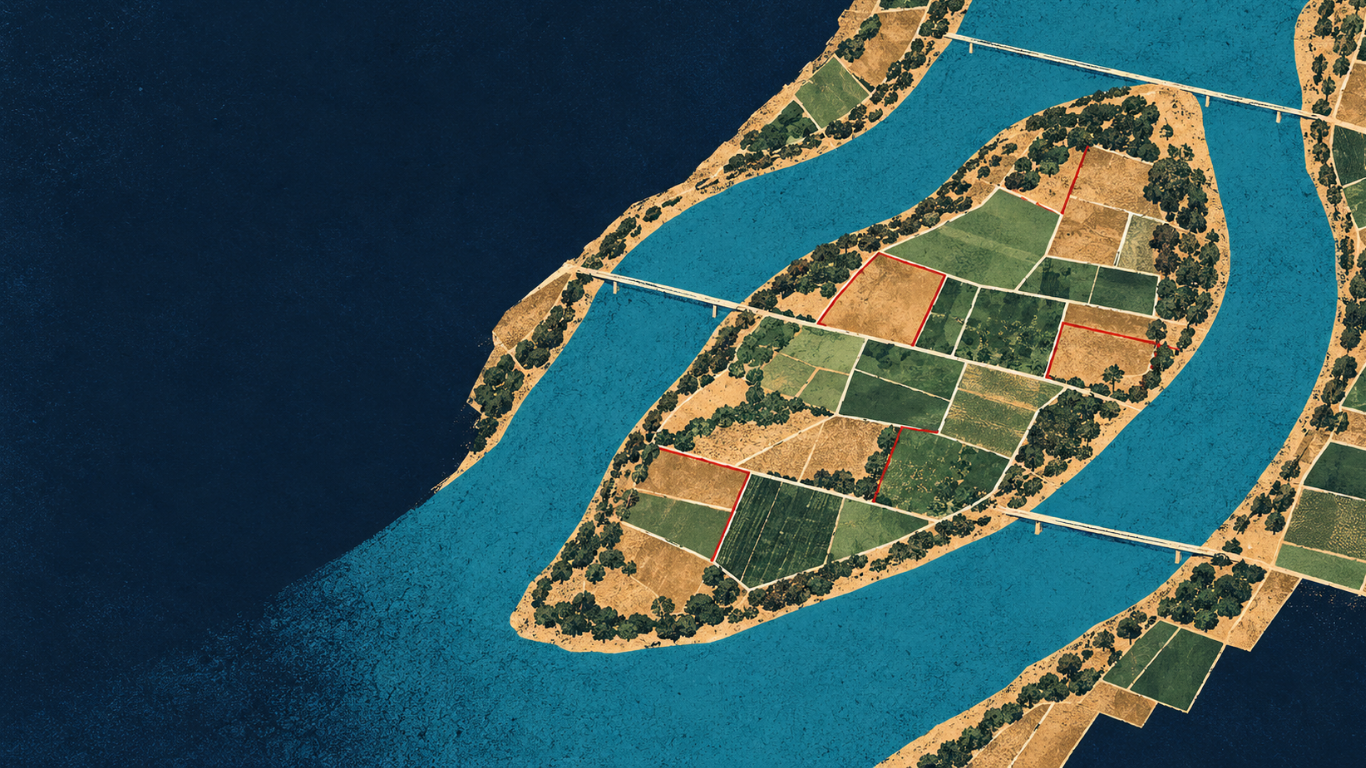
El-Gamil residents west of Port Said faced forcible eviction and violent Interior Ministry suppression. February 2024 clearances ignored residents’ redevelopment proposals. Authorities also pursue Warraq Island expropriation and displacement for investment without fair compensation, arresting some protesters.
Economic and social rights
ECESR filed a lawsuit before Cairo’s Administrative Court against interior and human-rights officials and Minya’s community-protection sector director, representing a woman seeking reproductive access.
A successful assisted-fertilization procedure produced triplets, but her husband’s January 2015 arrest caused severe psychological pressure and miscarriage. Sentenced in 2022 to 15 years, he is barred from providing samples and tests for a new procedure at her expense. She seeks cancellation of that refusal.
At the end of 2024, ECESR secured two judgments in cases 1971/2023 and 1963/2023 awarding a female and male journalist nearly EGP 250,000 from Al-Tareeq newspaper, owned by Al-Safwa Press, for arbitrary dismissal, notice, unused leave and unpaid salary.
AFTE said the Administrative Court referred Dr. Manar El-Tantawy’s appeal, case 73299/year 77, to the 18th Circuit that issued the unimplemented judgment on her professorship. The dispute concerns denial linked to her marriage to former prisoner Hisham Gaafar.
The January Revolution anniversary
For the revolution’s fourteenth anniversary, the Egyptian Network launched an online campaign on January 24 for disclosure of Mostafa El-Naggar’s fate. Missing since September 28, 2018, his disappearance violates Egyptian and international law and reflects state agencies’ involvement. It demanded disclosure, full state responsibility for his safety, and an end to all disappearances.
The Egyptian Organization for Human Rights welcomed a presidential pardon of 4,600 convicted prisoners for January 25 and Police Day, urging expanded conditional release under legal and humanitarian criteria.
After Gaza’s ceasefire, the Egyptian Network called on authorities, especially Prosecutor General Mohamed Shawky, to release Egyptians detained for supporting Gaza. EIPR counted at least 129, including two children, across ten cases, some held for 15 months.
Women’s rights
Women’s organizations submitted a joint report on rights in 2019–2024 for Egypt’s fourth UPR. Egypt accepted 70 of 82 women’s-rights recommendations in 2019 but rejected all proposals to remove CEDAW reservations and criminalize marital rape.
No personal-status or domestic-violence law followed accepted recommendations. Penal Code Article 17’s leniency continues reducing sentences for rape, indecent assault and so-called honour crimes; Article 60 justifies marital and family violence. Organizations documented 1,006 crimes against women and girls in 2022 and 950 in 2023.
Mai Saleh, New Woman Foundation’s women, work and economic rights programme director and gender consultant, told Zawia3 Egypt received over 370 observations in the previous review, accepted fully or partly. Women’s groups prepared a parallel report, and the foundation another.
They addressed failure to ratify ILO Convention 190, agricultural women’s exclusion from labour protection, the 30,000-teacher recruitment scandal and militarized appointments, abuses against community leaders, unclear new personal-status legislation, guardianship problems, weak political participation and general rights conditions.
Economic empowerment rhetoric conflicts with austerity disproportionately burdening women as social protection and public spending shrink for debt repayment. While government relies on small and medium enterprises, advocates seek cooperative solidarity economies, self-sufficiency and sustainable jobs rather than borrowing. Saleh urged reconsideration and solutions.
The Egyptian Women’s Legal Assistance Foundation expressed full solidarity with Laila Soueif after more than 120 days on hunger strike and demanded Alaa’s immediate unconditional release.
Following South Giza prosecutors’ decision to detain three suspects for four days over a girl locked in a dark room for six years in Badrashin, Barah Amen launched the “I Was Subjected to Home Confinement” campaign and a freedom-for-women-imprisoned-in-Egyptian-homes hashtag, demanding legal protection.
Edraak said this was not isolated: five forced-confinement cases were recorded in the first half of 2024, often accompanied by beating and torture that may cause death or suicide.
Feminist writer and Barah Amen co-founder Shaimaa El-Tantawy told Zawia3 no estimates exist for the scale of home confinement. Since 2015 the initiative has monitored domestic violence by perpetrator relationship, age, governorate and social and economic conditions, using press reports of violence, killing and personal-status incidents, and offering psychological and legal support.
At launch ten years ago, the campaign received around 1,000 testimonies from home-confinement victims. She urged a unified anti-violence law amid absent domestic-violence protection and no specific provision criminalizing home confinement.