The Constitution Party drew attention on the Egyptian political scene over the past few days, following a crisis whose manifestations unfolded beginning with the last presidential election and continuing with the dismissal of a number of its young leaders following internal disputes.
The Constitution Party was founded in September 2012, headed by politician and former Director General of the International Atomic Energy Agency Mohamed ElBaradei. The party is classified as one of the most prominent parties of the Egyptian opposition currents, as most of its leaders belong to the liberal current.
The current crisis is not the first to rock the opposition party. In 2013, just one year after its founding, a number of the party’s leaders announced their resignation, most prominently the leading jurist Hossam Eissa, who held the post of head of the party’s caretaker committee. The matter quickly escalated into a number of its members announcing a sit-in inside the party, affected by and protesting against the way it was run. The crisis erupted because of the party’s delay in announcing the election schedule to form its top levels and its bodies.
Statements came out at the time from some of the party’s founders declaring that “the party is run in a failed manner, and the party’s bylaws entrench tyranny by appointing party delegates rather than electing them”. Over three years from its founding, the party witnessed a number of internal conflicts that led to the successive withdrawal of a number of its leaders (such as: human rights defender George Ishak, former Minister of Culture Emad Abu Ghazi, the party’s founders’ representative Ahmed Darrag, political activist Esraa Abdel Fattah, media figure Bothaina Kamel, and the party’s president in 2014, Hala Shukrallah). The disputes also led to a shrinking of membership in the party, from 21,000 members to about 3,500.
What Is Happening Inside the Constitution Party
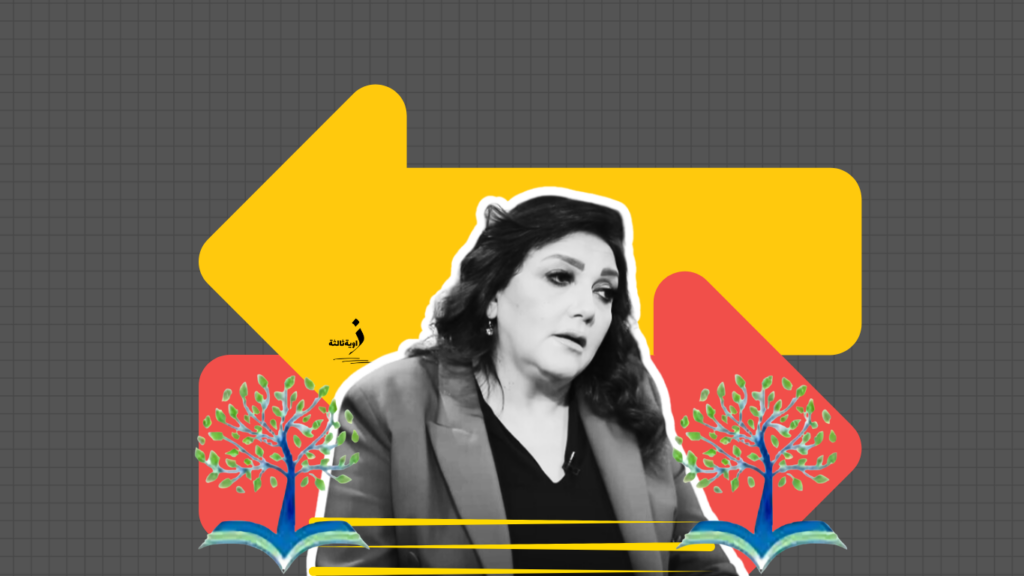
The party, headed since July 2022 by former presidential candidate Gameela Ismail, is witnessing a new dispute among members of the High Committee, after a decision was issued the day before yesterday, Saturday, to dismiss three members of the High Committee: Mohamed Hamdoun, director of legal affairs; Reham El-Hakim, secretary of central organisation and membership; and Mohamed Adel, the party’s secretary in Giza Governorate, in addition to suspending a number of members within the committee following political and organisational disputes, most notably the party joining the Free Current and Ismail’s decision to run in the last presidential election.
According to information obtained by Zawia3, the crisis that surfaced over the past few days goes back months, against the backdrop of political and organisational disputes within the party, which peaked during the last general assembly held during the presidential election, which aimed to vote on the decision for the party’s president to run in the presidential election and ended with a vote to withdraw and reverse the decision to run. This is what Gameela actually did.
Zawia3 contacted a number of those dismissed and suspended in the Constitution Party’s latest decisions. They agreed that there is a common factor in the recent explosion of the situation inside the party, which lies in the party joining as a partner in the Free Liberal Current, which was founded in June last year, bringing together a number of liberal opposition political parties, and was announced at a conference at the Conservative Party, attended by a number of prominent political figures, most notably Ahmed Tantawy, the potential presidential candidate and former head of the Karama Party; Akmal Kortam, head of the Conservative Party; former MP Mohamed Anwar El-Sadat, head of the Reform and Development Party; publisher Hisham Kassem; former MP Ehab El-Kholy; Dr Emad Gad, an expert at the Al-Ahram Center for Political and Strategic Studies; engineer Hussein Mansour, a leader in the Wafd Party; and Khaled Dawoud, journalist and former head of the Constitution Party.
That was before the Current decided to freeze its activity and withdraw from participating in any electoral or political process, following the crisis of the imprisonment of the head of the Current’s board of trustees, publisher Hisham Kassem, and his referral for trial before the Economic Court last September, after Kamal Abu Eita, a member of the Presidential Pardon Committee, former Minister of Manpower and Nasserist opposition figure, filed a complaint accusing Kassem of insult and defamation.
A number of members of the High Committee in the Constitution Party objected to the idea of the party joining the Current before the vote ended in favour of joining, due to the ideological difference between the liberal orientation of the Current and the orientation of the social democratic party that had joined the group.
For his part, Mohamed Hamdoun, the Constitution Party’s legal director and one of those dismissed, tells Zawia3: “Press statements by leaders within the Free Current caused a crisis inside the Constitution Party, which led to renewed demands to withdraw from the Current. In the end the matter was put to a vote after two previous attempts, and the result was a vote in favour of withdrawing from the Current”.
He explains that the decision to withdraw from the Free Current went against the wishes of party president Gameela Ismail, which led to the publication and implementation of the decision being delayed until the Current decided to freeze its activity permanently days after the party’s decision, which Hamdoun considered an indicator of decisions being taken unilaterally without regard to the bureau and the members.
Hamdoun, who was on Gameela Ismail’s list in the last Constitution Party elections, goes on to say that his crisis within the party, which ended with his dismissal, began after the elections held in July 2022. He adds: “As director of legal affairs, a number of complaints were referred to me for investigation, but I was surprised by a request from the party president not to investigate some names known to be close to her, which I refused and considered an unacceptable interference in the committee’s jurisdiction. Accordingly, Ismail manufactured some crises and accused me of lack of neutrality, which resulted in the investigations being stalled”.
He continued: “After the Free Current crisis, a new crisis began over Ismail’s wish to run in the presidential election. Last September, Ismail asked the High Committee to issue a decision calling on her to run in the presidential election held last December, which I opposed despite the approval of members of the High Committee, and I demanded that the bylaws be applied, requiring the approval of two thirds of the members of the High Committee and then a vote within the general assembly, which is what happened later.” He adds that a vote was held within the High Committee, with ten members approving Ismail’s candidacy against five objecting, and preparations then began for the general assembly meeting, which was accompanied by a crisis over who was entitled to attend. Under the bylaws, assembly members who have paid their subscriptions are entitled to attend, but according to Hamdoun they were surprised that the treasurer had refrained from issuing payment receipts to members after collecting the subscriptions through his personal (Vodafone Cash) account, which violates party and legal rules.
He continues: “We were surprised that none of the members had anything to prove they had paid their subscriptions, and that the only person entitled to confirm whether a member had paid or not was the treasurer. The aim of this was to control the mobilisation for the general assembly as one of the means of engineering the voting results.” He points out that the treasurer told them he could invite only ten members out of 80 whose subscription payments he acknowledged, which contradicts the truth, according to Hamdoun, who stressed that they agreed to the treasurer’s view on condition that payment of the subscription not be made a condition for attending the general assembly and voting on Ismail’s candidacy, but they were surprised that the treasurer refused to sign the lists, which led the party president to cancel the general assembly that had been scheduled for 1 October.
He continues that the matter increased tension within the party, which prompted Ismail to call a new general assembly on 10 October, which voted to reject Gameela Ismail’s candidacy in the presidential election. He points out that Ismail decided to punish nine members of the High Committee who had insisted on holding a full general assembly attended by about 750 members with updated data, which Ismail considered a challenge to her, leading her to freeze the High Committee from last November. As the crises escalated, she found that the solution was to get rid of the opponents, so she dismissed three and suspended the membership of six members of the High Committee, so that she could then reconstitute the committee in a way that pleases her. He explains that the dismissal decisions were issued by the arbitration body, which acts as an appellate body, in clear circumvention of the legal committee entrusted with this role under the bylaws.
The Constitution Party had announced via its official page on social media yesterday, Sunday, in two posts, two decisions: the first concerning the opening of nominations on 21 April for Constitution Party members in the Upper Egypt governorates to elect their representatives, with results to be announced on 26 May; and the second assigning the work of the central organisation secretariat temporarily to the Cairo Governorate organisation secretariat headed by Mohamed Mostafa, until the central organisation secretary is elected, and also assigning the work of the party’s legal affairs secretariat to Nasser Salah El-Din, a lawyer before the Court of Cassation, until elections are held to fill the post.
For her part, Reham El-Hakim, the organisation secretary against whom a dismissal decision was issued, agrees with what Hamdoun said regarding the crisis of mobilising the general assembly and the elections and the attempt to control them. She adds that the disagreement at the time of voting on joining the Free Current was a healthy disagreement, in line with what is practised in political work.
She believes that Ismail dealt in a professional and appropriate manner with the Free Current crisis, pointing out that the vote for the party to leave the Free Current, “after we failed more than once to get the vote in favour of leaving, was the beginning of Ismail’s turn against the group she sees as opposition within the High Committee”.
El-Hakim explains that she opposed the party joining the Free Current because she saw that it “carries ruin for the Civil Movement, of which we are part, and the Current’s orientations are completely different from the party’s orientations”. She stresses that she did not oppose Ismail running in the presidential election, and this was last July, but Ismail, without reason, delayed announcing her candidacy or taking real and serious steps, which made El-Hakim reconsider the candidacy decision during the general assembly last October and vote against her candidacy.
Commenting on the treasurer crisis, she points out that he deliberately did not hand over what was needed to prove payment of subscriptions to the general assembly members, and that paying the subscription into the treasurer’s personal e-wallet does not mean payment has been completed. She adds: “Our insistence on the attendance of the general assembly members made the treasurer ask the arbitration body to come up with a ruling to create a form exempting members from subscriptions in exchange for attending the general assembly”.
El-Hakim insists on mobilising according to the list she had previously signed, which covers inviting all members of the general assembly, numbering about 750, describing what happened as “contrary to the bylaws”, and saying she sought to set sound criteria in line with the bylaws. She explains that after the failure to convene the general assembly in early October, the High Committee met and some of those present accused her of obstructing the general assembly after she refused to limit attendance to a small number of the general assembly, as the treasurer wished.
On the performance of the arbitration committee that issued the latest decisions, she says the committee had previously issued a decision suspending the membership of two High Committee leaders, Amir Eissa and Mohamed Adel, for three months, on the pretext of assaulting the elections committee, which did not happen, according to her testimony. She adds that the matter provoked anger and raised questions among party members, and resulted in a collective decision by the High Committee to suspend the arbitration committee’s decision and summon it for discussion, but it refused to attend. At this point Gameela Ismail intervened to chair the High Committee session, insisted that Mohamed Adel, one of those whose membership was suspended at the time, not attend, and set out to paralyse the High Committee and force everyone to accept the arbitration committee’s decision.
She went on: “In the end we decided to announce a High Committee meeting to break the stalemate the party president had imposed on the committee. In response, the arbitration committee issued a ruling declaring our meeting void, and from there the committee split into two separate meetings. We decided to withdraw confidence from the arbitration body, which met again, and when withdrawing confidence was discussed, the secretary-general and the group supporting the party president walked out, but we completed the meeting and voted to withdraw confidence from the arbitration body. In response, the secretary-general filed a complaint against us, nine members who attended the meeting, which resulted in a decision to suspend our activity. We were expelled from the party’s groups and the party’s data and databases were withdrawn, and then a decision was issued to dismiss three of the members permanently and to continue suspending the membership of six members”.
Zawia3 tried to contact Constitution Party president Gameela Ismail for comment on what the dismissed party members said, but she had not answered our questions by the time of writing this report. We also spoke to some party members who preferred not to reveal their identities; they agreed that the party is on its way to collapse because of the policies being followed, and that the leadership has created many problems that could strengthen some members’ desire to call for early elections to remove Ismail from its presidency, hinting at the practices taking place inside a party that is one of Egypt’s opposition parties but does not accept opposition within it.