


The genocide being committed by the Israeli occupation forces against the people of the Gaza Strip is entering its eighteenth month, amid growing signs of strained relations between Cairo and Tel Aviv. Israel has accused Egypt of violating the peace agreement and has submitted a request to both Egypt and the United States to dismantle what it described as “military infrastructure” established by the Egyptian army in the Sinai Peninsula. In a statement on 4 March, Israeli Defence Minister Israel Katz said that Tel Aviv “will not allow Egypt to violate the peace treaty” signed between the two countries.
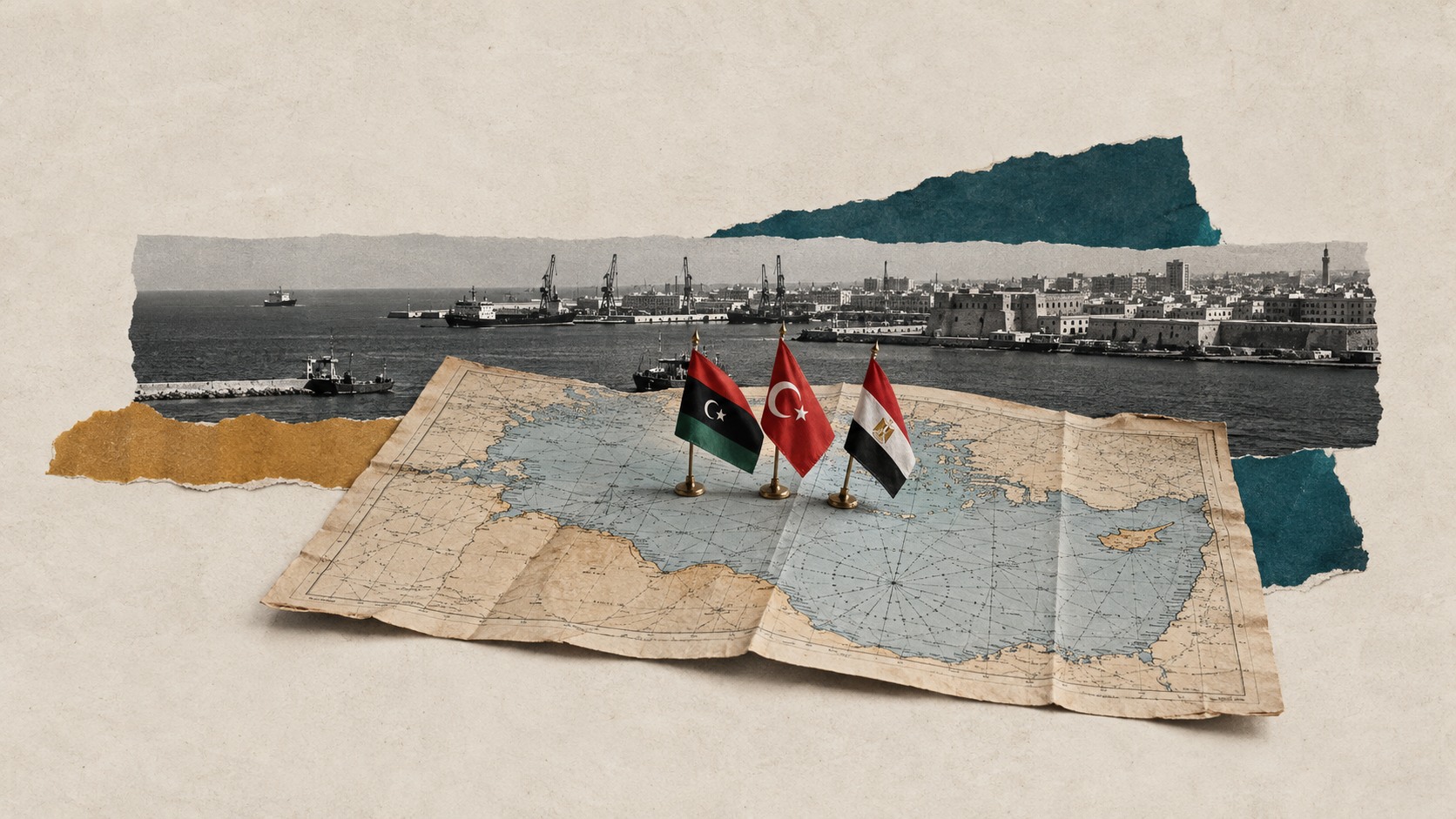
Egypt and Israel signed a peace treaty in Washington in March 1979, following the “Camp David” Accords signed in 1978. Among the most prominent provisions of the treaty are: ending the state of war, normalising relations, and Israel’s complete withdrawal from Sinai, in addition to turning large areas of the peninsula into demilitarised zones.
In another sign of escalating tension, Tel Aviv has not yet obtained official approval from Cairo for the nomination of its new ambassador. On 24 March, the Presidency of the Republic organised a reception during which President Abdel Fattah El-Sisi received the credentials of 23 new ambassadors to Egypt, and the Israeli ambassador was not among them.
Months ago, Cairo asked its ambassador in Tel Aviv, Khaled Azmy, to return to Egypt, and he has not returned to his post in Israel since then, even though his term has not yet ended, and Cairo has not yet officially announced the withdrawal of the ambassador.
Today, the questions are resurfacing: how far could the escalation spread? Will relations between the two countries remain within the bounds of political and diplomatic tension, or is the spectre of military confrontation now looming on the horizon? These questions are taking on a more serious character on the Egyptian street with notable movements by the Egyptian army on the north-eastern border, which reflect unprecedented readiness on the ground and raise possibilities that had not been on the table before.
Observers who spoke to Zawia3 believe that the possibility of escalation between Egypt and Israel is affected by several complex factors, including military, political and humanitarian dynamics. Although the two countries maintain the peace treaty, recent developments have weakened relations between them and raised concerns about the limits of this peace. And although Egypt has always been the most prominent mediator in the Palestinian-Israeli conflict, the scale of security pressure on its eastern border peaked over the past months.
Reports indicated that the Egyptian army reinforced its military presence in north-eastern Sinai and raised the level of field readiness by deploying additional tanks and armoured vehicles around the Rafah crossing and the areas adjacent to it, which is causing concern in Tel Aviv. Observers believe that this military move, although defensive in character, carries within it a clear message that Cairo will not allow any security breach or direct threat coming from the Palestinian south, especially with growing talk in the Israeli media about “safe corridors” or buffer zones on the edges of Gaza that could be exploited to force Palestinians to flee to Sinai.
According to official sources and military experts, the Egyptian army has deployed around 88 military battalions in Sinai, comprising nearly 42,000 soldiers, along with 3 complete military divisions and more than 1,500 tanks and armoured vehicles, in addition to projects to develop military airports and expand their runways, and to strengthen air defence networks and naval docks on the Mediterranean and the Red Sea. Observers compare these figures with what the peace agreement stipulates, which sets the maximum for Egyptian forces in the area at about 50 battalions and only 22,000 soldiers, which shows the size of the gap between the current reality and the original security arrangements that were put in place to guarantee a delicate balance in the strategically important peninsula.
Diplomatic Escalation
Since 7 October 2023, the statements of the Egyptian Ministry of Foreign Affairs have shown a notable evolution in dealing with the growing tensions with Israel, from calm and caution to escalation and clear anger. At first, Egypt was warning of the dangers of escalation between Palestinians and Israelis, as it warned of the gravity of Israeli military actions against Palestinians, noting that these actions lead to serious violence on both sides. As events escalated, Egypt condemned in the strongest terms the Israeli bombing of Al-Ahli Arab Baptist Hospital in the Gaza Strip, which resulted in hundreds of innocent victims, wounded and injured among Palestinian citizens in Gaza.
In a notable escalation of the diplomatic tone on Cairo’s part, Egypt condemned Israel’s violations in Syria and the targeting of a clinic affiliated with the UNRWA agency in Gaza, reflecting a clear escalation in Egyptian reactions towards Israel. It called on all the world’s countries, particularly the major and influential ones, to intervene to stop these violations and condemn them unequivocally, and to demand that Israel stop targeting the vicinity of the Rafah crossing, so as to enable Egypt and any other countries and international and relief organisations that wish to do so to deliver humanitarian aid to the Gaza Strip as quickly as possible.
In addition, Egypt warned of the gravity of Israel’s demands that the residents of the Gaza Strip move south, noting that this measure violates the rules of international humanitarian law, and stressing the need to stop such escalatory steps, which threaten the lives of more than one million Palestinian citizens and have caused a difficult humanitarian situation. Cairo called on the Security Council to intervene immediately to stop this escalation and called on all international parties to work to stop further escalation in the Gaza Strip.
Egyptian reactions clearly evolved from calm to escalation as Israeli military operations in Gaza continued, as Egypt rejected any attempts to displace the Palestinians, reflecting a firm stance against any attempts to change the demographic situation in the region. As tensions continue, Egypt is working to support efforts to return to the Gaza agreement, with a focus on maintaining stability in the region. In general, the statements of the Egyptian Ministry of Foreign Affairs point to increasing escalation in reactions towards Israel, with a focus on preserving the rights of the Palestinians and regional stability.
As Israeli military operations in Gaza continued, Egyptian reactions escalated. Egypt condemned Israel’s violations in Syria and the targeting of a clinic affiliated with the UNRWA agency in Gaza, reflecting clear anger at Israel’s actions. Egypt called on the international community to intervene immediately to stop this escalation, calling for respect for international and humanitarian law.
Insufficient Escalation
Akram Ismail, a member of the Central Committee of the Bread and Freedom Party (under establishment) and a leading figure in the Civil Democratic Movement, believes that what Egypt is currently doing at the official level does not measure up to the scale of the catastrophe, and that Egypt must play a stronger and clearer role, beginning first with a serious threat to suspend the Camp David agreement, as a symbolic step affirming its rejection of the war crimes and deliberate starvation taking place in Gaza. In addition, it must move seriously to break the siege imposed on the Strip by the occupation, by adopting practical proposals, such as sending official delegations from multiple countries to enter Gaza and deliver humanitarian aid in order to lift the siege and stop the starvation of civilians.
Furthermore, Ismail believes, speaking to Zawia3, that Egypt is required today to move effectively to form an Arab bloc, or even a wider regional one, that stands up to Israeli policies and clearly pressures Western governments, and the United States, to stop the massacres and violations in Gaza. This bloc does not have to be purely Arab, but it must represent the interests of the peoples and constitute a real tool of pressure on the powers complicit with the occupation.
The Civil Democratic Movement figure adds that Egypt’s hesitation to take a more decisive stance comes in the context of Gulf pressure and blackmail, but the price of this hesitation could be heavy. If Israel wins a crushing victory in this battle, under the direct sponsorship of the extreme American right-wing currents represented by the Trump administration, this will lead to a dangerous reshaping of the balance of power in the region. Israel will be the undisputed strongest party, and the roles of the other countries, including Egypt, will shrink before it.
Ismail points out that a complete Israeli victory means that Israel will be able to attack any country at any time, without deterrence. Moreover, the accelerating rapprochement between Israel and some Gulf states will lead to the further marginalisation of Egypt’s role and will open the way for an Israeli–Gulf alliance that redraws the map of the region in a way that serves Israeli interests only.
For his part, Mostafa Kamel El-Sayed, a professor of political science, believes that the Egyptian government considers the direct use of force in confronting Israel out of the question, and therefore confines itself to diplomatic moves and responses. However, these moves have not yet been exhausted and remain very limited. There are wide spaces through which Egypt can act, whether through the United Nations General Assembly to demand the imposition of sanctions on Israel, or by activating the mechanisms of international law, especially after the International Court of Justice described what Israel is doing as closer to genocide, a description that provides a strong legal basis for demanding international punitive measures.
The political science professor adds, speaking to Zawia3, that Egypt should take more decisive measures, such as suspending economic agreements with Israel. It is striking that the Egyptian government concluded a new agreement last January to buy gas from Israel, despite the ongoing crimes against the Palestinians. Some reports also indicate that Egyptian exports to Israel are continuing, which contradicts the minimum moral stance expected at such a moment.
The political science professor points out that Egypt can exert political and economic pressure on some other Arab countries, such as the UAE and Saudi Arabia, which continue to facilitate trade with Israel, whether directly or indirectly. In addition, Egyptians must be allowed to express peacefully their rejection of the genocide, by demonstrating in front of the US embassy or expressing their position in mosques and public squares, within a peaceful framework guaranteed by the constitution. But the Egyptian state is still dealing with this file as if limited diplomatic statements and declarations were enough, which contradicts the scale of the catastrophe. He concludes that what is happening now is not only a threat to Palestine; rather, the silence of the region will give Israel the legitimacy of a fait accompli to impose its control by force, with the support of its allies, in a way that goes beyond the borders of Palestine to the future of the entire region.
Are the Years of Cold Peace Between Cairo and Tel Aviv Over?
The escalation on the ground brings back to the fore the nature of the relationship between Egypt and Israel, which, although it stabilised at the official level after the signing of the peace agreement in Washington in 1979, has always been surrounded by popular reservation in Egypt, and was considered a “cold peace”. The agreement, which ended the state of war and imposed security arrangements in Sinai, included provisions that limited the deployment of Egyptian forces in certain areas, which later required security amendments in agreement with Israel to allow Egypt to strengthen its military presence in the face of terrorism after 2013, especially in the areas of Sheikh Zuweid, Rafah and Al-Arish. But the current military movements go beyond those tactical understandings to touch the very core of the relationship between the two countries, especially in light of official Israeli statements about its intention to carry out a military operation in Rafah, which is considered a serious transgression from the Egyptian point of view.
The Egyptian media, for their part, have not ignored the escalating tension. The official newspaper “Al-Ahram” published articles and reports that warned against infringing on Egypt’s borders or bringing about a demographic change in the Gaza Strip through the forced displacement of its population, and Egyptian analysts expressed concern about the possibility of Israel imposing a new reality in the Strip that would put Cairo before difficult options, including dealing with a potential refugee crisis, or things sliding towards unforeseen security confrontations.
On the other hand, Israel treats the Egyptian border as being of strategic sensitivity, but the rise of the far right in the Israeli government, and its push towards expanding military operations without sufficient political considerations, has created a kind of unprecedented tension with Cairo. It is noticeable that decision-making circles in Egypt, which have long dealt with the (Israeli–Palestinian) file with a degree of pragmatism, now face a more complex equation, especially with the continuation of the Israeli aggression in the Strip and the vagueness of the objectives of the operation in Rafah.
In this context, one cannot overlook the historical background of recurring tensions that Egyptian-Israeli relations have witnessed, although they have always been governed by a ceiling of restraint: from the incident of the shooting at Ras Burqa in 1985, to the tensions during the two intifadas of 1987 and 2000, through the waves of Egyptian popular anger against the repeated attacks on Gaza, and up to the incident of the killing of Egyptian soldiers near the border in 2011, all of them moments that exposed the fragility of the security understandings despite the solidity of the official agreement. Today, with Israeli forces approaching highly sensitive areas near the border, these fears are being renewed and the chances of escalation are increasing, even if in the form of controlled movements on the ground or coded political messages.
Although the direct military option between the two countries does not seem likely at present, given calculations of strategic cost, leaving the tension without effective management could lead to what might be described as an “unintended slide”, especially in the event of an accidental clash or a miscalculation on the ground.
In this context, Fadi Eid, a researcher in Middle East and North Africa affairs, affirms in an interview with Zawia3 that all scenarios are possible in light of the escalating tensions between Egypt and Israel, pointing out that “there are no limits to the escalation, and both sides have prepared militarily for any possible scenario.” He adds that “Israeli Prime Minister Benjamin Netanyahu sees the current moment as a historic opportunity to entrench the Greater Israel project, a moment he believes may not be repeated, which makes him more inclined to rush into escalation.” Despite this escalation, Eid stresses that “both countries do not want a direct military confrontation”, explaining that “the two powers are very heavy, and any military clash would carry an exorbitant cost for both sides.”
Regarding the Camp David agreement, Fadi Eid explains that all scenarios are now on the table, especially given “the absence of limits to Israeli aggression”, explaining that “for Netanyahu, stopping the war means the possibility of being tried domestically, and for Gaza it means an internal uprising against Hamas, which is why the movement continues to raise unrealistic demands in the prisoner exchange file despite the enormous destruction inflicted on its infrastructure and on the Gaza Strip in general.” He adds that “whenever Netanyahu finds an opportunity to reignite the war, he does not hesitate; rather, he seeks to expand it to achieve his political and personal goals.”
As for the future of Egyptian-Israeli relations in light of the dispute over the displacement file, Eid describes the situation as “complicated to the utmost degree”, saying that “Israel is working to divide Gaza into three areas almost empty of residents, except for the southern part adjacent to the border with Egypt.” He adds that “the aim is continuous pressure on the residents of Gaza to force them to reach the Egyptian wall, so that Egypt finds itself between two options, the sweeter of which is bitter: either it allows them to enter Sinai, in which case it will have contributed indirectly to the liquidation of the Palestinian cause, or it refuses their entry, in which case it will be accused of abandoning its responsibilities towards the Palestinians.” Eid affirms that “the difficulty of the situation lies in the fact that all the options put Egypt in a tight corner, as if it were in a political ‘stalemate’.”
How Do We Anticipate the Escalation Scenarios?
Mohamed Hamed, Director of the Eastern Mediterranean Forum for Political and Strategic Studies, says in an interview with Zawia3 that Egyptian-Israeli relations are going through a delicate and sensitive phase, which goes beyond mere circumstantial disagreements to a structural crisis of trust and understanding, especially in light of the escalation on the ground on the Rafah border and Israel’s attempt to impose new security equations unilaterally.
Hamed points out in his interview that there is indeed a trilateral dialogue between Cairo, Tel Aviv and Washington aimed at avoiding a direct confrontation, but indicators on the ground point to fundamental disagreements, especially in light of Israeli efforts to change the geographical and security character of the Palestinian–Egyptian border. He adds: “The Israeli army is now expanding over the Salah al-Din Axis and redrawing the borders of the Gaza Strip from the inside, preparing the ground for implementing the scenario of mass displacement towards Sinai, which Egypt considers a strategic threat to national security that it will not tolerate.”
In a symbolic gesture heavy with significance, Hamed draws attention to the absence of the Israeli ambassador from Cairo for several months, explaining that Egypt has already approved the name of the new ambassador, but he has not been invited to take the oath before President Abdel Fattah El-Sisi, despite the accreditation of other countries’ ambassadors. He considers that this delay is not a technical or protocol measure, but falls within what is known diplomatically as “diplomatic sounding out”, a political tool used when a state wishes to send implicit signals of rejection without formally breaking relations, noting that “Cairo’s mood, as it seems, is not ready now to grant full diplomatic legitimacy to the representative of a government that commits daily violations on the ground and is pushing the region towards further escalation,” Hamed says.
Speaking about the Egyptian position on the Israeli military build-up on the edges of Rafah, Hamed says that Cairo took the initiative with a pre-emptive response in the form of reinforcing its forces in Sinai, in a step described within Israeli circles as “surprising and unexpected”, noting that Israel tried to portray this step as a violation of the Camp David agreement, but in reality it is a legitimate defensive response in light of the growing threat.
Hamed stresses that Egypt rejects outright any attempt to impose the scenario of displacement from Gaza to Sinai, considering that this plan does not only constitute a political crime against the Palestinians, but aims to empty the land of its inhabitants and liquidate the Palestinian cause entirely. He adds: “If Egypt prevents the people of Gaza from entering, it will be accused of failing in its moral responsibilities, and if it allows them, it will be accused of taking part in liquidating the cause… and here lies the danger: all the options available to Egypt seem to lead to a dead end.”
The director of the Eastern Mediterranean Forum affirms in his statement that he does not expect a diplomatic clash or direct friction between Egypt and Israel in the near or even medium term, despite what he described as the deep and complex tension between the two sides.
Hamed concludes his remarks by stressing that Egypt, despite the escalation and the provocative Israeli moves, still holds to its firm position based on rejecting displacement and the forced change of the border reality. He considers it likely that Cairo will continue to use unconventional pressure tools, including military mobilisation and indirect diplomatic messages, without sliding into a comprehensive diplomatic clash in the foreseeable term, but he warns that any unforeseen development on the ground could ignite a wider crisis that would be difficult to contain later.
Editorial correction: The first version of the report stated that President Abdel Fattah El-Sisi presented the credentials of 23 new ambassadors on 24 March 2025; the correct information is that he received their credentials, according to the statement of the Presidency of the Republic on the same day.
Editorial correction: The first version of the report stated in one place that the peace agreement between Egypt and Israel was signed at Camp David in 1979; the correct information is that the peace treaty was signed in Washington in March 1979, after the two Camp David Accords signed in 1978, as stated earlier in the report.