

The Egyptian government has spent, in recent years, approximately $550 billion on infrastructure projects, covering road development, ports, logistics corridors, industrial zones, and new cities. Despite this, accident rates and road collapses are climbing daily, while entire streets flood nearly to capacity with each winter rainstorm.
Data from the Central Agency for Public Mobilization and Statistics shows approximately 7,000 road accidents recorded in 2023, resulting in more than 5,000 deaths and over 70,000 injuries. In parallel, scenes of flooded streets and main thoroughfares in Cairo, Alexandria, and several other governorates have recurred with every wave of rain or sharp temperature drop, causing traffic disruptions, school closures, power outages, and vehicle and property damage on more than one occasion. In 2024, the country recorded 5,260 deaths from road accidents, compared to 5,861 deaths previously, while the number of injured rose to 76,362.
Data and official statements also point to investments exceeding 10 trillion Egyptian pounds ($192.3 billion) in the infrastructure sector, covering roads, transport, and new cities. Despite this, the government has been forced to suspend schooling and work to avoid human losses during bouts of severe weather, while flooding events stretch on for days.
According to Egypt’s “Vision 2030” strategy, launched by the government in 2016, infrastructure is one of the foundational pillars for achieving sustainable development. It encompasses providing sustainable and adequate basic services, including electricity, energy, water, and sanitation, alongside developing safe and sustainable transport systems covering railways, roads and bridges, and ports and airports, as well as modernizing communications and information technology networks. The strategy also targets creating an investment-friendly environment that supports public-private partnership and strengthens the competitiveness of the national economy.
The development process, according to the strategy, aims to raise the quality of life and living standards of the Egyptian citizen through eliminating poverty, providing food security, offering quality healthcare, upgrading the education system, ensuring adequate housing, and enhancing cultural and sporting life.
Metro, Train, and Fuel: Egyptians Pay the Bill for Three Price Hikes in One Month
https://zawia3.com/metro/embed/#?secret=cXSMyWCBWu#?secret=zvzwBW8xI6
$550 Billion for Infrastructure in 10 Years
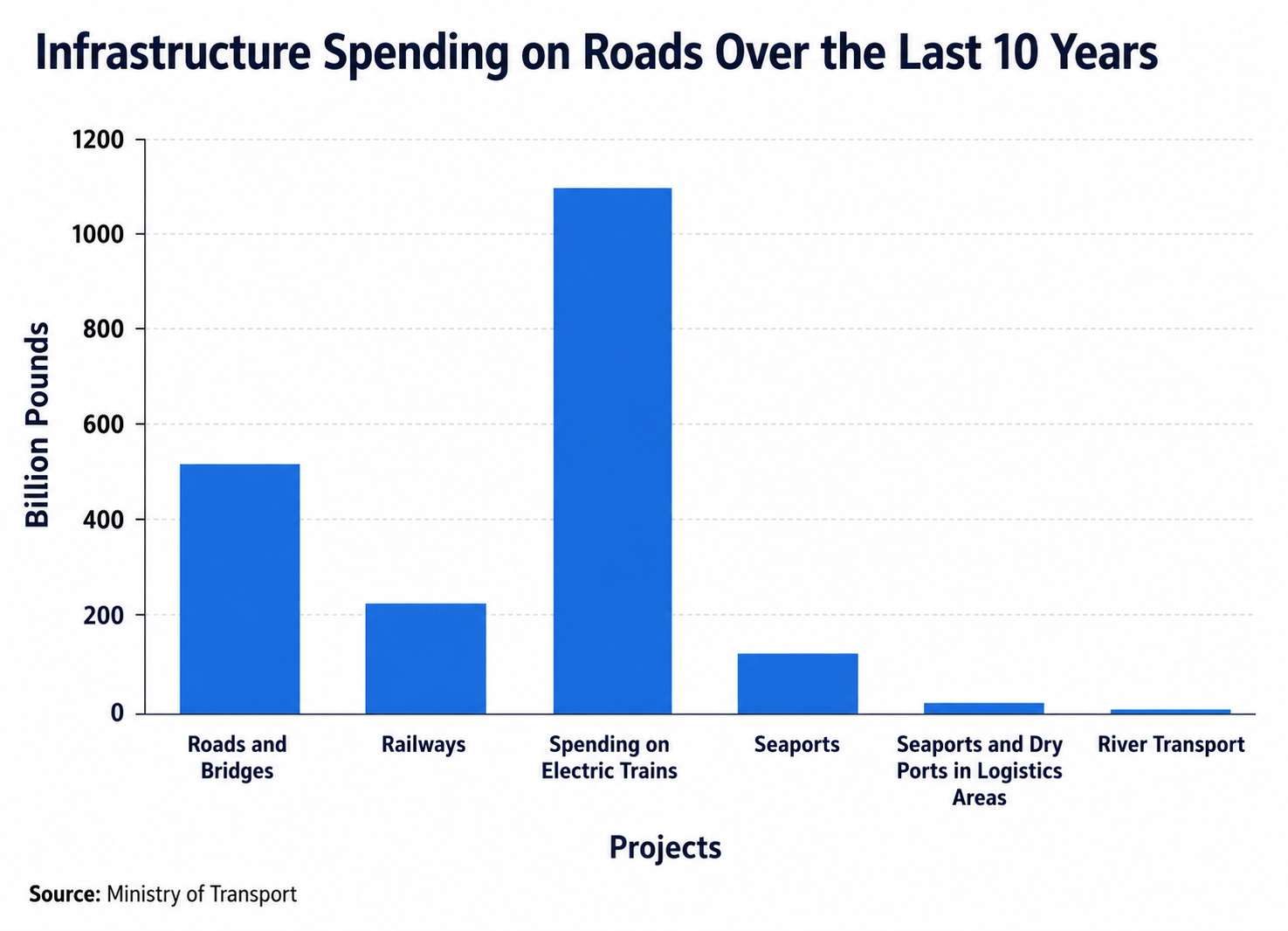
Between 2014 and 2024, the cost of modernizing the transport network reached 2 trillion Egyptian pounds ($38.5 billion), distributed as follows: 530 billion Egyptian pounds ($10.2 billion) for roads and bridges; 225 billion Egyptian pounds ($4.3 billion) for railways; 1.1 trillion Egyptian pounds ($21.2 billion) for tunnels and electric traction; 129 billion Egyptian pounds ($2.5 billion) for maritime ports; 15 billion Egyptian pounds ($288.5 million) for land ports, dry ports, and logistics zones; and 4 billion Egyptian pounds ($76.9 million) for river transport.
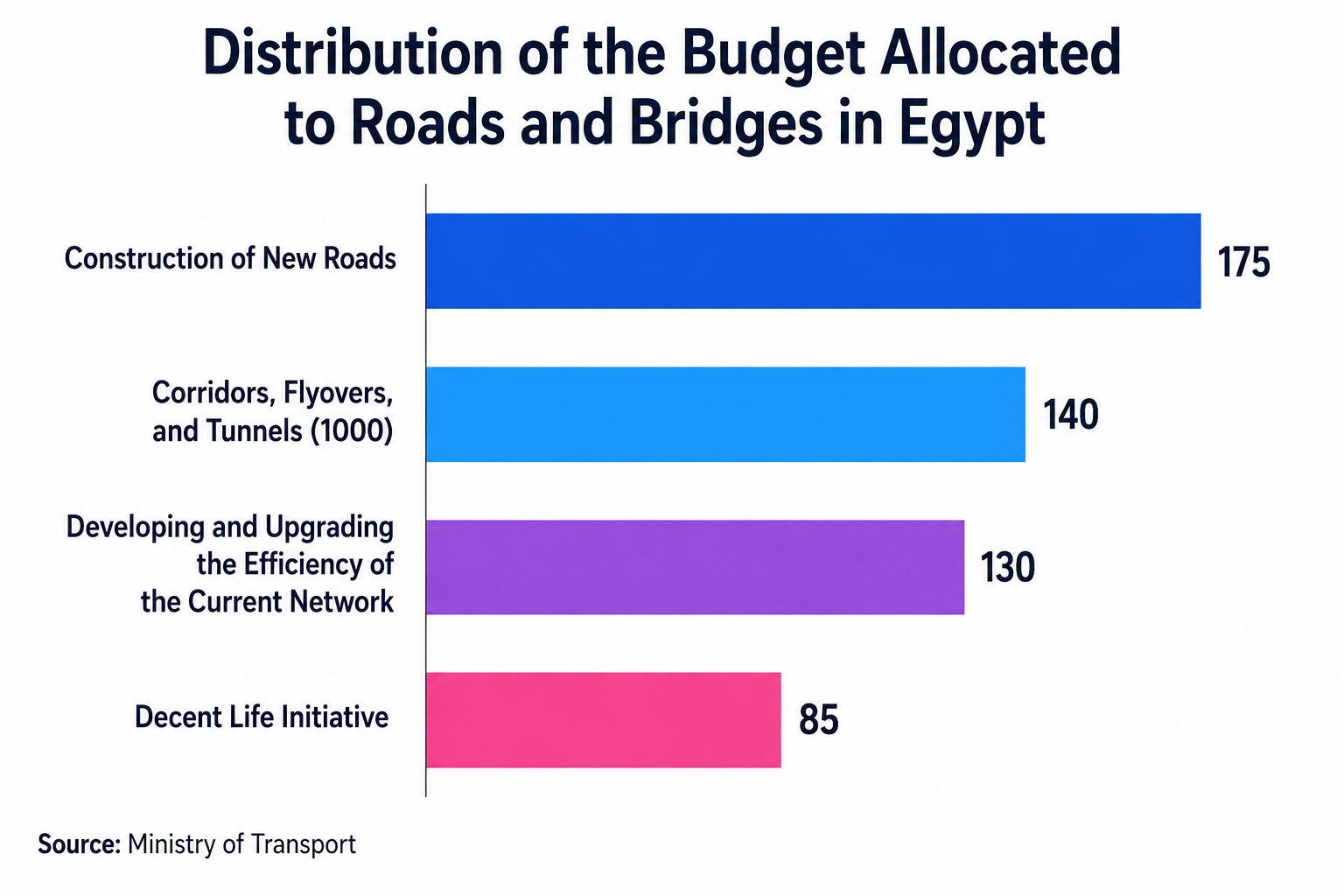
The data also point to the laying of 7,000 km of new roads at a cost of 175 billion Egyptian pounds ($3.4 billion), and the completion of approximately 945 bridges and tunnels at a cost of 132 billion Egyptian pounds ($2.5 billion) out of 1,000 originally planned at a projected cost of 140 billion Egyptian pounds ($2.7 billion). An additional 10,000 km of the existing main inter-governorate road network was developed and duplicated at a cost of 130 billion Egyptian pounds ($2.5 billion). The “Decent Life” initiative also targets the development and upgrading of around 2,900 km of roads across 52 administrative centers in 20 governorates, with 500 km completed so far, including 286 km in Upper Egypt and 214 km in the Delta.
Despite the development, roads, including newly built ones, are experiencing recurring ground subsidence. In June 2024, a truck carrying around 20 tons overturned in the lower Al-Miraj area, south Cairo, due to a sudden sinkhole. Last February, the Al-Wahat road above the Middle Ring Road experienced two successive sinkholes in the same day.
A few days before the Al-Wahat incident, a sinkhole in the Fifth Settlement reached a depth of approximately 15 meters and swallowed part of a petrol station. There was also a separate incident near the Cairo International Book Fair resulting from a water pipe burst, causing water accumulation and traffic disruption. All these incidents raise serious questions about construction quality and maintenance.
Political and economic researcher Elhamy El-Mirghany tells Zawia3 that older roads continue to represent a persistent public safety hazard, with the recurring accidents on them reflecting a clear deficit in maintenance work, alongside an overlap of responsibilities between the Roads Authority, the contracting companies, and local administrations.
El-Mirghany stresses the need for a comprehensive strategic plan for maintaining existing roads, including defined timelines, clear budgets, and performance indicators to guarantee public spending efficiency, rather than concentrating on expanding new project construction while neglecting the existing asset base.
He adds that the scale of infrastructure spending, whether it is $550 billion or more or less, is not in itself an indicator of success; the real measure is what tangible results have been achieved on the ground. He asks whether traffic congestion has actually eased, whether commute times and fuel consumption have fallen, and whether road accident rates have declined.
He notes that existing indicators offer no clear positive answer: traffic crises persist in many areas, road accidents continue, and challenges are emerging with some of the new roads, all of which raises serious questions about the efficiency of public spending and whether its priorities align with citizens’ actual needs.
He adds that the failure of accident and fatality rates to fall as expected calls for a comprehensive review of contracting, implementation, and maintenance policies, to ensure a genuine return on these investments and avoid burdening the economy with debt without a tangible impact on citizens’ lives.
Poverty Kills Families: Egypt’s Wave of Mass Suicides Is Rising
Financing Partnerships and Debt
Over recent years, Egypt has entered into financing partnerships with multiple international institutions to secure loans supporting infrastructure and sustainability projects, most notably with the World Bank. In 2016, Egypt received a $1 billion loan to support Egypt’s inclusive growth program, which included improving energy efficiency and strengthening the broader economic climate as part of structural reforms.
In October 2022, the World Bank approved financing of $400 million to support sustainable transport and infrastructure projects, aimed at improving the performance of the transport and logistics sector and supporting the transition to low-carbon transport along the Alexandria, 6th of October, and Greater Cairo rail corridor, with estimated emissions reductions of more than 965,000 tons of greenhouse gases over 30 years.
In June 2024, the World Bank approved $700 million in financing to help Egypt address short-term economic challenges and promote green growth, including expanding renewable energy and improving the efficiency of the electricity, water, and sanitation sectors under the Country Partnership Framework for 2023-2027.
More recently, parliament approved the Planning and Budget Committee’s report on the presidential decision approving a loan agreement for the Resilience, Opportunities and Welfare Enhancement Program between the Egyptian government and the Asian Infrastructure Investment Bank, with a total value of $300 million.
In the same vein, the government, through the New Urban Communities Authority, intends to expand domestic borrowing, planning to secure financing estimated at around 40 billion Egyptian pounds ($769.2 million) to fund infrastructure and housing projects as part of ongoing urban expansion and development plans.
The total cost of financing the Light Rail Transit (LRT) project came as part of a package of international loans and domestic contributions that exceeded $1.6 billion between January 2019 and March 2026.
The Monorail project relies primarily on an international loan of €1.88 billion provided by a bank consortium led by JP Morgan and guaranteed by the UK Export Finance agency, which contributed approximately £1.7 billion on its own. In addition, the National Authority for Tunnels borrowed approximately 5 billion Egyptian pounds ($96.2 million) from Egyptian banks during 2025 to cover construction and civil works.
The government has also begun implementing the High-Speed Electric Train project connecting the New Administrative Capital to Ain Sokhna and onward to Alexandria and the Mediterranean coast. The value of loans allocated for this project amounts to approximately €2.9 billion, distributed between international financing of around €2.26 billion, a direct loan from the Islamic Development Bank worth €318 million, and ongoing negotiations with international financial institutions for financing the second and third lines of the national high-speed rail network.
For his part, MP Mohamed Farid holds that the capacity of transport projects to cover their own operating costs remains a decisive factor in determining their financing mechanisms. He explains that where the economic viability of a project is established and it can generate a return, transferring it to the private sector is the more efficient option, allowing that sector to take on the responsibility for borrowing, financing, and repayment while generating its own profits and paying taxes, rather than burdening taxpayers with those costs.
He tells Zawia3 that it is essential to broaden the use of alternative financing instruments, such as “revenue bonds,” which link financing directly to the revenue generated by the project itself. This model is applied in a number of countries, he says, where it serves to test the economic viability of projects in practice before imposing any financial burden on citizens.
Preparing for Climate Change
Last March, during the severe weather event that swept the country, Egypt recorded tragic electrocution incidents from street lighting poles. The incidents resulted in the deaths of two children in Faqous and Dirb Negm, the death of a woman in Tanta from an exposed cable on a lighting pole, and two injuries and the deaths of a number of animals in Al-Badrashein for the same reasons.
Despite the projects the Egyptian government announced to improve infrastructure quality as one of the cornerstones of its economic and social reform program, the crisis of lighting poles and exposed, improperly insulated cables falls within the broader fragility of Egypt’s electrical infrastructure and the recurring risks it poses to citizens.
Over the past years, deaths and injuries from electrocution have recurred: 26 deaths and 64 injuries were recorded in 2016; approximately 20 deaths in 2020; and three deaths and dozens of injuries in 2022.
In March 2023, Dr. Ayman Mohasseb, a member of parliament, filed an urgent briefing request addressed to the Prime Minister and the ministers of electricity and local development, citing the deteriorating condition of street lighting poles across Egypt’s streets and describing them as “a serious threat” claiming the lives of innocent people, particularly children, due to the absence of safety measures and the spread of electrical short-circuits linked to the decay of networks.
MP Mohamed Farid, a member of parliament from the Reform and Development Party and a member of the Youth Parties and Politicians Coordinating Council, says that the large government expenditure cited by the Prime Minister at $550 billion was not limited to road development alone, but also covered power stations, water and sanitation networks, ports, and public transport. He notes that this spending has contributed to improvements across several sectors, though it is not without structural problems and challenges.
On the road sector specifically, the MP tells Zawia3 that there has been tangible improvement in the new networks, while the older roads still need maintenance but suffer from inadequate budgets. He attributes this to fiscal centralization, whereby citizens in Upper Egypt and the Delta are effectively funding transport projects in Cairo, and stresses that fiscal decentralization could resolve part of this problem.
Ibrahim Ezzedine, a senior researcher at the Diwan Al-Omran urban studies research center, explains in the same context that the state has been implementing infrastructure projects for years, particularly the “Decent Life” initiative launched in 2019, which targets infrastructure development in the governorates, in parallel with major projects to lay new roads and widen existing ones.
Despite these efforts, Ezzedine asks Zawia3 to what extent these projects have translated into tangible improvements in citizens’ daily lives. From an economic standpoint, he notes that the state borrowed approximately $20 billion specifically for the Ministry of Transport, contributing to an increase in external public debt, with the Ministry of Transport alone accounting for roughly 13% of that debt.
From a social standpoint, Ezzedine stresses that infrastructure development has not necessarily improved citizens’ mobility, particularly during the recent weather events that forced people to stay home, raising questions about the value of the projects if they are not equipped to handle weather fluctuations. He also points out that road accidents remain a persistent challenge: statistics show that the injury count rose between 2014 and 2024 by 22,717 cases, underscoring the need to reconsider the maintenance of older roads and strengthen road safety.
A report titled “Country Climate and Development Report,” released by the World Bank Group in partnership with the Egyptian government on the sidelines of COP27, which Egypt hosted in 2022, shed light on the vulnerability of cities and coastal areas to climate risks. With Egypt’s urban population projected to increase by 41.4 million people over the next three decades, the pressure on water networks, sanitation, and basic services is set to multiply. The report warns of sharp social and economic consequences: climate change could push an additional 9 million people into poverty by 2030, with potential losses ranging between 2% and 6% of GDP by 2060.
The report also sets out clear pathways for addressing these challenges, anchored in improving resource management efficiency and building infrastructure resilience. It confirms that investing in climate information systems and early warning mechanisms yields a high economic return of 1:9, suggesting that directing spending toward infrastructure capable of withstanding climate shocks is not only an environmental necessity but the more economically efficient choice in the face of future losses.
Ultimately, Egypt’s infrastructure crisis does not appear to be a funding crisis so much as a crisis of priorities and management. While billions of dollars flow toward major projects, basic services from stormwater drainage to road maintenance remain the weakest link in the government’s attention to deep infrastructure.