
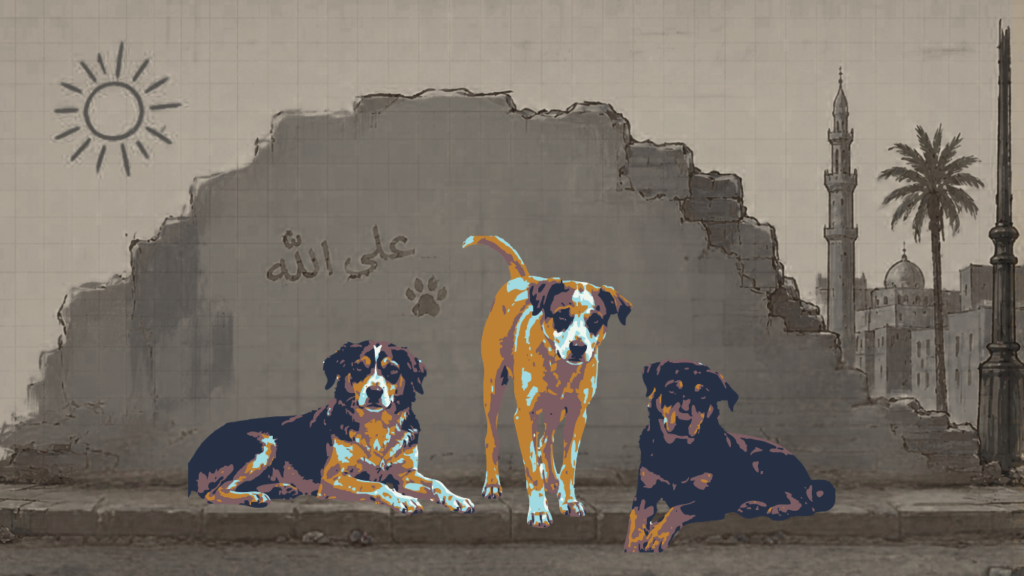

Incidents of citizens being bitten by stray dogs in Egypt have become a recurring phenomenon of growing concern, with hundreds of thousands of injuries recorded annually and reports continuing to pour in from across the governorates. Official data from the Ministry of Health indicates that approximately 1.4 million bite cases were recorded during 2025.
Over recent months, several governorates have witnessed scattered incidents resulting in injuries to children, women, and the elderly, reigniting concerns about the spread of stray dogs near residential areas, schools, and rural zones. In the most recent such incident, Sohag Governorate saw six people injured, including children and an elderly woman, after being attacked by a stray dog on 7 June.
In this context, MP Dr. Nesreen Omar warned of the rising cost of treating bite victims during a parliamentary session convened to discuss the crisis, noting that approximately 200 injuries are recorded daily. She explained that the treatment protocol requires a patient to receive five doses of anti-rabies serum, at a cost of approximately 600 Egyptian pounds ($11.54) per case.
Meanwhile, growing public anxiety over the presence of dogs in the streets has driven some citizens to kill them. At the beginning of this month, 15 stray dogs were found dead in various locations within one of Ismailia Governorate’s tourist villages, amid suspicion they had been poisoned.
The two incidents reflect the chronic debate surrounding stray dogs in Egypt, one that resurfaces with every new attack. While some argue that the recurrence of attacks on citizens demands decisive measures to reduce dog numbers, others contend that the crisis is the product of years of absent, organized stray dog management, encompassing sterilization, vaccination, and sheltering, compounded by indiscriminate feeding practices and mistreatment that may contribute to aggressive behavior in some animals.
Rising Pet Abandonment in Egypt: The Impact of Economic Hardship
What Do the Numbers Say?
The figures reveal a significant gap between official and unofficial estimates of the scale of the crisis. In December 2025, Agriculture Minister Alaa Farouk stated in a television interview that, according to a joint study between the ministry and the Food and Agriculture Organization covering urban and rural samples, the number of stray dogs ranged between 7 and 8 million, with a projected increase of 25% two years after the study, putting the maximum figure at approximately 10 to 11 million stray dogs. In separate statements in January 2026, the Agriculture Minister said the number of stray dogs in Egypt ranges between 12 and 14 million.
By contrast, some opponents of stray dogs’ presence in streets cite estimates suggesting the numbers have swelled far beyond official figures at the national level.
In this context, Dr. Shehab Abdel Hamid, chairman of the Animal Welfare Society, previously stated that a study submitted to the Ministry of Agriculture in 2014 estimated the dog population at approximately 15 million, and that these numbers have since grown significantly to exceed 40 million at present. However, the study in question has not been made public, and no updated official data is available to verify this estimate.
For his part, Dr. Mohamed Youssef, a veterinary medicine expert and former member of the Veterinary Syndicate, tells Zawia3 that all currently announced statistics are imprecise mathematical approximations, particularly since counting dogs is not done by direct enumeration but through observing street numbers while accounting for reproduction rates. Bearing in mind that a female dog gives birth twice a year to between 8 and 13 puppies, the national total would be far higher than announced figures, and he estimates the number of stray dogs in Egypt at no fewer than 30 million.
Among the statistics that sparked controversy upon announcement were those of Dr. Hossam Abdel Ghaffar, official spokesperson of the Ministry of Health and Population, who declared that 2025 saw 1.4 million bite cases, the majority from dogs, with treatment costs reaching 1.7 billion Egyptian pounds ($32.7 million). He noted that previous years recorded approximately 1.2 million bite cases annually, a figure he reaffirmed to Zawia3, adding that the Ministry of Health’s role in this crisis is focused on combating rabies and raising public awareness about vaccination in cases of bites or scratches from animals.
Dr. Mohamed Youssef considers that the lower figures reflect increased public awareness of the importance of receiving anti-rabies serum after a dog bite, but that they do not capture the full total of bite cases, as many citizens still do not pay attention when bitten by a cat or a dog.
Mona Khalil, president of the Federation of Animal Welfare Societies, criticized in television statements the circulation of information about stray dogs from multiple sources without a clear official body taking responsibility for responding to misinformation and rumors on the subject, in addition to the absence of clear official figures, statistics, and plans for handling this file. She noted that regardless of what information or figures civil society organizations provide, they will never be as accurate as what the state is capable of producing.
The stray dogs file is shared between the General Authority for Veterinary Services under the Ministry of Agriculture, the Ministries of Environment and Local Development, and interested civil society organizations.
9 People Shot Dead in Minutes in Egypt’s Abnub. Residents Say Security Had Every Warning
Egypt Classified High-Risk for Rabies
The US Centers for Disease Control and Prevention recently issued a report identifying 111 countries, including Egypt, as high-risk for the transmission of canine rabies to dogs in the United States. The CDC called for dogs that had been in any of these countries within the past six months to be vaccinated against rabies before entering the United States, alongside additional requirements including age, microchip identification, rabies antibody levels, health status, and documentation requirements.
It is worth noting that Egypt is consistently listed in CDC registers as a high-risk country for the spread of endemic canine rabies.
In 2019, the United States suspended the importation of dogs from Egypt after three rabies-infected cases arrived from the country over a four-year period, before the introduction of strict regulatory rules for importing dogs from Egypt.
Regarding travel advisories to Egypt, the CDC noted the presence of rabies-infected dogs in Egypt, as well as certain wildlife species, and flagged that in the event of a bite while in Egypt, vaccines may only be available at major medical centers in suburbs and cities.
The CDC directed travelers to Egypt to consult a healthcare provider to determine whether they should receive preventive rabies vaccination before travel, particularly if the traveler plans to engage in professional or recreational activities that increase the risk of exposure to potentially infected animals.
Mohamed Karem, a tourism expert, tells Zawia3 that the circulation of such a report about Egypt will not affect the tourism sector, particularly given that no crisis involving stray dogs and tourists has occurred to date. He also noted that dogs are largely absent from most tourist cities such as Sharm El-Sheikh, Hurghada, Luxor, Aswan, and other cities that receive the most visitors.
On the presence of stray dogs in the Pyramids area, Karem noted that dogs have on occasion actually served as a driver of publicity for Egyptian tourism, citing the dog that climbed to the top of the Great Pyramid of Khufu. He did acknowledge, however, that some locations face problems due to stray dog presence, and suggested that government efforts to vaccinate, sterilize, and shelter them could help avert a future crisis.
Rabies: The Most Dangerous Zoonotic Disease and a National Strategy to Combat It
Veterinary medicine expert Mohamed Youssef explains that dogs transmit many diseases to humans, including mange and tapeworm, but the most dangerous virus carried by dogs is the rabies virus, because it is fatal and cannot be detected in infected dogs until after a bite has occurred, as the symptoms leading to the dog’s death appear after it has already bitten someone. As for humans, a person can be saved if they receive anti-rabies serum immediately after a bite and before any symptoms appear, but once the first symptom of rabies manifests, the outcome is inevitably fatal.
In this regard, the Ministry of Agriculture launched the Egypt Rabies-Free 2030 strategy, with its first activities beginning last January through the vaccination of 4,517 free-roaming dogs and the sterilization of 445 dogs. It began in the Ain Shams area of Cairo Governorate, identified as one of the hotspots with the highest volume of citizen demands for intervention against free-roaming dogs.
The Agriculture Minister stated that the Ministry’s plan to tackle the stray dog crisis will take no less than 5 years, pointing to several measures being taken including the vaccination and sterilization of dogs through the ministry or governorates, and the establishment of shelters, noting that 4 shelters are being prepared across Cairo and Giza governorates. He also announced the appointment of 4,500 veterinarians through the Central Agency for Organization and Administration to monitor stray dogs and implement the plan’s objectives.
The minister affirmed that the state will never pursue proposals to kill or poison stray dogs, but may approve their export for the purpose of adoption, something that some civil society organizations are already doing on a very limited scale. He noted that free-roaming dogs are living creatures with advocates, and that ecological balance must be maintained.
The minister did not disclose the expected cost of resolving the stray dog crisis, but confirmed that the cost is shared between the state, civil society, and some international institutions, in coordination with governorate governors.
In a statement, the Sectoral Federation of Animal Welfare Societies, which cooperates with the government on the stray dog file, affirmed its complete rejection of addressing phenomena related to stray animals through incitement and hatred, calling instead for a science-based, awareness-led approach through sterilization, vaccination, and sustainable, humane solutions.
According to an article published on the website of the International Companion Animal Management Coalition, Western Europe and North America practiced culling of stray dogs and cats for decades without achieving any progress, and only made headway by adopting a strategy built on sterilization, encouraging responsible ownership behaviors, valuing each animal individually, committing to lifetime ownership, imposing controls on commercial breeding and sales, and identifying and registering animals.
Article 45 of the Egyptian Constitution stipulates, in a manner regulated by law, the obligation to treat animals humanely. Article 357 of the Penal Code of 2003 provides for imprisonment of up to six months or a fine not exceeding 200 Egyptian pounds ($3.85) for anyone who deliberately and without necessity kills or poisons a domestic animal or inflicts significant harm upon it.
However, Mona Khalil, president of the Federation of Animal Welfare Societies, said there is a genuine absence of legislation specifically protecting animal rights in Egypt, despite the constitutional provision, which has not been activated through a proper law. This leaves wide room for individual treatment of animals that leads to their torture or killing.
Controversy Over Dog Exports
The Egyptian House of Representatives entered the debate when MP Sahar Etman submitted a proposal to resolve the crisis by exporting dogs after vaccinating them. The proposal sparked widespread controversy due to the possibility of dogs being exported to countries that consume them as food, such as some East Asian nations, which would put their lives at risk.
The MP subsequently issued a statement through her official page affirming that her proposal has nothing to do with torturing dogs or exporting them to countries known for mistreating them or using them as food. Rather, her intention was to study the experiences of countries with advanced animal welfare systems, explore the possibility of cooperating with them in handling the growing numbers of stray dogs in ways that ensure their care and safety, or to make use of them in scientific research in accordance with humane and legal standards, while simultaneously protecting the safety and security of citizens.
In response, Professor of Veterinary Medicine at Benha University, Faheem Shaltout, tells Zawia3 that free-roaming dogs are a resource and an asset that can be put to use rather than viewed as a burden on society. He points out that the state permits the importation of dogs from abroad in hard currency, while having large numbers of them domestically, asking why they are not being cared for, vaccinated, trained, and utilized across various fields such as security, guard work, scientific research, and adoption.
He explains to Zawia3 that, contrary to claims that dogs are of no importance to ecological balance, they are part of the biodiversity of the environment and have been adapted to the Egyptian environment for thousands of years.
He notes that dogs carry the “environmental fingerprint” of their community, and that exporting them abroad could give some parties the ability to obtain information about Egyptian society through the dogs’ behavior, the bacteria they carry, and the types of diseases they are infected with.
He continues that importing dogs from abroad, along with their food and vaccines, is extremely costly for the state and requires foreign currency that is badly needed, whereas Egypt’s native street dogs are distinguished by sharp intelligence that enables them to perform various tasks if properly cared for and trained. Unlike imported breeds, these dogs do not require expensive food types and are disease-resistant by virtue of their adaptation to the local environment.
On the infection of some dogs with serious diseases such as rabies, he says that contaminated food consumed randomly lies behind their infection with various diseases, but that if cared for properly, they will not be a source of disease but will on the contrary be disease-resistant due to the immunity they have acquired from their environment.
Shaltout affirms that the solution begins with halting the importation of dogs from abroad, allocating funds to care for domestic free-roaming dogs, selecting the most suitable among them, and qualifying them for various tasks. In such a scenario, they could be exported abroad with guarantees that they will be in a safe environment, not consumed as food or subjected to torture. He stressed that stray dogs in Egypt are an opportunity to be seized, not a burden to be stepped around.
Egypt permits the importation of dogs from abroad for various purposes, pursuant to Law No. 29 of 2023 regulating the possession of dangerous animals and dogs, and the requirements of the General Authority for Veterinary Services and Veterinary Quarantine governing the entry of live animals into Egypt. Although official data on the number of dogs imported annually is unavailable, according to the World Bank’s WITS database, Egypt’s imports of dog and cat food sold at retail reached $9.17 million for 2024.
Relocation: The Ideal Solution
Dr. Mohamed Youssef considers that Egypt’s native free-roaming dog breeds are threatened with extinction, as they are wild dogs that originally inhabited the desert and exist only in North Africa. It was humans who encroached on their territory through urban expansion, not the dogs that came to humans. Eliminating them would therefore be an environmental crime, and the more appropriate course is to relocate them to their original habitat in the desert.
He explains to Zawia3 that as urban expansion pushed into the desert, the animals living there began entering the spaces inhabited by humans. Of all those species, including foxes, snakes, and others, the dog was the one that adapted to life alongside humans, found food, and formed a relationship with people, which facilitated its coexistence and reproduction until numbers reached the levels we struggle with today.
On the aggressiveness of some dogs, Youssef says that dog behavior changes according to the treatment they receive. For example, if a motorcycle hits a dog and breaks its leg, the other dogs in the street will treat every motorcycle as an enemy and attack it. Similarly, children who tie ropes around dogs’ necks will be treated by other dogs as a threat, prompting attacks.
He adds that the solution lies in returning them to their original desert habitat by relocating them to a point 5 kilometers beyond the furthest expected urban expansion over the next 5 years, while providing adequate living conditions in the desert, such as water troughs, food from slaughterhouse waste, and pipes for shelter only. Under these conditions, if the dog finds food and water, it will not return to the urban space, and over time it will adapt to its new environment and revert to the wild characteristics it once possessed.
He continues that if reproductive control is desired, males and females can be separated, noting that this is not a cull of males as some suggest, because they will be left in the desert where other dogs also exist, and because males and females will eventually find each other again. The separation is intended to limit reproduction only partially or temporarily.
He notes that under these conditions, the dogs would form a high-quality ecological buffer zone of great benefit, preventing any dangerous species from entering the urban space. He explains that a dog returning to its wild nature will search for food and water, and upon encountering a fox, a snake, or even a locust, will attack it, thereby restoring ecological balance. Inside the urban space, a dog will not bother attacking a snake or fox because it finds food more easily in waste.
The veterinary expert notes that this solution requires time and expertise, but is ideal for reducing the spread of stray dogs in the streets. In principle, no stray dog should exist within the urban space, while at the same time none should be disposed of through inhumane methods that disrupt ecological balance.
After years of debate, the stray dog file in Egypt remains suspended between conflicting population estimates, mounting public health concerns, and rights-based demands to reject violent solutions, while responsibility is distributed among multiple government agencies without a reliable database or comprehensive legislation regulating the treatment of stray animals. While the government is banking on the “Egypt Rabies-Free 2030” strategy and programs of sterilization, vaccination, and sheltering, the success of these efforts hinges on the capacity to move from limited initiatives to a comprehensive national policy that balances the protection of citizens with the preservation of ecological balance, and puts an end to a crisis that renews itself with every new bite.