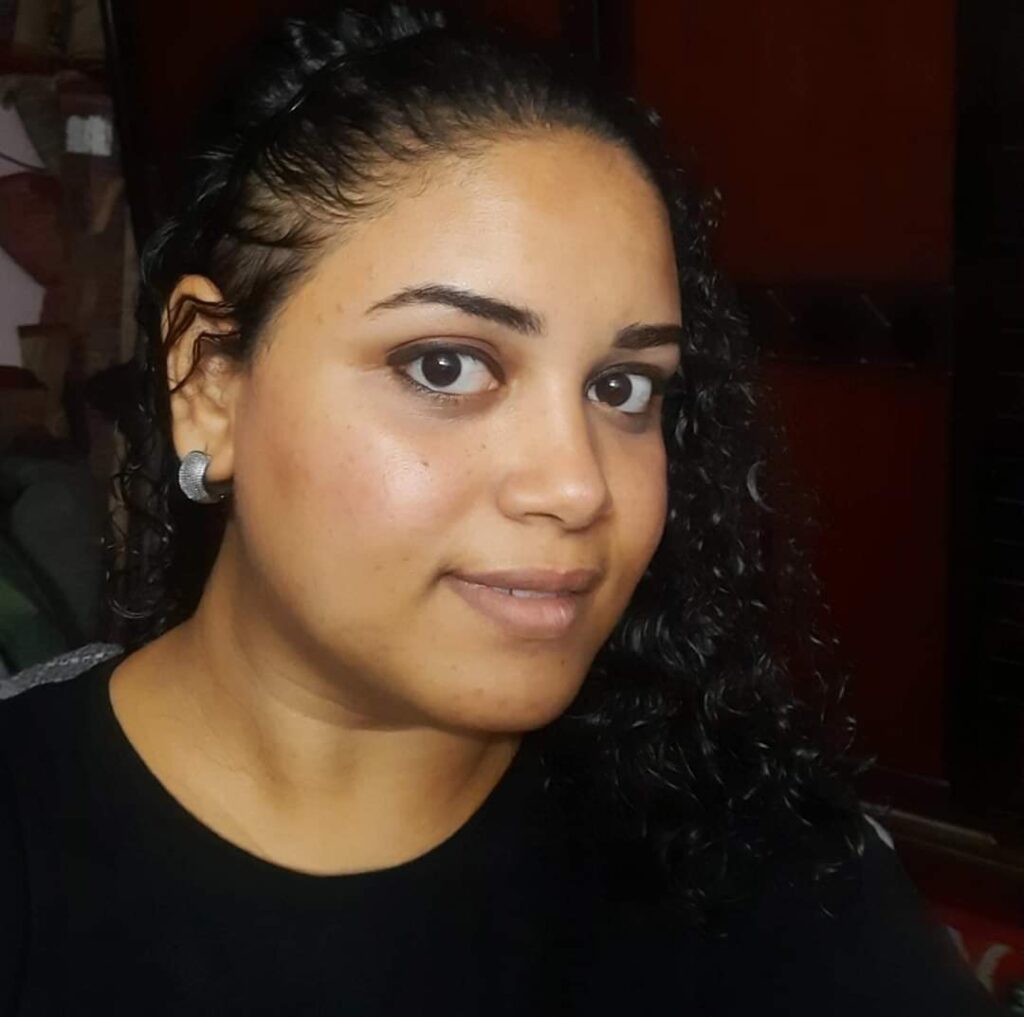

Maha Abdel Nasser is a member of the Egyptian House of Representatives for the Egyptian Social Democratic Party, a liberal political party founded after the January 2011 revolution. Its first internal elections resulted in Mohamed Abou El-Ghar winning the party chairmanship, with Ziad Bahaa-Eldin as his deputy. In April 2016, the second elections were held, resulting in Farid Zahran winning the party chairmanship, with Bassem Kamel (formerly a member of the Revolution Youth Coalition) as his deputy. In 2022, the elections produced the same results, with Zahran continuing as party chairman.
Abdel Nasser focuses on raising issues of social justice, women’s rights, education, health and political reform under the dome of Parliament. She has submitted a number of legislative proposals and initiatives aimed at improving economic and social conditions in Egypt, and has adopted positions supporting women’s rights and gender equality, defending women’s empowerment in various fields.
Zawia3 interviewed MP Maha Abdel Nasser, and here is the text of the interview…
– There is an accusation against Farid Zahran and some of the party’s MPs of causing the arrest of some of its members. What is your comment?
I have not seen any explicit accusation in this regard, only insinuations from some people.
The letter signed by party chairman Farid Zahran was unfortunate in some of its wording, and I believe the party chairman did not review the letter well, especially since lawyers usually draft such letters to disclaim responsibility.
The main purpose of the letter was to disclaim our responsibility, as holding any public conference requires obtaining a security permit. We did not know what would happen, especially since those arrested “are not members of the party”.
They stated in the investigations that they had received money to take part in the conference. This is a very serious matter, as we were not aware of it and do not bear responsibility for it. We are always keen to obtain a security permit before holding any party conference, although we are not always able to obtain one.
I never imagined that a conference would be held with the participation of Hanna Gerges, a legal expert and one of those who called for the conference, without obtaining a security permit, and I do not know exactly what happened. Did someone go to the hall owner and inform him that the conference was not authorised? No one knows what happened.
– Party chairman Farid Zahran was criticised for agreeing to run in the presidential election amid the political climate Egypt has suffered for years. What is your comment?
From my personal point of view, politics has no absolute right or absolute wrong.
Since the revolution, we have always reviewed our positions. Sometimes we see that our positions were right, and at other times we see them as wrong, and that a better position could have been taken.
The idea lies in what we want and why. Certainly, no one expected Farid Zahran to win the presidential election, and this is understandable. But as a party, when what we saw as a golden opportunity arose to appear, be present on the scene and gain public and media space that had not been available to us since 2013, we took it.
At first, I was opposed to the principle of running for president, but after many discussions within the party, I felt that the same criticisms had been repeated at the time of the 2020 parliamentary elections, which I had also initially opposed before reviewing my position and running in the elections on that list.
I want citizens to judge my parliamentary participation and my positions. Some revolutionaries are now telling me that I should run for Parliament again if the opportunity arises, but my answer is: “I cannot continue.”
So I see this as an extension of the same line. We are part of the system, regardless of our objection to its policies, but in the end any opposition party is part of the state. Either we are within the permitted frameworks or we stay at home, but choosing to participate and engage is the hardest choice.
This is difficult and psychologically exhausting, but during the Assiut conference, when I stood and spoke into the microphone and saw citizens standing on the balconies of their homes to follow, I felt that the decision to take part in Parliament had been the right one.
And whenever I watched Farid Zahran in any television interview, I became sure the experience was worth it. We have no opportunities or outlets to introduce ourselves to citizens except through these steps.
– Tell us about the crisis that recently erupted in the Egyptian Social Democratic Party over the delay in holding internal elections.
The Egyptian Social Democratic Party is almost the only party in Egypt that has held full elections since its founding, from the grassroots up to the higher committee and the party chairman. According to the party’s electoral system, a general conference is held to elect the higher committee and the chairman, and through them the rest of the organisational structure is elected.
Crises and divisions usually erupt with every internal election, and this is the result of the absence of democracy, which we have not practised and are not used to. We are a society that was deprived of the right to organise for more than 70 years, so when we begin to organise, it takes effort.
The momentum of the founding gave us a big push, then the public sphere was closed, which caused the party to erode, until we started again in 2019. After understandings with the authorities and our presence alongside other opposition parties, the party began to grow again and received new, sometimes different, memberships.
– The new members were the most prominent point of disagreement in the party… What exactly is their status?
We set rules in the party requiring new members to be educated and qualified to join the party, and these procedures are difficult and complicated. Unfortunately, the bylaws still approved by the Political Parties Affairs Committee stipulate elections every two years, which is exhausting. But they were the first bylaws, and I supervised all the party’s bylaws committees since its founding; we drew up the bylaws as an experiment, to be changed if necessary.
The bylaws were indeed changed, but they were not approved by the Political Parties Affairs Committee because of the general situation, so we had to work with the same old bylaws. The elections were supposed to be held this year, and we had already begun the procedures after the higher committee’s decision. At the same time, new memberships had begun entering the party, and these new memberships had to be converted from affiliate to active, which takes time. So we set a timetable, and the elections were supposed to be held this September.
Since the closing of memberships, the first procedure in preparing for the elections, a new crisis emerged, as there were many new memberships that could tip the balance in favour of one side at the expense of the other, which made the other side feel it might lose, so its group decided to stage a sit-in.
We believe the right to a sit-in is guaranteed, regardless of the violations that occurred, whether talking to the media or the misleading statements that were issued. But as the party’s general leadership, we preferred to remain silent so the crisis would not escalate.
– Initiatives were put forward to calm the situation within the party. What are the details of these initiatives?
Initiatives were put forward, and I was part of the centrist bloc that sought to achieve consensus, even after I was personally insulted. Some reject the new memberships and consider them paper memberships, while others want to expel those who committed violations and defamed the party.
So, together with a group of party leaders, I submitted a party initiative called (Save the Party), which aims to postpone the internal elections until January 2026, to calm the situation and settle the results of the parliamentary elections, because this crisis is fundamentally about the upcoming parliamentary elections.
During the postponement period, a “Party Governance Committee” headed by Farid Zahran will be formed, with the aim of vetting the new memberships, approving the new bylaws and completing all necessary procedures before holding the elections in January 2026.
– Will the other party to the crisis be a member of the governance committee?
Certainly. MP Mahmoud Samy, head of the parliamentary body of the Egyptian Social Democratic Party and assistant rapporteur of the Public Investment Priorities Committee at the national dialogue, who is the other party to the crisis, will be a member of the committee (last January, he announced his intention to run for the party chairmanship at the time).
This is despite my strong objection to the path he has taken and my repeated attempts to resolve the crisis with him without any response from him.
– And why have the elections not been held so far?
There was already a timetable for holding the elections, which was sent to the higher committee and approved. The first step of this timetable was closing memberships on 31 May, which was the day for reviewing new memberships.
Incidentally, Mahmoud Samy submitted about 1,500 new memberships; not all the memberships were submitted by the party chairman. On that day, some committee members discovered an increase in the number of new memberships registered in their secretariats, which threatened their positions, so they decided to stage a sit-in.
I was keen to hold the internal elections as soon as possible, by September at the latest, but the continuation of the sit-in for more than two months disrupted the party’s work. I was personally prevented from entering the party headquarters and holding meetings; therefore, I see that the crisis is neither organisational nor political, but merely internal disputes.
– Secretary-general Bassem Kamel is also accused of posting a picture on a social media platform showing him celebrating the breaking up of the conference and the arrest of some people. What is your comment?
I am not defending Bassem Kamel, but I believe he is not involved in this matter. He was a member of the Revolution Youth Coalition, and I cannot imagine that any party member would inform on his colleagues.
We found ourselves forced to defend people because of their actions, even though the party’s decision was clear that they should not be in the street at all.
– Your party was allowed to campaign and hold public rallies, while other presidential candidates were prevented from collecting endorsements. What is your comment?
It is clear that there was no security acceptance of the idea of allowing citizens to make endorsements, because when we too tried to collect endorsements outside the framework of recommendations from members of Parliament, we failed. We contacted security leaders, who assured us there were no security directives preventing the issuing of endorsements.
Nevertheless, employees at the Real Estate Registry offices hesitated to issue any endorsement for any candidate other than President Abdel Fattah El-Sisi. They were confused for fear of the consequences, although there were indeed places where citizens were able to issue endorsements.
I did not say the situation was good, and we know well that the situation is unsatisfactory, but there was an opportunity to participate through parliamentary recommendations. I had hoped that Gameela Ismail, head of the Constitution Party, would run for president with parliamentary recommendations, and I do not know why that did not happen, even though it was possible. I believe she was forced not to continue after the Constitution Party’s grassroots rejected her candidacy.
As for candidate Ahmed Tantawy, former head of the Karama Party, with all due respect, the endorsements were very difficult and the time was extremely short. Even after the popular endorsements were published, he was unable to collect the required number. This is not to belittle his efforts, but the time was indeed extremely short.
– But there are complaints from citizens that they were obstructed in issuing endorsements?
With all due respect, it was very difficult to collect this large number of endorsements from all governorates in the short time allotted. I admit there were problems in the last presidential election, which was not as democratic as we would like. But achieving change takes time and effort.
– Do you think change will come through the ballot box?
I see no alternative solution other than elections; even if the required change does not happen now, it may happen after 30 years as a result of the accumulation of events.
Revolutionary change comes as a result of historical accumulations, as we saw in the 2011 revolution, which was the fruit of years of political mobilisation. But it is important to have strong political organisations capable of taking part in dialogue and negotiations during the transition period.
In 2011, the Muslim Brotherhood was the main political force, which led us into this tunnel we are in now. That is why any initiatives to build strong civil entities must be supported.
For example, despite the shortcomings of the Socialist Union, it succeeded in producing political cadres capable of bearing responsibility.
– Will the economic situation allow society to stabilise and look to the presidential election as a way out of the crisis?
If the current policies continue as they are, the economic situation will certainly get much worse, and citizens may not even live for another 30 years.
I hope decision-makers will take rational and wise decisions. The new government discourse focuses more on the importance of industry and human resource development. I hope we focus on economic development to improve citizens’ standard of living.
The private sector must be encouraged and supported, with the state gradually withdrawing its hand from the economy. I believe that focusing on industry, agriculture and exports will help improve the economy, but I am not sure this will be achieved.
– It seems the party will continue on the same path in the next parliamentary elections?
The lists included all parties, and although the Nation’s Future Party was the majority, many parties were present. It is a coalition grouping for elections, and it is difficult for us to run on the closed list with opposition parties that are unlikely to achieve any gains.
I am very clear, and all opposition parties understand this. The idea of forming a list and then claiming that fraud was committed against them because they failed to make gains, or withdrawing because they could not complete the lists, is illogical.
Opposition parties are still weak, and the fault lies in the general climate and the closure that has continued for years. Had our party continued on the same approach since the 2012 elections, we would be somewhere else now.
In fact, what I hope for is the adoption of a proportional list system for a specific percentage of parliamentary seats, so that I can run on the basis of the proportional list rather than the closed list. But if the proportional list is not adopted and the law remains as it is, no one will have a chance. The choice then will be: do I want to be in Parliament and see value in being there, or do I prefer to stay at home?
– What have the opposition-affiliated faces in the current Parliament achieved?
At least we were able to create movement. We passed the law legalising hospital management contracts the government had previously concluded. For example, MP Irene Saeed succeeded in excluding primary care units from the law, which is an important achievement. When the law is implemented, the government will be keen to choose qualified operators, especially after the criticism of some previous projects. Without these opposition voices, public opinion would not have paid attention to these issues; the absence of opposition voices means the absence of the pressure needed to bring about change.
– But this Parliament has allowed many laws to pass that increase the burdens on citizens?
It will remain so, and the situation will only change by strengthening the opposition and increasing its pressure; there is no alternative solution.
This Parliament is the worst so far, and there may be a worse one in the future. If we decide to boycott Parliament and preserve our revolutionary purity, we will confine our activity to small gatherings within our parties and will only be able to reach a limited number of people.
Instead, we can engage in dialogue with the authorities, even if they have different views or security considerations, because everyone believes they are working for the good of the nation.
– What is your comment on the return of the electricity load-shedding plan after the rise in bill prices?
An utter failure. The return of the load-shedding plan shortly after it was halted is evidence of a clear failure in managing the crisis, and there is no convincing explanation for this decision.
Given the current economic crisis, priorities must be re-evaluated and unnecessary projects, such as building bridges, must be halted in favour of meeting citizens’ basic needs. The principle of priorities must be applied, even if we have to reduce the scope of projects; what matters most is meeting citizens’ basic needs amid the current economic crisis.
– What is your comment on the Criminal Procedure Law and the Legislative Committee’s attack on critics?
The law has not yet been presented at the plenary session and is still under discussion in the Legislative Committee.
I was in discussion with a fellow MP about the draft law after receiving many objections. On the other hand, there are good articles in the law, and amending the old law was necessary; the amendment had been postponed for more than 20 years.
I am not a legal specialist, but I will seek to amend some articles that matter to citizens. It is impossible to find a law that satisfies all parties, but there are important articles that I see as mattering to the ordinary citizen, such as setting the duration of pretrial detention in the new bill. However, there are some points that need amendment, such as searches without a prosecution warrant and the expansion of judicial enforcement powers.
I am still discussing with everyone, and we hope to find solutions to amend these articles before the law is referred to the plenary session and passed.
– Does the pretrial detention crisis depend on amending the law? Will the recycling of defendants end?
Nothing is guaranteed; these violations can be practised even without an explicit legal text allowing them. Setting the duration of pretrial detention and including provisions on compensation in the law, even if they are not fully implemented, is considered a positive step towards protecting defendants’ rights. These were the recommendations of the national dialogue and the amendments I submitted. There are some problems related to alternatives to detention, which I will address again, because resorting to pretrial detention must not be taken lightly.
– Where do the unified law on violence against women and the freedom of information law stand?
The draft law on combating violence against women is in the drawers and has not been placed on Parliament’s agenda, and I believe it is not a priority now. It is not within my powers to set Parliament’s priorities.
As for the freedom of information law, it has not even entered Parliament, despite being talked about for many years. I believe the current session will not see discussion of controversial laws or new laws that have not been presented before, and since the current session is nearing its end, I do not think new draft laws will be submitted. I hope the Criminal Procedure Law and the medical liability law will be completed; the latter is an important law, and I hope it comes out in a form that satisfies doctors so that we can stop the emigration of doctors.
– What about the law on the Anti-Discrimination Commission stipulated by the Egyptian Constitution?
No session has been held to discuss the draft law, and I will try my best to have this law, which I submitted, discussed; it is necessary to ensure constitutional compliance, and its adoption has been greatly delayed.
– Why have most draft laws become the product of the government rather than Parliament?
As for submitting draft laws, it has historically been common in Egypt for the government to be the main source of these drafts. This may be because the government has a more organised mechanism for preparing draft laws.
Although MPs also submit draft laws, the government often takes the initiative, especially in light of the crises it faces. A draft law submitted by an MP is usually compared with a corresponding government draft, and comparisons are made to merge the positive aspects into a final draft law, and the government’s vision usually prevails. Nevertheless, an MP is the main driver behind issuing such a law.
– Why has the Egyptian Social Democratic Party not returned to the Civil Movement?
The freeze was due to the Civil Movement’s confusion at the time of the presidential election. We did not want a crisis between us and the Civil Movement, because they were talking about a boycott, and the party would not boycott.
So we froze our activity at that time. Now, the number of parties in the Civil Movement is decreasing, and the movement is taking a single direction.
The matter has become strange; when I attended some meetings of the Civil Movement, I did not find myself in that place.
I have a big problem with Ahmed Tantawy, and I see that he represents a reactionary, non-progressive mindset, especially regarding his views on women and female genital mutilation. I cannot in any way give him my vote, regardless of his opponent.
There were attempts by the Civil Movement to support Tantawy before Farid Zahran announced his candidacy, and we rejected this from the outset. I cannot support someone whose ideas I do not believe in, especially since he has not denied any of his statements on these views. His campaign manager argued with me about the “medical importance” of FGM, which I completely rejected.
I believe the opposition is in crisis, part of which is due to political closure and the general situation, while the other part requires people to define what they want and which current they represent. If this alliance is going to dictate certain obligations to us, this is rejected by our party. We are a democratic party, and we will not accept obligations being dictated to us by any political coalition. Therefore, there are political differences between us and the Civil Movement.