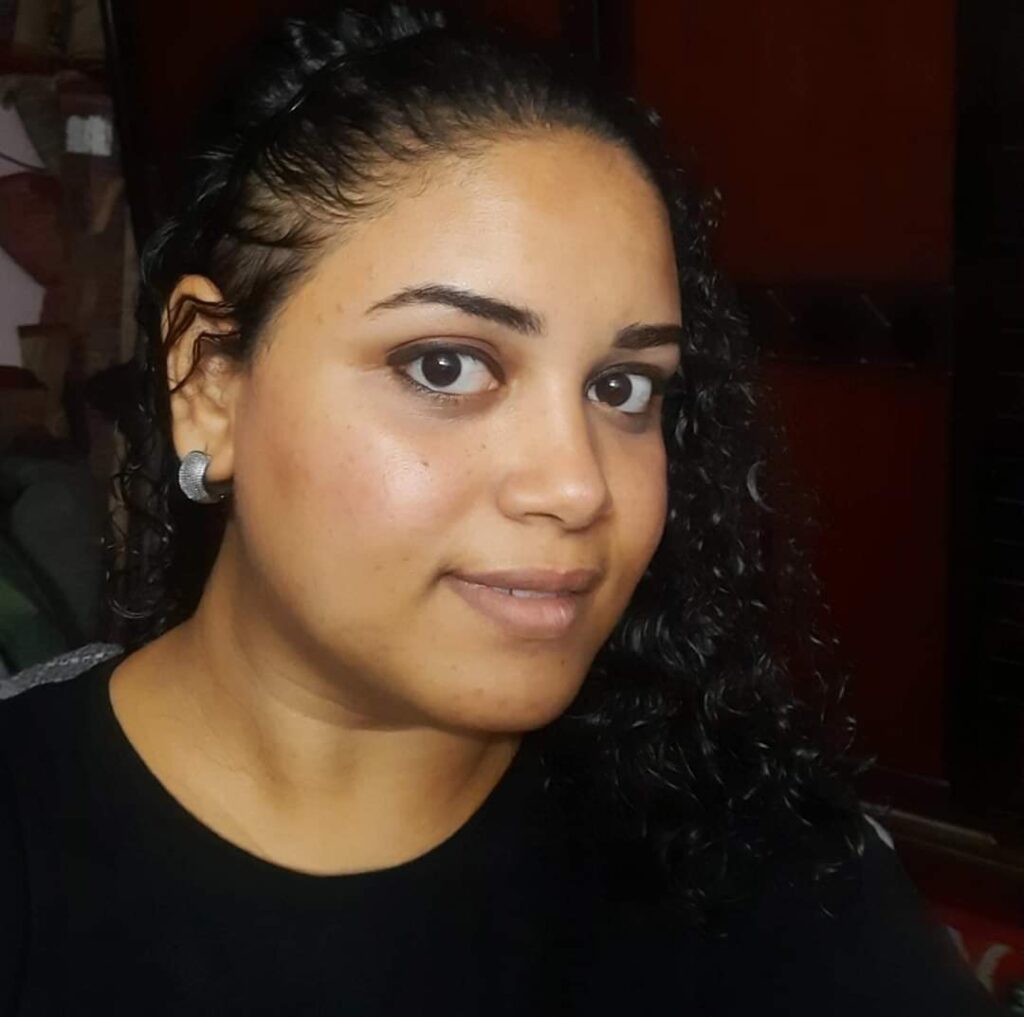

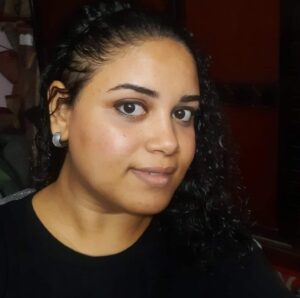
Her life of struggle spans 55 years, and she has lived through all the wars. She was born in 1952 in the village of Abasan, south-east of the Gaza Strip, to a Palestinian father and an Egyptian mother. She was arrested for the first time by the Israeli occupation forces after the 1967 Naksa, at the age of 16, and faced five charges that she did not deny but is proud of, including taking part in demonstrations and belonging to the fedayeen group “Guevara Gaza”, which led to her detention in the occupation’s prisons for two years. Then, the day after her release, the occupation government issued a decision to expel her to Jordan, making her the first expelled female fedayee, at only eighteen years old. She is the Palestinian Mariam Abu Daqqa.
Zawia3 met her in Cairo after her deportation from France as a result of her resistance activity there to raise awareness of the Palestinian cause, and we had this interview with her.
The Occupation Expelled Me from My Homeland
“I opened my eyes to oppression and occupation and the calamities and disasters it caused in my homeland, Palestine. I joined the national struggle at a young age and was arrested while I was in preparatory school, and I consider my period of detention the source of my strength and resilience.” This is how Abu Daqqa speaks about her upbringing and her expulsion from her homeland, saying: “The occupation expelled me from my homeland, and I was stuck for 11 days on the ‘Jordan bridge’ on the border between Jordan and Palestine. The Jordanian authorities would not agree to let me in, nor would the occupation accept my return to my homeland, and I had nothing with me but the court papers; I left without an identity card or any proof of identity at all. In the end, comrades in the struggle snatched me from the bridge and brought me into Jordan, which I left two years later, at the time of the Black September events, heading to Lebanon.”
Mariam, who took part in the General Union of Palestinian Women and belonged to the Popular Front, told us about her activity, which has continued since her youth and has not stopped to this moment, saying: “I took part in resistance activities in Palestine and Jordan, became the person in charge of a military unit in Lebanon, and also took part in a Palestinian delegation at the World Festival of Youth in Cuba in 1981.”

Abu Daqqa oversaw the founding of the Palestinian Youth Organisation affiliated with the Popular Front and of the Union of Palestinian Women’s Committees, and was the Popular Front’s representative in the General Union of Palestinian Women. She held the post of secretary of the General Union of Palestinian Women in Libya in 1983. She became a member of the Central Committee of the Popular Front for the Liberation of Palestine in 1992, and has been a member of the National Council since 1995.
She says: “I took part in international conferences, festivals and events to talk about the Palestinian cause and Palestinian women. At the same time, I did not neglect completing my studies, which we consider a part of the struggle and resistance that must not be overlooked; resistance has many forms, including sport, music and art in general, and of course education and study.”
The Second Return to the Homeland
Abu Daqqa returned to her homeland and birthplace in Gaza after more than 30 years of expulsion, two years after the signing of the Oslo Accords in 1993 between the occupation government and the Palestine Liberation Organization, which Abu Daqqa describes as “notorious and disreputable”. She says: “After the agreement, many of those expelled were able to return to Palestine, but for me the situation remained as it was. Then, two years later, I obtained a permit to visit my family in Gaza, and I returned after 30 years. My mother was still alive, but my father and my sister had passed away.”
On the journey back to her town, Mariam remembers that everything was different from what she had left when she was expelled: the houses were no longer as they had been, and among friends and neighbours, some had gone and the features and faces of those who remained had changed. Mariam tells of her return: “I left Gaza young and returned with a PhD in philosophy. I left as a fighter and resistance member and returned as a national leader, and I began again to integrate into community and political work a few days after returning.”
“Notorious” Oslo… Why?
On the reasons for describing the Oslo Accords as notorious, she says: “This agreement is one of the causes of the crisis of the Palestinian cause. Recognising Israel is considered a concession of the Palestinian people’s historical right to their historical land from the river to the sea; this agreement also led to a rampant division within the Palestinian resistance. This is more dangerous to the Palestinian national project than the 1948 Nakba.”
A Trip to France That Was Not Completed
Days before the Israeli occupation launched its current war on the Gaza Strip, Abu Daqqa received an invitation from 4 progressive left-wing entities in France to give 17 lectures and attend a screening of a film about the Palestinian cause titled “Yalla Gaza”, to discuss it with the audience and comment on the film, which tells of the conditions of occupation, reality, siege, destruction and wars to which the Strip is subjected.
She continues: “After I received the invitation from progressive left-wing entities to visit France and talk about the Palestinian cause, I obtained the visa and entry permit normally. A few days after my arrival, specifically on 16 October, I was placed under house arrest in a hotel in the French city of Marseille by decision of the French Minister of the Interior. On the same day as the aggression on Gaza, a car intercepted me while I was on my way to the city of Toulouse in France to take part in one of the events I was invited to; they forcibly stopped me in the middle of the road and informed me that I was under compulsory detention by decision of the Minister of the Interior, and my papers were withdrawn and my passport seized to implement the decision.”
She says: “I told the force that was implementing the compulsory restriction: your country, France, always claims democracy and civilisation, but I discovered that I must teach you the true meaning of democracy. Why do you prevent me from talking about what is happening in Palestine? Where are pluralism and freedom of opinion? Thirty members of my family have been killed, and I must talk about them, and if my charge is that I am a member of a Palestinian liberation organisation, confront me with this political affiliation.” According to her account, during her conversation with the security forces she stressed that the Liberation Front is internationally recognised and has had an embassy in France since the Oslo Accords, and that if France does not recognise the Front, it should close the embassy.
Hours later, Abu Daqqa was released and her passport was returned to her, but in return the Ministry of the Interior cancelled her permit to enter French territory, the “visa”, which means she will be barred from entering all European countries later. But on 8 November, the police detained her again after a decision was issued to deport her from France. On this, she says: “After the deportation decision was issued, masked men carrying firearms attacked me while I was returning home, beat me on the head with a firearm and abducted me. For a moment I imagined they were highway robbers, but I was surprised that the authority itself was a gang, and then I was taken to prison.”
The Prison Experience in France
Mariam Abu Daqqa says of the prison experience, which lasted four days until the deportation decision was carried out: “I do not imagine that even in a Third World country prison would be like what I found or was subjected to in France. I was stripped of all my belongings, even my shoes, and I was barefoot, sitting and sleeping on a wooden bench. I was badly injured and my head was swollen from the effects of the beating, and I was shivering from the severe cold and was even prevented from wearing shoes. So I immediately declared a hunger and water strike, and I was afraid that I would be assassinated with poison.”

She continues: “During the days of detention I was moved to four prisons, a prison every day, each prison harsher than the one before. While I was detained, demonstrations gathered in front of the prison gate in solidarity with me, and with the procedures for transferring me to the plane on the last day, French security handed me a small mobile phone through which I was contacted by the demonstrators, who held a huge press conference for me and kept chanting my name: we are all Mariam… we are all Mariam.” The Gazan fighter describes: “The demonstrators offered that I request asylum, but I refused and told them a handful of soil from the Arab homeland is better than the Élysée Palace, and a rubbish dump in Gaza is better than all of Europe for me.”
The Aggression on Gaza and the Targeting of Women and Children
Mariam Abu Daqqa comments on the aggression on Gaza, saying: “Like the entire Palestinian people, we always expect Israeli attacks at any time, which happens every year. The occupation has never stopped attacking us, and they always found the resistance lying in wait; but the form and pattern this time surprised all of us Palestinians, because for the first time the occupation forces were not the attackers as usual; this time they were the ones attacked in depth.” To this moment, the occupation has not been able to achieve its aim in Gaza and still feels defeated, and this is what made them take revenge by bombing civilians; the more intense the bombing, violence and killing, the more it means they are defeated on the battlefield. This is how she describes what the occupation is doing to the Gaza Strip.
Targeting Women and Children… and the European Positions
On the occupation’s targeting of women and children in particular, she says: “The occupation usually targets women and children, because they say that a woman gives birth to and raises her children, nursing them on the milk of the revolution. The Palestinian woman raises her children on pride and dignity and always urges them to resist. As for killing children, it is because they know they are the fedayeen of the future. They target vulnerable and weak groups for ideological reasons and out of fear, because they cannot defeat the resistance.”
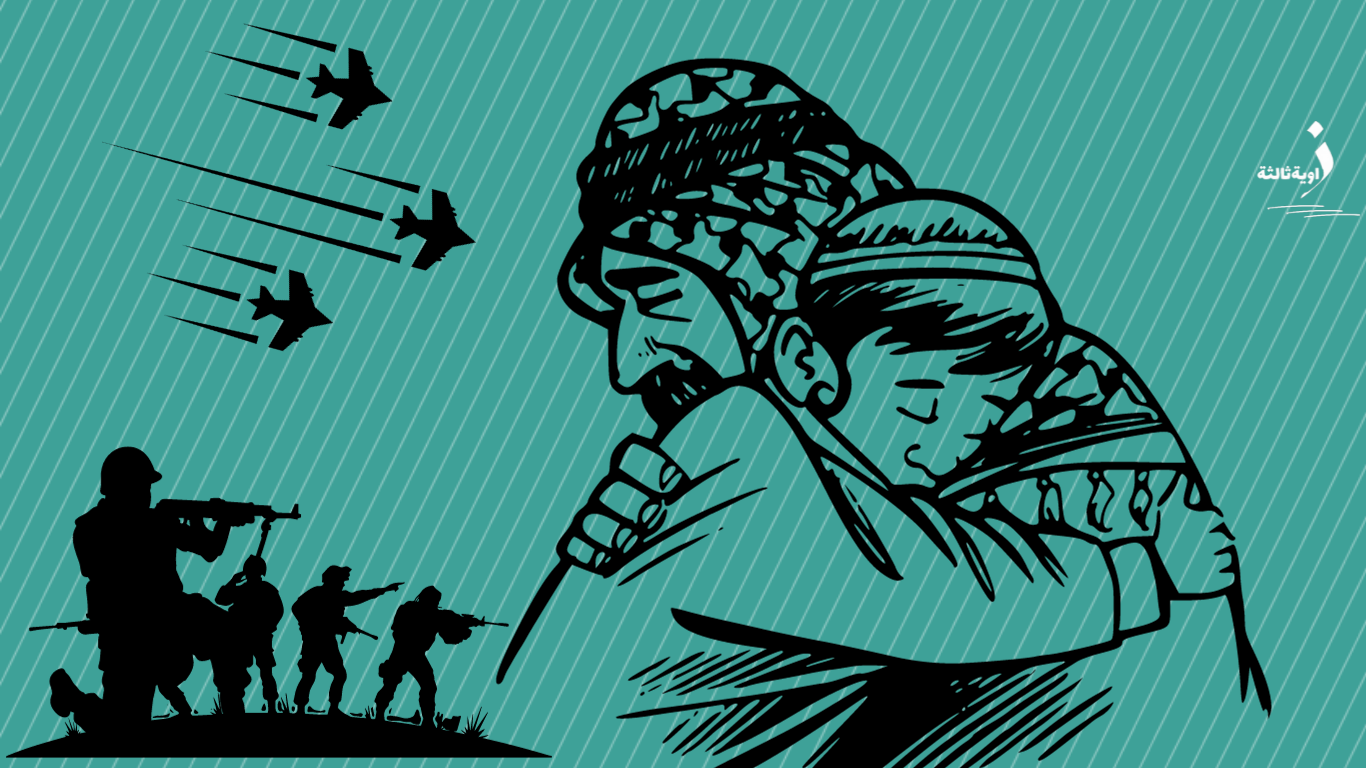
She says that Western governments and America are supporting the occupation army in an unprecedented way, despite the war crimes it is committing in Gaza; it has even gone as far as describing what is happening as the occupation authority defending itself. On this, Abu Daqqa believes that there is a third world war whose title is the Gaza Strip but which targets the entire region, because this advance of the resistance and the revolution threatened the Zionist entity, which is basically a creation of global imperialism, led by America, which has two missions, the first in Ukraine and the second in Gaza, because it wants complete control over the Middle East region and considers the occupation entity a guardian of imperialism’s interests in the region.
She says: “To facilitate the implementation of their agenda, they called the people of Ukraine and those in solidarity with them resistance, but in Palestine they call them terrorists, because they want their interests from Palestine and want to control it. The Western countries and America manipulate terms according to their interests and what they want.”
She adds that they discovered very important gas in Gaza, gas that the West has been deprived of since the war in Ukraine, and therefore they want the gas to strike the other direction (China and Russia). They also want to complete the Ben Gurion Canal project (the Ben Gurion Canal, or Israeli canal, is a proposed project for a waterway in the Israeli occupation entity aimed at connecting the Gulf of Aqaba with the Mediterranean Sea. It is proposed that the canal be named after David Ben-Gurion, the founding father of the occupation entity and its first prime minister).
And What about the Position of the Peoples?
Abu Daqqa affirms that there is a separation between the peoples and the governments of Europe, and that the position of the European peoples has changed a great deal, with great solidarity with the Palestinian cause. At the time of the 1948 Nakba, the peoples did not see the massacres committed by the occupation then, but with technological development and the multiplicity of means of communication, the massacres have become sound and image. Before that, only the occupation’s narrative was promoted, but now the massacres they commit are circulated, which has revealed their truth to the peoples of Europe and America. Even Jews have demonstrated in solidarity with the rights of Palestinians against the occupation, because they believe that Jews have no state according to the rulings of their religion.
From West to East, regarding the position of Arab countries, Abu Daqqa believes that Arab unity is very important; for example, the oil owned by the Gulf Cooperation Council countries is considered a strong weapon to pressure European countries and America, and “there must be at least a unified political position to boycott this occupier, as happened in Jordan, for example, which refused to conclude the water-for-energy agreement” (in November 2021, the Israeli occupation authority, Jordan and the UAE met at the “Expo 2020 Dubai” exhibition on a declaration of intent for a deal titled “electricity for water”, in the presence of the US climate envoy John Kerry; it was considered the largest regional cooperation deal, including several projects in the fields of energy and water).
Abu Daqqa concludes her conversation with us by stressing that the occupation targets all Arab countries, and that patriotism requires a unified Arab position, “a political position”, that uses all the political weapons in Arab hands. But contrary to expectations, there are those racing to normalise relations in the hope that the occupation entity will protect them, such as Bahrain and the United Arab Emirates; therefore, the occupation alone will be the winner if the situation continues as it is. She believes that Palestinian unity, partnership and pluralism are necessary principles for achieving the awaited liberation of the entire historical land of Palestine.