Journalist Rana Mamdouh Released
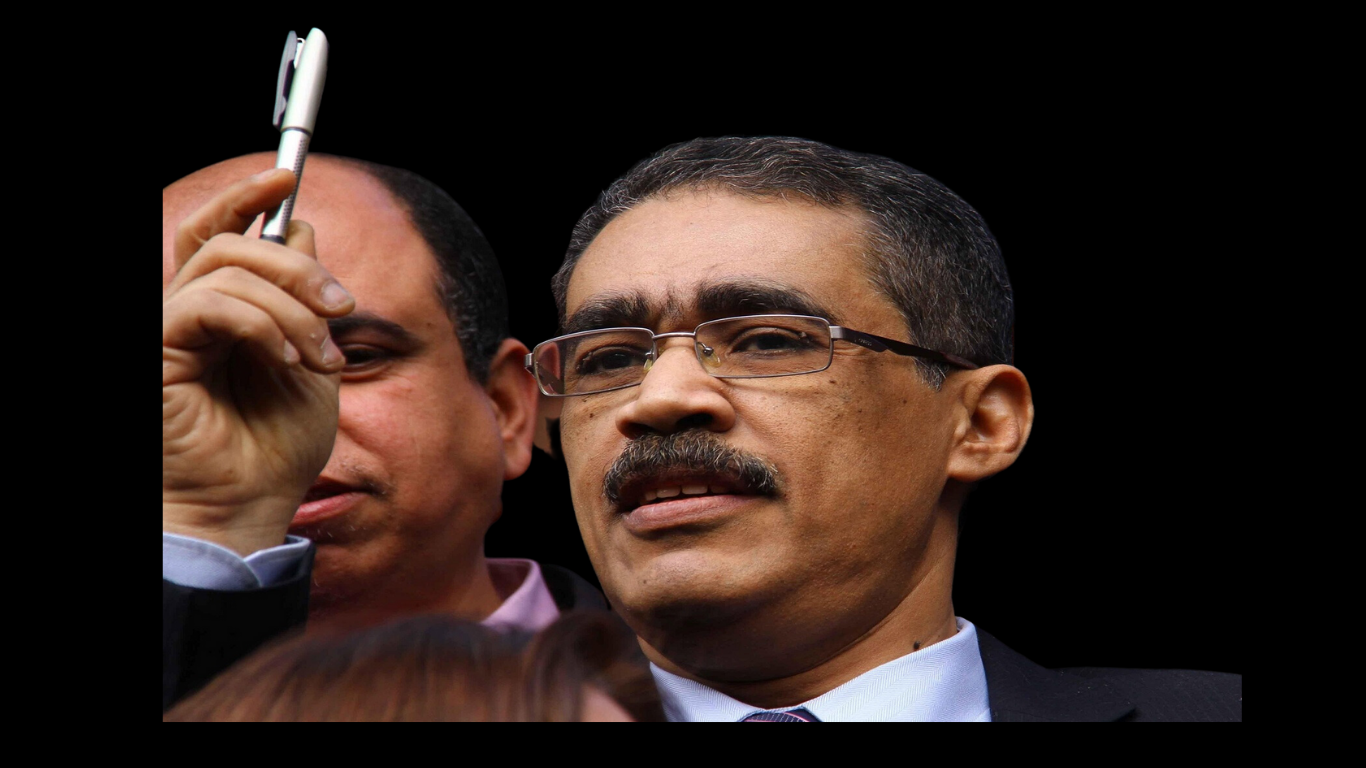
Police detained Mada Masr journalist Rana Mamdouh yesterday morning, Sunday, at El-Alamein police station in the north-west of the country, after she was stopped while heading to the city of Ras El-Hekma on a journalistic assignment, as the platform described in a statement following her detention.
Mada Masr said a police checkpoint at the El-Alamein toll station stopped the car carrying Mamdouh, asked her why she was heading there and held her for about an hour, claiming she was conducting an interview without a permit, before taking her to El-Alamein police station, after which contact with her and the car’s driver was lost.
Meanwhile, Khaled El-Balshy, head of the Journalists’ Syndicate, said in a statement: “Rana committed no crime, unless we consider a journalist heading out to do her work a crime”, before announcing in another statement her release on bail of EGP 5,000, after more than 12 consecutive hours of detention.
Rana Mamdouh, a member of the Journalists’ Syndicate who has worked in Mada Masr’s investigations section since 2018, was previously detained in 2019 along with two of the platform’s journalists after its office was raided, and was released within hours. She has also previously suffered a number of violations, especially by National Security officers at Cairo Airport, who in 2018 held her passport on her return from an investigative journalism conference in Jordan, questioned her, searched the contents of her bags and confiscated her private notebooks, before she was asked to go to the agency’s headquarters on the pretext of collecting her passport.
A Petition Demanding the Release of the Mahalla Workers
Political, labour and rights forces demanded the swift release of the four imprisoned Mahalla spinning workers and disclosure of the fate of the forcibly disappeared, through a petition launched for signature by a number of public, political and labour figures, setting out their demands.
The four workers are: Wael Abu Zuwaid, Mohamed Mahmoud Tolba, Abdel Gawad Mohamed Abdel Gawad and Hani Abdel Halim Mohamed Ismail. They were brought before the Supreme State Security Prosecution in case No. 717, after the prosecution charged them with belonging to an organisation established in violation of the law and spreading false news.
The forces signing the petition considered that the Mahalla workers committed no crime by exercising the right to strike enshrined in the international instruments Egypt has signed. The forces in solidarity included a number of parties such as Karama, the Popular Alliance, Bread and Freedom, the Revolutionary Socialists, the Egyptian Communist Party and the Conservative Party, as well as a number of labour and rights centres such as the Centre for Trade Union and Workers’ Services, the Al-Nadeem Centre, the Al-Ahd Centre for Legal Aid and the Foreign Trade Workers’ Union.
The petition pointed out that the government practises discriminatory wage policies between government employees and workers in the public business sector and the private sector, at a time when workers are burned by soaring prices, which was the main reason for the Mahalla strike. It explained that the workers’ strike was a direct result of the President’s decision to raise the minimum wage to EGP 6,000, which was not applied to them, so they went on strike to alert the government that there are workers whose wages are still below EGP 4,000.
The signatories called on the government to reveal the fate of the workers missing since the strike and to stop the policy of cutting off livelihoods, as the company’s management sent dismissal warnings to workers in detention on the grounds of absence from work. They noted that these arbitrary measures, which come at the same time as calls to return to the National Dialogue, confirm that this dialogue is conditional on full acceptance of the regime’s policies, and that any rejection of them means a return of arrests.
German Company Wins the Right to Manage the Great Transfiguration Site
The New Urban Communities Authority, representing itself, South Sinai Governorate and Misr Sinai Tourism Company, signed with the German company Steigenberger Deutsche Hospitality in the Middle East (Steigenberger Hotels AG) a new agreement granting the German company the right to manage and operate the tourism components around Mount Moses and Mount St Catherine, in the area known as the Great Transfiguration, in the presence of Egyptian Prime Minister Mostafa Madbouly.
President Abdel Fattah El-Sisi had directed the government at the end of 2021 to work on developing the city of St Catherine and giving it the status it deserves given its religious and heritage importance, establishing the new city of St Catherine and maximising the benefit from the tourism assets of this city, which has an archaeological, religious and environmental character combined, in line with sustainable development trends, and establishing the largest project in the history of South Sinai at present, namely the Great Transfiguration project.
The government aims to market St Catherine as a global tourist destination by highlighting the importance of the Great Transfiguration project as a spiritual destination of interest to followers of the three Abrahamic religions (Christianity, Judaism and Islam), especially as it contains Mount Moses, on which, according to religious beliefs, God revealed Himself to the Prophet Moses to teach him the teachings of his message and his holy book. The project lies between Mount St Catherine and Mount Moses, and includes a number of important tourist and religious sites, such as the Church of the Transfiguration, built on the orders of the Byzantine Emperor Justinian, as well as the coffin and body of St Catherine, the crossing route of the Prophet Moses and his followers, and the Islamic pilgrimage route.
Finance Minister: 50% of Ras El-Hekma Money in the State Treasury
Finance Minister Mohamed Maait said at a press conference that 50% of the money from the Ras El-Hekma deal, on the North Coast in Matrouh Governorate, will be deposited in the state treasury, noting that the deal’s revenues will support achieving the state’s budget targets during the current fiscal year.
He added in his statements that Egypt has reached an agreement with the International Monetary Fund under which it begins a three-year programme with the Fund and the World Bank, and that Egypt will receive three billion dollars as part of the agreed USD 20 billion financing package. He added that there is a financing package from the European Union, whose value he did not disclose, but which will be a good financing package.
The Cairo government had signed an agreement with the Abu Dhabi government to invest in the city of Ras El-Hekma in the north-west of the country for USD 35 billion, to be received in two instalments. This provoked popular anger and questions about the authorities’ right to sell or invest Egyptian land without referenda or parliamentary approval.
You can read our report Ras El-Hekma Residents: We Will Resist the Sale of Our City to learn more about the deal.
Parliamentary Objections to the Traffic Law… Licence Plate Fees Raised Sixfold
The House of Representatives, chaired by Counsellor Hanafy Gebaly, approved at its plenary session yesterday, Sunday, amendments to some provisions of the Traffic Law issued by Law No. 66 of 1973.
Article 13, whose amendment was approved, stipulated that “the executive regulations shall determine the form of licence plates, the data they contain, their security marks, their period of validity, their places of installation on the vehicle, and the value of the deposit paid for them, not exceeding EGP 100, and the fee for developing licence plates”. The amendment to the second paragraph of the article now reads: “The executive regulations of this law shall determine the form of licence plates, the data they contain, their security marks, their period of validity, their places of installation on the vehicle, the value of the deposit paid for them, not exceeding EGP 100, and the fee for developing licence plates, not exceeding EGP 600. The maximum development fee referred to may be increased by a decision of the Prime Minister by no more than 10% annually and up to three times the maximum referred to in this article”. These amounts will be collected by one of the means stipulated in the law regulating the use of non-cash payment methods issued by Law No. 18 of 2019.
Some MPs objected to raising the fees sixfold at once. MP Osama El-Masry said: “Raising the amount from EGP 100 to EGP 600 is excessive”. MP Mohamed El-Samoudi said that the licence plate development fee under the old law had a maximum of EGP 115, and that raising it to EGP 600 is excessive and a very large amount, a sixfold increase in the current bad economic conditions.
Inflation Rose to 36% Last February
The Central Agency for Public Mobilisation and Statistics announced in a statement that the general consumer price index for the whole country rose to 219.4 points in February, recording annual inflation of 36% compared with 31.2% in January at the start of the year.
The statement added that the monthly inflation rate recorded 11% in February, compared with 1.7% in January, attributing the most important reasons for this rise to increases in the prices of meat and poultry by 25%, cereals and bread by 14.2%, fish and seafood by 11.5%, dairy, cheese and eggs by 12.8%, oils and fats by 14.1%, fruit by 7.3%, vegetables by 9.2%, sugar and sugary foods by 6.9%, coffee, tea and cocoa by 11.3% and tobacco by 8.5%.
The report continued that there was a rise in the prices of ready-made clothes by 4.4%, footwear by 3.2%, water and miscellaneous housing-related services by 10.7%, furniture, furnishings, carpets and other floor coverings by 8.6% and, finally, household appliances by 7.4%.
CAPMAS pointed out that medical products, appliances and equipment saw their prices rise by about 17.3%, vehicles by 4.8% and cultural and recreational services by 9.8%. In addition, newspapers, books and stationery rose by 55.3%, pre-primary and basic education by 10.2%, general and technical secondary education by 6.5%, post-secondary and technical education by 6.9%, higher education by 32.5%, ready meals by 11.8% and hotel services by 9.8%.
Canada and Sweden Resume UNRWA Funding Because of the Catastrophic Situation in Gaza
Canada and Sweden announced the resumption of their funding for the UN Relief and Works Agency for Palestine Refugees (UNRWA), because of the catastrophic situation in the Gaza Strip.
The two countries were among 16 countries that suspended funding for the agency after allegations by the Israeli occupation that a number of UNRWA staff in Gaza took part in the Hamas attack of 7 October on the occupation’s settlements, which was called Operation Al-Aqsa Flood.
Sweden announced in a statement that it is sending SEK 200 million (USD 19 million) as a start to resuming funding, adding that “the Swedish government has allocated SEK 400 million to UNRWA in 2024. Today’s decision concerns SEK 200 million, the first instalment of these funds”.
In the same context, Canadian International Development Minister Ahmed Hussen announced Canada’s decision to resume funding, saying the decision was taken “in recognition of the robust investigation process under way into the Israeli allegations”, adding that the Canadian Armed Forces will donate about 300 cargo parachutes to Jordan for use in airdrops of aid into Gaza.
Similarly, Spain announced additional aid of EUR 20 million to UNRWA, after an initial additional EUR 3.5 million announced last week. On 1 March, the European Union decided to provide EUR 50 million in aid to UNRWA.
Meanwhile, US Central Command said in a statement on Sunday that the US Army vessel “General Frank S. Besson” left Joint Base Langley-Eustis heading to the eastern Mediterranean to deliver humanitarian aid to Gaza by sea. The ship is carrying the first equipment to build a temporary pier to deliver vital humanitarian supplies via the Gaza sea.