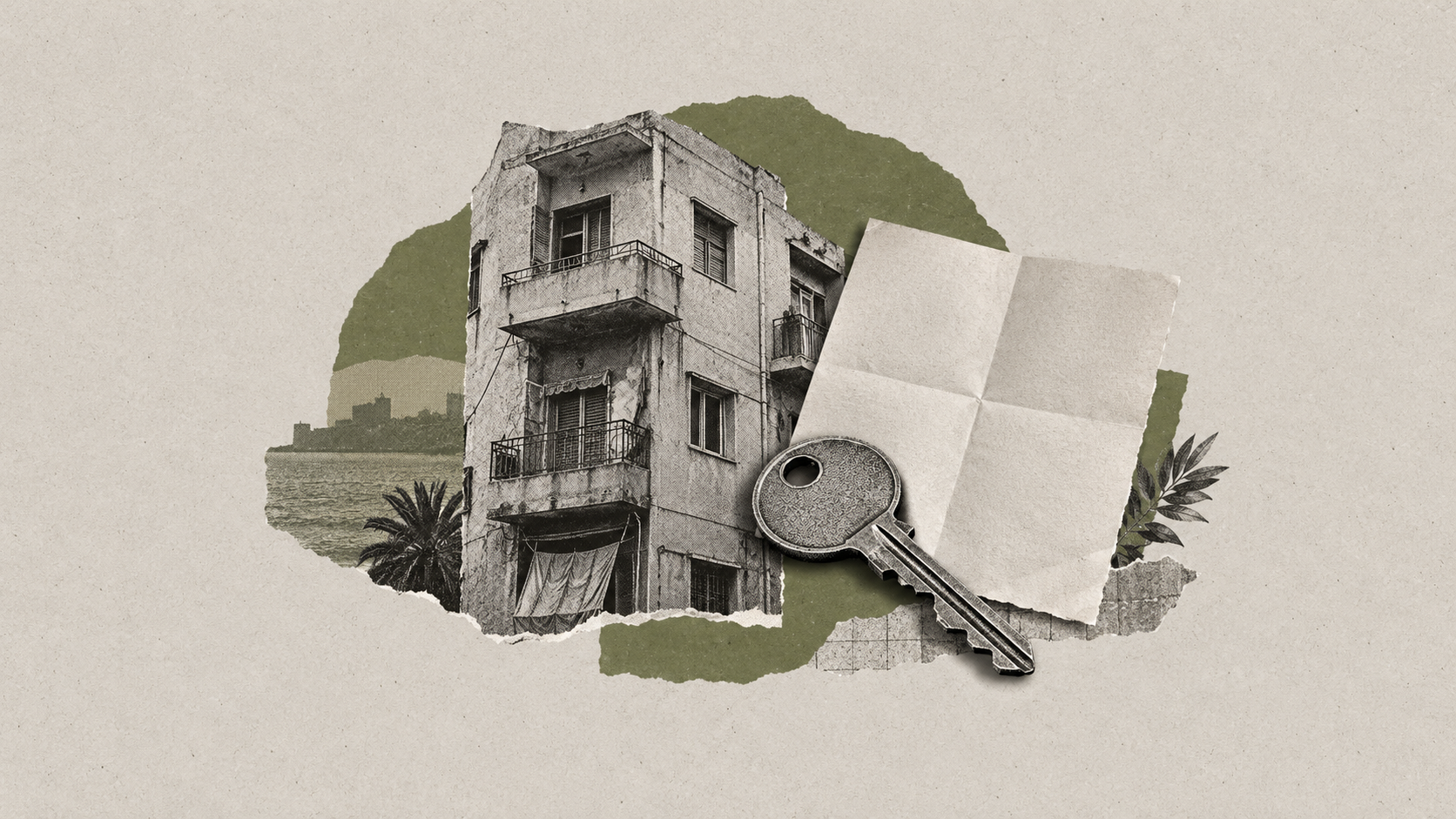


This report examines Maspero at the beginning of January 2026, following the announcement in late December 2025 that a development plan was being prepared.
After years of accumulated debt and debate about privatising parts of Egypt’s Maspero radio and television headquarters or moving its employees to the New Administrative Capital, the government outlined a restructuring and development programme in late December 2025. The National Media Authority would lead the process with cabinet support. Earlier reporting had discussed closure and relocation scenarios, but those reports did not amount to a final official decision to liquidate the building. Behind the debate lay a debt burden that the authority said in a 2021 statement exceeded EGP 42 billion. That is a historical figure, not an updated account of its debts in January 2026.
In its January 2021 statement, the authority put the principal of National Investment Bank loans at EGP 9.6 billion and accumulated interest at EGP 32.9 billion, while reporting total debt of EGP 42.6 billion. The two published components add up to EGP 42.5 billion, EGP 0.1 billion below the stated total. These figures therefore cannot support precise calculations or be presented as current liabilities. The statement also said the loans had been inherited from the former Egyptian Radio and Television Union and that the authority had taken out no new loans from the bank between its establishment and the date of that statement.
At a government meeting on 29 December 2025, National Media Authority chair Ahmed El-Moslimany announced preparations to launch a digital platform for Maspero, intended to make better use of its extensive broadcasting and historical archive. This formed part of a broader financial and administrative restructuring effort, including reform of the Sono Cairo company and its advertising agency, the merger of some channels and the development of others. The meeting also reviewed efforts to resolve outstanding financial arrangements with the National Investment Bank, removing obstacles to reform and improving financial sustainability.
Prime Minister Mostafa Madbouly said the state had established a specialised committee to reform the governance of economic authorities. Its work would focus on a clear reform roadmap, with government support for the National Media Authority’s cultural and social role, its adaptation to changes in broadcasting, and the restoration of Maspero’s standing.
Maspero’s return to the centre of public debate comes amid attempts to redefine the role of state broadcasting after years of financial losses, declining audience influence and the erosion of its workforce. Accumulating debt and the loss of skilled staff have raised questions about the institution’s future.
The government’s proposals confront a complicated reality inside the building. Accounts gathered for this report describe deteriorating studios, infrastructure that has not been modernised for more than a decade, skilled employees who have been marginalised or driven to leave, and difficult living conditions for workers. Highly restrictive editorial policies, interviewees say, have also undermined the official broadcaster’s ability to compete. They connect this deterioration to years of deferred decisions, reduced production and a weakened editorial role, alongside the rise of private channels and digital platforms that have come to dominate the media landscape.
This report asks what Maspero actually needs to recover its position. Against promises of revival and historical financial burdens measured in tens of billions of pounds, it examines the reasons for decline, the future of Egypt’s state broadcaster and the prospects for rescue amid competing proposals for its future.
Working inside Maspero
“Failure in everything,” says a long-serving Maspero employee who asked not to be named. He has worked there for more than 15 years. “Our salaries are set at the minimum. Everything is included, even incentives. After all these years inside the building, my salary does not exceed EGP 7,400.”
He tells Zawia3: “I obtained a court ruling ordering payment of financial entitlements from incentives I had not received for years. The problem is that there is no money inside the building to enforce it. The same applies to pensioners, who receive their entitlements with great difficulty.”
This is the employee’s account as the claimant. The material available for this report did not include a copy of the judgment or enforcement documents establishing its value or procedural status. His description of his salary and working conditions is an individual testimony, not a calculated average of pay across the institution.
The difficulties extend beyond wages, he says: “The building’s infrastructure is in a disastrous state. The studios are very old, the equipment is worn out and the basic facilities are deteriorating. Production has stopped or declined significantly. The skilled staff who used to be here have left or retired, while others have moved to private production companies or other satellite channels.”
Asked about the causes, he describes overlapping financial, technical and administrative problems. “When we were under the Ministry of Information, there was enough financial support to keep everything running. After we came under the [National Media] Authority, support declined, advertisers left and the building’s role diminished in the absence of development.”
He nevertheless hopes the proposed changes will succeed. “I hope the state’s development plan saves this long-established institution. It has a long history and enormous potential that could restore its broadcasting role.”
In February 2022, Maspero employees protested deteriorating working conditions, low wages and financial entitlements that had remained unpaid for years. In a statement issued on 11 February, they demanded the restoration of a fully empowered Ministry of Information to oversee the three media regulatory bodies, and an information minister with administrative and legal expertise. They also called for changes to the law establishing the National Media Authority, including restoring provisions that would reserve terrestrial and satellite broadcasting rights to the authority.
The employees also demanded the rescheduling of Maspero’s National Investment Bank debt and amendments to human resources regulations issued in April 2021, which they said violated legal and constitutional rights and lacked approval from the relevant bodies. They sought changes to disciplinary regulations to end what they described as arbitrary sanctions, the return of the regional broadcasting sector to the television sector, and replacement of existing healthcare arrangements with a contract with Misr Insurance covering employees and retirees. They estimated that the alternative could save approximately EGP 105 million annually. This was an estimate in their demands, not a saving shown to have been realised.
In the context of these mobilisations, broadcasters Hala Fahmy and Safaa El-Korbeigy were arrested before being released in February 2024. Dozens of employees were also referred for administrative investigation, with some cases referred to the Administrative Prosecution.
The 2022 protests were not the first. Similar demonstrations took place in 2011 after the January uprising, following Zaki Abdel Hamid’s appointment as an adviser to the information minister and head of the economic sector. Broadcasters and television employees regarded the appointment as a return of the influence of former Shura Council speaker Safwat El-Sherif, who was imprisoned at the time and faced accusations of inciting the killing of demonstrators during the uprising. He was subsequently acquitted of that charge.
A history of crises and corruption cases
Egyptian television began broadcasting on 21 July 1960, after plans for its launch had been delayed by the 1956 Suez War. Maspero became the country’s largest broadcasting institution, housing Channel One, Channel Two, the Egyptian satellite channel, Nile channels, regional stations and numerous radio networks. The building symbolised state broadcasting and its power to shape public opinion, before successive crises accumulated over the following decades.
Part of the institution’s financial and administrative history is associated with Safwat El-Sherif’s years as information minister. In September 2020, his three-year prison sentence in an illicit enrichment case became final after his appeal was rejected. His son, however, was acquitted in the retrial. That judgment must be distinguished from other complaints concerning Maspero’s management or appointments, since they involve different allegations and legal proceedings.
One complaint concerning management at Maspero was filed in September 2012 by Mohamed Kamal Othman, a director working at the Egyptian Radio and Television Union. Addressed to then prosecutor general Abdel Meguid Mahmoud, it accused El-Sherif and former union chair Hassan Hamed of making appointments in breach of rules governing recruitment to public employment.
Complaint 3321 of 2012 alleged that the two officials had appointed relatives and people connected to former president Hosni Mubarak’s administration. Its author characterised those appointments as violations of recruitment rules and a form of favouritism. These are allegations contained in a complaint, rather than a judicial finding that they were proven. The complainant requested an investigation into corruption inside Maspero and a review of employment contracts and recruitment conditions against legal requirements and transparency standards.
Criticism of spending and management continued during Anas El-Fekki’s tenure. In September 2009, Youm7 published an account that it said drew on a Central Auditing Organisation report covering earlier financial years. It described rented studios that were not being used, excessive production costs and bonuses, and weak returns on expenditure. These observations are presented here as reported by that newspaper. They do not justify describing all programmes as fictitious, or remove the distinction between an audit observation and criminal liability determined by a court.
Financial and technical deterioration continued after the January 2011 uprising. Successive information ministers attempted partial reforms, but these did not produce a tangible recovery. Employees faced halted production, deteriorating infrastructure, power outages and inadequate funding. The workforce also lost experience through retirement and departures to other satellite channels, while losses and accumulated debts continued to threaten the institution’s future.
With the announced development plan being prepared, those responsible for Maspero hope to revive it through infrastructure improvements, stronger content, investment in its extensive archive and better use of its existing expertise. The larger challenge remains addressing historical losses and restoring the confidence of both employees and audiences, allowing the broadcaster to recover its national and cultural role.
What would development require?
At the start of January 2026, the comprehensive development plan was still being prepared. At the 29 December meeting, the National Media Authority’s chair said it would be presented at the end of January and would cover restructuring, efficiency and increased financial resources. This report therefore concerns announced commitments and measures, rather than the results of a completed programme.
Mohamed El-Garhy, deputy head of the Journalists Syndicate, identifies three principal dimensions to Maspero’s crisis: economics, administration and the broadcasting industry itself. He tells Zawia3 that the economic problem begins with accumulated debt, as acknowledged in the authority’s public statements.
He argues that debt and the failure of projects and sectors inside Maspero to demonstrate economic viability have produced what he describes as disastrous conditions. A broadcaster working there captured the situation in a social media post, he says, describing deteriorating studios and sets alongside problems with healthcare, equipment and other technical and administrative services.
Administratively, El-Garhy describes a substantial legacy burden. A large share of the budget goes on salaries, he says, reflecting an inflated workforce and appointments, including administrative and security positions, that exceed the institution’s actual needs. At the same time, Maspero trained many of the skilled personnel who helped establish private channels. Low wages encouraged those workers to leave, depriving the public broadcaster of a significant part of its technical capacity.
Turning to the industry, he says there is little room for creativity inside Maspero. Strong discussion programmes addressing citizens’ problems are largely absent, contributing to declining audiences, the loss of advertisers and weaker credibility. In his assessment, efforts by the authority’s chair to improve channels and technical infrastructure have been limited, concentrating on renamed channels or cosmetic changes without materially improving employees’ conditions or restoring viewers’ trust.
El-Garhy views financial losses as a global challenge for the media industry, while regarding broadcasting as a matter of national security. He says that over the preceding decade the state established parallel entities through private channels as an alternative to Maspero. In his assessment, those efforts failed because they reproduced the same problems: insufficient freedom, little room for criticism and strong managerial control over content. He links these conditions to the president’s public dissatisfaction with media performance and his request for a media development committee.
This is El-Garhy’s assessment of financing and editorial freedom. It does not mean every media organisation worldwide operates at a loss, or that a public broadcaster’s value can be measured solely through commercial profit. Public service, editorial independence and audience trust are also central to the debate.
On 20 January 2019, the National Media Authority signed a five-year cooperation protocol with Egyptian Media Group. It envisaged a satellite channel targeting Arab families, development of the content of existing Egyptian state channels and a partnership in advertising rights intended to increase revenue.
The protocol covered a new channel, improvements to existing content and advertising cooperation. Subsequent collaboration with production companies brought programmes such as “Good Morning Egypt” and “The Ninth” to state television. The continuing debate about debt and reform at the end of 2025 indicates that the 2019 agreement alone did not resolve the crisis. It does not establish that every provision had ended, or that the later programmes were named in the original agreement.
Reform begins with the state
El-Garhy argues that recovery requires a working environment fit for purpose. Employees face what he describes as inhumane conditions, low wages, barely functioning equipment and studios that need to catch up with technology. The next step, he says, is restoring the confidence of workers and audiences by giving skilled staff room to create. That requires political will which, in his assessment, has not yet materialised.
Digital media academic Sara Fawzy identifies three areas for action. The first is financial: cancelling Maspero’s debts would, she argues, be an essential step towards freeing the institution from constraints that prevent it from functioning effectively.
She tells Zawia3 that existing debts obstruct development of the building and production, while directly affecting employees’ wages and retirement entitlements.
The second area is investment and development. Fawzy proposes inviting businesspeople to invest in digital platforms belonging to Maspero, or allocating part of tax revenue to production and technology. She cites the BBC as an example of financing public service broadcasting. These measures, she argues, could provide sustainable income and improve infrastructure and studios. Skilled staff leave for work abroad or at private channels because of financial constraints and insufficient production resources, weakening Maspero’s competitiveness.
The comparison requires a distinction: the BBC’s public services are funded primarily through the television licence fee, alongside commercial resources and specified funding for some services, as set out in its funding framework. Allocating general tax revenue to Maspero is therefore Fawzy’s proposal, rather than an exact description of the British arrangement.
Her third area is administrative restructuring and addressing organisational overstaffing. She describes a complex hierarchy of chairs, deputies and other senior officials that needs to be reduced and adjusted to the institution’s actual requirements. In her view, weak content and insufficient independence arise primarily from financial constraints, rather than a lack of vision or management. Administrative solutions consequently need genuine financial support and clear political will.
Fawzy says restoring Maspero’s vitality begins with financial reform, followed by adequate production resources. Options include subscription-based digital platforms, partnerships with telecommunications companies and exclusive or jointly produced content capable of generating revenue. Its broadcasting heritage, including material from earlier eras, could become an important income source if presented and managed strategically.
She also stresses the need to involve economics, investment and management specialists alongside media professionals. Their role would be to develop workable proposals that deliver meaningful institutional improvement and restore Maspero’s ability to compete nationally and internationally.
The future of Egypt’s long-established broadcasting headquarters remains tied to the state’s willingness to make decisions that balance financial and administrative rescue with investment in its workforce, infrastructure and content. Its historical challenges require a clear political commitment if it is to regain its position as a competitive broadcaster, reflect citizens’ interests and rebuild credibility and trust in public media.