

At the end of last July, the National Media Authority announced the formation of a new advisory council—adding to an expanding series of committees and subsidiary bodies under its umbrella—without disclosing any clear mandates or defined objectives. The decision came at a time when Egypt’s official media system is experiencing a period of disarray, sparking widespread debate over the usefulness of the council amid the proliferation of existing committees and boards. Despite this organizational buildup, no tangible results have emerged to signal improved performance, while financial crises persist and losses continue to mount with no ceiling in sight.
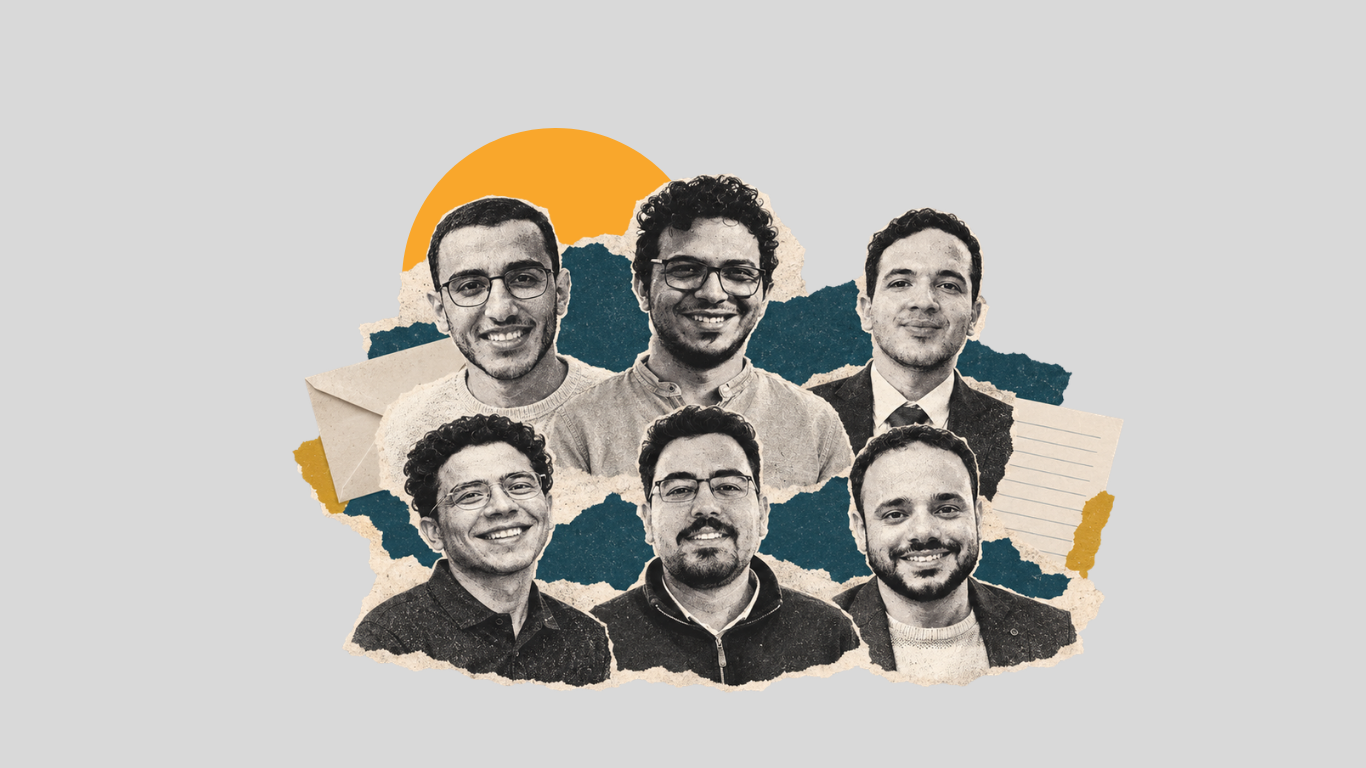
According to the statement issued by the Authority, the council includes a number of academic and executive figures, among them: Abdel Fattah El-Gebaly, Chairman of the Media Production City; Dr. Tharwat El-Badawy, Dean of the Faculty of Mass Communication at Cairo University; and Dr. Mohamed Sameh Amr, Dean of the Faculty of Law at Cairo University. Other prominent deans and academics include Dr. Omar El-Husseiny, Dean of the Faculty of Engineering at Ain Shams University; Dr. Hossam El-Din Abdel Fattah, Dean of the Faculty of Engineering at Cairo University; and Dr. Ayman Shetaiwy, Dean of the Faculty of Business at Alexandria University, along with Dr. Ahmed El-Gohary, former President of the Egypt-Japan University of Science and Technology.
The council also includes individuals from executive and financial backgrounds such as Engineer Ali Salem, representing the National Media Authority; Hesham Suleiman, former executive at United Media Services; and journalist Ezzat Ibrahim, Editor-in-Chief of Al-Ahram Weekly. In addition, representatives from the Ministries of Finance and Planning are present, including Dr. Hussein Eissa and members of the technical secretariat of economic authorities. According to the announcement of its formation, the council aims to provide advisory insights and ideas to the Authority, covering financial, professional, and technical aspects, with a focus on improving the performance of the National Media Authority’s sectors and offering proposals to enhance operational efficiency.
In recent years, the National Media Authority has failed to achieve noticeable progress in terms of content quality, viewership rates, or financial independence. On the contrary, reports issued by the Central Auditing Organization and official data indicate continued hemorrhaging of losses—whether in various Maspero sectors or institutions affiliated with the Authority. Observers who spoke to Zawia3 attribute this to multiple reasons, most notably administrative bloat, weak governance frameworks, and the absence of marketing strategies capable of attracting both advertisers and audiences.
Moreover, many development initiatives—such as studio upgrades or digital broadcasting transitions—have faced setbacks due to poor planning and weak administrative capacities, as well as a lack of transparency regarding how resources are allocated to these projects.
Dr. Sara Fawzi, a media professor at Cairo University, believes that it is too early to assess the performance of the newly formed council, as it has not yet begun its work in a way that allows for objective evaluation. However, she points to some positive signs, most notably the growing attention now being paid to media channels, especially those representing Maspero’s historic legacy. She argues that this legacy deserves to be revived in a manner that reflects its true value—whether through strategies that generate financial returns or by re-presenting it to new generations in ways that highlight its prominent role in the history of drama and programming production.
Speaking to Zawia3, she explained that projects like Maspero Drama and other planned initiatives represent a positive step, particularly with the move toward creating a digital platform to showcase this heritage content. She also considers the idea of founding Maspero Academies an important one, expressing hope that they will lead to real progress—especially in areas like program content planning, applications of artificial intelligence, and addressing the technical challenges facing the media industry.
However, Fawzi voiced clear reservations about the absence of young people in advisory formations, arguing that any committee lacking effective representation of younger generations—particularly those in their 30s and 40s—will remain deprived of perspectives vital for media development. She added that this issue is not confined to the National Media Authority but has become a widespread pattern across many institutions, where youth are unjustifiably excluded, despite representing an essential source of energy and a key pillar in any genuine modernization process.
Don’t miss: Tarek Nour: From Allegations to Media Power


Ongoing Bleeding of Losses
The National Media Authority has recorded mounting losses over the past five years (2020–2025), amid worsening indicators of the financial erosion of the institution responsible for managing state-owned media. Official financial reports reveal alarming figures that underscore the depth of the structural crisis within the Authority.

In the fiscal year 2020/2021, the Authority announced that its cumulative losses had surpassed 42.6 billion Egyptian pounds ($878.4 million)—a figure that reflects years of accumulated deficits and mismanagement of resources. This number was confirmed in an official statement issued by the Authority at the time, but was not accompanied by any announcement of a clear reform plan or spending rationalization measures.
In the fiscal year 2022/2023, the annual losses of the National Media Authority reached approximately 10.6 billion Egyptian pounds ($218.6 million), representing around 74% of the total losses incurred by all government economic entities in Egypt. This figure prompted oversight bodies and members of parliament to call for an urgent review of the Authority’s performance, though these calls have yet to produce any concrete action.
The crisis escalated further during the fiscal year 2023/2024, with losses rising to 11.4 billion Egyptian pounds ($235.1 million), placing the Authority at the top of the list of the most loss-making government entities in the country for at least two consecutive years, according to official reports from the Ministry of Finance and the Central Auditing Organization.
In June 2023, the Minister of Finance announced that the total losses of the National Media Authority had reached 12.2 billion Egyptian pounds ($251.5 million)—a figure that aligns with estimates from oversight agencies and points to a continued rise in annual losses, with no signs of imminent improvement or comprehensive review of the financial and administrative policies in place.
According to informed sources within the Authority who spoke to Zawia3, the National Media Authority currently includes no fewer than 15 internal and advisory committees and councils. Some of these are permanent—such as the Media Planning Committee, the Technological Development Committee, and various oversight and content councils—while others are temporary entities formed by seasonal decisions, such as the Maspero Development Committee or the Financial Reform Committee. However, no periodic reports have been published regarding the outcomes of their work.
The National Media Authority depends almost entirely on financial support from the public treasury. In the fiscal year 2022/2023, its total allocation reached 24.9 billion Egyptian pounds ($513.4 million), with 18.4 billion Egyptian pounds ($379.4 million) directly covered by the state. This reflects a financial dependency of over 75% of its total revenue. The Authority is listed among 16 government entities with chronic losses that burden the national treasury—alongside institutions like the Egyptian National Railways.
Don’t miss: Egypt’s Economic Authorities Bleed Billions Amid Governance Failures
Why Is the National Media Authority Losing Money?
Journalist Mona Ezzat asserts that the development of media institutions is primarily tied to the level of freedom they are granted and the extent to which creativity is allowed to flourish within them. She emphasizes that institutions do not evolve through superficial decisions, but by creating an environment that enables the production of genuine content reflecting people and their issues—whether artistic, cultural, political, or social.
In exclusive comments to Zawia3, Mona explained that the essence of media work starts with a fundamental question: “What do we want to present to the public?” She believes that the absence of this question from the agendas of media institutions is what leads to recurring crises and escalating losses. She adds: “We need to create real space for creativity—space that allows for raising and debating all kinds of issues from multiple perspectives, rather than remaining captive to restrictions and red lines that strip media of its meaning.”
The journalist notes that Egyptian media in the 1990s and early 2000s enjoyed wide viewership—not only due to the limited alternatives at the time, but because it offered artistic and cinematic works that reflected the concerns of society and carried high artistic value, delivered through prominent names in writing, directing, and acting.
She told us: “People used to look forward to what was broadcast on television because it genuinely represented them and tackled their issues with high artistic and professional quality.” She stresses that the current drop in viewership rates is no mystery, but rather a natural result of the absence of real content. She adds: “If the viewer doesn’t see themselves represented on the screen, if they don’t hear their issues discussed seriously, they’ll simply turn to other channels that do.” In her view, the problem does not lie in the names or age groups involved in production, but rather in the nature of the messages and content offered by programs—whether artistic, cultural, or political.
She continues: “When I don’t see content that represents me on screen, when I don’t find genuine discussion of crises, and when I don’t see quality in the product, I stop watching. And when that happens on a wide scale, it’s only natural that media institutions will suffer financial and reputational losses.”
Mona places the blame for this decline squarely on editorial policies and criticizes the approach of forming new committees or hiring consultants without fundamentally reviewing the content. She says: “You don’t solve the problem by moving a chair from right to left, or by replacing one person with another. It’s solved only when we define a clear vision, decide what we want from this media, and determine the type of messages we aim to deliver.”
She warns that the continued lack of professionalism leads to the recruitment of unqualified personnel: “When the available space for expression becomes extremely narrow, we are forced to select presenters, producers, and directors who fit that limited space—not based on competence or experience. The result is weak content that isn’t worth watching.” She also affirms that if the current situation continues, further deterioration is inevitable. She says: “No matter how many committees or figures are brought in, nothing will change as long as the content remains the same. If the content stays weak, the losses will persist, and the standing of Egyptian media will continue to decline—while other Arab media institutions advance because they’ve mastered the formula of influence.”
Journalist Dalia Nasser, from Radio and Television Magazine and herself a product of Maspero, agrees. In a statement to Zawia3, she said that media everywhere in the world is measured by its level of influence, presence, and reach—benchmarks that Maspero has failed to meet for years. She points to several causes behind this decline, chief among them “the exodus of talent from the building to the private sector—both local and regional—where there are better opportunities in terms of professional recognition and financial compensation.”
She adds that Maspero’s crisis goes beyond human capital to include technical and production aspects, noting severe shortages in modern equipment, weak sound systems, and a lack of proper sets and engineering infrastructure needed to produce competitive content. She continues: “The state no longer pays any real attention to Maspero, even though it was possible to inject investment from United Media Services into the building, with oversight and performance accountability later. But what happened was quite the opposite—development was abandoned, and Maspero was left to face its fate.”
As for the proliferation of newly formed committees within the Authority, especially those including members from outside Maspero, Dalia asserts they will bring no real change. Instead, they will merely impose superficial regulations on “a dysfunctional system that will lead nowhere.” She concluded her remarks with a striking analogy: “Maspero has become like a patient ravaged by illness, for whom death is the only cure.”
Don’t miss: Fragile Paper: An Existential Crisis for State-Owned Newspapers in Egypt
Dreams of Reform
In December 2016, President Abdel Fattah El-Sisi issued Law No. 92 of 2016 on the institutional regulation of press and media, which mandated the dismantling of the former Egyptian Radio and Television Union (ERTU) and its transformation into three independent bodies: the Supreme Council for Media Regulation, the National Press Authority, and the National Media Authority. The latter is officially regarded as the successor to Maspero, functioning as an independent public institution with legal personality.
On August 27, 2018, Law No. 178 of 2018 concerning the National Media Authority was published in the Official Gazette. It reaffirmed the Authority’s organizational and financial independence and outlined its responsibilities, including managing state-owned media institutions, developing their assets, and approving their activities based on principles of independence and sound governance. This legal framework laid a theoretical foundation for reforming state media institutions, but its implementation has remained fraught with challenges.
Following its legal establishment, the Authority began developing reform strategies through specialized committees: an Economic Planning Committee, an Institutional Development Committee, and a Content and Quality Committee. These aimed to achieve financial balance, reduce expenditures, and convert its commercial operations into companies with more flexibility outside governmental bureaucracy. A phased two-year plan was drafted, followed by a final roadmap involving comprehensive restructuring—merging overlapping activities, reducing the number of administrative units from 1,588 to around 267, and creating regulatory sectors overseeing production, digital content, finance, and human resources.
Among the most prominent projects was the digitization of the Authority’s vast archive to re-present Egypt’s media heritage, alongside a digital platform offering access to this historical content as a new revenue stream. However, despite the theoretical strength of the plan, its implementation has so far failed to yield tangible changes.
One of the primary reasons for this failure, according to observers, is the massive debt burden inherited from Maspero. The original debt was estimated at between 7 and 8 billion Egyptian pounds ($144.3–$164.9 million) in 2018, with projections suggesting it could reach around 36 billion Egyptian pounds ($741.2 million) in the following years—especially if the Authority fails to utilize its available assets, such as land from transmission stations, to repay part of it. Yet the crisis extends beyond debt. The Authority suffers from the absence of effective strategic management. It lacks specialized departments for planning and oversight and does not have a long-term vision to guide its editorial, financial, or operational performance. According to an academic study, the absence of strategic management is the main obstacle to the Authority’s development.
Moreover, direct governmental involvement in development efforts has waned, while private companies—particularly United Media Services, owned by a sovereign entity—have taken over much of the production portfolio since 2020. This shift has further marginalized the Authority and undermined its editorial and financial independence. The combination of mounting debt, managerial deficiencies, and diminished regulatory power has caused the Authority to fall short of the goals set out for it in law—namely, achieving independence, sustainability, and meaningful media impact.
The National Media Authority stands as a living example of the structural challenges facing state-owned media in Egypt. It embodies the heavy legacy of entrenched administrative traditions, bureaucratic overgrowth, and weak strategic planning, alongside ambitious reform dreams that have yet to materialize. Despite legislative amendments, modernization attempts, and the formation of specialized committees and councils, official figures confirm that losses continue to mount and public influence continues to decline. The absence of a clear editorial vision, poor governance, and the exclusion of young talent remain among the clearest symptoms of institutional failure.