
The Civil Democratic Movement has faced one of its largest crises since its founding after a statement supporting Conservative Party leader Akmal Kortam provoked anger in political circles and on social media. The movement subsequently apologised, withdrew the statement and deleted it from its official page.
The statement concerned the demolition of a palace Kortam owns on the Nile, which he described as an infringement of his rights. The Ministry of Water Resources and Irrigation said the building violated the law and encroached on the river’s protected zone.
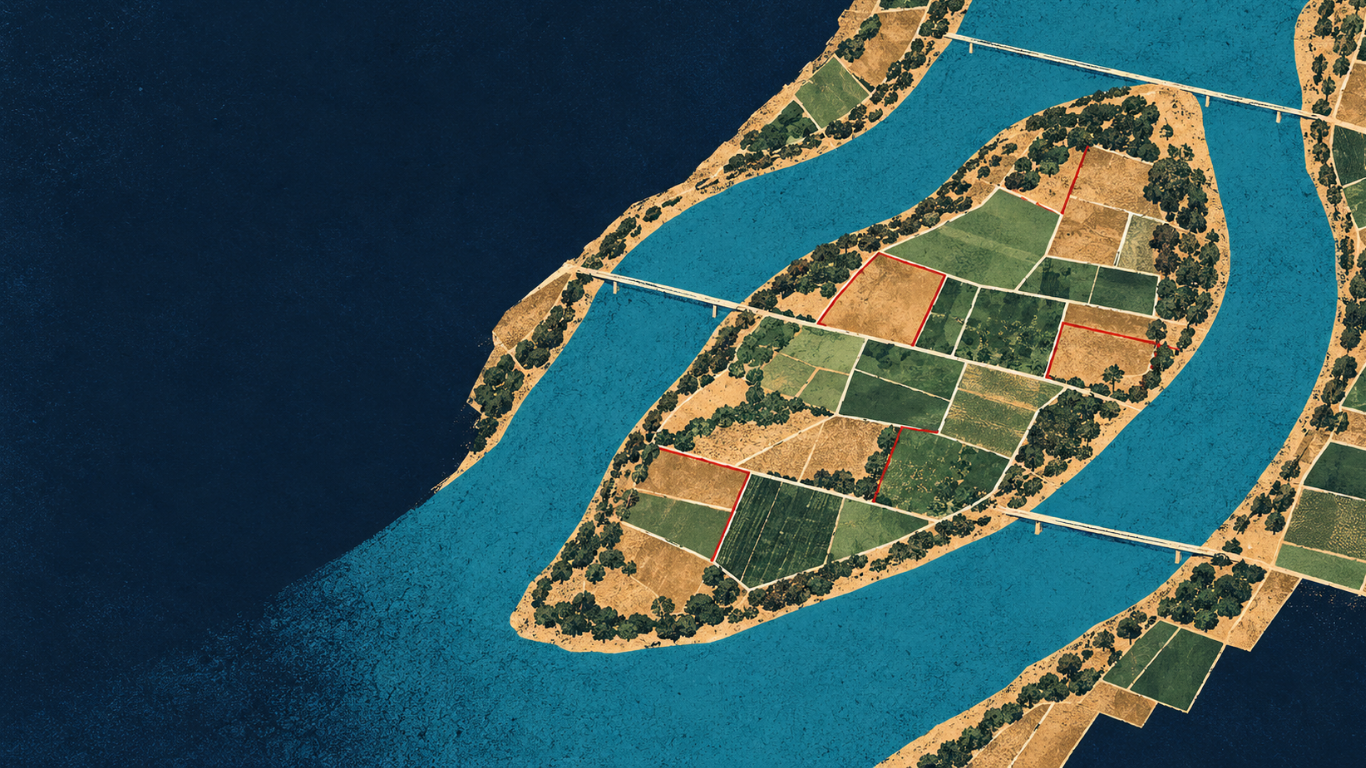
Critics said the statement conflated a private property dispute with public issues such as Warraq Island and historic cemeteries, giving it a wider political significance than warranted. Others felt the movement prioritised defending a leader over issues affecting broader groups, and objected to insufficient internal discussion before publication.
Some accused it of taking sides in a dispute still subject to legal proceedings. In withdrawing and apologising, the movement acknowledged that its wording was unsuccessful and prompted interpretations it had not intended.
Parties and politicians disavowed responsibility, including Kortam’s own Conservative Party, exposing deep disagreements about decision-making and political priorities.
Sources inside the movement tell Zawia3 that the anger prompted reviews of the alliance’s future and governance. Member parties are consulting on whether to remain, restructure comprehensively or dissolve it and form ideological alliances. The youth secretariat decided to prepare a restructuring proposal in an effort to save it.
A trustees’ meeting scheduled for 5 June was postponed to 12 June to enable full attendance and calm tensions. The Conservative Party announced a reassessment of its alliances, interpreted by some as preparation to withdraw. Party sources said a final decision would follow the meeting.
Although the immediate dispute concerned a solidarity statement, movement leaders, researchers and politicians interviewed by Zawia3 say it exposed accumulated structural problems: organisational rigidity, weak decisions, distance from public concerns and failed renewal within Egypt’s largest civil opposition alliance.
A revealing crisis
The Civil Democratic Movement was established in December 2017 as an alliance of twelve parties and public figures to coordinate civil opposition, defend democracy, the rule of law and a civil state, and offer a pluralist alternative based on peaceful transfers of power.
It brought together liberal, left-wing and nationalist currents. That diversity enabled agreement on public issues, but also contained differences that accumulated over time.
From 2018, the start of El-Sisi’s second term, political and security pressures restricted its public activity. It remained largely constrained until April 2022, when the president’s invitation to a National Dialogue involving government supporters and opposition offered a chance to regain visibility.
The dialogue initially brought some cohesion, particularly around demands to release prisoners held over their opinions. As the 2023 presidential election approached, however, differences grew. An initial common demand for competitive election guarantees gave way to divergent positions on participation.
An earlier Zawia3 report, “We Agreed to Disagree: Behind the Splits in Egypt’s Opposition,” traced these divisions and predicted a changed role after the election. The Egyptian Social Democratic and Justice parties subsequently froze membership, followed later by the Reform and Development Party.
Akram Ismail, a movement and Bread and Freedom Party leader, considers the recent crisis revealing of structural problems. The alliance faces political and security pressure because it represents a current rejecting the engineering of political life and seeking independence, he says.
He tells Zawia3 that this pressure does not absolve it of responsibility for the deleted statement. Internal contradictions, unequal weights, ideological differences and different political traditions make it more fragile as activity and initiative decline, bringing underlying disputes to the surface.
Ismail says it seeks independent opposition outside the “available space”—an electoral alliance involving Justice, Egyptian Social Democratic, Reform and Development and pro-government parties. Isolation is the cost of that choice. Yet linking Kortam’s personal dispute to national issues was a mistake that cannot be justified by pressure, particularly when the alliance already suffers from weak effectiveness.
Political and human rights researcher Mostafa Shawky regards the crisis as part of the movement’s historical trajectory, rather than a product of one statement.
He divides its roots into two. The objective factor is what he calls the “complete nationalisation of public space,” closing politics and isolating civil forces from society, weakening their ability to build constituencies or connect with citizens.
The internal factor is failed restructuring, especially after the National Dialogue offered a limited chance for renewal. In his view, a rigid leadership could not use that opportunity before political space narrowed again.
A prolonged process of fragmentation
El-Sisi’s third-term victory in December 2023 did not end internal disputes. The Egyptian Social Democratic and Justice parties’ membership freezes continued, while debate intensified over alliances for the 2025 parliamentary election. The movement’s rejection of cooperation with pro-government parties deepened differences.
In February 2024, another statement called for demonstrations against genocide in Gaza and criticised Egypt’s position and the continued Camp David agreement. It was published without internal consensus. Zawia3 previously reported objections from Reform and Development, followed by Conservatives and the Constitution Party, revealing further organisational weakness and disagreement.
Reform and Development later left as the parliamentary election approached. The number of active parties fell to nine, and public figures became more influential relative to organised parties on the board of trustees, without a shared vision or clear public constituency.
In July 2024, restructuring efforts sought to repair divisions and create public engagement through a youth secretariat. It held a few activities but gradually receded without a substantial organisational or political effect.
In the latest parliamentary election, the movement appeared fragmented, without a common programme or unified alliance. Zawia3 examined this in “Divisions or Complementary Roles: Why Did the Civil Movement Fail to Build One Electoral Alliance?”
Another dispute involved allegations against Islam Kortam, Akmal Kortam’s son, during his candidacy in Basateen and Dar El-Salam. The Conservative Party denied claims of indirect coordination with Mostaqbal Watan candidates in individual-seat contests and the use of political money. The allegations conflicted with the movement’s and party’s declared positions.
Ismail says the way Islam Kortam won prompted major internal disagreements that did not become public and could not be treated as ordinary business.
Information reaching the movement alleged practices such as political spending commonly seen in elections. Members assessed them differently: some regarded them as electoral offences, others as part of customary electoral conduct. Ismail attributes this to divergent political traditions.
Shawky argues that the movement has not developed its political understanding since the Tiran and Sanafir dispute, relying on ready-made positions that fail to engage with citizens’ most important concerns. Although it previously offered political and economic reform proposals, he believes its vision has not meaningfully evolved under continuing closure of public life.
The Conservatives’ influence and anger
Ironically, the Conservative Party disavowed a statement intended to support its own leader. It later announced the freezing of previous alliances and plans for new social-liberal alliances ahead of elections through 2030.
The statement did not explicitly withdraw from the Civil Democratic Movement, but political circles interpreted it as preparing a break, especially after Kortam left the trustees’ messaging group. An informed movement source called that a clear signal about the party’s future relationship with the alliance.
The controversy reopened discussion of Conservative influence, particularly because movement meetings long relied on the party’s premises and financial and logistical resources.
Shawky calls the inclusion of Kortam—a former member of Mubarak’s National Democratic Party—in the movement’s leadership a “historic mistake.” He believes financial influence encouraged overlooking his political practices and historical positions.
At the same time, Shawky considers claims that money gives Kortam control exaggerated. Nationalist and socialist left-wing parties have historically carried the greatest weight in decisions, he says. The difficulty is their failure to take a common position: some endorse other currents’ views, giving them enough weight to prevail. Decision-making is therefore more complex than submission to one individual.
Magdy Hamdan, a member of the Conservative Party’s presidential council, says its statement does not necessarily mean withdrawal. The party is reviewing and reorganising its positions.
He tells Zawia3 that presidential council member and movement coordinator Talaat Khalil is authorised to decide whether to remain or freeze membership at a forthcoming meeting.
Remaining depends on a genuine willingness to change, Hamdan says. He criticises entrenched figures as obstructing renewal and calls for more effective personalities. He also regards the movement as ideologically unbalanced, dominated by the left with the Conservatives as its sole liberal party, undermining agreement, particularly on elections.
He says the alliance failed as an electoral framework and portrays the Conservatives as its most influential party, claiming it would not have been founded without them.
On cooperation with the Constitution Party, Hamdan describes its leadership as organisationally unsettled and legally disputed, with the Political Parties Affairs Committee recognising none of the competing claimants. His party, he says, deals only with officially recognised entities.
He presents this as respect for law and state institutions rather than intervention in other parties’ disputes, and says the Conservatives seek a broader liberal alliance capable of competing in public life.
On Kortam’s property dispute, Hamdan condemns what he calls gloating by some movement members and evasion of responsibility by others. He says Kortam later provided what the party considers evidence refuting the Irrigation Ministry’s allegations.
An apology that failed to contain the anger
Withdrawal and apology did not end the criticism. Some demanded dissolution, arguing that the movement could no longer serve as a unifying civil opposition framework.
Critics said the incident exposed longstanding political and organisational problems and a loss of capacity to represent opposition priorities, prompting calls for a more coherent and effective alternative.
Bread and Freedom leader Ola Shahba considers the crisis deeper than the statement, rooted in the alliance’s nature, methods and political choices.
No party’s departure will solve it, she tells Zawia3. Alliances naturally contain political and intellectual differences. The central problems are weak engagement with direct social issues and the absence of a genuine constituency capable of scrutinising performance and conferring broader legitimacy.
The second problem is internal structure and decision-making. The statement was issued without sufficient discussion; some objections were treated as minority views, while others failed to object clearly despite sharing political responsibility.
After publication, some members defended themselves separately and denied responsibility. Shahba sees this as practical evidence that the movement no longer acted as a coordinated coalition: parties protected themselves rather than a collective decision. It also revealed rigidity, indifference to the alliance’s fate and insufficient political imagination or assessment of consequences.
The issue was not only content but distance from social context. A businessman’s dispute was not a general social threat, making comparison with Warraq and historic cemeteries politically ill-judged and exposing poor anticipation of public reaction.
Movement spokesperson and Constitution Party member Walid El-Omary says the trustees’ meeting was delayed to widen attendance. The next meeting would be held at the Socialist Popular Alliance or Bread and Freedom premises. Claims that the movement had decided to dissolve were not based on formal discussion.
He says the debate concerns comprehensive restructuring and renewal, or dissolution if agreement on reform proves impossible. Dissolution had not been adopted as a final decision.
Much criticism comes from people involved in the democratic current from its inception, he notes. Some calls to end the movement offer no clear alternative for civil political action.
El-Omary says acknowledging and apologising for the error promotes political accountability, often missing in Egypt. He fears attacks may continue even after reform and weaken civil opposition, especially as some official media adopt the same rhetoric.
The failed attempt at youth renewal
The forthcoming 12 June restructuring discussion revives the 2024 youth secretariat initiative. It aimed to involve younger members in decisions and renew organisation, but remained limited despite events and representation on the trustees’ board.
Sources tell Zawia3 the secretariat never gained full acceptance. Some parties and public figures viewed it as an attempt to change the balance of power or impose new influence on decisions, limiting cooperation.
It also lacked clear rules defining its powers and relationship with trustees, faced disputes over membership and representation, and suffered weak coordination with member parties. Its activity gradually declined.
Ismail says young members remained wary of full engagement because of tension over trustees’ practices and priorities. The movement has not settled whether to expand youth participation; traditional leaders still dominate and are cautious about opening space and accepting its consequences. Gaining experience requires allowing young people to make mistakes or occasionally take unbalanced positions, he says.
Shawky attributes failure to two factors: traditional leadership treated youth as an organisational appendage rather than a force for change, and the group could not establish influence or win room for its project. Political closure diminishes young people’s capacity to act; new initiatives gain influence during periods of openness.
Shahba says the secretariat did not become a space for new ideas or activities reconnecting the movement with society. The issue is not age alone, but political formation, real public engagement and some parties’ weak attention to social issues and internal democracy. Youth cannot renew politics while operating within the same traditional frameworks.
Giving independents and public figures equal votes to party representatives on the trustees’ board reduced youth influence, she adds. Such figures are not accountable to organised constituencies or supported by political groups for their positions.
This structural imbalance affected both the movement and secretariat and requires review. Shahba notes the initiative arose amid youth mobilisation around Palestine, but that momentum alone could not create sustained political renewal or stable organisation, despite the cost borne by some young activists and the continued detention of some.
Reform, dissolution or gradual erosion?
Shawky believes a formal decision to dissolve would not change the wider political crisis. He expects gradual disintegration as a more effective alternative attracts active members. In his view, current leaders cannot absorb serious reform projects and proposed measures amount mainly to improving appearances.
El-Omary says the youth secretariat will submit a restructuring plan to preserve the alliance. Proposals include broader membership, public figures, youth and middle-generation leaders; clear criteria for public-figure status; participation requirements and removal of inactive members; an executive office with real authority; and rules for political messaging recognising the alliance as civil rather than ideologically uniform.
He says the secretariat worked on Alaa Abdel Fattah’s case, Laila Soueif’s hunger strike and criminal procedure legislation, and remained cohesive despite disagreements over the recent statement.
He attributes reduced activity to internal disputes and a lack of agreement on transparency and frank discussion, without absolving the secretariat. Youth were represented by two trustees, one independent and one party-affiliated, whose firm opposition to using the movement’s name to endorse candidates was respected.
Shahba argues that dissolution or replacement by ideological alliances would produce smaller organisations facing the same problems with less influence. The movement was created to coordinate opposition under political closure around shared rules, not identical ideas. Its existence does not prevent parallel alliances on specific issues or orientations.
The true crisis concerns governance and decisions rather than the alliance’s form, she says. Serious restructuring now requires genuine external pressure.
Member parties themselves need a deep review of their decisions, issues, internal rules and respect for democracy, women’s rights and members’ rights. These are central indicators of political culture and the capacity to develop new leaders and enable marginalised members to influence decisions.
The crisis thus reflects a long accumulation of political and organisational differences in an alliance founded on diversity. Between reform and calls for dissolution, it faces a decisive test: renew its methods and conduct a comprehensive review, or risk gradual erosion without a clear political alternative.