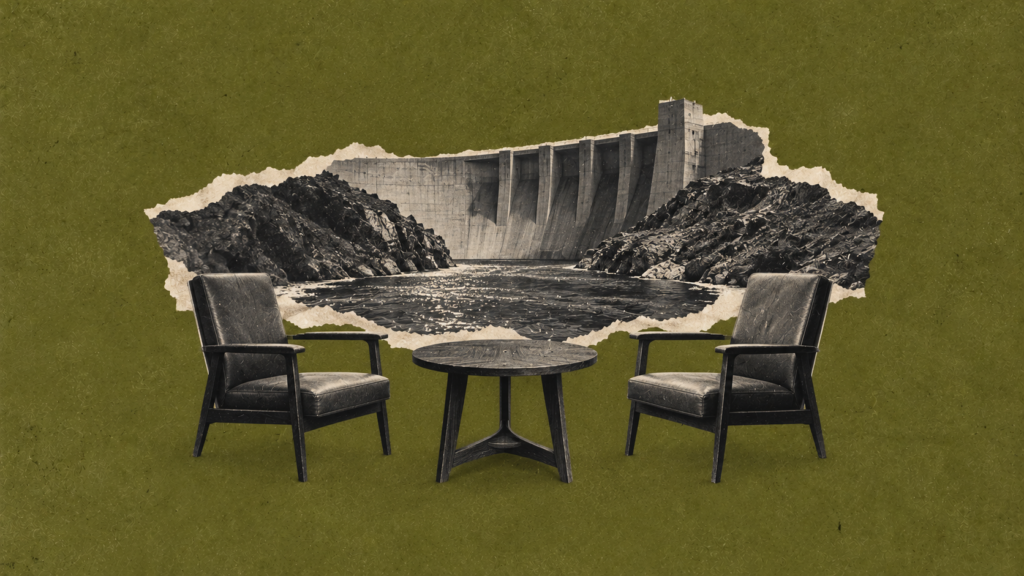

Last August, Ethiopia’s Minister of Water and Energy, Habtamu Itefa, announced his country’s intention to build additional dams to maximize the use of Nile waters and increase electricity production, noting that the flow of water to downstream countries would remain under Addis Ababa’s control, reigniting the controversy over the contentious file in Cairo.
In a subsequent development on August 23, Itefa said that joint management of the GERD was “absolutely impossible and unimaginable,” affirming that his country bears no legal obligation to share dam management with downstream states, and that Nile water flows heading toward Egypt and Sudan have come under Ethiopian control.
Itefa did not stop at rejecting joint management. He indicated that his country possesses vast areas of irrigable land near the GERD, and that not exploiting them to date reflects, in his words, consideration for Egypt’s and Sudan’s needs. He noted that the dam’s primary objective is electricity generation rather than irrigation projects, though he spoke of the possibility of utilizing the water after it passes through the turbines.
These statements coincided with what Cairo and observers of the file described as Ethiopian escalation. Former Ethiopian Water Minister Shiferaw Garsu had earlier raised a demand that Egypt pay financial compensation in exchange for using Nile River waters, on the grounds that Addis Ababa contributes 86% of the flows as an upstream state, according to the official Ethiopian News Agency. Experts who spoke to Zawia3 consider this an attempt to “price water” that does not accord with international law standards.
In response to Ethiopia’s statements, Egypt affirmed its commitment to taking all measures guaranteed by international law to protect its water rights. During a meeting between Foreign Minister Badr Abdelatty and Minister of Water Resources and Irrigation Hani Sewilam, both sides stressed that protecting Egypt’s water security does not conflict with African peoples’ right to development, affirming that the Nile is a transboundary water resource whose management must follow the rules of international law, foremost among them the principle of no harm to downstream states, prior notification, and consultation and consensus among the states concerned.
During a press session at the Egyptian Ministry of Foreign Affairs with foreign press representatives, Abdelatty declared that Egypt had stated its position clearly, and that the negotiation track over the GERD “has ended and reached a dead end,” noting that Cairo reserves its right to use the means guaranteed by international law to defend itself, its interests, and its water security if subjected to harm or danger.
When asked whether this position implied the possibility of resorting to the military option, Abdelatty affirmed that international law guarantees states the right to defend themselves and their interests if subjected to danger, stressing that Egypt “has the full right to defend itself.”
In a related context, Egypt and Sudan renewed their affirmation that the water security of both countries “tolerates no infringement,” and that its protection does not conflict with Nile Basin states’ right to achieve sustainable development, during talks between Sudan’s Minister of Agriculture and Irrigation Esmat Qurashi and Egypt’s Minister of Water Resources and Irrigation Hani Sewilam in Cairo, which addressed technical cooperation and joint projects amid the continuing GERD crisis and the absence of a legally binding agreement governing filling, operation, drought periods, and water discharge.
According to the Egyptian Ministry of Agriculture and Land Reclamation’s statement, both ministers affirmed the importance of strengthening coordination between the two countries regarding developments in the Eastern Nile Basin, particularly those related to the filling and operation of the Ethiopian dam, in a manner that protects the water security and interests of both Egypt’s and Sudan’s peoples, while emphasizing the principles of cooperation, consultation, information exchange, and non-harm to the interests of other states.
The two sides also discussed, alongside the establishment of joint agricultural projects in Sudan, a number of water cooperation files, including the rehabilitation of Jabal Awlia Reservoir, the development of monitoring and measurement systems, the reactivation of the High Dam Lake mission on a joint basis, as well as projects for flood protection, rainwater harvesting, groundwater, and capacity building.
How Is Egypt Moving?
In Cairo, the repercussions of the GERD crisis do not stop at the level of mutual statements: the political escalation coincides with growing debate about water levels, water resource management, and the state’s capacity to handle any change in incoming flows. Egypt had accused Ethiopia of taking unilateral actions in dam management that caused sharp changes in the volumes of water flowing to the two downstream states, while Addis Ababa denied responsibility for the floods Sudan experienced, saying the dam had contributed to limiting their effects.
Ambassador Rakha Ahmed Hassan, former Assistant Foreign Minister, says Egypt has a political and diplomatic track whose tools have not yet been exhausted, noting that resuming negotiations with Ethiopia could be one of these tracks, but only on the condition that they aim at reaching a legally binding agreement governing the GERD’s operating rules, not merely non-binding political statements or understandings.
He considers the core of the disagreement in previous rounds to have been the two parties’ divergence over the nature of the required outcomes: Egypt insisted on a legally binding agreement, while Ethiopia preferred, in his estimation, a political framework, which robbed the negotiations of their capacity to achieve real progress.
At the external level, Hassan argues that Egypt’s movement can focus on African regional institutions, as the most relevant framework for the dispute, while simultaneously drawing on the American role and its capacity to influence Ethiopian leadership. He does not consider recourse to the United Nations to be the most effective track at this stage, explaining that such disputes over international rivers can be better handled through regional and diplomatic frameworks, while Cairo continues to present its position and document points of disagreement before international and regional parties.
Hassan does not rule out that the nature of Egypt’s options may change as the crisis develops, but notes that Egypt has not yet exhausted the available political tracks before transitioning to other options.
Ahmed Sultan, a researcher in regional security affairs, agrees with this assessment. He says Egypt continues to treat the Ethiopian dams file as a political rather than a military or security matter, noting that the nature of file management determines the tools for addressing it and the paths for moving forward. He argues that Cairo has not yet exhausted the political steps and options available to it before transitioning to other options.
Sultan affirms that Egypt’s acceptance of additional dam construction inside Ethiopia, particularly border dams that could impede water flow or breach legal obligations and framework agreements between Nile Basin states, “is unacceptable to Egypt,” noting that Cairo will not repeat what he considers the “mistake” of its handling of the GERD.
He adds that the options before Egypt remain open, as the file is still being handled politically, with the nature of that handling potentially shifting in the future if developments warrant it. Based on his monitoring of Egyptian foreign policy over the past decade, however, he sees the military option as not currently on the table, arguing that the movement may rely on a combination of diplomatic and intelligence measures, while resorting to the military option remains, in his words, “the last resort.”
Sultan notes that what is currently being proposed is political movement, through attempts to reinforce relations with Nile Basin states and African countries, alongside pressure in cooperation with international powers including the United States, with China potentially entering the picture in connection with the file.
He points to the need to distinguish between signaling the construction of new dams and actually commencing construction, and between the existence of an intention to implement a project and its actual initiation on the ground, considering that the nature of Egypt’s response differs according to the stage a project reaches.
He affirms that Egypt will move on this file primarily through diplomatic and legal tools, within what he calls “strategic balance policy,” explaining that Cairo does not wish to lose or strain its relations with Nile Basin states, including Ethiopia.
For her part, Dr. Sara Kira, international relations researcher and director of the European North African Center for Studies, says Cairo has chosen for more than a decade the path of negotiation and international law in dealing with the GERD issue, despite Ethiopia’s repeated statements, some of which she describes as escalatory and provocative, and despite Addis Ababa’s continued implementation, filling, and operation of its project without reaching a legally binding agreement with Egypt and Sudan.
She tells Zawia3 that Egypt sees from its side that negotiation is possible, cooperation is possible, development is possible, but imposing a fait accompli at the expense of Egyptian and Sudanese water rights is not peace, not cooperation, and not respect for international law.
Kira argues that “it is no longer possible today to treat the GERD crisis as a limited technical disagreement over an electricity generation project. The recent developments, particularly Ethiopia’s announcement of its intention to proceed with plans to build three additional dams on the Blue Nile, confirm that we are facing a new phase concerning the future management of this vital water resource, and the possibility of the GERD transforming from a standalone project into part of a larger system of water infrastructure that could have a cumulative impact on Blue Nile flows.”
The international relations researcher draws attention to Addis Ababa’s announcement last March of plans to develop three new hydroelectric projects on the Blue Nile: Karadobi, Mandaya, and Beko Abo, with a total announced capacity of approximately 5,700 megawatts and estimated investments of approximately $10.5 billion. She notes that these projects remain in planning and preparation stages, meaning their final figures and designs are subject to change, but they in themselves represent an important shift in Ethiopian thinking about exploiting the Blue Nile.
She explains that the crisis lies not only in the number of dams but in accumulation: when a country moves from a single project to discussing a chain of installations on an international waterway, the issue becomes linked to the operating rules of these installations collectively, and to how water flows will be managed in years of abundance and flood, in years of drought and extended drought, and through mechanisms for data exchange, prior notification, emergency response, and guarantees of the safety of installations downstream.
Egypt depends almost entirely on Nile waters to meet its daily needs. Published estimates from the American University in Cairo indicate that agriculture requires approximately 76% of the country’s water resources, in addition to drinking water. Egyptian experts affirm that supply shortfalls can be partially managed through High Dam storage and water reuse measures, but continued pressure on resources imposes greater challenges on agriculture and food security sectors.
The country faces a massive structural water gap between its needs and available resources. Published estimates put Egypt’s actual water need at approximately 114 billion cubic meters annually, while total available resources do not exceed approximately 80 billion cubic meters, comprising 55.5 billion cubic meters from Egypt’s historical Nile share under the 1959 Agreement, plus smaller additional sources from groundwater, desalination, and rainfall, leaving a deficit estimated by the Central Agency for Public Mobilization and Statistics and the Ministry of Water Resources and Irrigation at approximately 54 billion cubic meters annually.
Egypt bridges part of this gap through two main sources: water reuse (approximately 21.6 billion cubic meters annually from treated agricultural drainage), and the import of agricultural crops in the form of “virtual water” (approximately 34 billion cubic meters annually), in addition to unsustainable over-extraction of deep groundwater (3 to 4 billion cubic meters annually), an environmentally non-sustainable solution.
No legally binding agreement currently exists between Egypt, Ethiopia, and Sudan to govern GERD operation during drought years, leaving downstream states vulnerable to sudden shocks in discharge, as occurred in late August 2025 when discharges dropped to approximately 111 million cubic meters per day, then suddenly jumped to approximately 750 million cubic meters in September, causing unexpected flooding in Sudan.
Why Does Egypt Not Move Militarily?
This question remains the most prominent whenever discussions arise in Egypt around the GERD crisis, particularly at the informal popular level. In this context, Egyptian diplomat Abd El-Rahim Shalaby, Assistant Foreign Minister and former Ambassador, presents in an analysis published on the Orient XXI website last August the limits of this difficult option and why Cairo has not resorted to it to date despite the direct threat to its water security.
He notes that Egyptian restraint is not, in his estimation, linked to a deficiency in military capabilities, but to practical and political complexities: the dam is located approximately 1,400 kilometers from Egypt, making any long-range air operation highly complex, while using bases in Sudan could circumvent the distance problem but carries risks relating to Sudan’s stability and the possibility of drawing it into a direct confrontation with Ethiopia.
He also points to the difficulty of achieving complete destruction of a reinforced concrete dam through conventional air strikes, in addition to the risks of collapsing a full reservoir and the damage that could result in Ethiopia and Sudan before water reaches Egyptian territory.
Shalaby adds a political dimension to these calculations, considering that any Egyptian military intervention against Ethiopia could carry a regional cost beyond the military dimension, given the sensitivity of Egypt’s relationship with sub-Saharan African states and the potential resulting weakening of Cairo’s image as an African partner.
His analysis therefore does not present the military option as a simple or low-cost path, but links it to a set of military, political, and regional repercussions that enter into Cairo’s calculations.
In contrast, the analysis raises non-military pressure tools, including leveraging relationships with states and institutions capable of influencing the financing of future Ethiopian dam projects, pointing to the possibility of targeting regional financiers, foremost among them the UAE, to pressure toward a freeze on support for new dam projects on the Blue Nile, alongside drawing on US influence within international financial institutions such as the World Bank and the International Monetary Fund.
Shalaby links these tools to a broader objective: pushing Ethiopia to subject the Blue Nile system to a legally binding agreement, particularly as it has announced three additional dams, Karadobi, Mandaya, and Beko Abo, considering that the construction of these projects would expand the scope of the crisis beyond the GERD alone.
From Washington to Tel Aviv: How Is Addis Ababa Moving?
Sara Kira places a broader regional dimension on reading the current escalation, saying in her conversation with Zawia3 that “the danger of the current scene increases when we place the Ethiopian escalation in the water file alongside the geopolitical shifts in Ethiopia’s relations with international powers.”
She explains that recent periods witnessed a clear rise in Ethiopian-American relations to the level of political, security, and military cooperation, reaching high-level contacts between the two sides and the development of strategic dialogue frameworks, then the strengthening of defense and security cooperation, with last August witnessing a notable step in the form of high-level defense consultations between the two countries within the framework of pursuing strategic cooperation in defense and security.
She adds: “In the other direction, Ethiopian-Israeli relations experienced accelerating escalation, encompassing high-level political visits and cooperation in security, technology, agriculture, and investment, as well as areas related to water management, irrigation, and agricultural technology.”
Kira affirms that these indicators do not necessarily mean the United States or Israel have declared support for Ethiopia’s position on the GERD, as such a conclusion requires direct evidence, but neither can the geopolitical simultaneity be ignored between Ethiopia’s hardening stance on the water file and the expansion of its international partnerships in the areas of security, defense, technology, and investment. She notes that “in international politics, balances of power are not measured only by official statements declaring alignment with a party, but also by the scope of the partnerships built, the nature of the sectors they encompass, and the level of political, economic, and security support states receive.”
She stresses that what is occurring in Ethiopia’s relations with Washington and Tel Aviv must enter Egypt’s strategic calculations, not as automatic evidence of the existence of an alliance directed against Egypt, but as a change in the strategic environment surrounding the Egyptian-Ethiopian water crisis.
This cannot be separated from the fact that Ethiopia, at the same time as it expands its international network of relations, continues to insist on its position rejecting the conclusion of a legally binding agreement with Egypt and Sudan on the GERD’s operating rules, and is now moving to the stage of discussing new projects on the Blue Nile, according to Kira.
She explains that Egypt’s position rests on the fundamental governing principles of the use of international watercourses, foremost among them equitable and reasonable utilization, no significant harm, and cooperation, information exchange, prior notification, and consultation on projects that could affect other states.
Egypt has affirmed this vision repeatedly before the Security Council. On September 1, 2024, Egypt’s Foreign Minister addressed a letter to the Security Council President against the backdrop of Ethiopia’s announcement of the continuation of the GERD’s fifth filling procedures, renewing Cairo’s rejection of Ethiopian unilateral policies as violations of international law rules and principles, a breach of the Declaration of Principles signed in 2015, and a contravention of the Security Council Presidential Statement issued in September 2021.
Coinciding with the dam’s official commissioning in September 2025, Egypt affirmed that the dam’s inauguration grants no legal legitimacy to Ethiopia’s unilateral measures, and considered the continuation of filling and operation without a binding agreement to be a continuation of what it described as Ethiopian violations of its obligations under international law and the 2015 Declaration of Principles.
The Egyptian researcher argues that the end of the negotiations track after 13 years resulted from the absence of Ethiopian political will to reach a solution, and from attempts to use negotiation as a cover for entrenching the fait accompli.
The Egyptian Ministry of Water Resources and Irrigation subsequently documented what it described as the dam’s unilateral and unregulated operation, noting large and sudden discharges after its inauguration: discharge reached approximately 485 million cubic meters on September 10, 2025, then rose to approximately 780 million cubic meters on September 27, before declining to approximately 380 million cubic meters on September 30 (these are ministerial measurements of daily discharge at specific monitoring points, differing from the late-August figures cited earlier).
This incident reveals, according to Kira, that the risks associated with the dam relate not only to the volume of water stored, but also to the method of operation and the water discharges reaching downstream states in the absence of a binding and jointly managed mechanism.
She adds that this makes talk of new dams more significant than merely announcing electricity generation projects: if the GERD becomes part of a system encompassing other dams further upstream, the impact of each project should not be measured individually, but rather the cumulative impact of the installations on the entirety of Blue Nile flows must be considered.
From this point, the need for a legally binding agreement becomes more urgent, because the objective is not limited to determining water volumes, but extends to establishing rules for managing drought, extended drought, and floods, data exchange, prior notification, emergency management, ensuring the safety of installations downstream, and preventing significant harm to other states.
Kira notes that the experience of recent years has shown that unilateral operation can create risks in both directions: the issue relates not only to the possibility of water volumes declining, but also to sudden changes in discharge volumes, imposing additional pressures on water management systems in Sudan and Egypt.
She argues that Egypt’s handling of the crisis must continue as a policy of strategic patience, not a retreat from rights. Strategic patience, however, has limits: negotiation does not mean accepting the fait accompli, and commitment to peaceful solutions does not mean abandoning tools for protecting national security.
Scenarios for Egypt’s Response
Kira sets out several paths for Egyptian movement in the coming period, foremost among them continuing to internationalize the file legally and diplomatically, documenting unilateral measures and their effects, and not allowing facts imposed on the ground to become acquired rights through the passage of time.
She also sees the necessity of strengthening Egyptian-Sudanese coordination, on the grounds that Egypt’s water security cannot be separated from Sudan’s, the state located directly downstream of the Ethiopian dam system, alongside intensifying Egyptian movement within Africa to demonstrate that Cairo is not opposing Ethiopian or African development, but insisting on the principle that transboundary rivers cannot be managed with the logic of unilateral sovereignty.
She adds that external movement must coincide with strengthening Egypt’s domestic capacity to face water pressures, through water reuse, desalination, loss reduction, irrigation system development, water resource protection, and preparation for various hydrological scenarios.
She argues that the greatest danger lies not in the construction of a new dam in itself, but in the chain of dams and installations transforming into a permanent system for controlling Blue Nile flows without binding operating rules accepted by downstream states. At that point, the issue will no longer be linked to the GERD alone, but to the future of the entire water system in the Eastern Nile Basin.
She affirms that the GERD has become a physical reality, but physical reality does not alone create legal legitimacy, nor does it grant a single state the right to unilaterally rewrite the rules of an international river. The question is therefore no longer only how Ethiopia will manage the GERD, but how the entire Blue Nile will be managed, and who will set the rules of that management.
In a related context, Ahmed Sultan says that Egypt, despite what has occurred in the GERD file, does not view Ethiopia as a hostile state, but at the same time does not accept “the extremist tendencies that want to harm Egypt,” pointing to Cairo’s awareness of Ethiopia’s standing as a major state in East Africa and the Nile Basin, and that the two countries are not currently in a state of war.
After more than a decade since GERD negotiations began, the crisis now appears to stand before a different phase: Ethiopia is not content with consolidating the reality of the dam that has entered the operation stage, but is discussing new projects on the Blue Nile, while Cairo affirms that its water security and rights cannot be subject to negotiation or fait accompli. While Egypt declares that the negotiations track has reached a dead end, its officials’ statements do not signal a transition to the military option so much as they affirm the retention of the rights guaranteed by international law.