

Renaissance Dam Talks Fail, and Egypt: Our Water Is a Red Line
Egypt announced the failure of the talks on the Grand Ethiopian Renaissance Dam, which is being built on the Nile, and referred to its legitimate right to defend its water interests and national security.
In a statement issued by the Egyptian Ministry of Irrigation on Tuesday, Egypt attributed this failure to Ethiopia’s continued refusal to accept any of the technical or legal solutions that would protect the interests of the three countries.
The ministry said: “Ethiopia chooses to continue exploiting the negotiation process as a cover to entrench the fait accompli”, and uses the talks “as a tool to obtain the downstream countries’ approval of unregulated and absolute Ethiopian control over the Nile”.
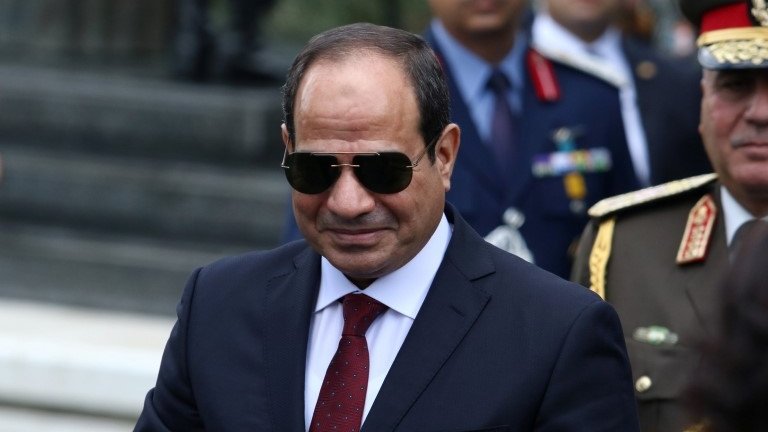
President Abdel Fattah al-Sisi said that Egypt’s water rights are a “red line”.
For its part, Ethiopia objected to the Egyptian statements, describing them as a “distortion of the situation” and saying that Egypt “has maintained a colonial-era mentality and obstructed efforts towards rapprochement”, according to a statement by its Ministry of Foreign Affairs.
Sugar Pumped into Markets to Solve the Crisis
The Ministry of Supply announced that it had contracted to import 50,000 tonnes of sugar, expected to arrive next February, with the aim of solving the sugar crisis in Egypt.
Sugar prices in Egypt jumped to unprecedented levels, with the price of a kilogram exceeding EGP 55 in the markets, amid a tendency among some traders to stockpile the commodity in anticipation of the government raising its prices.
Minister of Supply Ali Moselhy announced in a Facebook post that the ministry had pumped 245,000 tonnes of sugar into the markets, noting that there are large reserves in the governorates.
Onions pumped into markets to solve the crisis: Mahmoud Atta, head of the Central Administration for Horticulture at the Ministry of Agriculture, said that the ministry had pumped 70,000 tonnes of onions into the markets out of a total of 150,000 tonnes seized in Giza governorate, noting that another 31,000 tonnes had been seized in the Imbaba and Monshaat El Qanater districts of the same governorate.
He said in televised statements that the Ministry of Agriculture informs both the Ministry of Supply and the Consumer Protection Agency of onion storage sites so that legal action can be taken against them and the monopoly crisis can be confronted. He said that the price of onions fell on Tuesday to EGP 20. What Atta said about lower onion prices does not match what is offered on the website of Carrefour Egypt, which sells onions at EGP 51.95 per kilogram.
The Stock Exchange Falls below 25,000 Points
The Egyptian Exchange continued its losses on Wednesday, falling below 25,000 points. The main index, EGX30, fell by 1%, reaching 24,838 points.
On Tuesday, the Egyptian Exchange was also hit by profit-taking that pushed its main index down by more than 1%, after a big rise of more than 2% the day before.
Abdel Sanad Yamama: I Will Not Run for President Again, and I Asked Sisi to Put His Name in the Constitution
Abdel Sanad Yamama, the presidential candidate who received the fewest votes in the 2024 Egyptian presidential election, said that during his first term as party leader, which ends in two years, he will be keen to prepare the party and its cadres so that the Wafd has a presidential candidate in 2030.
He added, in a phone call with Al-Hadath Al-Youm channel, that he will not run “because age does not allow it, and the new generation must take its place”.
He said that President Sisi met him and listened to the party programme he had presented in the election, and that “the President was cheerful”.
He stated that he “proposed amending the preamble of the constitution by adding President Sisi’s name to Egypt’s leaders”.
El-Balshy: The Palestinian People Are Being Subjected to Genocide
Khaled El-Balshy, head of the Egyptian Journalists Syndicate, said that the Palestinian people are being subjected to genocide and war crimes, and that Palestine has lost 96 journalists killed during the war on Gaza, with the occupation targeting their families and children, exceeding the largest recorded number of journalists killed in any previous war, whether the Second World War or the Vietnam War.
Speaking at a joint press conference of the journalists’ syndicates in Egypt and Palestine and the International Federation of Journalists, “Palestinian Journalism in the Face of Genocide”, under the title “A Day with the Palestinian Press… Gaza Faces Genocide and Displacement… Stop the War”, El-Balshy said: “We are organising a day of solidarity with the Palestinian cause and the Palestinian people, and we will review the coordination efforts between the Egyptian Journalists Syndicate, the Palestinian Journalists Syndicate and the International Federation of Journalists to prosecute the crimes of the Israeli occupation.”
He noted that the Zionist enemy had introduced a dictatorship of algorithms to prevent the publication of the Palestinian narrative, but journalists in Palestine stood firm against it and showed the truth to the whole world.
Haniyeh in Cairo to Discuss a Long Truce
Ismail Haniyeh, head of the political bureau of the Palestinian resistance movement Hamas, arrived in Cairo on a previously unannounced visit, the aim of which, according to Palestinian media, is to discuss the files of de-escalation and prisoner exchange.
A senior source in the Fatah movement said that Haniyeh will discuss with the Egyptians ending the siege, bringing in aid, the withdrawal of the Israeli army and the return of displaced Palestinians to their homes.
This will be Haniyeh’s second visit to Egypt since the start of the war on 7 October; he made his first visit on 9 November.
The Palestinian Press Agency said today that Haniyeh will hold talks with Egyptian officials on developments in the aggression on the Gaza Strip and many other files.
The visit comes after Israeli signals of Tel Aviv’s readiness for a truce in the Gaza Strip. Israel’s ambassador to the United States, Michael Herzog, told the US network CNN that “Israel is ready for a truce in the Gaza Strip in exchange for the release of as many hostages as possible”.
Three days ago, a crowd of settlers demonstrated in the streets of Tel Aviv to pressure the hardline right-wing government led by Benjamin Netanyahu to move the file of Israeli hostages in the Gaza Strip.
The demonstrators denounced the government’s performance after a statement by the army’s military spokesperson admitting that three hostages had been killed by mistake, and demanded the resignation of Netanyahu, whom they described as a weak failure.
The US newspaper The Washington Post reported on Wednesday, citing senior Israeli officials, that the possibility of a two-week ceasefire in the Gaza Strip would be considered in order to release as many as possible of the Israeli prisoners still held by Hamas.
Malaysia Bans Israeli Ships from Docking at Its Ports
Malaysian Prime Minister Anwar Ibrahim said that his country will immediately ban the Israeli shipping company ZIM from docking at its ports.
He added in a statement: “This ban comes in response to Israel’s actions that violate basic humanitarian principles and international laws”, in reference to its ongoing aggression on the Gaza Strip.
Anwar noted that ships heading to Israel will also be prevented from loading cargo at any port in his country, singling out ZIM, Israel’s largest shipping company, and explaining that his country is confident its trade will not be affected by this decision.
It is worth noting that the Malaysian government had permitted ZIM to dock its ships at Malaysian ports in 2002, even though Muslim-majority Malaysia has no diplomatic relations with Israel.
The largely symbolic step signals frustration over the war in Gaza. Kuala Lumpur has often criticised Tel Aviv and supported the Palestinians.
The Danish shipping group A.P. Moller-Maersk had decided to impose an additional risk surcharge on container shipments to Israel to cover rising insurance premiums due to the security situation, starting from the beginning of next year.
A few days ago, the credit rating agency Moody’s said that the war Israel is currently waging on the Gaza Strip will test the resilience of the Israeli economy. It noted that the conditions created by Operation “Al-Aqsa Flood” would expose the Israeli economy to an unprecedented test.