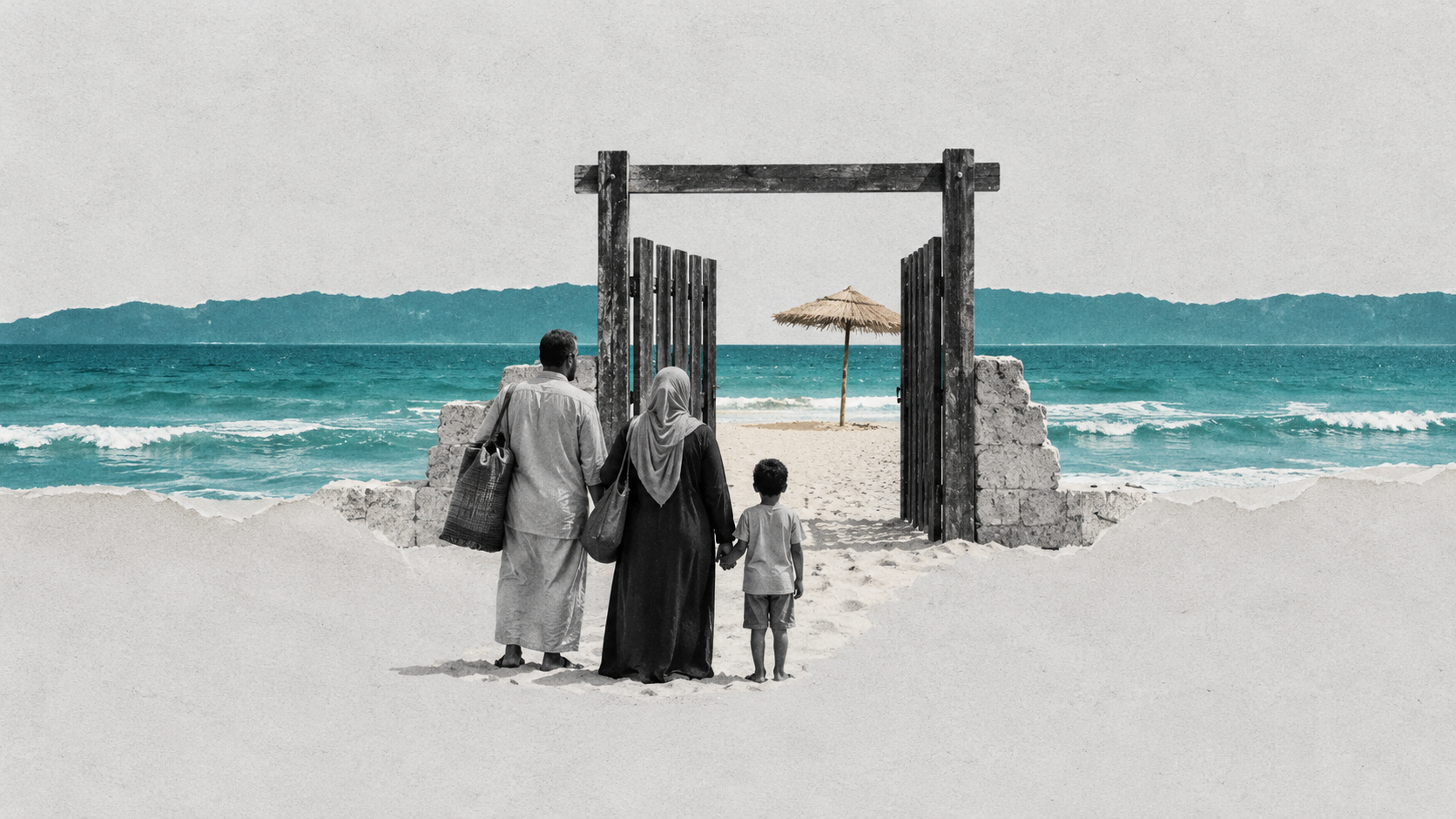
In 2009, Mamdouh Fathi began fulfilling his dream of building a large house overlooking the sea in Al-Reisa neighborhood, one of the districts in the city of Al-Arish, the capital of North Sinai governorate. He bought a plot of land and began laying the foundations, with work continuing for several years. When the house was completed and ready for living, security conditions and the terrorist operations in North Sinai prevented him from moving in, and he only settled there in 2016. However, after just three years, Mamdouh, like thousands of residents in the neighborhood, was shocked by the issuance of Presidential Decree No. 330 of 2019, which declared that the Al-Arish Port and its surrounding area would be considered public utility works, later transferring its jurisdiction to the Armed Forces, starting the residents’ suffering with demolition orders that affected their homes.
Although Mamdouh’s family has been living in the house for nine years, some of the residents affected by the demolitions have lived in the neighborhood for over 25 or 30 years. The neighborhood contains residential buildings with four to five floors, inhabited by several generations of the same family, along with a number of villas. Like many other residents who spoke to Zawia3, Mamdouh complains about the low compensation values, which are calculated based on 2019 prices, despite the significant inflation in real estate prices since then.
Mamdouh says: “For example, compensation ranging between 600,000 and 800,000 EGP ($12,000 – $16,000) is given for a house that exceeds 150 square meters and has a garden with fruit trees, while apartments in Al-Arish are currently sold for prices ranging from 1.5 million to 1.8 million EGP ($30,000 – $36,000).” He cites the case of a person who owns a palace with a swimming pool and a Chinese roof, who received compensation of no more than 1.3 million EGP ($26,000), while a medium-sized apartment cannot be purchased for less than this amount. He believes the area constitutes a “population extension,” and that it could have been dealt with under Decree No. 330, which included the residential block, but demolitions resumed in the fourth and fifth phases.
Mamdouh shares with Zawia3 how the residents of the port area suffer from the demolition decisions executed by local authorities as part of what is known as development plans or the expansion of the coastal road. He points out that demolition is now taking place suddenly, with bulldozers arriving in the morning and demolishing one or two houses daily, without waiting for the residents to evacuate their homes or move their furniture, which was not the case in the past. He describes this as a form of psychological pressure to force residents to leave without resistance, as part of what he calls a “well-designed plan” to avoid mass gatherings or protests.
He adds: “The government previously tried to calm the situation by sending Minister Kamel El-Wazir to meet with the residents in July 2023, and he apologized on behalf of the state and the president. However, the promises were not fulfilled, and the pressures and demolitions resumed systematically and gradually. What is happening is a waste of citizens’ rights and depriving them of their homes without fair compensation or an adequate alternative.”
He points out that the land he owns overlooks the sea and enjoys all utilities, while he is being offered alternative land in a mountainous area more than a kilometer away from the beach, which does not match in value or services. He expresses his frustration that these lands are being offered as “usufruct rights” and sold to him at high prices, placing additional financial burdens on him. He also criticizes the lack of transparency in the compensation estimation process, as the residents are asked to sign and hand over their homes without knowing the amount that will be deposited in the bank. He describes this mechanism as a “military secret,” forcing citizens to accept the situation without negotiation.
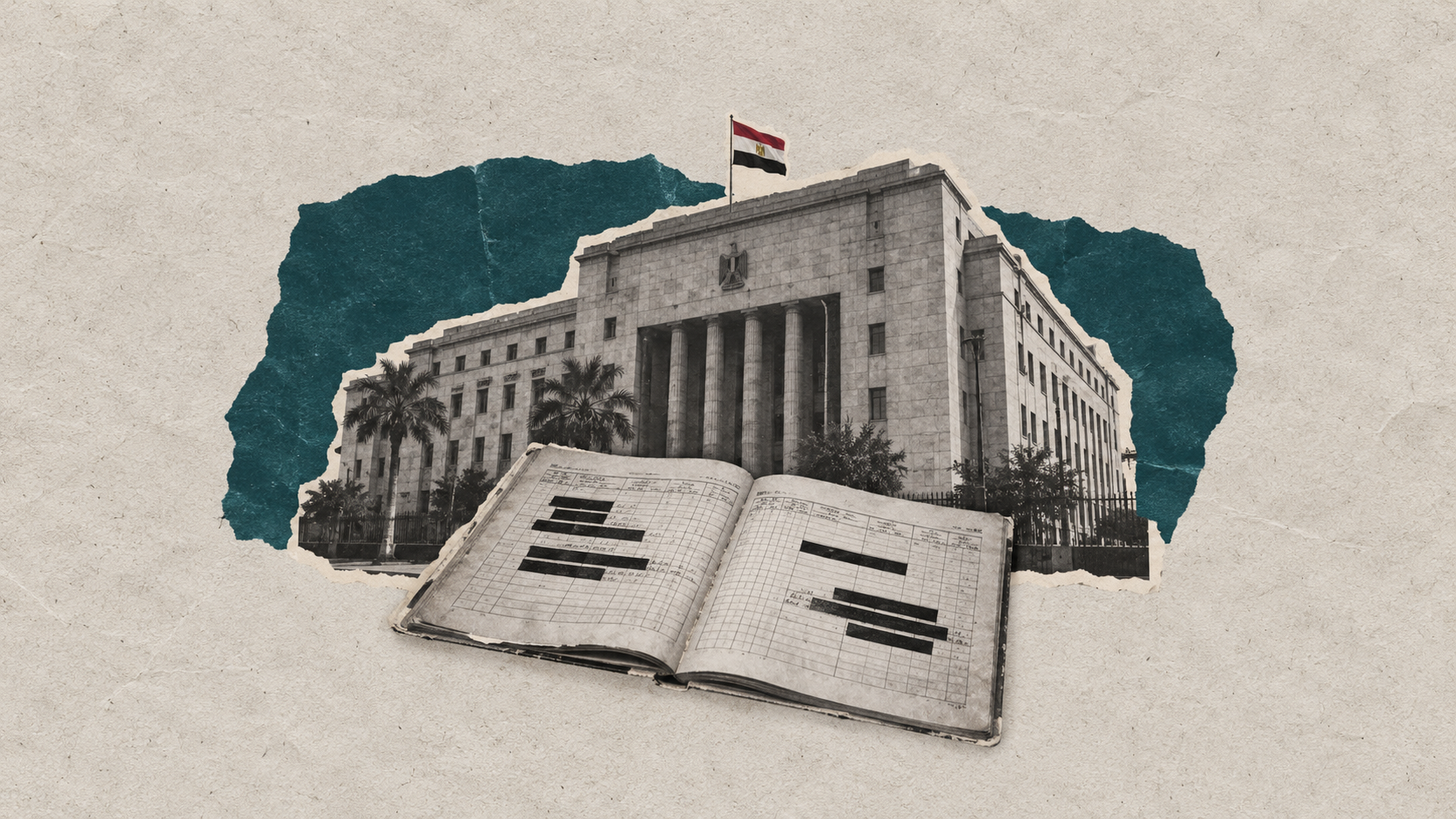
In July 2019, Egyptian President Abdel Fattah El-Sisi issued Presidential Decree No. 330 of 2019, which was published in the official gazette. It declared the Al-Arish Port in North Sinai and all its facilities, along with any land or other establishments needed for its operations, to be public utility works, except for military sites allocated to defense matters. The decree also stipulated that the Suez Canal Economic Zone Authority would finance, implement, develop, manage, and operate the port, with the Ministry of Defense taking over the area’s security procedures, and a protocol being signed between the two parties outlining the technical, financial, and legal commitments related to the management.
Two years later, El-Sisi issued Presidential Decree No. 465 of 2021, which amended Article 2 of the previous decree, transferring the ownership of Al-Arish Port and re-allocating all the surrounding land needed for development to the Armed Forces. The total area amounted to 541.82 acres within the North Sinai governorate. Over the past two years, bulldozers have demolished homes in the first, second, and third phases of the development project.

Don’t miss: North Sinai’s Thirst: A Deepening Water Crisis

From Loss to Eviction: Testimonies from the Port Neighborhood
The losses of the residents caused by demolitions in the Al-Reisa neighborhood in Al-Arish, according to Rasha Al-Farghani, are not limited to just the material side. She spent around 15 years with her family in their home there, and her memories were tied to its walls. When she lost one of her children during the comprehensive operation in Sinai, she chose to have his grave in the garden of the house, so he would always be close to her. She says: “I buried my son in front of the house, and I can’t bear to part from this place.”
Rasha recounts that the demolition crisis began in 2019 when the idea was first proposed, but it didn’t actually take effect until mid-2023. She confirms that many homes have already been demolished, and many residents have been forced to leave their homes without receiving the compensation they are entitled to. She points out that the government provided some families with temporary apartments to live in for no more than six months, after which they were asked to vacate them.
She explains to Zawia3: “They told us that the apartment was worth 350,000 EGP ($7,000), but we later discovered that the actual price was 960,000 EGP ($19,200), and the initial amount was just an advance payment. The problem is that the compensation was calculated based on 2019 prices, which doesn’t reflect the current market prices. Most families lived in homes ranging between 150 and 200 square meters, while the alternative apartments offered are no more than 65 square meters, which barely meet basic living requirements.”
She continues that the team led by Kamel El-Wazir, the Minister of Transport, visited the neighborhood in July 2023, met with the residents, and offered an apology on behalf of the President, assuring that demolitions would only proceed with the residents’ approval, and only those who were satisfied would leave their homes. However, Rasha reports that shortly after the meeting, the governorate sent a notice to a committee of residents requesting the demolition work to begin, with no regard for the agreement that was made.
She says: “They told us: Your homes won’t be demolished unless you are satisfied, then a few days later they came back demanding the demolitions start, as if nothing had happened. The governor and his deputy spoke to us in the same tone as the minister, but no one kept any promise.” She believes that the accelerating pace of demolitions, especially after the end of the high school exams, reflects pressure to hand over the land to investors, without considering the fate of the families who will be left homeless.
She adds that the Port neighborhood consists of licensed residential buildings, ranging from two to five floors, and most of the buildings are equipped with official utilities like water, electricity, and telephone lines. Many residents have official ownership documents (the green document). She points out that the land on which the Azhar Institute in the neighborhood was built, which the authorities intend to demolish, was donated by the residents for the benefit of the children of the area. She asks: “If the state is the one that introduced the infrastructure to this area, why is it demolishing it now?”
She concludes by saying: “We do not reject development, but we reject that it comes at the expense of our dignity and security. We demand fair solutions that respect our humanity. Build us an alternative residential neighborhood, and hand over our new homes to us before you demolish ours. What we are going through is harsh and unfair, and we need real intervention to put an end to this tragedy.”
According to data from the North Sinai Governorate, the Al-Arish Port development area includes approximately 1,108 residential units, 32 commercial buildings, 23 government establishments, in addition to the “Sinai Star” chalet complex. The Al-Arish Port development project, supervised by the Armed Forces, aims to increase the port’s capacity to accommodate large ships, especially container ships. The expansion includes extending the port’s area to 371 acres, with the construction of new quays extending 2,250 meters, wave barriers 2,700 meters long, and a new container basin 3,200 meters long, which will allow the port to receive container ships for the first time. The project also includes the construction of six cement silos with a storage capacity of 75,000 tons.

The Future Projects Map in the Al-Arish Port Area
Don’t miss: Displaced from Rafah: The Ongoing Struggle for Fair Compensation
Obstacles to Compensation and Construction
There is a prevailing sense of anger and despair among many of those affected by the demolition project in the Port neighborhood of Al-Arish, including Munir Adel (a pseudonym), who explains that he is a resident of the third phase of demolitions. Despite an official decision to disburse 20% of the compensation promised by Minister Kamel El-Wazir in 2023, the authorities have yet to fulfill this decision.
Munir notes that he obtained a permit for reconstruction, but was unable to proceed with it, as he has not received water or electricity services, and the relevant authorities did not recognize the governor’s circular. Additionally, the city council has not approved the architectural design for the new building, which has disrupted his life once again. He criticizes the failure to implement the so-called “discount cards” announced by the governor to alleviate the burdens on the residents, pointing out that they were never actually put into practice, despite being promoted via North Sinai Radio, and none of the residents or traders benefited from them.
He tells Zawia3: “What is happening is blatant injustice and oppression. My house was demolished, and since then, I’ve lived scattered, away from my children and grandchildren, without any real compensation. We were the protectors of our land and homes in the face of terrorism, and we did not fear death. When terrorism ended, we were asked to leave under the pretext of development. We accepted, but we demanded that our voices be heard and our rights recognized. Many families who left their homes now live in harsh economic conditions, which has led many of the remaining residents to cling to their homes and refuse to leave.”
Munir compares the cost of the residential units built by the governorate and offered as compensation to the residents. He explains that the cost, according to the tender issued in 2022, was 425,000 EGP ($8,500), but it eventually reached 960,000 EGP ($19,200). He questions: “Why did the governorate pay this difference to the contractors and not to us?”
At the end of 2022, the North Sinai governorate allocated alternative land to the residents whose homes were demolished, in areas south of the Al-Reisa neighborhood and south of the Al-Zohour neighborhood in Al-Arish, with a maximum area of 130 square meters per house. In July 2023, Minister of Transport Kamel El-Wazir held a meeting with a committee representing the protesters and apologized to the residents of Al-Reisa, promising to pay satisfactory compensation to the affected individuals, halting the demolitions until fair compensation was provided and suitable alternatives for the residents were secured.
Don’t miss: Owned by Al-Organi: Exploring the New ‘Sisi’ City Near the Gaza Border
Compensation
MP Rahmi Bakir, a member of the Egyptian Parliament representing North Sinai, confirmed his full solidarity with the residents of the Al-Mina neighborhood in Al-Arish, who have been affected by the demolitions related to the construction of the new Al-Arish Port project. He considers the core issue to be the unfairness of the compensation offered compared to current property prices, clarifying that the residents have no objection to the principle of demolition if it is for the public good, but they demand fair compensation that enables them to secure alternative housing. This, he says, is something he has repeatedly raised with the responsible authorities, including the governor and the management overseeing the project.
He tells Zawia3: “The demolition decision has been in place since 2019 through a presidential decree, and since then, prices have undergone drastic changes. Initially, the price for the square meter of buildings was set at just 1200 EGP, and after objections, it was raised to 3500 EGP. However, this price is currently insufficient to buy or build alternative housing, as the actual price per square meter is now at least 8000 to 9000 EGP. This makes the compensation – which, at best, amounts to around 350,000 EGP ($7,000) – insufficient to build an apartment worth between 800,000 and 900,000 EGP ($16,000 – $18,000).”
The MP further explains that the state had legally licensed these buildings and provided utilities like electricity, water, and gas. Therefore, ignoring the rights of the residents or compensating them with amounts that do not match their actual investments is a great injustice. He mentions previous meetings between the residents and Minister of Transport Kamel El-Wazir, during which he promised them fair compensation and reassured them, but these promises have not been implemented by the governorate, leading to rising tensions among citizens, who have returned to protest and gather in the streets.
The MP adds: “The partial solutions that were proposed, such as allowing construction on alternative land owned by the residents, were not fully implemented. What is now required is for the government to expedite fair compensation and resolve the residents’ anxiety. I stand in solidarity with the residents of the port in their demand for fair compensation and a fair price for their buildings, so they can secure alternative housing.”
Bakir affirms that he has communicated with both former and current officials, urging them to implement Law No. 10 of 1990, which mandates providing citizens with a fair price and sufficient time to vacate when public utility projects are executed. He stresses that compensation should be paid in advance of demolitions, so citizens can secure alternative housing, calling on the government to fulfill its promises and resolve the crisis in a fair and humane manner.
A local source informed Zawia3 that the new Al-Arish Port project holds significant strategic importance due to its proximity to the eastern border and the planned bridge between Egypt and Saudi Arabia, as well as its connection to railway routes that will link the Red Sea with Gulf countries. The source further explained that during the initial waves of demolitions, an agreement was made between officials and residents to pay compensation at a rate of 7000 EGP ($140) per square meter, which was considered fair at the time based on construction material costs. With the current wave of demolitions, the price was raised to 9000 EGP ($180) per square meter, and negotiations were held with the governor and Minister El-Wazir based on the principle of “house for house” or “land for land.” At that time, the residents were promised ready-to-finish apartments in the Al-Reisa neighborhood of Al-Arish or plots of land for construction in nearby areas, or financial compensation to buy alternative housing according to the resident’s preference.
Don’t miss: Residents in Egypt’s Al-Omraneyya Face Evictions Without Notice or Alternatives
Community Participation?
For his part, Mahmoud Shalaby, a researcher focused on Egyptian and Libyan affairs at Amnesty International, believes that the news about forced evacuations and house demolitions in the Al-Mina neighborhood in Al-Arish is part of a recurring pattern Egypt has witnessed in recent years. This pattern involves sidelining community participation and transforming development issues into security matters, to the detriment of residents’ rights.
In his conversation with Zawia3, he stressed that eviction operations should be subject to clear regulations according to international law standards, which stipulate, first and foremost, the need for genuine and meaningful consultations with the affected residents before making any decision to demolish or evict. This is to respect their right to housing and the livelihoods associated with it. He pointed out that if it is proven that there are no alternatives to implementing development plans other than eviction, the residents should be given adequate advance notice before the demolition is carried out so they can make the necessary arrangements for their lives.
He says: “There have been previous cases, such as the village of Jamima in Marsa Matrouh, where attempts were made to evict people without any real consultation with the residents. This could be repeated in Al-Arish.”
Shalaby emphasizes the importance of ensuring that compensations are fair and proportionate to the current economic conditions, stating that fair compensation should be determined in consultation with the residents, taking into account their way of life, work, and income sources, such as agriculture or fishing, which may be linked to the location itself.
He concludes his conversation by confirming that eviction should be a last resort, not the first option, and it must be carried out within a framework that respects human rights, ensures fair compensation, provides advance notice, includes active participation from the residents, and offers clear alternatives, especially for those unable to secure alternative housing.
While the state is rapidly advancing with the Al-Arish Port development project, thousands of families in the Al-Reisa neighborhood find themselves trapped between forced eviction decisions, compensation that does not match the economic situation, and housing alternatives that fail to meet the minimum requirements for dignified living. Testimonies from local residents, obtained by Zawia3, reveal the scale of the humanitarian and social tragedy faced by the residents due to the demolitions. This raises pressing questions about the effectiveness of the current policies and the lack of justice in addressing issues of forced displacement and compensation.