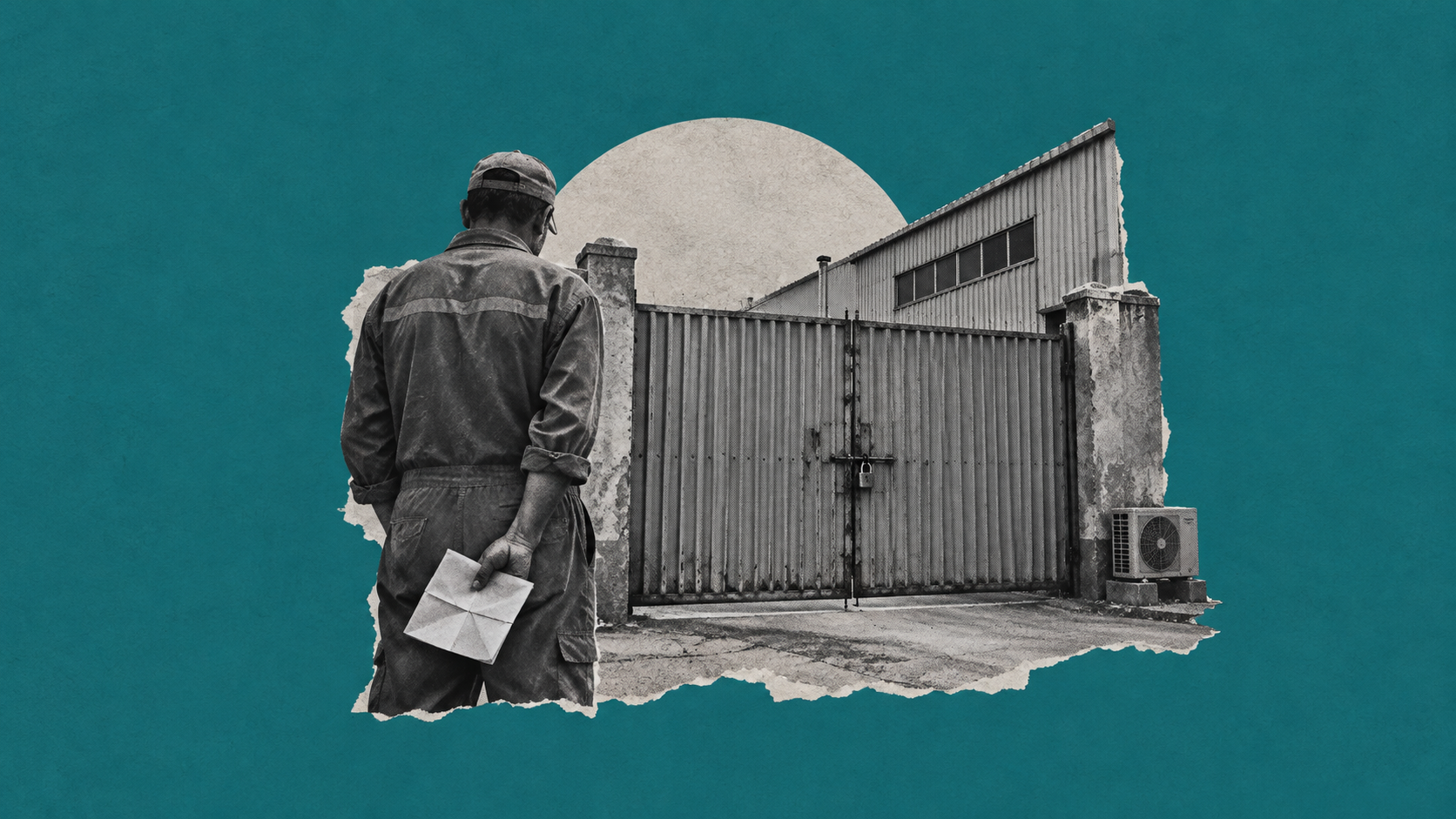


After struggling with depressive symptoms that he links to relentless pressure at work, Ahmed Yasser, 28, left his job at a real-estate marketing company in New Cairo. Earnings depended heavily on sales incentives, making each target a source of anxiety. Six months of searching have brought no suitable replacement job. With his savings running out, his greatest fear is returning to the same kind of workplace.
Yasser tells Zawia3 that he sometimes worked 12-hour days, without meaningful breaks, while trying to meet demanding sales quotas. Missing a target could mean a substantial deduction from what he describes as an already meagre income.
“I felt as though I was living in an environment that did not value people,” Yasser says. The constant pressure left him feeling close to breaking down.
His experience raises a question that receives little attention in debates about workers’ rights: who protects their mental health?
A policy paper published in August 2024 by the Egyptian Center for Economic and Social Rights (ECESR) identifies a significant gap in Labour Law No. 12 of 2003, the law in force at the time of this report. Labour researcher Hassan al-Barbari argues that, despite roughly 32 provisions addressing occupational health and safety, explicit attention to psychological well-being is almost absent.
Cases reported during 2024 have intensified public concern about the pressures facing workers. In August, news of the death of Mohamed Mamdouh, a 29-year-old hotel receptionist in Minya, prompted discussion of overwork. Media accounts described a brain haemorrhage and relayed claims connecting his condition to accumulated stress. Those accounts alone do not establish a medical cause or prove that work caused his death.
In June, reports of an Agriculture Ministry employee’s death by suicide in Dokki linked the case to financial hardship and social pressures. In another case reported in February, the wife of an employee in Hawamdiya, Giza, said he had been experiencing severe distress over living and working conditions, including a manager’s decision to deduct a week’s pay.
Such accounts deserve attention, but suicide has complex and interacting causes. A relative’s description or a single workplace incident cannot, by itself, establish why a person died. The cases nevertheless underscore the need for accessible support and safer working conditions.
A workplace that never lets up
Islam Hureidi, a civil engineer at a large private construction company, says he is paid well. That has not relieved the daily physical and psychological strain. He describes a workplace in which demands never stop, leaving little energy for family or social life.
“I feel constantly tense; anxiety stays with me throughout the day,” he tells Zawia3. Workers carry responsibility for the company’s achievements and profits, he says, yet managers continually signal dissatisfaction.
With few alternative opportunities, he feels employees are treated as tools from which everything can be extracted. The exhaustion can become intolerable, but family obligations and rising living costs keep them in their jobs.
Samar Hassanein, an orthopaedic surgeon at a major teaching hospital in Cairo, describes a similar burden. She says she performs operations every day, sometimes more than seven, and feels persistently tired. At times, she wonders whether she is experiencing depression. This is her description of her symptoms, rather than a diagnosis made in this report.
Her colleagues in other departments face comparable conditions, she says: heavy workloads in a difficult environment, with inadequate salaries.
The public-health picture requires care with statistics as well as individual accounts. WHO estimates published in June 2021 showed a decline in the global suicide rate between 2000 and 2019, although trends differed across regions. They do not support a blanket claim that rates were rising everywhere, nor can differences between countries be explained simply by their working cultures.
For Egypt, a 2022 news report cited 2,584 deaths by suicide in 2021, attributing the figure to the public prosecutor’s office. Other reporting has circulated a figure of 3,022 for 2019. Counts drawn from different sources and methods cannot establish a reliable trend or identify the share attributable to work.
The need for workplace mental-health protection does not depend on assigning every crisis to employment. It follows from the strains described by workers and the absence of effective ways to address them.
Pressure has many sources
A report by the Al-Azhar Observatory, covered in October 2022, discussed family disruption, online blackmail and difficult living conditions, while also invoking religious explanations. Those are the observatory’s interpretations, not a clinical assessment of individual deaths.
Work can be one of several sources of distress. Excessive demands, unrealistic targets and insufficient support can contribute to exhaustion, anxiety and isolation. The WHO’s 2022 guidelines on mental health at work call for action on working conditions, alongside support for workers experiencing mental-health difficulties.
Egyptian figures are also frequently cited without adequate context. Coverage of a Health Ministry survey in April 2018 reported that roughly one quarter of respondents experienced mental-health problems. Mood disorders, including depression, accounted for 43.7% of disorders among those affected, while substance-use disorders accounted for 30.1%. Those two percentages do not refer to the entire population.
These historical findings should not be relabelled as a new 2023 survey or multiplied by a later population total to produce a count of current patients. Nor do they establish that most people affected are workers. Comparisons with earlier studies require compatible definitions, samples and methods.
The ECESR paper raises a separate concern about treatment capacity, citing 15 hospitals with 4,498 beds within the service network it discusses. That figure is not a count of every public, private or outpatient mental-health provider in Egypt.
Psychiatry and addiction consultant Ahmed Mowafi tells Zawia3 that chronic workplace stress can contribute to anxiety and depressive disorders. Tight deadlines, excessive demands and a poor balance between personal and professional life may all play a role.
When pressure persists, symptoms can intensify, he explains, with emotional and mental exhaustion affecting concentration, mood and the ability to function. Deteriorating performance and more frequent absences may then expose a worker to further pressure, creating a damaging cycle.
Mowafi says he sees a substantial burden of anxiety and depression among employees in both public and private workplaces. He stresses that inadequate counselling and support can allow problems to become more serious. His observations describe clinical concerns; they do not supply a nationwide prevalence estimate.
He advocates changes at several levels: clearer priorities, manageable workloads, supportive colleagues and open communication with managers. Counselling and training on dealing with stress should accompany improvements to the workplace itself.
Workers need time to rest and access to support—but employers also need to change the conditions producing excessive pressure.
Rest, leisure and a workable division between professional and personal life can help people recover energy, Mowafi says. They should be part of a wider response, rather than a way of making individuals solely responsible for coping with harmful conditions.
Rights on paper, gaps in practice
Al-Barbari, the ECESR researcher, argues that psychological safety should be integral to the rights of Egyptian workers. Neglecting it harms individuals and the workplaces that depend on them.
He also emphasises the relationship between mental and physical health, citing research on occupational well-being published through Al-Asmariya Islamic University in Libya. Persistent stress may be associated with physical-health risks, but such associations do not establish the cause of a particular person’s illness.
In his view, the problem is both legislative and practical: protections discussed in constitutions, laws and international standards do not translate into consistent attention to workers’ psychological welfare.
Labour Law No. 12 of 2003 regulates areas including wages, working hours, employment and termination. For workers covered by its ordinary working-time provisions, actual work is generally limited to eight hours a day or 48 hours a week, excluding meal and rest breaks, subject to the law’s exceptions.
The law also regulates pay dates, overtime compensation and paid leave, including annual, sick and maternity leave. It establishes mechanisms for labour disputes and requires employers to take measures against workplace hazards. Its scope and exceptions matter: not every category of employee is governed by all of its provisions in the same way.
Book Five addresses occupational health and safety and the protection of the working environment. It imposes duties on employers and workers, provides for inspection and workplace safety arrangements, and includes social and health services.
Al-Barbari points to Court of Cassation rulings cited in his research—appeals No. 2610/72 and No. 410/73, issued in 2004—as emphasising the obligation to provide protective measures and make workers aware of occupational risks.
Yet assessing an employee’s fitness when they enter a job is different from protecting their mental health throughout employment, he argues. The existence of general safety duties does not by itself create a functioning system for identifying and reducing psychological risks.
He calls for preventive policies, access to appropriate care and clear responsibilities for employers. This would bring mental well-being into everyday occupational-health practice rather than addressing it only after a crisis.
Al-Barbari also criticises the emphasis of the national occupational-safety strategy discussed in 2023, arguing that psychological and mental-health protection received insufficient attention compared with physical hazards.
Women can face an additional burden, he says. Paid employment is often followed by substantial unpaid work at home, including childcare and care for relatives. Meeting both sets of demands may leave little time for rest or treatment. He cites research discussed by the Center for Global Development in support of the need to recognise this combined workload.
Funding care, not just acknowledging it
Access to treatment is inseparable from wider pressures on health financing. Figures cited in the report put Egypt’s total current health expenditure at roughly $17 billion in 2015 and $15 billion in 2019, with spending per person falling from about $183 to $150.
Dollar-denominated totals are affected by exchange rates as well as spending decisions. Total current health expenditure, which includes spending beyond the government budget, should not be conflated with a ministry’s allocation or treated as a direct measure of workers’ wages.
The original reporting also cited nominal public-health figures of about EGP 87 billion during the pandemic response, EGP 93.5 billion in 2020/21 and EGP 108.7 billion in 2021/22. Differences in coverage and budget stage mean these cannot simply be combined into a single comparable series.
A clearer comparison appears in an August 2023 analysis by the Egyptian Center for Economic Studies. Using its stated budget definitions, the centre calculated that nominal health spending rose from EGP 135.6 billion in 2021/22 to EGP 147.8 billion in 2023/24—about 9%.
After its adjustment for inflation, however, the same analysis put real spending at EGP 114.3 billion and EGP 102.1 billion respectively, a decline of 10.7%. The calculation belongs to the Egyptian Center for Economic Studies, a different organisation from ECESR.
The 2014 Constitution sets a minimum health-spending commitment of 3% of gross national product. Debate over compliance involves both the scale of funding and what the government includes in its calculation; a nominal rise alone does not show whether services can buy more care.
For Yasser, Hureidi and Hassanein, these policy questions have immediate consequences. Their accounts describe exhausting work, financial obligations and limited room to step away. Recognising psychological health as part of workplace safety would mean responding before distress becomes a crisis—with enforceable protections, changes to working conditions and care that employees can actually access.