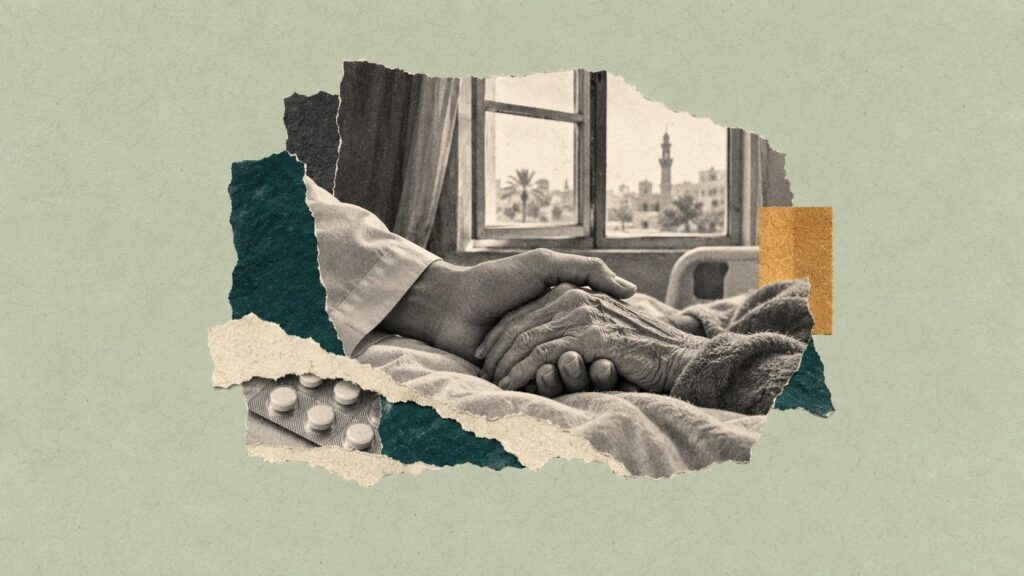

Thousands of Egyptian patients live with pain every day, in public and private hospital rooms and in homes that have become unofficial care units, because the healthcare system has yet to recognise their right to palliative care. One of the most humane forms of healthcare, it remains outside Egypt’s institutional planning, confined to limited initiatives or particular departments, usually within cancer treatment institutions.
At a time when palliative care prioritises patients’ quality of life and recognises relief from physical, psychological and social suffering as a fundamental right rather than a luxury, that right remains unavailable to millions of patients. This is happening in a country where chronic diseases are becoming more prevalent, accounting for 84% of deaths, particularly heart disease, diabetes and hypertension, according to the World Health Organization, and where life expectancy has risen to around 72–73 years.
The World Health Organization defines palliative care as an approach that improves the quality of life of patients and their families facing life-threatening illness, by preventing and relieving suffering through early identification and comprehensive treatment of pain and physical, psychological, social and spiritual problems. Yet the concept remains poorly understood by both society and the medical community. Palliative care is often confused with care for advanced illness or hospice care. While palliative care begins at the diagnosis of an incurable or chronic illness and can be provided alongside curative or disease-directed treatment, care for advanced illness focuses on patients who have exhausted their treatment options, seeking to relieve pain and preserve dignity at the end of life.
The WHO estimates that around 56.8 million people worldwide need palliative care every year, but only 14% actually receive it, predominantly in high-income countries. In low- and middle-income countries, where around 80% of those needing this care live, most face illness and pain without adequate support.
Estimates indicate that patients in their last year of life account for only 45% of all those needing palliative care. The rest live for many years with chronic and complex conditions, including cardiovascular diseases (39%), cancer (34%), chronic respiratory diseases (10%), AIDS (6%) and diabetes (5%), as well as advanced neurological and immune disorders. These figures show that palliative care is concerned not only with death but with the everyday lives of millions of people and their ability to live with illness. It also helps them avoid repeated emergency department and intensive care admissions, and improves patients’ and families’ experience of the healthcare system.
In Egypt, palliative care is still provided in limited, isolated settings, without a clear national strategy or meaningful integration across the different levels of healthcare. It is largely restricted to certain cancer treatment institutions or individual initiatives run by civil society organisations, and is absent from most public hospitals and primary care units.
This takes place against a strained healthcare backdrop: rising rates of chronic illness, longer life expectancy, shortages of hospital beds, particularly intensive care beds, and a growing financial burden on families. Estimates suggest that one in five Egyptians falls into poverty because of health expenditure, especially in advanced illness, when costs increase without a corresponding improvement in quality of life.
Although palliative care can help reduce these costs and ease pressure on hospitals, it remains absent from programmes such as universal health insurance, which is supposed to provide a framework for integrated care.
There is an enormous gap between need and available services in Egypt. The country has only 17 palliative care clinics, most concentrated in Cairo, and 312 pain treatment units and clinics, more than half in Cairo and Alexandria and mostly privately run. There are no more than 43 geriatric clinics, also mostly in the private sector. Palliative care services are entirely absent from several governorates, including Qalyubia, Sharqia, Fayoum, Beni Suef, Matrouh, North and South Sinai, and the Red Sea. Hospice services, specialising in end-of-life care, are virtually confined to three civil society institutions nationwide, according to the Guide to Palliative Care and End-of-Life Care Services in Egypt, published in May 2025 by the Al-Naseh project in cooperation with the Egyptian Association of Healthcare Researchers and Shamseya for Innovative Community Healthcare Solutions.
Sara El-Shafei, director of the Al-Naseh project and lead researcher on the guide, says information about palliative care providers in Egypt is scarce. Even some doctors and specialists lack a clear understanding of the concept. This prompted the research team to produce a guide for patients and others interested in the subject, designed to make these services easier to access when needed.
She tells Zawia3 that palliative care means “comprehensive care” focused on improving patients’ quality of life, not simply treating disease, with pain relief an essential component. It covers any patient with a difficult or complex illness affecting different bodily systems and their psychological condition, whether or not the disease is advanced. It does not necessarily mean the patient is dying. Yet this comprehensive perspective is largely absent in Egypt because of limited resources and other factors, leading to neglect of patients’ psychological and everyday needs, such as nutrition, breathing and their ability to live with illness.
“The prevailing perception in Egypt associates palliative care only with cancer patients because the specialty began within cancer treatment institutions,” she says. “But that association is inaccurate. The main objective is to improve the quality of life of people with chronic or complex diseases, such as Alzheimer’s or multiple sclerosis, through an integrated team including doctors, physiotherapists, psychological support, rehabilitation and social workers.” She stresses that, for patients’ comfort, palliative care should not be fragmented among multiple providers.
Hospice care is one part of palliative care, concerned with the final stage of illness. Palliative care itself should begin in the early stages of difficult diseases affecting more than one bodily system, the researcher says. She believes the ideal model is a palliative care department in every hospital treating such conditions. Al-Shaheed Ahmed Shawki Geriatric Hospital, which has both inpatient and outpatient palliative care services, is one of the few public-sector examples outside cancer centres and hospitals.
On Egypt’s global position, El-Shafei says the WHO’s 2020 classification places the country in an intermediate category, where palliative care is delivered through individual initiatives and isolated institutions rather than forming part of a comprehensive Health Ministry national strategy comparable to preventive or curative medicine. Some Arab countries, particularly Gulf states and Jordan, and African countries such as Zambia and Uganda, have better palliative care systems than Egypt, she adds. The obstacle is not cost but organisation: palliative care reduces pressure on emergency and intensive care departments, thereby lowering health expenditure.
The Al-Naseh director says one of the most striking findings during the study was the extreme centralisation of services: most are in Cairo, followed by Alexandria, while they are almost non-existent elsewhere. Pain clinics were also more widespread than expected, although still insufficient. She notes that civil society organisations bear most of the burden of hospice or advanced-illness care, without a legal framework regulating their work, forcing them to operate as “guest houses”.
El-Shafei stresses the need for a clear legal framework for home care and hospices, and simpler procedures and a more efficient system for dispensing pain medication while retaining necessary safeguards. She calls for palliative care to become an independent academic specialty in universities and to be gradually integrated into the healthcare system, starting by training family doctors at health units to deliver basic palliative care services.
Relieving cancer patients’ suffering
Cancer patients face overlapping physical, psychological, social and sometimes spiritual pressures arising from the disease and its treatment. They experience severe pain, repeated vomiting, bedsores, general weakness, recurrent infections and severe anaemia. Psychological suffering includes depression, anger, sadness and denial, alongside social burdens caused by treatment costs and lost income. Some also experience a spiritual crisis, expressed through existential questions, objections or reproach, placing patients and their families under intense psychological strain, says Dr Nasser Eissa, a member of the board of trustees of Global Cancer Care.
He tells Zawia3: “Palliative care’s role is to ease the burden of illness by addressing these aspects together, controlling physical symptoms caused by the disease or chemotherapy and providing psychological and social support, helping patients and their families through the crisis with as little suffering as possible.”
Eissa stresses that palliative care services remain insufficient in Egypt, particularly outside the major cities. The concept is relatively new and has not yet spread as widely as needed. Some major hospitals and cancer institutes have started offering pain clinics as part of palliative care, he notes, but these clinics face acute shortages of painkillers, especially morphine, because of strict restrictions on dispensing them.
In recent years, civil society and the private sector have emerged as potential actors in closing gaps in palliative and advanced-illness care. Several charitable or private healthcare institutions have incorporated palliative care into hospital or home-based services. Some civil society organisations have been able to provide psychological and social support and financial assistance to patients with advanced illnesses.
Egypt first encountered the concept of palliative care in 2005, when Global Cancer Care began operating in the country. The association specialises in services for cancer patients and has three branches. It organises regular home visits to check on patients and provide necessary medical services, including examinations, intravenous fluids and pain treatment, alongside social and psychological interventions when needed, through what is known as a “Mobile Hospice”. It also runs a “Day Room”, where patients who can travel spend a full day taking part in recreational and social activities and sharing meals, with medical examinations and treatments other than chemotherapy or radiotherapy available. It organises recreational trips and educational seminars for patients, families and volunteers on the psychological and medical aspects of dealing with illness.
Eissa says comprehensive palliative care reaches only 8% to 10% of patients who need it in Egypt, meaning around 90% are deprived of the service. This shortfall requires an expansion of hospice units and greater awareness of the concept in universities, hospitals and charitable institutions across the governorates.
Palliative care has yet to receive sufficient attention within the medical sector, he says. Some doctors are now obtaining qualifications in pain management, which is only a limited part of palliative care; the broader concept includes psychological and social care alongside medical treatment. He criticises inadequate training for doctors and nursing staff in the psychological and human aspects of patient care amid overcrowding and workload pressures in hospitals, which compound suffering and negatively affect patients’ response to treatment. He calls for specialised training programmes for nurses and doctors in the principles of palliative care and humane communication with patients.
He praises positive examples such as Baheya Hospital and Hospital 57357 for their commitment to care that considers patients’ psychological condition and provides a humane, supportive environment. Expanding these experiences, he believes, is an essential step towards developing Egypt’s palliative care system.
In Egypt, opioid painkillers are dispensed under strict conditions and with special, closely controlled prescriptions. They are controlled substances because of their potential to cause addiction and require a stamped prescription from the treating physician specifying doses and timings precisely. They are subject to strict oversight by the Egyptian Drug Authority and narcotics control authorities to ensure therapeutic use and prevent misuse or unlicensed circulation, with severe legal penalties for violations.
However, the conditions governing opioid dispensing are among the greatest obstacles to palliative care in Egypt. Current legislation does not adequately distinguish between controlled medical use for chronic pain and misuse, imposing strict limits on quantities and requiring patients to undergo burdensome, repeated procedures.
Although the stated aim is to combat addiction, the practical outcome is often to deny pain treatment to patients who genuinely need it or force them to endure avoidable suffering. In the absence of integrated digital systems tracking medication dispensing, paper-based bureaucracy continues to complicate the situation rather than manage it effectively.
Dr Nasser Eissa says the restrictions are intended to prevent misuse, but the greatest harm falls on cancer patients suffering severe pain. Alternatives such as tramadol and codeine are available to varying degrees, while morphine patches and medicines such as MST are scarce and generally dispensed only at very advanced stages of pain. He stresses the need to develop hospital pain-management programmes and simplify dispensing procedures while maintaining necessary safeguards.
Palliative care is also an essential part of paediatric cancer treatment. It focuses primarily on managing symptoms associated with the disease or its treatment, above all pain, one of the symptoms with the greatest impact on a sick child. It addresses various symptoms to alleviate suffering, says Dr Moataz El-Zomity, medical director and deputy director-general of Children’s Cancer Hospital 57357. He describes palliative care as an ethical and professional obligation on healthcare providers towards sick children. This approach has been applied at Hospital 57357 since it opened on 7 July 2007, with palliative treatment an integral part of its work from the outset.
El-Zomity tells Zawia3 that Hospital 57357 provides all the services a child needs during palliative treatment. In some cases, the consulting team may decide to include chemotherapy, radiotherapy or even surgery within a palliative care programme, depending on the patient’s condition and healthcare needs. Children requiring admission are received in the hospital.
“The hospital provides palliative care through inpatient departments and outpatient clinics, alongside home visits for some children who can receive palliative care at home,” he says. “A specialised team follows up with these children and provides the support they need outside the hospital.” The treatment programme includes psychological, behavioural and spiritual support, he adds.
“Care is not limited to the child but extends to the family, recognising the psychological burden it carries throughout the illness,” he adds. “Clinical nutrition is integral to the hospital’s treatment protocols and is therefore an essential component of the palliative care provided to children.”
El-Zomity stresses the distinction between palliative treatment and end-of-life care. By definition, palliative treatment does not address the cause of illness but alleviates its symptoms and therefore is not directly associated with increased recovery rates. It nevertheless remains crucial to improving patients’ quality of life and reducing physical and psychological suffering, whether the symptoms involve pain or respiratory or digestive problems.
A shortage of specialised units
Palliative care primarily aims to control distressing symptoms and improve the quality of life of people with life-threatening illnesses, rather than cure the illness itself, says Dr Elham Aref, director of the palliative care unit at Al-Shaheed Ahmed Shawki Hospital and professor of geriatrics at Ain Shams University’s Faculty of Medicine. A life-threatening illness does not necessarily mean death is imminent within days or weeks, she explains. Patients may live with it for a year or longer, but their life expectancy is shorter than normal. In these cases, palliative care aims to control pain and the accompanying physical and psychological symptoms so patients can live as well as possible.
She tells Zawia3 that, contrary to a widespread belief, palliative care is not limited to cancer patients. Many other conditions require this care, such as advanced Alzheimer’s disease, advanced Parkinson’s disease, and organ failure, including liver or kidney failure or severe heart muscle weakness.
She explains that the Al-Shaheed Ahmed Shawki Hospital unit is one of the few specialising in this field within geriatric hospitals. The number of facilities providing comprehensive palliative care in Egypt remains extremely limited. She attributes this to several factors, including shortages of pain medicines in appropriate strengths and doses, which pose a genuine challenge to service delivery and may prevent some institutions from expanding their provision.
The palliative care unit at Al-Shaheed Ahmed Shawki Hospital offers several levels of service, she explains. Some patients can be followed up through outpatient clinics as long as their general condition is stable and permits it. If severe symptoms cannot be controlled on an outpatient basis, patients are admitted to the 13-bed inpatient unit. The aim is to control distressing symptoms temporarily so patients can return home and continue treatment there. A third service involves the palliative care team following patients admitted to other departments at El-Demerdash Hospital, including oncology, by developing a comprehensive treatment plan in coordination with the treating medical team.
To date, Egypt has no independent, specialised palliative care training programmes for doctors. These concepts, if taught at all, are covered within other specialties such as oncology or anaesthesia. Nurses, pharmacists, psychologists and social workers also lack dedicated training programmes preparing them to work in integrated palliative care teams. This shortage contributes to palliative care’s absence from primary care units, where basic pain relief and patient support could, in theory, be provided before conditions worsen and require more expensive intervention.
Elham Aref also says that although palliative care is widespread in developed countries, Gulf states and Africa, it remains unfamiliar in Egypt in its internationally recognised form. She links this largely to health policies and insufficient attention to the specialty from decision-makers. Until recently, Egyptian universities and the Health Ministry had no medical specialty or accredited qualification in palliative care. Ain Shams University has, however, recently obtained approval from the Supreme Council of Universities to establish a professional medical diploma in palliative care for doctors. The programme has officially begun, but its first cohort has not yet graduated.
Psychological support for patients and families
Psychological and social care is integral to palliative care, yet it is often marginalised in medical practice. Illness affects not only the body but patients’ psychological state, social stability, relationships with their families, and fears of the future and death.
The psychological dimension is an essential and indispensable part of palliative care, not only for cancer patients but for everyone living with chronic or serious illnesses, says Dr Nada El-Moazen, director of the Integrated Association for Psychological and Social Crisis Treatment and Addiction Rehabilitation and director of the Scientific Association for Targeted Therapy and Cancer Research.
El-Moazen, a psycho-oncology specialist, explains that every cancer patient should have an individual psychological and social treatment protocol as an essential part of their medical record, whether child or adult, male or female. When patients reach the palliative care stage, often at stage three or four of the illness, patients and families are in a severely distressed psychological state, making psychological and social intervention indispensable rather than optional.
She tells Zawia3 that psychological work in palliative care covers not just the patient but the entire family as a unit directly affected by the disease. Psychological factors can intensify the perception of physical pain, and psychological instability or previously undiagnosed mental health conditions, such as anxiety or personality disorders, complicate care and heighten suffering.
She notes that many patients in developing societies have never received psychological care because of the social stigma associated with it. Accumulated mental health problems are consequently discovered at the same time as a cancer diagnosis. Psychological support for cancer patients must be fully coordinated with their treating oncologist, she stresses. Psychiatric medicines, such as antidepressants or anxiety medication, must not be prescribed without the necessary examinations and verification that they are compatible with the main treatment plan, especially when strong painkillers or opioids are used, because of potentially serious side effects and drug interactions.
Psychological palliative care requires highly qualified and trained specialists because of the sensitivity and complexity of cases, she says. There is no room for mistakes in a field dealing with patients in advanced stages of illness and families at risk of psychological collapse. She cites cases encountered in her work, including helping families during patients’ final hours or supporting wives and young children after the death of the family breadwinner. The psychologist’s role does not end when the patient dies but extends to treating post-traumatic disorders among family members.
She adds: “The absence of specialised psychological support can lead to dangerous behaviour within the family, such as some members turning to medication or drugs to escape psychological pain. This requires the specialist to remain alert and able to intervene early to protect the family.”
El-Moazen stresses that palliative care must be recognised as an independent specialty with clear academic and scientific frameworks, rather than being subordinate to or incorporated within other specialties. She highlights the importance of doctors, psychologists and social workers specialising in palliative care and psycho-oncology and trained to work with patients with advanced illnesses and their families. Specialised psychological support indirectly helps improve patients’ response to treatment, she notes.
The Guide to Palliative Care and End-of-Life Care Services in Egypt recommended a comprehensive national palliative care strategy integrating it into every level of healthcare, based on three interconnected pillars: training qualified personnel, supportive legislation and regulation, especially for opioid dispensing, and greater public awareness. It also recommended independent medical training and specialisation programmes, incorporating basic palliative care into university curricula, training nurses, pharmacists and psychologists, creating a clear palliative care career path, reviewing opioid laws to meet patients’ needs, moving to digital dispensing systems and establishing a national database for monitoring and oversight.
It also called for policies ensuring the availability of essential medicines in their various formulations, regulation of palliative care teams within healthcare institutions, incorporation of palliative care into universal health coverage and use of the universal health insurance system to implement it. Care homes for older people should be considered essential partners in providing palliative care, with their legal regulation linked to providing these services. National awareness programmes should address palliative care and the concept of a “healthy death”.
In a country with rising rates of chronic illness and increasing life expectancy, palliative care is a genuine test of the healthcare system’s ability to place people at the heart of public policy rather than at its margins. Patients’ suffering is not inevitable: it is the direct result of deferred choices, inadequate legislation and the absence of a comprehensive vision recognising that pain relief is a right, not a favour, and that quality of life matters as much as prolonging it.
This daily suffering reveals that Egypt’s palliative care crisis concerns priorities and organisation more than resources. With clear political will, this care could be integrated into public hospitals and primary care units, staff trained, and pain treatment freed from bureaucratic restrictions that trap patients rather than protect them. While civil society initiatives continue to fill substantial gaps, the state’s failure to adopt a comprehensive national strategy amounts to implicit acceptance of pain as part of the experience of illness.