Pseudonyms are used for the families and their children, and some identifying details have been withheld to protect their privacy. Ages and experiences reflect interviews conducted while this report was being prepared in July 2026.
When Samer, aged about sixteen and a half, began going through puberty, his family did not know how to explain bodily boundaries and privacy to him. His mother says he touched her body inappropriately and later behaved similarly towards a female relative, without understanding, in her account, the effect on her. She found herself trying to protect other people and teach her son at the same time, with little support to help her manage the situation.
His mother, whom we call Amal, describes how these incidents left her distressed and under intense pressure. Aged 43 at the time of the interview, she was encountering her son’s needs during puberty for the first time. He has an intellectual disability that she describes as first-degree. The difference between his physical development and his ability to communicate and understand boundaries heightened the family’s confusion. It does not, however, reduce his personality or abilities to an assumed mental age.
Amal says the period increased the psychological burden on her. Her older son repeatedly reproached her and struggled to understand his brother’s difficulties. Hurtful remarks and harassment from people around her added to the pressure. She felt her repeated explanations were not reaching her son. Her words express helplessness and a lack of support, rather than a medical finding that he cannot learn.
She recalls a neurologist telling her that training or punishment would not stop the behaviour because it arose from an internal instinct that was difficult to control. This is her account of that consultation. It cannot establish that people with disabilities are incapable of learning. Appropriate communication and support differ from one person to another, and punishment cannot substitute for teaching privacy and boundaries.
The World Health Organization stresses that autistic people’s abilities and needs vary and can change over time. Autism is not synonymous with intellectual disability: the two may coexist, but many autistic people do not have an intellectual disability. This report brings together different families’ experiences, rather than presenting a single description of everyone with either diagnosis.
Puberty also brought a new financial burden as the family moved between doctors seeking appropriate help. Amal says sedating medication prescribed before puberty was associated, in her experience, with severe seizures whose effects took three months to manage. The interview material did not include the medication details or an independent assessment establishing the cause. Her son also stopped taking part in sports because she feared confrontations with others. She began working as a clinic secretary to share the cost of consultations with his father.
When families have no one to explain puberty
Hana, who was sixteen at the time of the interview and has a moderate intellectual disability, faced a different difficulty. When menstruation began at eleven, she refused to wear sanitary pads. Her mother says the family spent two years trying to help: she tried cloth instead of pads, thicker underwear, and securing a pad with a trouser belt. These attempts did not work, and she continued changing pads at very short intervals. These are experiences the mother describes, not care methods recommended for every person.
Her mother, who uses the pseudonym Nahed Mostafa, describes puberty as one of the family’s hardest periods. She and Hana’s father spent two years anxious and frightened during episodes of anger. The pressure has continued, she says, and she has been looking for residential care after finding it difficult to cope alone. She has yet to find a stable source of support.
Self-care difficulties are among the areas covered by Egypt’s 2022 National Survey of Persons with Disabilities, alongside mobility, vision, hearing, communication, memory, cognition and other domains. The total number of people with disabilities cannot be treated as a count of people with intellectual disabilities. Nor is difficulty with self-care itself a diagnosis of intellectual disability. Categories can overlap, and their definitions and measured levels of difficulty differ.
The families interviewed by Zawia3 describe how difficult puberty becomes when appropriate services are unavailable. With little psychological or community support and limited information about sexual health, they move between individual consultations, social media groups, doctors and specialists. Conflicting advice deepens the confusion, particularly when the same proposed solutions are offered to people whose communication, learning and support needs differ.
A qualitative study published in 2017 explored such tensions through an interview with the sister and caregiver of an autistic adult. It identified partial acceptance of his privacy alongside embarrassment, concern about inappropriate public behaviour and a lack of family training. This single case cannot represent all families or adolescents, but it illustrates the consequences of overlooking sexual needs and failing to provide guidance.
An Egyptian study published in 2010 in the Eastern Mediterranean Health Journal involved 100 mothers of children aged six to eighteen at one government school in Minya. Thirty-five percent showed positive adaptation on the study’s measure, while around two-thirds recorded high levels of psychological distress on its assessment tools. These findings describe that sample at that time; they do not estimate the situation of all mothers in Egypt today.
Home remedies can deepen the danger
About twenty years ago, when Somaya Adel’s son entered adolescence, Facebook support groups were not part of her search for help. Somaya, a pseudonym, says her son is autistic. At the time, she turned to her own mother, who suggested what she described as camphor oil to calm him. She recounts this as part of her search for assistance, not as a recommendation to use it.
Somaya was 59 when interviewed. She had previously consulted several doctors and moved away from medicines and sedatives that she says left her son lethargic, sleeping for long periods and experiencing urinary incontinence. She describes the experience as deeply harmful. Without the drugs’ names, doses or associated diagnoses, however, their role in those symptoms cannot be established, and her account cannot be generalised to all psychiatric treatment.
She recalls a doctor describing her son’s response as becoming accustomed to the doses, which she understood as addiction. Frightened, she sought cupping because she believed it would cleanse the medicines from his blood, before consulting another doctor about treatment with fewer effects and turning to herbs. Her account does not establish that cupping removes medicines from the body. Physical dependence on a prescribed drug is not automatically a diagnosis of addiction.
Somaya remembers intense anger and destructive behaviour at home after medication was stopped, alongside the changes of puberty. She says her son masturbated repeatedly, sometimes every few hours. Struggling to respond, she added drops of what she called camphor oil to his food and drink. This practice carries a poisoning risk and is not evidence of a safe treatment. Prescribed medicines should not be stopped or altered without consultation with the treating clinician.
Over time, Somaya says she realised that denying her son’s sexual needs was not helping him. She tried to teach him the difference between private and shared spaces, directing him to his room rather than touching himself in front of others. She relies on gestures because he does not use speech to communicate, and she found it difficult to tell whether he understood what she was explaining.
Somaya associates the oil with a reduction in the behaviour that worried her. The timing she observed does not establish causation, identify the preparation or its concentration, or demonstrate its safety. Her experience cannot be turned into a treatment recommendation for other families.
She describes years of exhaustion and concern about her son’s future. Her husband worked from morning until late at night and could not share daily care to the extent she needed. Without regular support outside the family, responsibility fell mainly on her.
Her son was 35 at the time of the interview, but his need for support had not ended. She still tries to teach him not to undress in shared spaces and to close the bathroom door, particularly because her young grandchildren live in the same house. What hurts most, she says, is being unable to find an appropriate service she can afford: “To take him somewhere good, you have to pay, and that is a huge burden.”
A laboratory study of camphor and sex hormones in male rats found no statistically significant differences in GnRH, LH, FSH or testosterone between groups. It was not a human treatment trial and did not test the safety of adding oil to food. It therefore does not support claims that this is a safe way to manage sexual desire in adolescents or adults.
The medical reference MedlinePlus warns that camphor poisoning can cause seizures and disturbances in consciousness and breathing. Suspected ingestion requires immediate medical help; vomiting should not be induced without professional instruction. Calling a preparation natural does not make it safe to swallow.
A case report published in 2023 documented camphor oil poisoning in an adult man and discussed symptoms including sweating, agitation, seizures, abnormal heart rhythms and cardiopulmonary arrest. It concerns toxicity, not evidence that the oil suppresses sexual desire effectively. Separating accounts of folk remedies from medical evidence is essential if families’ distress is not to become publicity for harmful practices.
Seeking help between costly promises and daily reality
Unlike Somaya, Mona, a pseudonym for a fifty-year-old mother, is uncomfortable teaching her autistic son to manage private behaviour in a safe space, as rehabilitation centres have suggested. She does not know how to explain the difference between privacy and inappropriate conduct, or how to check whether he understands. Her questions reflect a need for practical training adapted to his communication, rather than proving that he cannot think or learn.
Her frustration led her to post in a Facebook group for families of people with disabilities. She asked about other families’ experiences of puberty, their most difficult problems, how they explained bodily changes, and whether anyone had found a helpful doctor or specialist. She wanted a clear route through scattered advice she did not know how to assess.
Mona says she has not followed suggestions to give her son medication: “Everyone always recommends sedatives.” She had also avoided them when he experienced inattention, hyperactivity and violent behaviour, fearing side effects and rising doses. She calls what she fears “a circle that never ends”. These are her concerns, not a medical rule that every treatment requires continual increases in dosage.
In this gap, families encounter advertisements promising definitive treatments for autism, using their desire to help their children to market expensive programmes. Mona describes following content that explained autism and its causes before its creator began promoting a treatment he claimed to be developing that would eliminate it altogether.
She says she consulted the creator, who presented himself as a doctor, because his explanations seemed relevant to her daily questions. She was then offered treatment courses costing thousands of dollars. The interview material contains no documents that establish the provider’s identity or the programme’s details. Her account is therefore presented as testimony about an offer she received, not proof of an allegation against an identified person.
According to Mona, the provider said he accepted no one under eleven and that her son qualified. He sent programmes for her to choose from, but she withdrew because of the cost and lack of reliable medical information about the protocol. Signs of puberty had begun about eight months before her interview. “This is a problem. I am afraid I will not find anyone to help us,” she says. Rejecting promises to eliminate autism does not mean there are no supportive interventions: services can improve communication, skills, health and quality of life according to individual need.
Special education consultant Abeer Abdallah says puberty can be especially challenging when children need additional help to understand bodily changes and express their feelings. Support has to take account of the person’s communication and understanding, rather than assume that everyone with a disability will respond in the same way.
Abdallah describes how pain and sensory changes can be expressed through crying, anger or self-injury when someone has difficulty explaining them in words. She gives the example of a girl hitting her abdomen because of menstrual cramps she cannot describe. Such behaviour should not be assumed to have no cause, or every sign of distress attributed to sexual desire. Possible causes require assessment.
She says mothers may need considerable time and assistance to teach menstrual and personal care, including changing pads and underwear and understanding bathing. Training responses differ. Repeating steps, using visual materials and taking sensory discomfort into account can be more appropriate than pressure or reprimands.
For boys, she points to the need for specialist help with self-care and bodily changes, including changing underwear when necessary and respecting privacy. Some families report intense emotions during puberty. Autism does not, however, automatically mean violence or heightened sexual desire, and these experiences cannot be generalised to everyone.
She notes that erections may occur unexpectedly, as they do for other adolescents, and that some people she supports have difficulty understanding appropriate conduct or boundaries around touching others. She describes instances of unwanted touching that require education and protection for everyone involved. A normal physical response does not make assault inevitable, and disability does not justify it.
Abdallah says families of girls who need communication support fear sexual assault, particularly where a girl may struggle to describe an incident or ask for help. Fear of pregnancy following an assault adds to this anxiety. It should not be assumed that every girl with a disability cannot refuse: abilities differ, and providing appropriate ways to communicate and obtain protection is the responsibility of those around her.
Boys are also at risk. Abdallah warns against lengthy stays in centres without effective oversight, safeguarding and complaints procedures. The concern is that dependence on caregivers and difficulties reporting abuse can be exploited. It does not mean every rehabilitation centre is abusive, or that safeguarding is solely a mother’s responsibility.
International research underlines these concerns. A systematic review published in 2022 covered studies involving more than sixteen million children and young people in twenty-five countries and found higher exposure to violence among those with disabilities, including sexual, physical and emotional violence and neglect. It synthesised studies of different disabilities and forms of violence. It was not one survey restricted to intellectual disability, nor a measure of abuse prevalence in Egypt.
Abdallah says fear of assault has led some families she encountered to seek medicines to suppress desire. One family discussed a hysterectomy for their daughter and approached Dar al-Ifta for religious permission, fearing pregnancy and childbirth following an assault, particularly because she sometimes left home for days. The consultant describes how far such fears can go, not surgery as a safeguarding solution. A hysterectomy does not prevent sexual assault and affects bodily integrity and reproductive rights.
Article 23 of the Convention on the Rights of Persons with Disabilities recognises marriage on the basis of free and full consent and the right to retain fertility on an equal basis with others. Protection from violence cannot be achieved by overriding bodily integrity or imposing reproductive interventions.
Marriage and sedatives cannot replace choice and support
Magda Soliman, who leads the health and reproductive rights programme at the Centre for Egyptian Women’s Legal Assistance, says part of the problem begins when families deny their children’s sexual and emotional needs. She has met parents who believe their children do not experience hormonal and physical changes like their peers. When signs of puberty appear, they seek medicines to suppress desire instead of information and support.
Other families, she says, turn to marriage as a way to meet those needs or protect against exploitation. She criticises an approach that overlooks the person’s own wishes and ability to decide and understand the relationship. She also draws attention to harassment and exploitation experienced by people with disabilities, the silence surrounding their experiences and the difficulty of obtaining appropriate help.
Soliman warns that poor awareness can leave a person vulnerable to exploitation within marriage or lead families to decide on parenthood without preparation. She also raises the possibility that some conditions may be inherited. This cannot be generalised: intellectual disabilities have varied causes, and one parent’s diagnosis does not mean their children will necessarily have a disability. Assessment of genetic risks depends on the specific diagnosis.
The US Centers for Disease Control and Prevention explains that autistic people’s abilities differ substantially. Care, education, communication support and health assessment therefore remain individual matters. A decision about one person should not rest on a general assumption about their diagnosis.
Soliman condemns arranging a marriage to shed responsibility for a child’s care. A family’s wishes cannot replace the person’s right to choose, accept or refuse. She calls for attention to health, social and psychological circumstances, and for information and support rather than decisions made on someone’s behalf simply because they have a disability. These are central issues in her discussions with parents.
Sexual desire alone is not sufficient grounds for deciding to marry, she adds. Without preparation and support, marriage can introduce new burdens for the person and family. Understanding and skills vary and require individual assessment. Physical appearance cannot establish decision-making capacity, and an adolescent or adult cannot be reduced to a fixed comparison with a younger child.
Bodily rights and consent
Gharib Soliman, a lawyer specialising in disability issues, says Egyptian law recognises the right of people with disabilities to marry under the relevant legal conditions, reflecting equality and their right to build a shared life. People able to form a relationship should not be denied that right simply because they have a disability, he argues, while consent, decision-making capacity and marital responsibilities must be considered.
He describes positive changes in some social attitudes towards marriage for people with disabilities over the decade preceding the interview and calls for greater respect for their rights. This is his assessment from professional experience, not a statistical measurement of attitudes across society.
On medication, the lawyer regards giving someone substances to suppress sexual desire without their knowledge or consent as an infringement of their rights and bodily integrity. Such practices are particularly troubling where poverty and poor access to care are involved. Support, he argues, should respect the individual rather than turn their body into a site for experiments or decisions intended to make caring for them more convenient.
Education that protects privacy and bodily boundaries
As part of her sexual and reproductive health work, Magda Soliman provides mothers with information about supporting daughters from the beginning of puberty. This includes explaining menstruation and helping families manage the practical challenges around it, so that both the young person and those providing care have more support.
She also teaches protection from harassment and the development of personal boundaries. Sessions address touching, kisses and invitations to go somewhere with another person. Animated films, visual role-play, stories, balloons, music and songs are among the tools she uses to make these ideas accessible to people with intellectual disabilities.
Recognising sexual and reproductive needs is part of care, Soliman argues. Families need to understand ordinary developmental changes rather than deny them or treat them as shameful. This includes respecting privacy, explaining bodily boundaries and distinguishing private behaviour from conduct that affects other people.
She warns against relying on repression and punishment and calls for safe play, sports and community participation that help reduce stress and build skills. Such activities support quality of life and communication. They do not mean sexual needs disappear through exercise, or that every difficult behaviour results from repression.
Soliman also urges the Ministry of Youth and Sports to expand regular, accessible support and activity centres. Families need continuing opportunities that foster participation and skills, she says, rather than occasional sports days that leave daily needs unmet.
Support should begin before a crisis
Psychiatrist Shaimaa Abdel Ghany says puberty brings physical and emotional changes that can confuse adolescents generally. Some adolescents with disabilities need additional help to understand and respond to them. She stresses preparation before a crisis occurs, instead of waiting until families are desperate for an immediate solution.
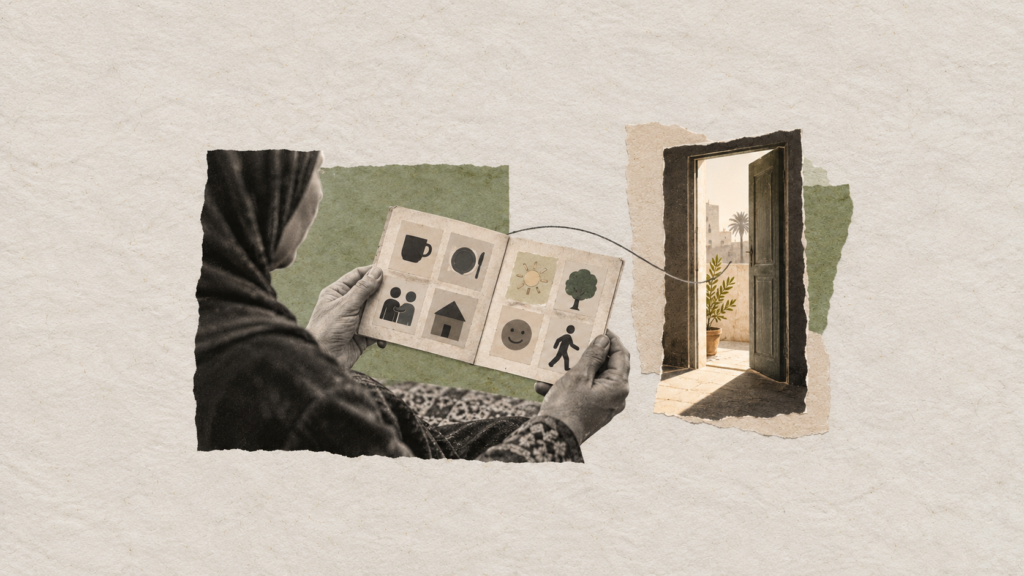
Families can use stories and visual materials to explain bodies and the changes associated with puberty in boys and girls, she says. Preparing early can reduce surprise and anxiety and allow information to be introduced gradually in a way that suits the person, instead of expecting them to absorb a long explanation all at once.
For families unable to reach a consultant, reliable visual resources can help explain menstruation, associated pain, hygiene and bathing, or changes such as facial hair. Materials still need to suit the person’s age and understanding. Online resources cannot replace assessment when pain, distress or harmful behaviour is present.
Abdel Ghany notes that puberty includes sexual feelings and urges that adolescents may not know how to express or manage. Support begins by explaining that these changes are ordinary, while teaching privacy, consent and respect for other people’s bodies. The person should not be blamed simply for having these feelings.
She says families can use pictures and visual tools within appropriate sexuality education to distinguish private from shared spaces, teach self-care and explain what others must not do to a person’s body. This also means teaching a clear way to refuse and seek help, whether through speech or another form of communication.
Some situations may require psychiatric assessment and medication when there is severe anxiety, depression or behaviour that threatens safety, she says. That does not mean prescribing medication simply because someone reaches puberty or experiences sexual desire. The problem being treated must be identified, benefits and adverse effects weighed, and treatment medically monitored.
Abdel Ghany favours guidance, education and suitable activities where these can address the behaviour, and gentle redirection rather than scolding. Repeated harmful or violent behaviour requires an understanding of its causes. Sedation is not an automatic answer for everyone.
She warns against aggression and punishment and stresses consulting a psychiatrist when a family cannot manage serious risk or distress. Professional guidance recommends assessing pain, physical and mental health, the environment and communication needs first, using appropriate psychological and social interventions, and reserving medication for situations where it is indicated and its effects can be monitored.
These families’ experiences show that puberty is more than a biological transition. It exposes gaps in support, information and accessible services. Where specialised assistance and appropriate sexuality education are limited, parents are left to navigate individual advice, folk remedies and sedating medicines. The specialists interviewed emphasise early preparation, family training and continuing psychological and behavioural support that protect adolescents, respect their rights and allow them to move through this stage with safety and dignity.