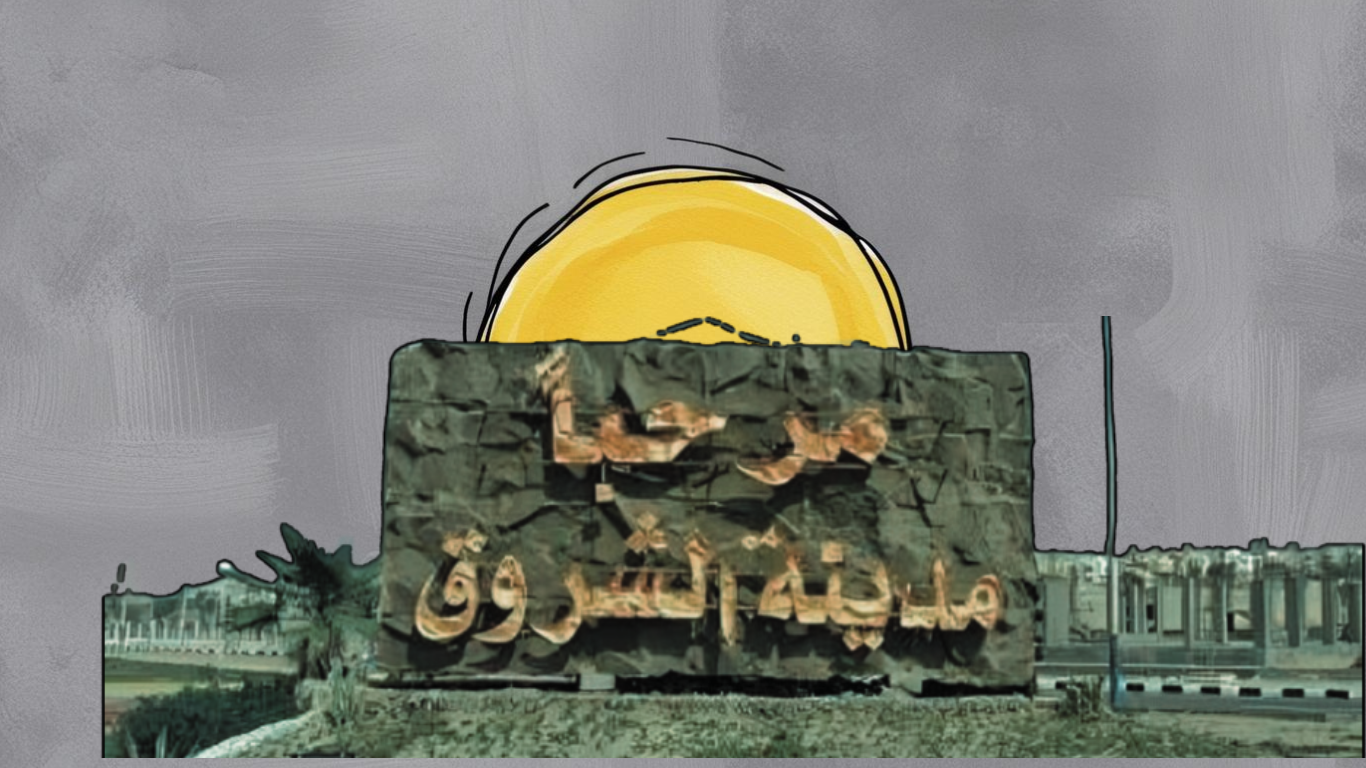
Egyptian Prime Minister Mostafa Madbouly yesterday submitted the government’s resignation to President Abdel Fattah El-Sisi, who accepted it, before tasking Madbouly himself with forming a new government.
A brief statement from the Presidency, without details, said Madbouly had been tasked with forming a new government of people with distinguished competence, experience and abilities, to work towards a number of goals, foremost among them preserving the determinants of Egyptian national security in light of regional and international challenges.
The statement said the new government’s goals include “continuing efforts to develop political participation, as well as on the security, stability and counter-terrorism file in a way that reinforces what has been achieved in this regard, and developing the files of culture, public awareness and moderate religious discourse, in a way that consolidates the concepts of citizenship and social peace”.
Madbouly, 58, is the third prime minister under President El-Sisi. While serving as housing minister in 2018, he was tasked with forming a government to succeed that of Sherif Ismail, who suffered from health problems for years before his death in 2023. Two reshuffles were made to Madbouly’s government: the first on 19 December 2019 and the second on 13 August 2022.
No Constitutional Obligation
The government’s resignation and Madbouly’s reappointment to form it again sparked debate among activists, politicians and citizens, who asked why he remains prime minister despite the decline in government performance and the political and economic crises that have dominated his tenure.
The latest decision to spark controversy and outrage on the Egyptian street was the increase in the price of subsidised bread on ration cards, with Madbouly saying his country was forced to adjust prices, “but bread will remain heavily subsidised”. The new price took effect on 1 June, rising from five piastres to 20 piastres per 90-gram loaf.
Some asked why the government resigned now, more than five months after the presidential election, while others saw forming a new government as a routine procedure following the inauguration of the president and the start of his term.
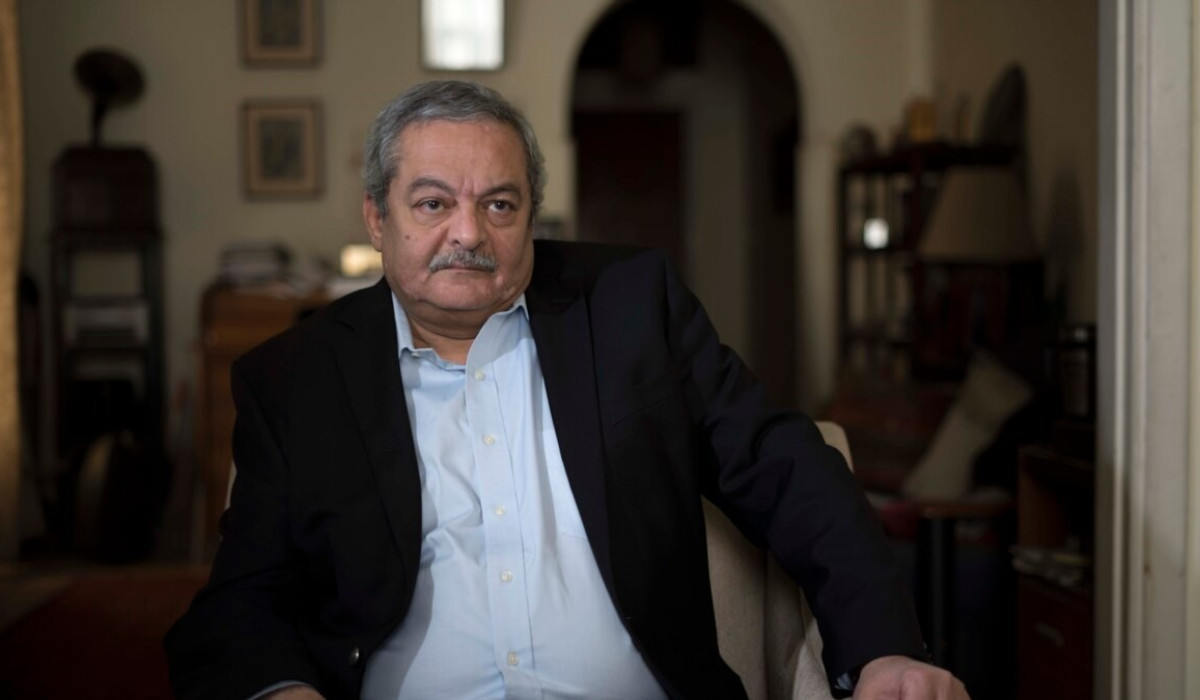
For his part, Islam Abdel Meguid, a lawyer before the Court of Cassation, stresses that there is no constitutional reason for the prime minister’s resignation and that what happened has nothing to do with any constitutional obligation, explaining that it differs from what Article 147 of the Egyptian Constitution provides, as that article concerns dismissing the government, which must meet several conditions, most notably the approval of the House of Representatives. Article 147 of the Egyptian Constitution states: “The President of the Republic may relieve the government of its duties provided that a majority of the members of the House of Representatives approve. The President of the Republic may carry out a cabinet reshuffle after consulting the Prime Minister and with the approval of the House of Representatives by an absolute majority of those present, and no less than one third of the members of the House.”
The Cassation lawyer tells Zawia3 that, under the constitution, the President tasks the leader of the majority, or the person backed by the majority in the House of Representatives, with forming the cabinet to ensure the House approves the new line-up, suggesting that what happened was an agreement between the prime minister and the president on a broad cabinet reshuffle, and pointing out that the Egyptian constitutional system is semi-presidential, with an executive authority that has two heads: the President and the Prime Minister.
Madbouly must choose the new government within 30 days, according to Article 146 of the Egyptian Constitution, which states: “The President of the Republic shall assign a Prime Minister to form the government and present his programme to the House of Representatives. If his government does not win the confidence of a majority of the members of the House within 30 days at most, the President shall appoint a Prime Minister nominated by the party or coalition holding a plurality of seats in the House. If his government does not win the confidence of a majority of the members of the House within 30 days, the House shall be deemed dissolved, and the President shall call for the election of a new House of Representatives within 60 days of the date the dissolution decision is issued. In all cases, the total of the periods set out in this article may not exceed 60 days. If the House of Representatives is dissolved, the Prime Minister shall present the formation of his government and its programme to the new House at its first meeting. If the government is chosen from the party or coalition holding a plurality of seats in the House, the President, in consultation with the Prime Minister, shall choose the ministers of defence, interior, foreign affairs and justice.”
Absence of Transparency and Loss of Accountability
Commenting on the government’s resignation, researcher and politician Mostafa Shawky, a leader in the Bread and Freedom Party (under formation), says there is a complete absence of transparency and freedom of information, evident in the lack of any reasons given for the government’s resignation, pointing out that this is the first time he has seen a government resign without any discussion with the public or any information about the reasons for its resignation.
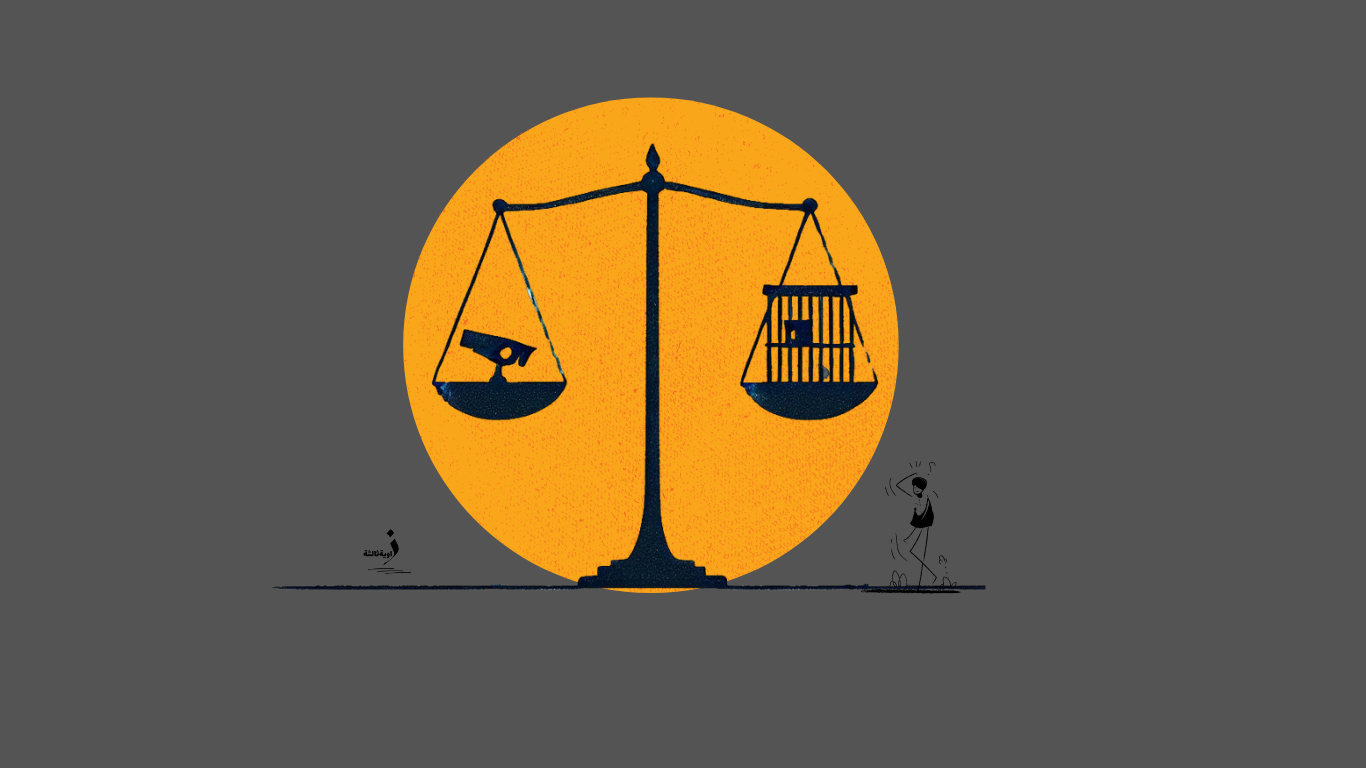
The Bread and Freedom leader tells Zawia3 that the absence of transparency and freedom of information greatly hampers monitoring the government’s performance and holding it to account if it deserves to be, and that resigning in this way allows the government to escape accountability and popular punishment for its political and economic biases and its failure to meet the people’s demands.
On the prime minister remaining in office, Shawky believes the authorities must explain to the public why the head of government is being kept: does the President believe the prime minister succeeded in his tasks while his ministers failed in theirs? He interprets Madbouly’s continuation as the political authority renewing its confidence in the outgoing government’s biases and orientations, since the prime minister is the one who fundamentally represents the political and economic orientations and biases, and keeping him means renewed confidence in the same economic biases and orientations linked to continued foreign borrowing, deteriorating economic conditions and an unstable currency, and the continuation of political biases such as nationalising the public sphere, confiscating press and media freedom, the absence of political pluralism and the siege on parties and civil society, as well as the continuation of the same social orientations in favour of a limited class of cronies at the expense of the majority of the people and their interests.
He goes on: Accepting the government’s resignation while keeping the prime minister means the President sees the crisis as one of government performance, not orientations, and this is the opposite of the truth, because our current crisis is linked to political, economic and social orientations and biases, not just the government’s performance. That is why I believe the new government will repeat what it has done over the past years.
Over the past ten years, the local currency has fallen against the US dollar more than once, which has in turn pushed the prices of all goods to unprecedented levels, greatly affecting citizens’ purchasing power. Meanwhile, the country faces rising inflation, which reached about 31.8% last April, according to data from the Central Agency for Public Mobilization and Statistics. The World Bank and world trade statistics say Egypt is among “the 10 countries most affected by food inflation in the world”.
The Crisis Is Not in the Government Alone
Khaled Dawoud, a journalist and leader in the Egyptian Social Democratic Party, believes the decision to keep the prime minister in office is disappointing, and that in practice nothing has changed. He tells us: Everyone knows that public policies were not decided by Madbouly but by other parties within the ruling system, but at least changing the prime minister and appointing a new figure would have given the impression of a desire to inject new blood and adopt different policies; reappointing Madbouly means the policies applied over the past years will not change.
Dawoud points out that Mostafa Madbouly implements policies he is informed of, and there are no broad expectations of any change in economic or other policies, noting that there are some files, such as foreign policy, in which the prime minister has no say.
In the same context, Zohdy El-Shamy, head of the board of trustees of the Socialist Popular Alliance Party, says that no one, neither the public nor the authorities with their institutions and agencies, knows the truth of this change, its motives or its reasons, as is usual in the management of the political process, and this is the clearest proof that there is no real change in the style and orientation of governance, pointing out that there is an understanding between the prime minister and the president on how the resignation was submitted.
El-Shamy expressed to Zawia3 his astonishment at the Presidency’s statement and its talk of forming a new government of competent people, an expression not used before, and which is incomprehensible given the situation the country is going through, which needs a government with a political and economic orientation capable of solving the crises the country is experiencing.
He stresses that neither the previous nor the current government is solely responsible for the country’s crises, and that the entire structure of political power is responsible for where the country has ended up, because the government does not run the country alone.
In recent days, the World Bank revealed a rise in Egypt’s poverty rate to 32.5% in 2022, compared with 29.7% in the 2019-2020 fiscal year. The results of income and expenditure surveys have not been published since 2020. The Bank indicated that spatial disparities persist, especially between rural and urban areas, and that about 66% of the poor live in rural areas, where annual inflation reached 42.6%, higher than the national inflation rate.