
In 2022, the Egyptian authorities began working to address the teacher shortage, as former Education Minister Tarek Shawki announced the launch of a competition to select 30,000 teachers, to be appointed as an expected first batch of 150,000 teachers over five years.
The announcement was a breakthrough for tens of thousands of graduates of faculties of education in Egypt from various governorates (the number of faculties of education at public universities has reached 27, according to the latest statistics), as they suffer from unemployment after the state stopped the mandatory assignment of teachers following a decision by Mubarak’s former prime minister Kamal El-Ganzoury in 1998, when he halted the appointment of graduates on the pretext that the state budget could not bear it. Assignment had emerged since the beginning of the republican era as a government tool, involving taking pledges from students on enrolling in faculties of education to agree to compulsory work as teachers in public schools after graduation.
According to researcher Wael El-Garsany in his doctoral thesis titled “University Education in Egypt and the Unemployment of the Educated“, the assignment system was applied at the time because of the low numbers enrolling in faculties of education, owing to citizens’ reluctance to join the teaching profession, which was seen as one of the lowest jobs on the social ladder. But over time, and with the increase in the number of university graduates in various specialisations, Egyptians turned to faculties of education as a social advantage, and they came to be considered among the “top faculties” (a common term in Egypt for faculties that qualify graduates for prestigious social positions), because of the government job awaiting graduates, unlike other specialisations not covered by the assignment system.
The decision to stop the assignment system brought results that specialists describe as “catastrophic”, as the education system began to collapse due to the severe shortage of required teachers, since the appointment of teachers became subject to the procedures applied under the state’s civil service system, including the competition system. This led to a build-up of unemployed graduates of faculties of education, as the matter became subject to the free market principle of supply and demand (in private schools and private tutoring centres), without regard to public schools and their needs.
| According to data from the Central Agency for Public Mobilisation and Statistics for 2022, the total number of graduates of faculties of education in Egypt reached about 68,221, while the number of graduates of the Women’s College at Ain Shams University, education division, reached about 2,036, the number of graduates of faculties of physical education about 16,189, music education about 547 and art education 99. These figures represent the number of graduates from these faculties in a single year, which means that graduates of faculties of education have become among the most unemployed in Egypt. |
However, President Abdel Fattah El-Sisi had announced in 2022 the government’s intention to appoint 150,000 teachers on a contract basis, at a rate of 30,000 teachers a year through the competition system, over five years. So what happened?
In February 2019, the Egyptian government opened applications for temporary contracts with teachers to fill some posts and cover the shortage until the end of the 2018/2019 academic semester. Indeed, 36,000 teachers took up their work in schools after passing all the tests, and worked for several months (the second semester only), before the Ministry of Education announced a new competition (120,000 teachers, administrators and workers) for one year renewable for three years. But after the tests were held and some were selected, officials backtracked and the procedures were not completed because of the suspension of classes and the social and economic conditions that hit Egypt because of the coronavirus pandemic, prompting some of those accepted at the time to file lawsuits (the Education Minister acknowledged that there were 260 cases concerning his ministry pending before the courts in state cases). The teachers contracted in the 36,000-teacher competition demanded priority in appointment in subsequent competitions, given that they had passed all the qualifying tests and had worked for only a few months, but the former Education Minister refused, announcing the application of the principle of equal opportunity.
| The Egyptian government’s acknowledgement of the teacher shortage dates back to when former Education Minister Tarek Shawki admitted before the House of Representatives that there was a shortage of about 323,000 teachers nationwide, attributing the low numbers to accumulations over years since the end of the last century, as the number of teachers fell because new batches were not appointed and also because some retire every year (about 24,000 teachers retired, according to the Ministry of Education’s statistical report issued in 2021), an approximate figure for the average number of teachers leaving service each year, in addition to about 45,000 teachers on unpaid leave. Meanwhile, the number of students increases every year without a similar increase in the number of teachers. |
Last year, the ministry announced a competition for 30,000 teachers as class assistants for the first, second and third primary grades for the 2023/2024 academic year, including graduates of faculties of education in the basic education and kindergarten departments and of the faculties of Dar Al-Ulum. 89,394 teachers applied for the competition, of whom only about 28,000 passed the tests. But they faced a number of difficulties that made them describe themselves, according to those we spoke to, as a “trial balloon” for the government. So what happened to them?
30,000 Teachers… A Batch That Was Not Appointed
Nermin Mohamed (who asked for her name to be replaced with a pseudonym) says she applied for teacher recruitment competitions three times before, in 2014 and 2019, and then in last year’s competition in 2023, but it was the first time some organisational procedures differed, which caused many problems. She describes it: “The matter was psychologically and physically exhausting, and psychological pressure followed us because of the shocks most of us experienced due to being excluded despite passing all the tests, to the point that three of the female teachers in my group lost their lives as a result of psychological pressure and depression. One of them was pregnant in her last months and died along with her foetus, and another suffered a sudden heart attack”.
Nermin, from Hadayek Helwan, south of the capital Cairo, who works as a kindergarten teacher, explains: When the latest competition (the 30,000-teacher competition) was announced, I applied along with a number of my colleagues, and we did indeed sit extremely difficult tests at the Central Agency for Organisation and Administration. “They were very long and wide-ranging, to the point that they imposed tests on us in mathematics and English at an advanced level, impossible for non-specialists, and the tests also focused on general knowledge, history and other fields most of us are not proficient in, since each of us specialises in a single branch of those sciences. Despite this, 28,176 teachers passed those tests, 96% of the total targeted for appointment”.
She adds: After passing the tests at the Central Agency for Organisation and Administration, we were informed that we had been accepted and that the appointment procedures were under way. We then began professional and mental training within the educational directorates, and after we finished, we waited to be notified to start work, but we were surprised by the announcement that we had to undergo new tests and training at the Military Academy in Cairo, which provoked intense ridicule on social media, as it was the first time teachers had been subjected to such things.
| In April 2023, social media erupted with scathing and sarcastic criticism after it was announced that President El-Sisi, accompanied by the Egyptian Minister of Defence, had attended the tests of teachers applying for jobs in Egypt’s public schools inside the Military Academy, prompting some to ask whether this approach was part of the militarisation of state facilities that began in 2013. |
Nermin goes on: We had no choice. We had to go to the Military Academy, each from their own governorate, and we bought an application file (the application file for the academy’s military cadets). The required papers were extremely complicated, as they included detailed information about relatives up to the fourth degree: their jobs, places of residence, criminal status and more, as well as many papers and statements that have nothing to do with civilians. Nevertheless, we completed the procedures and the training began.
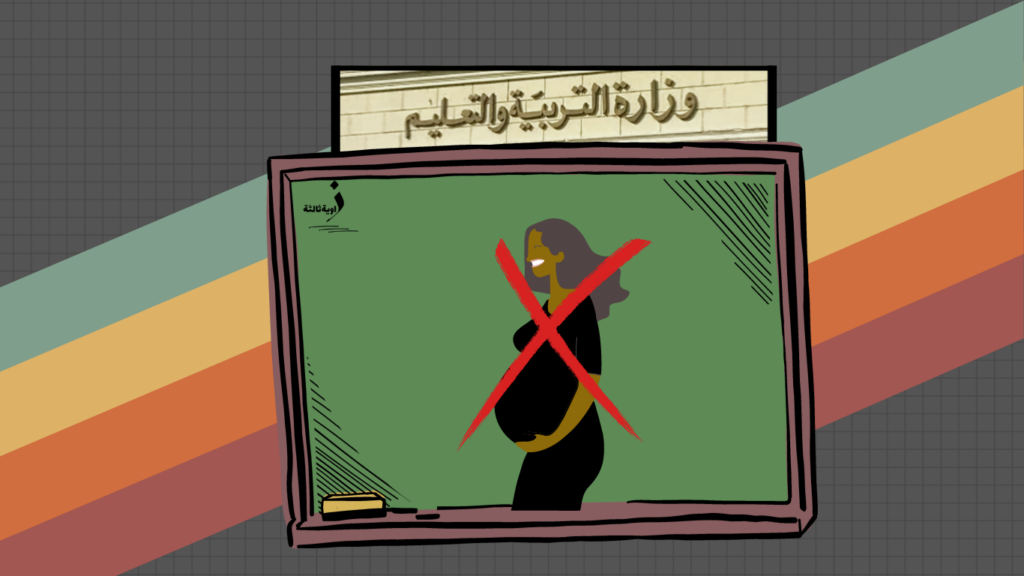
The young woman in her twenties describes how harsh the training was, to the point of numerous injuries among the teachers, especially during the physical training, which officials justified as aiming “to make the teacher physically fit to increase his capacity for work and productivity”, according to the President’s own directives. She adds: “Things were somewhat chaotic; even the scale for measuring weight was faulty, as it showed everyone as overweight. A friend of mine whose weight did not exceed 65 was recorded by the scale as 85 kilograms. Also, all the overweight or pregnant teachers were excluded from the physical training and were told they would go directly to the appearance examination, but that did not happen, and they were surprised to be included in the physical training, which they could not perform”.
From Cairo to Aswan, where Rania Saad, a teacher specialising in basic education, told us: “When the competition was announced, I and 65 teachers from my educational directorate applied through the online link, and we were given a date for the test at the Central Agency for Organisation and Administration in Cairo. We travelled and sat the tests, and about five months later the results were announced and I was among those who passed. I then underwent mental and pedagogical training for a week and obtained a documented and stamped clearance certificate from the educational directorate I belong to, which means my acceptance and the start of work”.
Rania explains: We were surprised by the request to go to the Military Academy in Cairo again to undergo new tests and training, and I do not know exactly what teachers have to do with military institutions! At that time we faced many difficulties in reaching Cairo, because some trains broke down or were crowded after the start of the war and conflicts in Sudan in April 2023, as thousands of Sudanese refugees were arriving daily. But we managed to get there with difficulty, and then we began the military training. Halfway through, and after passing the medical examination, many female teachers were excluded either because of excess weight, pregnancy or wearing the niqab, and the official at the academy called them “Al-Mawaqif”, meaning people whose cases were put on hold until they rectified their status. As she describes it, the training was spread over three separate days, which forced her and her companions to travel back and forth between Cairo and Aswan repeatedly, a high economic cost they could not bear, especially since most of them were unemployed. She asks: Why were nearby venues not allocated in the southern governorates instead of us travelling to Cairo, from the far south of Egypt to its north?
| In a statement commenting on the competition, the Egyptian Initiative for Personal Rights said it rejects the discriminatory criteria on which teachers are selected, which for the first time include passing physical and mental fitness tests at the Military Academy headquarters, based on Decision No. 2297 of 2022 amending some provisions of the executive regulations of Chapter Seven of the Education Law issued by Prime Ministerial Decree No. 428 of 2013, whose fourth article gave the Education Minister the right to set contract conditions (passing training). The Prime Minister’s letter issued on 27 April 2023 also included clearly discriminatory criteria, requiring the completion of six months’ training at the Military Academy as one of the requirements for appointment in any ministry. |
After the Military Academy training, lists were sent to the educational directorates stating that only half the number had passed and been appointed, which surprised everyone, since they had already passed all the tests, and they had been told that the Military Academy training was merely routine. The appointment of only about 14,000 teachers from the competition was announced.
Nermin speaks again: I was surprised to find that I was among those excluded, despite passing all the tests and training, even the military ones, and there was no justification for rejecting or excluding me. We all went to demonstrate and protest in front of the Ministry of Education headquarters in the New Administrative Capital three times. The second time, groups from National Security and Central Security surrounded us, and 14 teachers were arrested. She says that instructions were issued to shops around the ministry in the Administrative Capital to close their doors to the protesters and not allow them to use the toilets or buy bottles of water or food, as they continued their protests in front of the ministry from eight in the morning until eight in the evening for three days, to no avail.
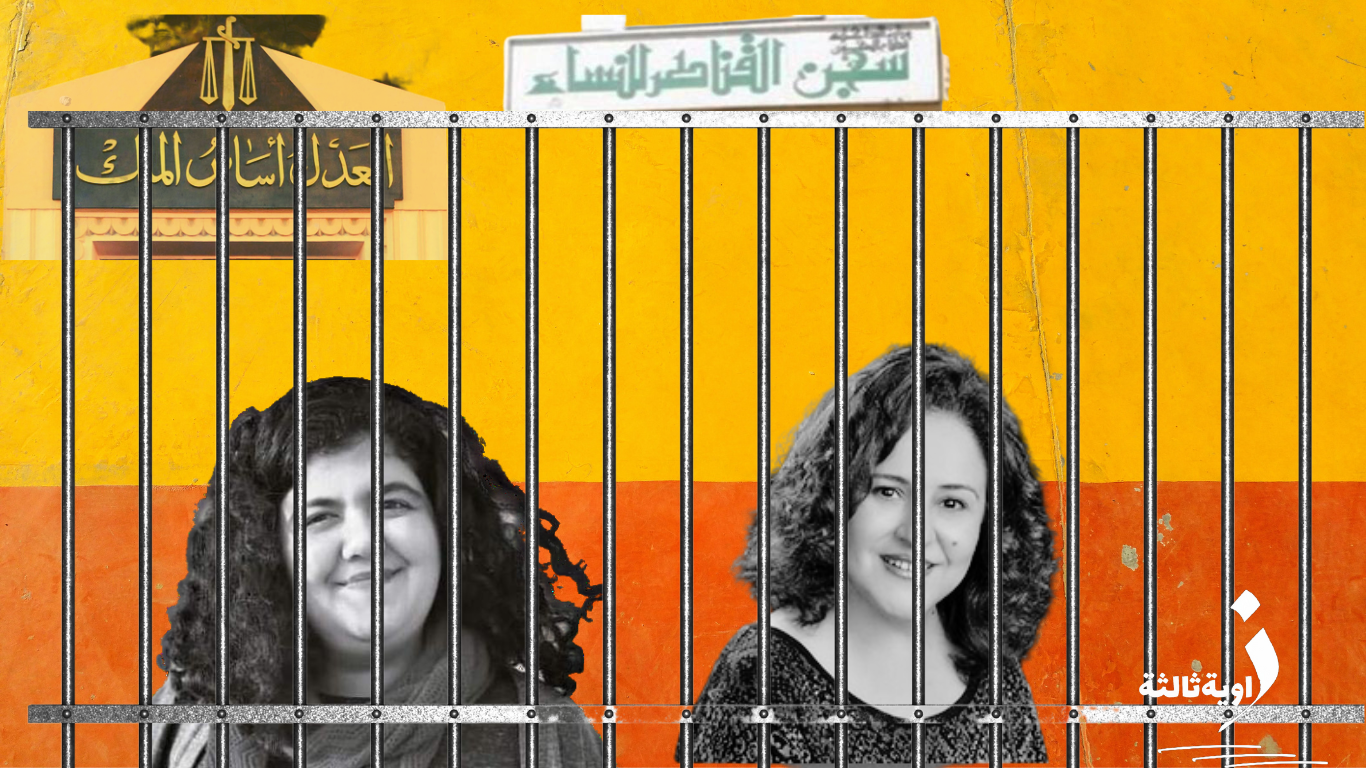
| Last October, security forces arrested 14 teachers for taking part in a protest in front of the Ministry of Education in the New Administrative Capital. They were investigated before the Supreme State Security Prosecution in case No. 2333 of 2023, facing charges including joining a terrorist group, publishing and broadcasting false news, misusing social media and participating in an assembly. |
The same happened in Aswan. Rania says that she and teachers from different directorates protested in front of the governorate building for three days, especially since most of them had resigned from their jobs and become unemployed to meet the competition’s full-time requirement. The governor at the time tried to calm their anger and promised them solutions, but nothing happened, so they returned to protest for a similar period a second time. This time security forces surrounded them, threatening to fire tear gas, and because most of them were women, they backed down. She adds: “We learned of a protest in Cairo in front of the Egyptian Parliament building, so we all travelled to demonstrate. That was on a day when the Education Minister attended, in response to requests for information from some MPs about our crisis”.
| Last November, Education Minister Reda Hegazy met members of the Education and Scientific Research Committee in Parliament to discuss the crisis of the teachers excluded from the 30,000-teacher competition, and statements afterwards asserted a breakthrough in the crisis, but nothing has happened so far. |
Rania continues: A colleague of ours was supposed to attend the session, representing our group, as Aswan’s MPs had obtained a permit for her to enter Parliament, but security refused to let her in and broke up the demonstration, which about a thousand teachers or more attended.
Nermin, Rania and thousands of other excluded teachers had no choice but to turn to the courts, after submitting dozens of complaints and objections to the Presidency, the Administrative Prosecution and the relevant authorities, but no one responded. A number of volunteer lawyers and rights centres took up the case, which attracted the attention of Egyptian public opinion.
Atef Labib El-Nagmy, a lawyer before the Court of Cassation and founders’ representative of the “With the Law We Build Egypt” party, says he is the volunteer agent for 500 appellant teachers and filed lawsuits on their behalf at the State Council. The Commissioners’ Authority issued a report affirming the right of 150 of them to be appointed, and they were referred to the court of merits for a final decision before the trial judge, but the case has not yet been decided due to the procedures for moving the court from its old building in Abbasiya to a new one in New Cairo near the headquarters of Egypt’s Prosecutor General. As for the rest of those affected, the Commissioners’ Authority has not yet issued any decisions in their favour.
He explains: “When we started the cases, I addressed those affected among my clients and explained to them that winning and losing are not tied to the case or the ruling that will be issued; rather, we use the cases as a means of pressure on the authorities to push them to review their appointment policies. According to my information, the problem is not that some did not succeed in the tests; it is that the appointment of those who passed the 30,000-teacher competition came on the basis of an agreement under which the state obtains a foreign loan to pay teachers’ salaries. When the recent Gaza events began, the loan was disrupted, which made it difficult to appoint all those who passed and caused delays in paying the salaries of those already appointed. So the hope is that such cases continue until the financial resources for appointing teachers are provided”.
| According to a group of excluded teachers who spoke to Zawia3, teachers who succeeded in being appointed in previous competitions did not receive the announced salaries, which the government estimated at about EGP 6,000; according to the testimonies we received, the salary was about EGP 4,000 before tax and insurance deductions. The government has also faltered in paying their salaries monthly, to the point that some of them received three months’ salary at once. |
El-Nagmy points out that the teacher shortage rate in Egyptian schools exceeds the permissible rate, stressing that providing teachers should take precedence over any construction works taking place in Egypt. He describes the teachers’ competition as a legitimate factor, but says it must be accompanied by the state’s commitment to social justice, meaning that the authorities are responsible for providing job opportunities for citizens even if they are unable to work, given their obligation to provide citizens with a source of income in one form or another, because rising unemployment threatens society in terms of security and the economy. He gave an example from the teachers’ competition: “If the official excludes someone because of excess weight or a woman’s pregnancy, he must provide an alternative job opportunity”.
In the same context, Ahmed Mahrous, documentation and monitoring officer at the Egyptian Initiative for Personal Rights, tells Zawia3 that the initiative took up the case of the detained teachers until they were released last February, after pretrial detention lasting more than three months.
He adds: “The crisis began last October, when about a thousand teachers excluded from the competition protested in front of Parliament and the Ministry of Education. At that time 14 of them were arrested. We followed the crisis, contacted 106 affected teachers and filed a lawsuit, submitting a number of appeals to the State Council that were referred to the Commissioners’ Authority, which issued its decision affirming the right of 86 of them to be appointed and referring 20 others for study of their cases”.
Last Tuesday, the Administrative Court in Abbasiya was scheduled to begin hearing the appeal of 16 teachers, but it postponed the session to 11 June. According to Mahrous, the initiative took on the defence of the teachers as agent for 94 excluded women and 12 excluded men, who sat the tests in 17 governorates: Cairo, Giza, Alexandria, Sharqia, Gharbia, Kafr El-Sheikh, Suez, Ismailia, Dakahlia, Qalyubia, Menoufia, Beheira, Beni Suef, Fayoum, Sohag, Qena and Aswan. The lawsuits included 50 appeals against exclusion because of weight, 28 because of the appearance examination and 28 because of pregnancy.
Although Rania, Nermin and dozens of teachers turned to the courts to speed up a decision in their dispute with the authorities, all the cases were postponed to June, which raises questions about the authorities’ policy on providing decent job opportunities for teachers without forcing them through complicated and, as they describe them, “humiliating” procedures.