
During the first week of the US-Israeli war against Iran, direct effects on the Egyptian economy became apparent, the most prominent of which is the decline in the pound’s exchange rate after months of relative stability, while serious fears are being raised about the withdrawal from the Egyptian market of hot money, the largest share of which is held by the Gulf, which would mean doubling the burdens on the government, especially given its commitment to repay the largest tranche of debt during the first quarter of this year.
For the first time in several months, the pound fell against the dollar last week, exceeding the EGP 50 threshold, which is the highest level recorded by the currency in about nine months, amid rising demand for the dollar and increasing monetary pressures in the Egyptian market, and expectations that the rise will continue if the war extends for several more weeks.
Despite the reassurances issued by the Egyptian government in the middle of last week regarding securing food needs and providing energy alternatives, observers who spoke to us express serious fears about the long-term impact of the crisis, especially with regard to the energy file, which hinges on Tel Aviv’s decision to resume gas exports to Egypt, a matter linked to an end to the war, according to Israeli officials.
Egypt imported 344 billion cubic feet of Israeli gas in the fiscal year ending in June 2025, according to official estimates, while domestic production is estimated at about 4.1 billion cubic feet per day and consumption at about 6.2 billion cubic feet per day, which means that imports (Israeli and others) cover a significant share of the gap.
Observers believe that the disruption to international shipping, especially in light of the disruption of the Strait of Hormuz and the threat to close it to commercial vessels, will have direct repercussions on Suez Canal revenues, which have recorded historic declines since the Israeli aggression on Gaza on 7 October 2023, and the subsequent widening of the circle of war and the involvement of regional parties in it.
Suez Canal revenues fell during the 2024/2025 fiscal year to USD 3.62 billion, recording their lowest level in 20 years, a decline of 45.5% compared with the previous fiscal year.
For its part, the research firm Fitch Solutions warned of the accelerating pace of the withdrawal of short-term foreign investment from government debt instruments in Egypt, explaining in a report it issued on Tuesday that foreign investment in these instruments recorded an outflow estimated at about USD 1.8 billion during the period from 15 to 26 February, and expecting the exits to continue in the coming weeks, which could aggravate the pressure on the exchange rate.
What Awaits the Egyptian Economy?
Academic and economist Dr Medhat Nafea believes that reading the repercussions of the current war requires distinguishing between the short and long term, especially as the Gulf states are exposed to direct attacks and the Strait of Hormuz has actually been closed.
He explains, speaking to Zawia3, that the short term (weeks, or days as in the Twelve-Day War) means the closure of the Strait of Hormuz, which will directly push up oil prices and disrupt part of global energy trade, doubling Egypt’s import bill and putting pressure on inflation and the exchange rate.
Nafea points out that the halt of gas supplies from the Leviathan and Tamar fields aggravates the energy gap, and he also notes that a Houthi escalation in the Red Sea could lead to a near halt in Suez Canal revenues as ships shy away from passing through, and would raise the cost of shipping and insurance and, consequently, of goods.
He notes that in this high-risk environment, hot money tends to exit quickly, which increases the pressure on the pound and raises the risk premium on debt instruments. Likewise, Gulf investments hold back because their economies are preoccupied with security and internal stability.
The other scenario, the bleakest as the economics professor describes it, is that the war drags on, which means that the Egyptian economy will face a structural shock: a prolonged decline in Canal and tourism revenues, a wider gap in the energy balance, and continuous pressure on the balance of payments and the exchange rate. A larger exit of short-term money becomes likely, and the situation may require additional monetary tightening or emergency financing arrangements.
As for Gulf investment flows, they depend on the ability of those states to contain the attacks and continue their oil exports by alternative routes; if oil exports and shipping and trade in and through them are disrupted for a long period, their financial surpluses will shrink, which limits their ability to pump out foreign investments and has a negative impact on the remittances of Egyptian workers in the Gulf, and consequently the pound will once again bleed value against the dollar under the pressure of the decline of all foreign currency resources, and markets will be thrown into confusion in the absence of real structural reforms, according to Nafea.
MP and economist Dr Mohamed Fouad agrees with him, as he believes that the Egyptian economy is currently being exposed to an external shock linked to rising regional tensions, and points out that the main point of fragility at home is the interruption of gas supplies via the regional pipelines, which imposes additional pressure on the energy balance and the current account.
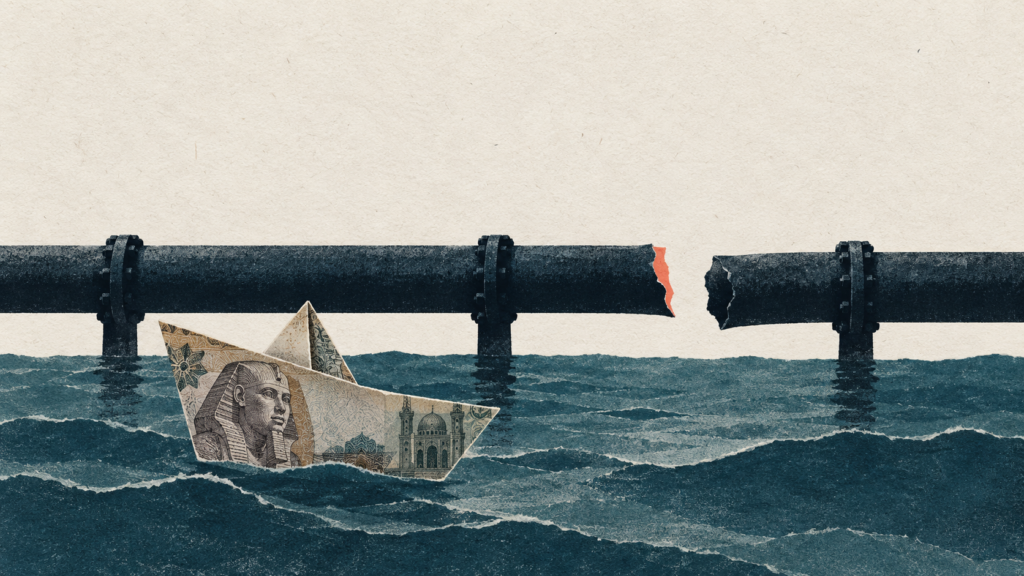
Fitch Solutions points out that the suspension of pipeline gas imports from Israel imposes a structural burden, as these supplies covered between 15% and 20% of domestic consumption.
Although Cairo has contracted for more than 100 cargoes of liquefied natural gas for 2026, the current gap may force it to resort to the volatile and costly “spot market”. This forced shift means a bigger import bill and a deepening of the current account deficit, in addition to the continuing spectre of power cuts that has come to haunt the Egyptian street, according to Fitch’s estimates.
Fouad explains that the financial markets have already shown some indicators of a repricing of risk, among them the rising cost of insuring against sovereign risk and the widening gap between the pound’s spot rate and its pricing in forward contracts, but these developments, as he describes them, are still within a range that can be contained and do not reflect a state of acute anxiety in the markets.
He adds that the exchange market is witnessing a gradual and controlled movement consistent with a limited exit of foreign portfolio investments, stressing that the available data do not point to a broad structural wave of outflows from the Egyptian market so far.
At the international level, Fouad points out that the global volatility index has already risen to levels that reflect a state of high anxiety, but it has not yet entered the panic range that usually drives investors to exit markets en masse. He also notes that the emerging market debt indices issued by JPMorgan do not so far show signs of a broad withdrawal from assets in emerging economies.
Regarding the effects of the crisis on the real economy, Fouad expected tourism to see some short-term effects driven by travellers’ caution, while the greatest risks remain linked to energy-intensive industries, which may face limited production interruptions if the disruption to gas supplies continues for a longer period without effective alternative solutions.
Fouad concluded that the current developments essentially reflect a process of repricing risk more than a comprehensive economic crisis, stressing that the priority at the current stage must focus on managing the energy file efficiently and monitoring capital flow indicators daily to ensure market stability.
International institutions’ estimates indicate that 2026 will be a year of pressure on the debt service front in Egypt, as debt maturities, especially external ones, are expected to range between about USD 60 billion and USD 70 billion during the year, with a notable concentration of instalments in the first quarter, which deepens short-term financing needs and increases the sensitivity of the financial situation to any external shocks or disruptions in capital flows.
Despite the government’s announcement of a reduction in the debt-to-GDP ratio of about 12% over the past two years, and the subsequent upgrade of its credit rating by Standard & Poor’s last October, for the first time in seven years, the burden of debt service has remained the most acute challenge. Official data indicate that debt service accounts for about 50% of total public expenditure, and about 72% of total revenues in 2024/2025, among the highest ratios among peer countries.
3 Effects Battering the Egyptian Economy
For his part, the CEO of the Kuroom Centre and global markets expert, Dr Tarek El-Refaey, believes that in the near term, the economic effects of the war differ greatly between Egypt and the Gulf states. Egypt is highly vulnerable given its reliance on foreign capital, tourism and Suez Canal revenues to provide foreign currency. Conflict in the region usually leads to capital flight from emerging markets, pressure on the Egyptian pound, and a decline in the number of incoming tourists, who represent a main source of foreign currency.
El-Refaey tells Zawia3 that “any disruption to shipping traffic or energy flows through the Red Sea or the Strait of Hormuz could affect traffic through the Suez Canal, which is another main source of Egypt’s hard currency income”, while estimates indicate that the risks of war are already affecting Egyptian currency markets, capital flows and inflation expectations.
As for the economies of the Gulf Cooperation Council states, El-Refaey describes the near-term situation as more complex. Because most Gulf currencies are pegged to the US dollar, they are shielded from the currency depreciation that Egypt has witnessed.
He says that the rise in oil prices, driven by geopolitical risks, may provide temporary financial gains for major exporters such as Saudi Arabia, the UAE and Qatar. However, the region still faces immediate downside risks resulting from disruptions in the tourism, aviation and logistics sectors. Flight cancellations and regional insecurity may lead to a significant drop in the number of visitors and harm the Gulf’s growing tourism sector.
He adds: “In the long term, the biggest risk facing the Gulf states lies on the strategic rather than the financial side, as continued instability may undermine investor confidence in the region as a safe global business hub, and threaten economic diversification projects aimed at reducing dependence on oil revenues. Continued attacks or disruptions may also threaten energy exports and maritime trade through the Strait of Hormuz, through which about 20% of global oil supplies pass.”
The financial markets expert concludes that Egypt will face immediate fiscal and monetary pressures, while the Gulf economies enjoy a stable financial position in the short term, but are exposed to long-term risks to investment, diversification and regional stability.
The Egyptian government faces heavy economic burdens this year, and since mid-November last year it has begun implementing a broad package of fiscal austerity measures with a profound impact, in an attempt to contain the rising public debt and reduce pressure on the budget, amid growing fears that these policies will affect the pace of industrial and investment growth. The measures include raising the prices of energy, transport and government services, as well as reducing reliance on sovereign guarantees for major projects in vital sectors such as infrastructure, education, health and transport, which are the sectors most closely linked to creating jobs and stimulating economic activity.
Within the framework of these policies, the Ministry of Finance issued strict instructions not to issue any new sovereign guarantees except for projects with a high cash return and clear investment feasibility. It also requested a halt to expansion in purchasing new assets or imported equipment unless they are self-financed or based on partnerships with the private sector or foreign investors under the systems of (BOT) (build, operate, then transfer ownership) or (PPP) (public-private partnership), while working to transfer some operating assets to sovereign funds to finance them outside the general budget, so as to avoid increasing debt or burdening the treasury with new guarantees for foreign loans.
An Optimistic View
On the other hand, professor of political economy Karim El-Omda considers that Egypt’s financial situation is still stable despite regional challenges and foreign currency pressures. El-Omda explains that the decline of the pound against the dollar in the recent period is not a sharp collapse, but a limited decline within a flexible exchange rate framework, pointing out that the large monetary reserve and the Central Bank’s good management provide strong support for the currency.
El-Omda adds, speaking to Zawia3, that the exit of foreign hot money is nothing new for Egypt, as the country has witnessed similar cases in previous crises such as coronavirus in 2020, the emerging markets crisis and the Russia-Ukraine crisis, stressing that every partial exit of this money does not necessarily mean the collapse of the pound. He expects the dollar to remain within the range of EGP 52 to 52.5 at most, and the Egyptian currency later to return to its normal levels in the forties.
He points out that the energy crisis represents an additional factor of pressure on the economy, especially with the decline in domestic gas production and the interruption of Israeli gas, stressing the importance of securing alternative energy imports from countries such as Algeria and Russia to avoid any long-term crisis, and explains that these challenges may lead to a temporary rise in inflation and the repricing of some imported goods, such as cars, but any state of panic could aggravate the problem.
El-Omda advises remaining calm and not being swept along by extreme expectations about rises in the price of the dollar or oil, stressing that the oil supply in the markets is sufficient and that Egypt’s strategic reserve of basic commodities is good, which allows the crisis to be managed effectively.
Fitch’s analytical reading holds that the prolongation of the conflict in the region is eroding Egypt’s external position through multiple channels; on the one hand, global oil prices rise, increasing the costs of subsidies and imports, and on the other, tourism and Suez Canal revenues decline, in addition to the possibility that remittances from Egyptians abroad will be affected, these being the main sources of hard currency.
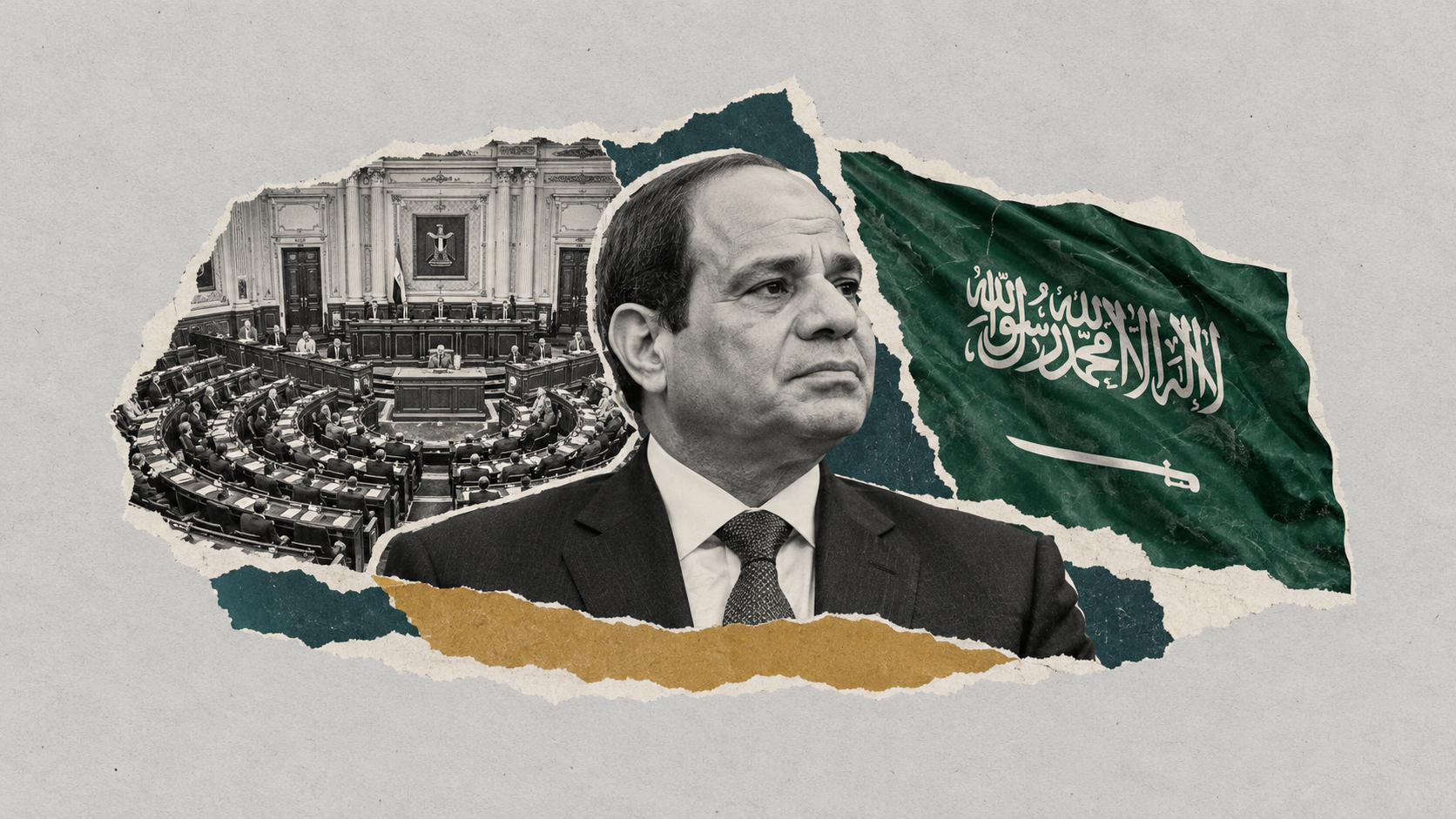
In the same context, statements by President Abdel Fattah El-Sisi confirmed the enormity of the economic bill; he revealed that disruptions to shipping in the Suez Canal have cost the Egyptian treasury losses approaching USD 10 billion.
El-Sisi had warned of the dangers of prolonging the ongoing war between the United States, Israel and Iran, stressing that any development that could lead to the closure of the Strait of Hormuz would have direct repercussions on global shipping, including the Suez Canal, which is one of the most prominent sources of Egypt’s national income.
El-Sisi explained, in a speech he delivered on Sunday evening at the annual iftar organised by the Armed Forces to coincide with the anniversary of the 10th of Ramadan victories (the October 1973 War), that Cairo is following developments in the region with great caution, stressing that Egypt is preparing extensively for the possibility of the war continuing amid the rapid escalation around the Strait of Hormuz and the effects this may have on global trade and energy prices.
The figures clearly reflect the extent of the pressure facing foreign currency, and make managing the current crisis a battle of “long breath” amid international and regional conditions that show little flexibility, which leaves the economic decision-maker with limited options for manoeuvre between meeting obligations and providing basic goods.