In a country where the public sphere contracts year after year and politics becomes a risky activity, questions about the intellectual’s role, the limits of speech and the meaning of dialogue become existential. Discussion of the press, parliament or opposition concerns the right to know and the possibility of imagining a different future.
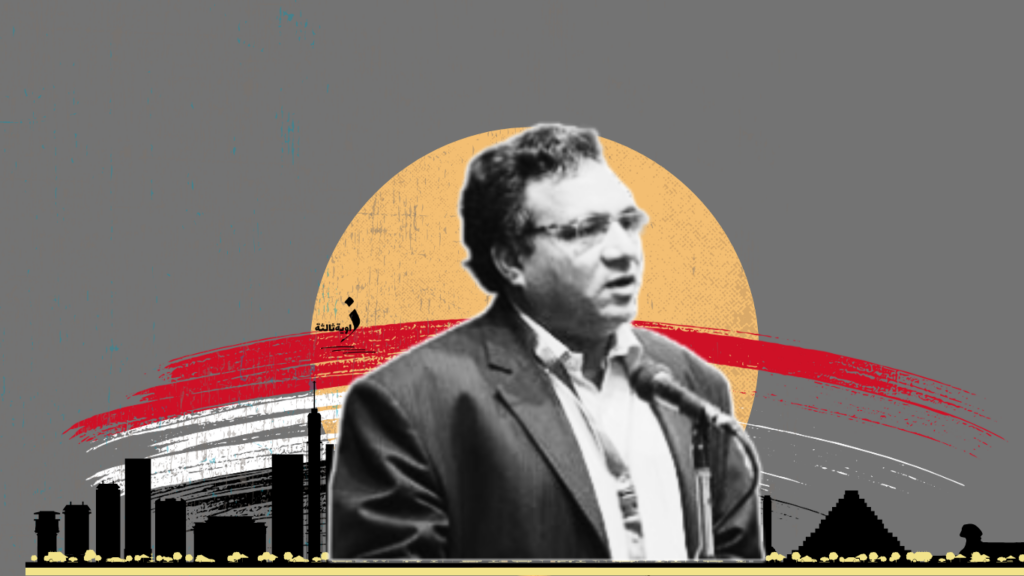
This extended interview with writer and political thinker Ammar Ali Hassan offers a critical account of a troubled moment. Drawing on years of observing Egypt’s public life, he addresses press freedom, parliament’s structure, the opposition’s crisis and the fate of the National Dialogue. His answers connect political repression and the erosion of public space with rising social violence and the narrowing horizons of culture and writing.
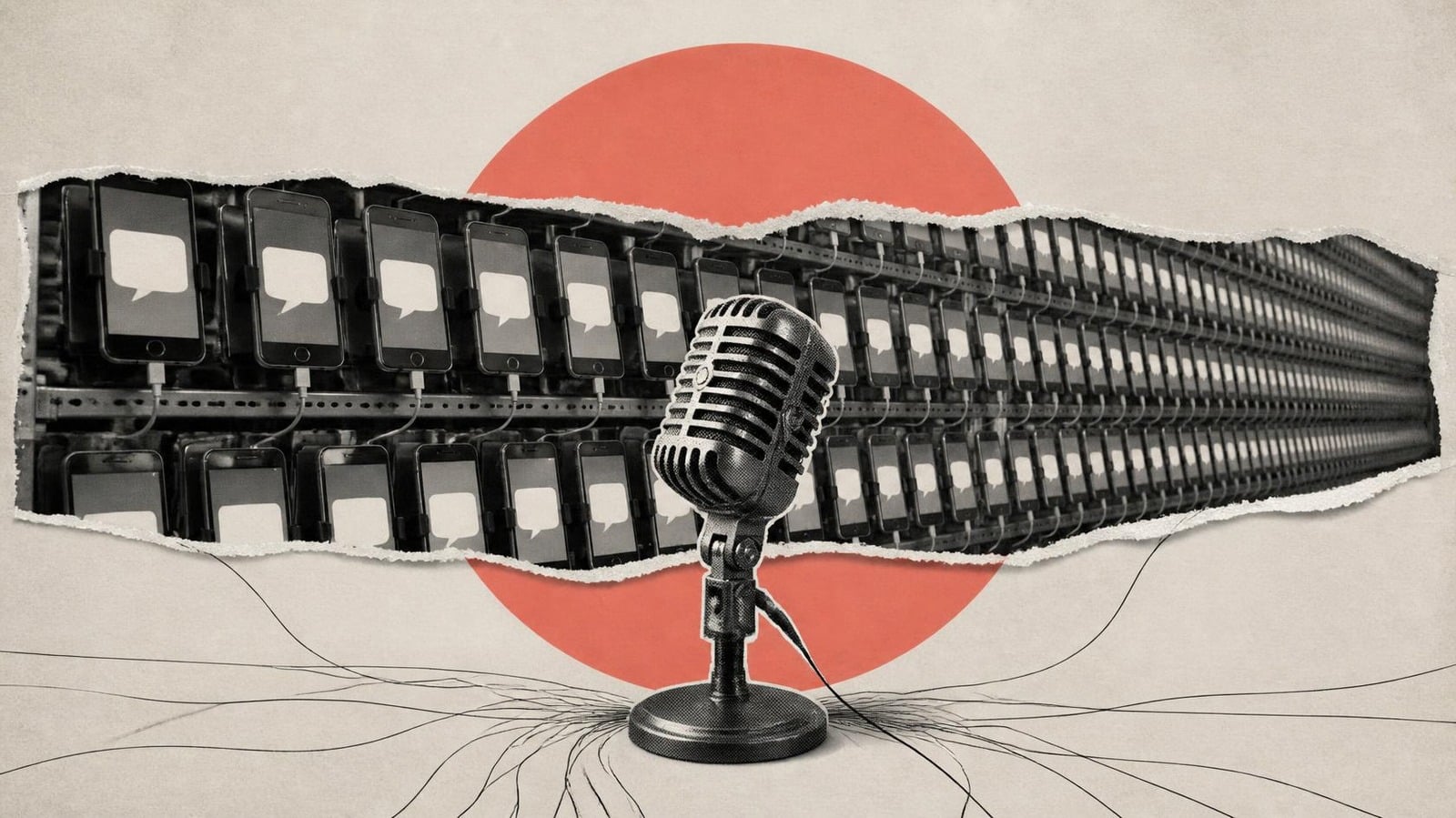
What do you think of growing accusations of publishing false news and the government’s move toward harsher penalties?
In many cases, calling news “false” is inaccurate. There is a fundamental difference between false news and mistaken reporting. Even falsehood has degrees: total and partial, deliberate and unintentional.
Even when an error is established, we must ask why it occurred. Did the journalist fail to check carefully or make enough effort to obtain information? Or did the authorities themselves withhold it? In the latter case, a journalist tries to publish, the authorities rush to brand the report false, then turn to courts and imprison journalists over publication—something historically unusual in Egyptian political and media life.
Existing penalties are sufficient; indeed, they are numerous and severe. Journalists have spent decades trying to reduce them. Unfortunately, the direction is now reversed: penalties are increased when journalism has almost died and its breath has been stifled.
The Egyptian press can no longer say anything about senior officials or even junior bureaucrats. It is shackled. People have turned away from the press and media because they can no longer convey the truth, or find anything they can report.
Government institutions, the bureaucracy, business circles and influential bodies all operate under a thick fog through which information scarcely escapes. News reporting has almost disappeared, and deep investigations of any phenomenon are impossible. Opinion writers face persecution and cannot speak freely, from self-censorship acquired through continuing repression to direct instructions passed to editors-in-chief.
Fact-checking organisations recorded more than 180 misleading or inaccurate statements by ministers and officials in just six months. How do you respond?
If the “false news” rule were applied to many officials’ statements, we would have cases by the dozen and wake up the next day to a complete ministerial and political vacuum.
Many statements are speculative and arbitrary. Figures contradict one another and change from official to official, while the truth is absent or deliberately obscured. Journalism tries to find its way to that truth but is not enabled to do so.
As I said, lying and error are distinct. For decades, professional practice held that if a newspaper or platform published an inaccurate report, the affected party had a right to reply or correct it in the same space and font size. That is what our teachers taught us. Today, they neither wait for corrections nor offer an alternative account. When journalists try to understand or ask questions, they are accused of lying, misconduct and sometimes treason.
Do you expect a freedom of information law soon?
I think it may be issued soon. But the more important question is: where is the transparency commission envisaged by the constitution? In my reading, the constitution does not merely recognise access to information; it also calls for punishment of those who withhold it from the people.
If this constitutional principle were implemented and a transparency commission established, a very large part of the crisis would be resolved. The press could obtain regular government reports, statistics and data, particularly on economic projects, to consult and rely upon.
Treating a freedom of information law as an instrument of pressure, repression or restriction is narrow and misleading. It should respond directly to an inherent right of the Egyptian people—owners of the money, land, sovereignty and legitimacy—to know what is happening to their funds, rights and future.
How do you assess the latest parliamentary elections?
They were not only the longest but also the strangest in Egypt’s roughly century-and-a-half of parliamentary life. There was so much chaos, abuse and violation that the president himself intervened. That would not have happened unless he had been told the scale had become a public scandal requiring intervention to curb the practices we witnessed.
A parliament produced by elections held in that manner will remain wounded in the public conscience, even if it fulfils the formal procedures allowing it to convene, perform its duties and pass legislation or constitutional amendments. Everything it issues will also carry that wound. Reconsideration is necessary: people will struggle to accept such a parliament or grant it moral legitimacy.
Will the new parliament differ from its predecessors?
I believe the 2015 and 2020 parliaments emerged through the same method: closed absolute lists and individual contests, many decided in advance. Political money, violations and arbitrary procedures were relatively less extensive before. This time, the entire election was engineered, with outcomes determined before the process began. The pattern existed previously, but not with this degree of bluntness.
We will see the same parliament and performance. There will be opposition voices, some following a prescribed path and others outside it, but their influence will be almost nonexistent because the overwhelming automatic majority remains in the authorities’ hands. Parliament becomes a bridge across which the executive obtains what it wants.
Did the National Dialogue open even a limited window in public life?
It was a wasted opportunity to establish communication between the current authorities and opposition figures, independents, experts, scholars, thinkers and experienced politicians. Some participants appeared to act as intermediaries conveying public sentiment; others sincerely cared about the national interest.
At a minimum, the dialogue should have produced a clear action plan for full or partial implementation. We hoped for more than releases of political prisoners or amendments to electoral laws: we hoped for genuine, comprehensive political reform.
Unfortunately, it was treated as a public-relations campaign, an exercise in testing opinion or relieving pressure. Then the war following 7 October began, the authorities no longer felt a need to listen to participants, and the process ended that way.
This is a familiar failing in Egyptian political life. I first became politically aware under Mubarak and saw authorities turn to such dialogues whenever crises or pressure intensified. Participants appeared on television and spoke persuasively, but once the crisis ended, the door closed and we returned to zero. The same happened with this period’s National Dialogue.
Could the media development committee repeat that pattern?
I do not expect it to achieve much while the prevailing political doctrine views free media as a threat to stability. That assumption is refutable: the flexibility and media freedom of earlier periods helped preserve Egypt. If media freedom caused collapse, other countries would have collapsed, particularly given the conflicts, civil wars and popular uprisings around us.
Media even helped prolong Mubarak’s rule. Although his system had exhausted its purposes by 1995, it lasted another sixteen years thanks to the flexibility created by a margin of media freedom.
If the political authorities will not recognise public freedoms, including media freedom, as inherent citizens’ rights, they should at least see them as a way to inject flexibility into political life, making authority more familiar, stable and acceptable to a broad public.
Can Egypt’s opposition still perform its role, or is it facing a structural crisis?
The opposition has suffered for a long time. Some of it was manufactured by the authorities’ money and influence, with a prescribed path and limits. Others tried to rebel against that arrangement and were besieged, excluded, disparaged and defamed. Legitimate funding from citizens was dried up, strict monitoring imposed, or people inserted to weaken parties from within until they collapsed.
We have repeatedly seen such practices since Mubarak, with parties including Wafd, Labour, Tagammu, Al-Ahrar and then Al-Ghad. This is how the authorities have manipulated the margins of serious opposition.
I do not rely on the other kind—opposition following a set route, accepting what is permitted or sharing certain rewards with political authority. I do not regard it as opposition in the real sense.
That does not mean Egypt has no opposition. There is an unorganised, fluid opposition of scholars, thinkers, experts, politicians, prominent figures and ordinary citizens. They exist, cannot be denied or excluded, and I believe their circle is widening.
So you do not recognise an opposition operating within the “available space” and distinguishing electoral from political alliances?
I do not recognise an opposition whose path is drawn by the authorities. It is normal in democracies for opposition, as part of the political system, to talk with those in power, sit at the same table, present programmes and alternatives, convey public sentiment and even participate in decisions. That is understandable and acceptable.
What I cannot understand is political authority allocating particular rewards to the opposition and limiting the relationship to those rewards, or to softening repression against opponents. The relationship becomes begging rather than engagement between equals. The opposition no longer sees itself as entitled to propose alternatives or seek power.
The authorities regard opposition as decorative ornaments, and many opposition groups unfortunately accept that role. Others resist and try to build real opposition, whether through parties, pressure and interest groups, or a fluid opposition among the wider public and civil institutions.
Do you expect the next parliament to amend the constitution?
All future scenarios remain open. This parliament may complete its full term, or the Constitutional Court may dissolve it and order new elections. It may pass the anticipated package of legislation broadly aligned with the executive’s current political and economic direction.
It may also amend the constitution, including presidential terms or other provisions. Alternatively, it may last only a year or a few months and end before such changes. Amendments might occur if it completes its term.
If another parliament is elected, it may consider the same issues. All possibilities are open. There are circulating accounts, unconfirmed information, anxieties, speculation and predictions. It is difficult to distinguish actual information from guesses or fears.
But judging from past events and the wishes, ambitions, capabilities and interests present in politics, much will depend on parliament’s role in the next phase.
Egypt has seen tangible social violence in the past two years, often against vulnerable groups such as women and children. What causes it?
The spread of social violence has no single cause. It results from multiple, deeply interconnected factors.
First are political factors: closed channels for public dialogue and the absence of outlets, alongside the effects of high-level decisions on living conditions. Laws also constrain people—rising market prices through inflation, relations between landowners and tenants, new housing rent laws and other measures. These generate violence in what we might call “communities of scarcity.”
There are factors connected to weakened religious restraint: religious institutions and some producers of religious discourse no longer offer people a good example. Some failed dramatically during the past decade, through Egypt’s testing period from the January revolution onward.
Economic factors are clear too: widening scarcity, rising poverty and diminishing generosity. A person unable to obtain food, clothing or medicine is unlikely to remain calm and may direct anger toward society if unable to direct it at authority.
Another factor is the recycling of violence, or “violent waste,” through social media. The space is open to instinctive behaviour, excessive consumption, extravagance and the circulation of violent and criminal scenes. What people once encountered only in limited amounts is now widely present.
Drugs are another factor, especially new, powerful substances that impair judgement and push addicted people toward violence against themselves, relatives and the wider community.
Finally, I see factors related to the spread of some psychological disorders, with some affected people inclined toward violence. More precisely, the causes are multiple and complex. Each carries its own weight, but together they push society away from tranquillity toward violence.
There seems to be a writing crisis in Egypt: recent films and television dramas rarely satisfy audiences, and published books attract little attention. Where does the problem lie?
The crisis is complex, not superficial. It has several dimensions, some related to writers themselves.
A book worthy of that name needs a full journey through a reputable publishing house: topic selection, review, correction, proofreading, editing and appropriate printing. That system has been visibly damaged. Many publishers print poor texts in exchange for payment, without review or basic standards. Some involve plagiarism or reliance on artificial intelligence. The practice spreads as long as publishers receive money.
Beyond that is society’s view of culture as a luxury over the past decade, alongside anxiety about intellectuals as bearers of awareness, leading to pressure to reduce their roles.
There used to be a connection between books and drama, which reaches more people. That link has almost disappeared. Drama writers tend to take shortcuts, and adaptations of novels or short stories—once common in Egyptian television and cinema—are now rare.
Film and television used to make some writers prominent: viewers discovered their names through adaptations, then sought their books. It was legitimate publicity for literature. That role has almost vanished.
Cultural space in the press is nearly nonexistent, apart from a very few publications such as Akhbar Al-Adab, whose readership is also limited. Cultural magazines and periodicals print hundreds of copies and sometimes distribute only dozens. Even thousands would be a small figure compared with the number of intellectuals and people interested in culture.
I therefore reject the claim that we lack producers of literary or artistic texts. The crisis extends to publishers, media, the spaces through which texts reach audiences, and society’s general attitude toward culture and writing.
We have far more writers than in earlier periods. Look at short-story competitions and you will find many good works. Their organisers answer this question in practice: even prizes for young writers receive hundreds of novels, at least forty of which may be good.
Did Egypt previously have forty good literary writers at one time? No. But the state supported culture, kept its channels open and maintained a regional cultural role, which benefited writers.
Today, almost all that has disappeared. The serious intellectual who seeks truth, criticises power, sides with people and opposes corruption and authoritarianism faces intense pressure. That has also eroded the intellectual’s symbolic value in public eyes, and audiences have turned away.
The causes are multiple. Some relate to the wider context, others to intellectuals who have often accepted withdrawal from public concerns into their own writing. Some were excluded or left the field; others stopped producing after questioning its purpose. Some write well but cannot find a publisher—or, once published, distribution and readership. These are interconnected problems.