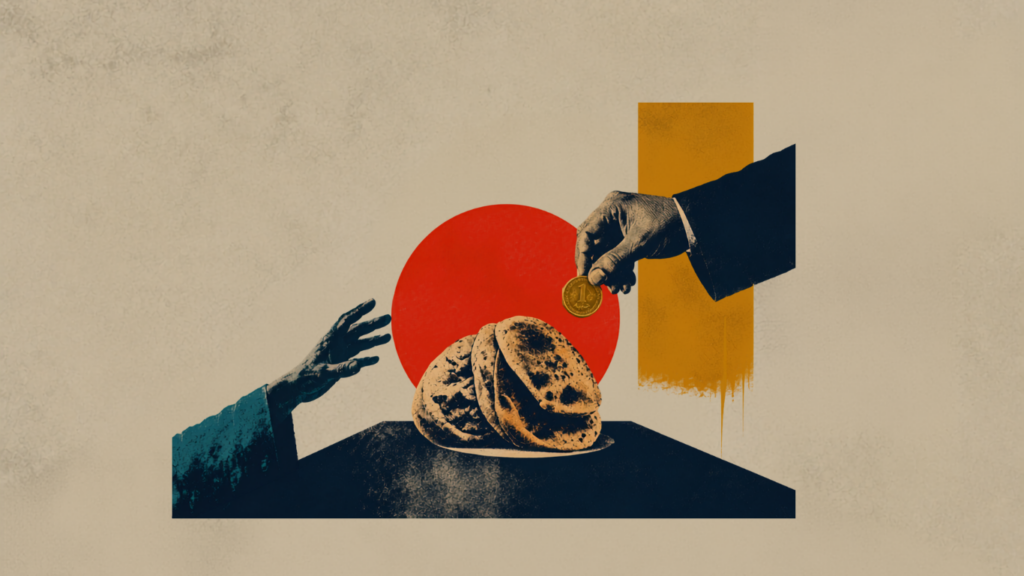

On June 24, Prime Minister Mostafa Madbouly said cash support would be introduced during fiscal year 2026/2027, rather than on July 1, 2026. Ration-card rolls would first be reviewed to exclude high-income recipients, he said. Estimates suggested this review could remove around twelve million people from the system, leaving approximately 58 million beneficiaries.
On June 5, Madbouly had said the cash-support system would begin with the 2026/2027 fiscal year. Beneficiaries would be divided into tiers according to economic and social need to address shortcomings in the existing system, achieve social justice and better use subsidy resources, in his description.
As the government prepared the change, members of parliament submitted an urgent briefing request to the prime minister and ministers of supply, social solidarity and finance about the announced shift from goods-based subsidies to cash support. Government ministers were absent from parliamentary discussions of the request.
The concern is that high inflation could erode the real value of the expected EGP 325 payment—approximately $6.50 at the exchange rate used in the report—and weaken its capacity to protect those most in need.
Zawia3 reviewed the 2026/2027 budget as the government sought to reduce subsidies. Seven expenditure lines had zero allocations compared with varying amounts in earlier years: cost-of-living assistance, child pensions, literacy spending, investment in livestock and fisheries, compensation for contractors’ price differences, public-business-sector company support and lending to public-sector companies.
Cost-of-living assistance, literacy spending, investment in livestock and fisheries, and support for public-business-sector companies received zero in the 2026/2027 budget. The child pension was incorporated into the conditional Takaful cash-transfer benefits instead of remaining a separately funded line. A zero separate allocation therefore does not by itself establish that this benefit was abolished.
Cost-of-living assistance had EGP 200,000 allocated in 2025/2026, while literacy support had approximately EGP 100,000, before both returned to zero in 2026/2027.
Cost-of-living assistance is an exceptional state payment within social-protection packages for public employees and pensioners facing inflation and difficult conditions. It differs from a cost-of-living allowance added to basic or functional pay: assistance is paid as social cash support. On February 26, 2025, the finance minister announced that the exceptional allowance for state employees would rise from EGP 600 to EGP 1,000.
The removal of literacy-support allocations comes while reported illiteracy in Egypt was 16.6% in 2024, including 21.4% among women and 12% among men. Zawia3’s Arabic analysis estimated around 17.8 million people using official population totals. That estimate is not reproduced as a verified headcount here: applying an age-specific illiteracy rate to the entire population, including children, requires a matching denominator.
The source graphic’s allocation shares
The allocation shares shown in the source graphic
| Category | EGP trillion | Share |
|---|---|---|
| Subsidies and grants | 0.826 | 10.1% |
| Other expenditure | 2.13 | 26.0% |
| Debt service | 5.22 | 63.9% |
Is cash support a gateway to ending subsidies?
Economist Ahmed Khozayem says goods-based subsidies and cash transfers differ fundamentally. Cash quickly loses value when the dollar exchange rate changes. “Any increase in the dollar eats away at cash support, because even a one-pound change in the dollar price feeds directly into prices.”
He tells Zawia3 that in-kind subsidies remain a tool for preserving what is left of the middle class’s social-protection umbrella. In his view, the government’s debate overlooks more influential economic realities.
A one-percentage-point increase in interest on domestic debt imposes enormous costs, Khozayem says. External-loan interest costs can exceed savings from cutting goods subsidies or raising subsidized bread prices. He calls such decisions reckless measures that reach into citizens’ pockets and add to living costs.
Economist Belal Shoaib instead considers cash support the better option even with high inflation. He estimates that at least 30% of in-kind subsidy resources fail to reach intended recipients and argues that cash directs resources more efficiently. He points to Takaful and Karama as a successful example of payments reaching beneficiaries directly.
No official body has established that ineligible people make up 30% of recipients; Shoaib’s estimate of resource leakage is also distinct from the proportion of ineligible households. Madbouly has announced a review of beneficiary databases, citing families receiving subsidies despite living in affluent compounds, sending children to international schools and universities, and owning expensive cars.
Shoaib tells Zawia3 that cash transfers would improve oversight and governance and reduce monitoring costs. Government bodies could focus on planning and administration rather than tracking leakage or misuse, using digital infrastructure he considers good.
He says linking support to inflation already happens indirectly: allocations rose from around EGP 160 billion to EGP 178 billion as prices increased. This reflects fiscal responsiveness, he argues, and a cash system could raise allocations when necessary just as the in-kind system does.
The Finance Ministry’s analytical statement for 2026/2027 puts food-ration subsidy allocations at EGP 178.3 billion, compared with EGP 160 billion in 2025/2026.
Subsidy allocations across five fiscal years
| Category | 2026/2027 | 2025/2026 | 2024/2025 | 2023/2024 | 2022/2023 |
|---|---|---|---|---|---|
| Total subsidies | 468.28 | 434.77 | 409.09 | 356.84 | 275.85 |
| Non-financial institutions · subtotal | 450.16 | 418.95 | 397.57 | 345.45 | 266.94 |
| Food-ration commodities | 178.3 | 160 | 165.4 | 133.28 | 121.81 |
| Petroleum products | 15.84 | 75.03 | 155.57 | 165.13 | 125.63 |
| Export promotion | 48.04 | 44.5 | 17.99 | 12.84 | 1.96 |
| Farmers | 1.07 | 1.02 | 3.2 | 0.54 | 0.3 |
| Electricity | 104.16 | 75 | 10 | 2.42 | 2.08 |
| Passenger transport | 2.7 | 2.46 | 2.46 | 2.23 | 1.9 |
| Health insurance and medicines | 21.63 | 10.9 | 7.42 | 3.35 | 1.87 |
| Industrial activities | 25.9 | 29.58 | 14.3 | 10.99 | 1.07 |
| Upper Egypt development | 0.45 | 0.4 | 0.37 | 0.4 | 0.4 |
| Other | 52.07 | 20.06 | 20.87 | 14.27 | 9.91 |
An economic researcher familiar with the cabinet’s subsidy file calls the current shift a “back door to eliminating subsidies.” He says poverty, inflation and currency instability make the change inappropriate, citing poverty affecting more than 30% of the population and substantial social and economic risks.
The Arabic report describes the 29.7% national-poverty estimate announced in 2020 as the latest published household-survey figure and cites other estimates of 33% by late 2022 and economists’ assessments approaching 40%. For clarity, the World Bank’s October 2025 Poverty and Equity Brief already reported 33.5% under the national methodology for 2021, drawing on the 2021/2022 household survey. That dated estimate should not be confused with a measurement of poverty in 2026.
The researcher, who requested anonymity for professional-safety reasons, tells Zawia3 that inflation and weakening purchasing power erode cash payments over time, while subsidized goods better secure families’ basic needs.
He gives an illustrative example: EGP 100 might buy a quantity of rice today, half that quantity a year later and one-quarter after two years. These are hypothetical amounts illustrating erosion, not an inflation forecast.
A fixed cash payment may look like continued support on paper while gradually removing its real value, he argues. Under current conditions, it would increase household burdens and poverty even if official statistics did not capture the full change.
The priority should be expanding social protection and strengthening support for poor households, he says. Reducing subsidies or moving completely to cash should be reconsidered only when poverty falls to around 15–20% and economic conditions stabilize.
The citizen who cannot feel secure about making a living
Khozayem says the government has failed to control inflation. Even when it raises interest rates to restrain prices, the government itself remains a major debtor to banks through domestic-pound and external debt.
He criticizes what he calls a revenue-collection mentality. Repeated increases in electricity, fuel and service prices without comparable income growth or jobs for young people continually weaken the middle class.
The reform program launched on November 3, 2016 coincided, in his account, with poverty expanding from approximately 25% to more than 60%, which he attributes to the World Bank. This comparison mixes poverty definitions and is presented as his claim rather than a comparable statistical series.
The Arabic report cites a national poverty rate of 27.8% in 2015 and monthly income below EGP 482 for that group. It then attributes a 66.2% rate to a 2025 World Bank report using a roughly $6.80 daily threshold and equates it with EGP 10,000 monthly. The linked source is a social-media post. The World Bank’s October 2024 brief instead reports 68.8% below $6.85 per day in 2017 purchasing-power-parity dollars for 2019, while its October 2025 brief reports 58.5% below $8.30 in 2021 PPP dollars for 2021. These are upper-middle-income benchmarks, distinct from Egypt’s national poverty line; PPP dollars must not be converted to pounds using the market exchange rate. The EGP 10,000 conversion is therefore not adopted.
Political-sociology professor Hoda Zakaria says subsidy policy should guarantee a minimum dignified life. A person working daily to earn a living needs confidence that the state secures basic needs so life can remain stable.
She tells Zawia3 that parliament, as citizens’ representative, must communicate their concerns to government. Briefing requests and questions reflect genuine anxieties about living costs. A cash payment that quickly loses purchasing power disrupts the relationship between income and expenditure and cannot achieve its protective purpose.
Cash support should be assessed by whether it provides economic security, Zakaria says. A proposed EGP 300–350 payment is not effective while inflation remains elevated. What matters is purchasing power and whether the amount meets basic needs.
Economic reassurance feeds into social stability and public satisfaction, she adds. Severe financial pressures can push some people toward harmful or criminal behavior when they cannot meet essentials. A minimum level of livelihood security is therefore a social concern beyond economics alone.
Zakaria rejects reducing the debate to accusations that support reflects a socialist economic bias. She says this harms social peace and distracts from the central issue: a dignified, secure life.
Inflation eats away at support in plain sight
Khozayem warns that an exit of hot-money flows he estimates at around $45 billion would heavily pressure the exchange rate. He suggests each $1 billion leaving could raise the dollar’s pound price by around EGP 1, feeding another inflation wave. This is his estimate, not a fixed or verified exchange-rate relationship.
Non-resident holdings of local-currency government debt were reported at $38.1 billion in January. By the end of March, holdings reached around EGP 1.969 trillion, equivalent in the cited report to roughly $39.5 billion. The Arabic article’s parenthetical “EGP 39.5 billion” is a currency-label error; the figure is in US dollars.
Khozayem says the government approaches the economy narrowly and neglects its social dimension. Measures such as electricity conservation and coded meters focus on collecting revenue or offsetting losses. He cites charging cafés and restaurants more for electricity when they remain open after official closing times as another example of imposing burdens.
On July 1, 2026, Madbouly announced a 20% electricity-consumption surcharge for restaurants and cafés operating after prescribed closing times.
Khozayem says the government is not held accountable for maximizing revenue from major potential sources: agriculture, industry—including mining, quarrying and extraction—maritime activity, tourism and services he links to a network of 54 countries.
No one challenges weak revenue, he argues, while the economy mainly relies on Suez Canal income, expatriate remittances and tourism. In his description, the government is proficient at borrowing and citizens ultimately pay the repayment cost.
The problem is not in-kind support itself but decision-making, he says. Switching to cash is an oversimplification: another price wave can quickly consume payments until their real value effectively disappears.
Shoaib rejects the argument that cash support would fuel inflation. Ending leakage and payments to ineligible recipients would save substantial sums, he says, enabling more efficient spending elsewhere. He does not consider the objections sufficiently justified.
He considers EGP 300–350 per eligible person suitable for current conditions, with increases possible if circumstances require them and parliament seeks greater support when inflation rises sharply. Changes nevertheless depend on annual budget reviews and fiscal policy.
Assessing the transition would require at least a full year, Shoaib expects. Success depends on clear eligibility rules, accurate exclusion of ineligible groups and directing resources toward those most in need to improve public-spending efficiency.
2026/2027 support by budget function
Subsidies, grants and social benefits by function
| Function | 2026/2027 | 2025/2026 | 2024/2025 | 2023/2024 | 2022/2023 |
|---|---|---|---|---|---|
| Social protection | 685.66 | 628.79 | 557.52 | 496.86 | 414.87 |
| General public services | 80.77 | 59.1 | 7.04 | 6 | 4.67 |
| Economic affairs | 20.07 | 16.07 | 32.1 | 30.13 | 9.04 |
| Health | 16.92 | 13.29 | 21.44 | 17.75 | 11.96 |
| Housing and community facilities | 9.12 | 13.77 | 10.15 | 10.41 | 5.62 |
| Education | 8.24 | 3.64 | 6.48 | 2.37 | 1.63 |
| Youth, culture and religious affairs | 7.02 | 5.05 | 5.97 | 5.15 | 4.19 |
| Public order and safety | 4.39 | 2.72 | 4.53 | 4.24 | 2.04 |
| Environmental protection | 0.14 | 0.12 | 0.28 | 0.12 | 0.82 |
| Reported sector total | 832.32 | 742.55 | 645.5 | 573.01 | 454.84 |
Keeping in-kind subsidies, despite their flaws
The anonymous cabinet economic researcher says economic literature treats subsidies as distortions to be limited because resources leak to ineligible recipients. Egypt is an exception, he argues: retaining imperfect in-kind support is preferable while prices continually rise. Its current budget share is limited and does not justify abandoning it now.
Low-income citizens face mounting electricity, water, transport and other service costs. In-kind subsidies preserve a minimum supply of essentials despite deficiencies in the system, he says.
Any discussion of eliminating subsidies or fully moving to cash should follow tangible income improvement and at least five years of economic stability so households recover their ability to cope. He warns that applying cash support now could worsen price pressure while people already face rising living costs.
Although free-market economics generally disfavors subsidies, even capitalist economies operate social-protection programs, he notes, citing US food vouchers for low-income groups. Countries with higher poverty and unemployment have greater need for continued support.
Subsidies should be judged by the goods and services they secure and their ability to meet basic needs, rather than the number of pounds paid. He says linking minimum wages to inflation would help preserve real incomes and the purchasing power associated with cash support.
He calls EGP 300–350 unfair unless linked to inflation, because purchasing power will gradually decline. Leakage should be addressed through an accurate database excluding ineligible recipients and reaching those most in need, rather than replacing the entire system.
The shift from goods-based subsidies to cash is ultimately about whether the state can protect vulnerable people against inflation and living costs, as well as spending efficiency. The debate raises the prospect that the transition could open another route to eroding social protection.