

The first issue of Deleted Lines: accountability, detention, freedom of expression and economic and social rights.
Deleted Lines | Issue 1 | November 2024
Why Deleted Lines?
Prepared by: Rabab Azzam, Aya Yasser, Ahmed Gamal Ziada
Zawia3 launches the first issue of its monthly newsletter “Deleted Lines“, as an attempt to make heard the voices that have been buried under the rubble of silence. We shed light on files that are absent from traditional journalism, either because of control or because of the authorities’ desire to keep them hidden in darkness: the faces of prisoners and detainees behind bars, political rights torn between applause and the gagging of mouths, the laws drafted under the dome of parliament, the issues of minorities buried in the margins, and freedom of expression, which has become a mere ghost roaming the streets of Egypt.
We write about economic and social rights torn apart like autumn leaves, about the forms of violence against women, and about the voice of human rights defenders that disappears amid the noise. “Deleted Lines” is not just a newsletter; it is an attempt to return the stolen letters to their rightful place, and to revive the issues that the authorities prefer to remain in the shadows.
We realise that covering these issues faces major challenges, whether at the local level or in digital spaces where algorithms prefer to ignore sensitive topics. Nevertheless, we believe that our role goes beyond the obstacles, because the truth deserves to be told, and because the audience we write for is an audience that seeks knowledge and claims for itself the right to ask.
1. Financing settlements and international accountability
Financing Israeli settlements
The “Don’t Buy into Occupation” coalition revealed in its fourth report, issued on 29 November 2024, the involvement of more than 800 European financial institutions in supporting companies that contribute to illegal Israeli settlement projects in the occupied Palestinian territory. Between January 2021 and August 2024, these institutions provided loans and underwriting worth USD 211 billion, and held shares and bonds worth USD 182 billion in 58 companies operating directly in settlement activities.
Beneficiary companies and financing institutions The list of beneficiary companies was topped by prominent companies such as “Coca-Cola”, “Booking Holdings” and “Volvo Group”. As for the European institutions providing the most financing, they include “BNP Paribas”, “HSBC” and “Deutsche Bank”. The report highlights how deeply these companies are involved in activities that contribute to entrenching the Israeli occupation and strengthening settlement expansion.
Escalation on the ground and in law This report coincides with a major escalation in Israeli violations, including continuing attacks on Gaza and forced displacement operations in the West Bank. In July 2024, the International Court of Justice issued an advisory opinion affirming that the Israeli occupation is illegal, and called on states to end any economic or investment activities that support it. This was followed by a United Nations resolution reinforcing this call, warning against supporting any entity or company that contributes to violations of international law.
Comments from the coalition Inès Abdel Razek, co-director of the Palestine Institute for Public Diplomacy, affirmed that Israel’s impunity at the international level contributes to the continuation of crimes against Palestinians. She stated: “Financial flows and commercial activities contribute to the ongoing assault on the Palestinian people, which places a legal and moral responsibility on the companies involved”.
For her part, Nathalie Janne of CNCD-11.11.11 pointed out that “divestment from companies supporting the occupation has become common in the financial sector, which proves that banks and financial institutions can assume their responsibility to ensure that they do not contribute to violations of international law”.
The report’s demands The report called on financial institutions to adopt enhanced due diligence measures and to withdraw from companies that refuse to comply with international law. It also demanded that European governments take decisive measures, including:
- Banning the import and sale of settlement products in European markets.
- Preventing economic and commercial support for settlements.
- Halting the export of weapons and surveillance technology to Israel.
The report stresses that the continued support of European financial institutions reinforces illegal settlement and deepens Israeli violations in the occupied Palestinian territory, which places states and institutions before a legal responsibility to hold accountable the companies engaged in these activities.
The National Council for Human Rights loses its A status
The Sub-Committee on Accreditation of the Global Alliance of National Human Rights Institutions (GANHRI) announced on 20 November 2024 the downgrading of the classification of the National Council for Human Rights in Egypt to category (B). The decision attracted wide attention in human rights circles and was welcomed by many local and international human rights organisations.
Concerns over non-compliance with the Paris Principles The Sub-Committee stated that its decision came as a result of the Council’s failure to comply with the Paris Principles, particularly with regard to its independence, effectiveness and transparency. It pointed out that the appointment of the Council’s members directly by the executive authority, through a process lacking transparency and participation, negatively affects the Council’s ability to work independently and without government interference.
Steps by human rights organisations Ahmed Attalla, executive director of the Egyptian Front for Human Rights, explains in an exclusive statement to Zawia3 that the Front sent a separate report to the Sub-Committee on Accreditation on the performance of the National Council. It also took part with other human rights organisations in submitting a joint report addressing the shortcomings in the Council’s compliance with the Paris Principles.
The importance of the classification Attalla stresses that the classification reflects the extent of the Council’s credibility internationally and directly affects its standing before international mechanisms, including the United Nations. He explains that the downgrade clearly indicates that the Council does not enjoy full independence from the government, which weakens its ability to perform its human rights role effectively.
Local and international reactions Attalla points out that the National Council had expected the downgrade decision, based on previous statements by the Council’s president, Moushira Khattab, who called for legislative amendments to the law establishing the Council in order to avoid this downgrade. He explains that Khattab’s statements during the discussion of the Criminal Procedure Law included hints of the Council’s desire to confront the risk of losing its classification.
At the international level, no notable reactions have been recorded so far, but the impact of the decision on the performance of the National Council will become clearly visible in the coming period. Attalla adds that the National Council is required to present proof at the next session, scheduled for October 2025, to refute the evidence establishing its lack of independence. He stresses that human rights organisations will closely follow the measures the Council may take to improve its classification.
The downgrading of the National Council for Human Rights is a clear warning to the relevant authorities of the need to take serious steps to guarantee the Council’s independence and transparency, so that it can perform its role in line with international standards.
2. Prisons, health care and pretrial detention
Hoda Abdel Moneim and the right to health care
On 13 November 2024, Amnesty International issued an urgent action regarding the deteriorating health condition of human rights lawyer Hoda Abdel Moneim, who has been detained for more than six years. The organisation affirmed that Hoda suffers from multiple illnesses, among them diabetes, peripheral neuropathy, and heart and kidney diseases, in addition to arterial thrombosis and high blood pressure. Despite her need for specialised medical care, the authorities refuse to transfer her to an outside hospital.
Hoda Abdel Moneim languishes in a narrow cell in the 10th of Ramadan prison, where she is allowed out for only one hour a day, in a dark corridor. She also suffers from severe restrictions on communicating with her family and her lawyers, as her family has been able to visit her only six times since 2024, amid a continuing ban on accessing her medical reports, according to Amnesty International.
Hoda Abdel Moneim was arrested in November 2018 as part of a campaign that targeted 31 human rights defenders. She was sentenced to five years in prison on terrorism-related charges, and a decision was issued to return her to pretrial detention immediately after her sentence ended in October 2023, on new false charges. Amnesty International points out that her trial lacked the most basic standards of justice.
Amnesty International demanded the immediate and unconditional release of Hoda Abdel Moneim, considering her detention arbitrary and aimed solely at punishing her for her human rights activism. The organisation also called for guaranteeing her access to the necessary health care, including her transfer to an outside hospital if necessary. The organisation addressed a letter to Egyptian President Abdel Fattah El-Sisi, demanding that all charges against Hoda Abdel Moneim be dropped, and that she be guaranteed appropriate health care and the means to communicate regularly with her family and her lawyers. The organisation also urged the authorities to respect their international human rights obligations.
Death of an Independence Party member in prison
This November 2024 witnessed a number of violations documented by institutions concerned with the rights of male and female prisoners and with human rights. At the beginning of this November, political prisoner and Independence Party member Ehab Goha (51 years old) died in pretrial detention at Borg El-Arab prison in Alexandria, as a result of the deterioration of his health due to medical negligence, which drew wide criticism in human rights circles.
The Egyptian Initiative for Personal Rights commented, saying that the relevant authorities decided to ignore all the opportunities that would have allowed his release, among them the spread of the coronavirus and its transformation into a pandemic in 2020, his reaching the legal maximum in 2021, as well as the reactivation of the Presidential Pardon Committee in 2022, and although all the conditions applied to him, no one worked to secure his release. In a statement, the Committee for Justice said that with Goha’s death, the number of detainees/prisoners who have died inside places of detention since the beginning of this year has reached about 46 cases.
We at Zawia3 had published last July a report monitoring the deaths and violations practised against male and female prisoners in places of detention. According to a report we analysed, issued by El Nadeem Center for the Rehabilitation of Victims of Violence and Torture last May, it monitored 314 violations, compared with 343 violations last April, among them six deaths as a result of medical negligence and detention conditions (compared with two deaths in April), nine cases of torture (compared with eight cases of torture in April), 36 cases of harassment, and four cases of collective harassment (compared with ten cases in April), 21 cases of defendants being recycled into new cases (compared with 78 cases in April), 19 cases of deliberate medical negligence (compared with 15 in April), 19 cases of enforced disappearance (compared with 17 cases in April), the reappearance of 171 forcibly disappeared people after varying durations and periods of disappearance (compared with 137 in April), and 29 cases of violence by the state (compared with 40 cases of violence in April).
To read the full report: Hidden death: Egyptian places of detention between two eras
Health care in detention
Sherif El-Rouby: The authorities continued to deny male and female prisoners their rights to health care, as happened with politician Sherif El-Rouby, who has completed two years of pretrial detention in connection with case 1634 of 2022, but the court decided on the sixth of this month to renew his detention for an additional 45 days.
During the session, El-Rouby requested to be examined by a specialist doctor to treat him for a problem with the seventh nerve and facial pain, but for the third time he received no response to his request, which means he is being denied the right to treatment and health care in detention, which has led to the deterioration of his health. The Egyptian Initiative for Personal Rights held the State Security Prosecution, the Ministry of Interior represented by the administration of 10th of Ramadan 6 prison, and the terrorism circuits sitting in Badr responsible for renewing pretrial detention fully responsible for the safety of Sherif El-Rouby. The Egyptian Initiative demands the immediate release of El-Rouby to enable him to obtain the necessary health care, and an end to the issuing of decisions renewing his detention after he has exceeded the legal maximum for pretrial detention.
Ahmed Tantawi: The Association for Freedom of Thought and Expression documented violations against the former presidential candidate, currently detained, Ahmed Tantawi, and his supporters who were arrested after the end of the presidential election, including deprivation of visits and preventing the delivery of basic necessities to them in their places of detention.
Human rights lawyer and prisons researcher Marian Sedhom considers the human rights scene in Egypt contradictory: there is the National Human Rights Strategy, the National Dialogue, the presidential pardon lists, the removal of some names from the terrorism lists and the release of some male and female pretrial detainees, coinciding with the renewal of the pretrial detention of others for years without trials, the building of new prisons, and bad amendments to laws, such as the amendments to the Criminal Procedure Law.
In her statements to Zawia3, Marian points out that the late Ehab Goha suffered a deterioration of his health in Badr prison and became bedridden, suffering from water on the lung in addition to diabetes, and his lawyer warned of this a month before his death at Al-Miri Hospital in Alexandria. He was supposed to have been released after five years of pretrial detention pending investigations in the Independence Party case, and he was never referred to trial. As for Sherif El-Rouby, he has for some time been complaining during the sessions about the seventh nerve, and he is not given treatment or allowed to have medicines brought in to him, which exposes him to health risks and complications. She considers that there is intransigence or gross negligence by the prison authorities that sometimes causes the deaths of pretrial detainees, and that there is no oversight of the requests submitted to the Public Prosecution, with the most prominent cases in the recent prisons, particularly Badr prison. For example, in the last quarter of 2022 four prisoners died because of medical negligence and hunger strikes after being transferred to the new prisons.
Recycling prisoners into new cases
Recycling of prisoners: The Criminal Court (Second Terrorism Circuit) decided to renew the detention of Mohamed Sherif Abdel Alim Refaei for 45 days pending investigations in case No. 3434 of 2024 Supreme State Security. He faces charges of joining a terrorist group with knowledge of its aims, publishing and broadcasting false news and statements liable to harm security and public order, and using an account on social media networks for the purpose of publishing false news.
Renewals of detention on various grounds
On 25 November, the Cairo Criminal Court (Second Terrorism Circuit) issued decisions renewing the detention of a number of individuals in various cases. The most prominent of them:
- Translator and activist Marwa Arafa: her detention was renewed for 45 days in connection with case No. 570 of 2020; she has been held in pretrial detention since April 2020.
- Football fans: the detention of four fans of Zamalek and Al Ahly clubs was renewed, in connection with cases involving charges of joining terrorist groups and publishing false news.
- Mohamed Fathallah Roshdy Zayan: his detention was renewed in a case related to the presidential endorsements, after a year of pretrial detention.
Continued detention in the “Hope Cell” case
The detention of student Mohamed Ahmed Saad was renewed for 45 days in connection with the case known in the media as the “Hope Cell”, despite his not having taken part in any political activity, as he was arrested from inside his faculty in 2019.
The case of cartoonist Ashraf Omar
On 24 November, the State Security Prosecution renewed the detention of cartoonist Ashraf Omar for 15 days pending investigations in a case related to publishing false news and joining a banned group, four months after his arrest.
Appeal of conscript Youssef Saad Hanin rejected
On 13 November, the Military Court rejected the appeal of conscript Youssef Saad Hanin against his three-year prison sentence on a charge of “conduct harmful to military order”, after a conversation over the “Messenger” application that was deemed “offensive to Islam”.
A new trial after years of pretrial detention
The State Security Prosecution referred 58 defendants in case No. 93 of 2022, related to mocking the series “The Choice”, to the Criminal Court after about three years of pretrial detention.
Social media post cases
On 10 November, the prosecution renewed the detention of a group of individuals over posts on social media discussing the high cost of living, while the detention of Nourhan El-Sayed Ahmed Darraz (54 years old) was renewed over posts in which she criticised the economic situation.
A broad campaign of detention renewals for Gaza protesters
On 14 November, the detention of 173 people from 20 governorates was renewed for 45 days, over the demonstrations organised in support of the Gaza Strip.
Arrest of journalist Sayed Saber
On 26 November, journalist and novelist Sayed Saber was arrested at his home, and the prosecution ordered him detained for 15 days pending investigations.
Pretrial detention and recycling
Human rights lawyer Haitham Mohamedein explains to Zawia3 that the political authorities had announced an intention to solve the pretrial detention crisis, and this was discussed in the sessions of the National Dialogue, in light of which a new draft Criminal Procedure Law was submitted; however, the practical reality is completely different, as the political will is moving in the opposite direction to what the state announced, in what appears to be a discourse directed abroad more than a genuine discourse. He asks what prevents, for example, the release of Marwa Arafa, whose pretrial detention has exceeded about four years and who has exhausted the maximum period of pretrial detention in felony cases, considering that the political decision to abuse male and female opponents and to use pretrial detention in itself as a punishment still stands, and that they are still inside the same repressive square.
Mohamedein shows that recycling prisoners of conscience and those in political cases into new cases is a custom the authorities follow after male and female pretrial detainees have served the maximum period of pretrial detention, which is two years: it takes them back to square one and imprisons them again for two more years, using pretrial detention as a punishment instead of investigating the cases, in addition to deliberately not counting periods of pretrial detention within the sentence imposed on some prisoners of conscience, such as Alaa Abdel Fattah, Mohamed Oxygen and Mohamed Adel, and manipulating the law and using flimsy pretexts to keep them in prison.
Broad human rights solidarity with Alaa Abdel Fattah
Laila Soueif, university professor and mother of the imprisoned political figure Alaa Abdel Fattah, is continuing her open-ended hunger strike, demanding the release of her son after he completed his five-year sentence. On 19 November, Laila’s home turned into a space of solidarity, celebrating the birthday of Alaa, who turned 43 inside prison, far from his family and friends.
The family’s hopes for his release had been dashed by the authorities’ refusal to release him by 29 September, after the expiry of his legal five-year sentence in case 1228 of 2021. He had previously spent seven years of it in prison since 2013, when he was arrested and sentenced to five years in prison on charges related to protesting without a permit, and he was released after the end of his sentence in 2019; however, the security authorities arrested him again a few months later and the Public Prosecution ordered him held in pretrial detention, then the State Security Misdemeanour Court sentenced him in December 2021 to five years in prison on a charge of publishing false news. The family had hoped for his release on the expiry of his sentence, but because the period of pretrial detention was not counted, he is forced to spend more than two additional years in prison, which means he will remain behind bars until January 2027.
On 19 November, the National Council for Women refused to receive a complaint submitted by a delegation made up of university professors, male and female doctors, male and female lawyers, male and female journalists, former MPs and a former minister, regarding the deterioration of the health of Laila Soueif, who is on hunger strike in protest at the continued detention of her son Alaa Abdel Fattah in violation of the law, according to what journalist Rasha Azab tells Zawia3. She stresses that the surroundings of the Council witnessed a heavy security presence and friction between security and the figures who came to submit the complaint, and that a member of security forcibly took her phone to prevent her from filming the event before she managed to recover it; the delegation was allowed to enter the Council, but the officials refused to receive the complaint or examine it on the pretext of lack of jurisdiction.
We at Zawia3 provided comprehensive coverage of the solidarity events and spoke to a number of activists and politicians. To read the coverage, please see the link: Laila Soueif’s home becomes a centre of solidarity on Alaa Abdel Fattah’s birthday.
A number of male and female human rights defenders and journalists also expressed solidarity with journalist and activist Rasha Azab after she announced that her private car had been stolen in the Zamalek district on 5 November, and accused Egyptian security of besieging and pursuing her before and after the incident. Meanwhile, the head of the Journalists Syndicate, Khaled El-Balshy, submitted a report to the Prosecutor General and a complaint to the Minister of Interior, demanding legal protection for Azab and an investigation into the incidents of her pursuit and the violations she has recently been subjected to, according to Rasha in her conversation with us.
3. Legislation and human rights defenders
The asylum law
Asylum law: 22 human rights organisations warned, in a joint statement, of the danger of passing the proposed text of the law on the asylum of foreigners in Egypt, which was recently approved by the Defence and National Security Committee of the Egyptian parliament, considering it an extension of the policies of exclusion that ignore the stakeholders among male and female refugees and their representatives and the human rights and UN organisations, as it was submitted without involving the international partners or the civil society organisations working in the field of refugee protection, which have borne the burden of running the refugee status determination mechanism and providing assistance to their communities for decades, in cooperation with, or sometimes on behalf of, the state.
The United Nations High Commissioner for Refugees says, in an exclusive statement to Zawia3 commenting on the law, that it “is currently working with the Egyptian government on a transitional plan, with the aim of supporting it in establishing an asylum management system in line with international and regional standards”, explaining that “before the law was passed, UNHCR provided comments to the government on some provisions of the draft law, which was published in early November, and since the approval of the law, UNHCR has expanded its comments to cover all aspects of the new law and will continue to share those comments with the government in the coming days and weeks.”
It adds: “Since 2019, when the Egyptian government announced its plans to draft an asylum law, UNHCR and the Ministry of Foreign Affairs have organised several initiatives to build asylum capacities, in the form of working papers, meetings, round tables and workshops, including with the refugee law committee, to advocate for and support the development of a legal and institutional framework in line with international standards.”
The Criminal Procedure Law
Criminal procedure: Human rights organisations expressed their grave concern and condemnation over the House of Representatives’ starting, during the first week of this November, the discussion of the new draft Criminal Procedure Law, prepared by the subcommittee of the Constitutional and Legislative Affairs Committee without conducting a genuine societal dialogue including all the parties concerned. They warned that the proposed bill includes a number of articles that grant immunities to public officials, especially in cases related to assaults on the rights of male and female citizens, which opens the door to more violations and impunity, threatens to undermine the pillars of justice and of the Egyptian legal system, reinforces legislative trends that raise concerns about respect for constitutional and international human rights standards, and represents a retreat from the guarantees of a fair trial and the principles of the rights of male and female defendants and detainees.
Human rights lawyer Malek Adly, director of the Egyptian Center for Economic and Social Rights, shows to Zawia3 that the most prominent objections regarding the Criminal Procedure Law lie in the excesses in the wording and its amendments and the new inputs that wreck the very idea of criminal justice, as it gives god-like powers to law enforcement officers and violates Egypt’s international obligations under the International Covenant on Civil and Political Rights; many human rights organisations rejected the expansion of the powers of the law enforcement authorities, and what relates to remote trial procedures, which are riddled with many human rights problems. He denounces the fact that the bill is being discussed suddenly in parliament without a genuine societal dialogue and discussion by specialists, even though the Criminal Procedure Law is considered a second constitution with regard to citizens’ rights.
He considers that the current parliament deals with sensitive bills, such as the asylum law or the Criminal Procedure Law, from a single point of view, noting that the law on the asylum of foreigners raised human rights concerns about the fate of male and female refugees in Egypt because it considers Egypt a country of settlement for them and not a country of transit, and in view of Egypt’s human rights record and the fact that they are among the most vulnerable groups. However, the mere eagerness of the authorities to regularise the status of male and female refugees in Egypt is a positive thing, provided that the new law does not lead to tightening the noose on them, reducing their numbers and expelling them. The bill, which contains 39 articles consisting of general terms that amount to no more than a repetition of Egypt’s international obligations under the refugee conventions and international agreements, cannot be judged, so the issuance of the law’s executive regulations must be awaited.
For a report Zawia3 published on the law: Protection or restrictions? Wide criticism of Egypt’s new asylum law
Transnational repression
Meanwhile, the Egyptian Network for Human Rights warned against bilateral security agreements and international Interpol turning into tools of transnational repression and a danger threatening hundreds of opponents against whom prison sentences have been issued in absentia in political cases, pointing to the decision of the Moroccan security authorities to detain the Egyptian doctor holding Turkish nationality, Abdel Basset El-Imam, while he was completing his arrival procedures at Mohammed V Airport in Casablanca on the third of this November.
This raised wide concern about the risks facing hundreds of male and female Egyptian political opponents against whom sentences have been issued in absentia in cases of a political nature, and who were forced to leave Egypt after the events of 3 July 2013, which contradicts international obligations, most notably Article 3 of the Convention against Torture, which stipulates that “No State Party shall expel, return or extradite a person to another State where there are substantial grounds for believing that he would be in danger of being subjected to torture”. It pointed to recorded cases of the handover of male and female opponents in countries such as Kuwait, the UAE, Saudi Arabia, Bahrain, Lebanon, Jordan and Sudan, and non-Arab countries such as Malaysia, Turkey, Spain and Sweden.
Human rights defenders and civil society
The Egyptian Initiative for Personal Rights announced on 13 November the issuance of a judicial order ending the ban on its executive director, Hossam Bahgat, from disposing of his funds and property, eight years after it was imposed “pending investigations” in case 173 of 2011, known as the civil society organisations case. The decision banning him from disposing of his funds and property had been issued in 2016 “as a precautionary measure” in case No. 173 of 2011.
Also, the Centre for Egyptian Women’s Legal Assistance announced that the investigating judge in the case of the funding of civil society organisations decided to end the ban on the chair of the foundation’s board of trustees, Azza Soliman, from disposing of her funds, more than three years after the decision was issued in case 173 of 2011.
The Arab Center for the Independence of the Judiciary announced, in a statement of which we obtained a copy, the removal of the name of the center’s head, human rights lawyer Nasser Amin, from the travel ban lists imposed on him since August 2016, while keeping the name of its executive director, lawyer Hoda Abdel Wahab, under the travel ban imposed on her since June 2016.
The Egyptian Initiative for Personal Rights submitted a grievance to the Supreme Judicial Council, renewing its demands for dropping what it described as the fabricated charges brought by the Supreme State Security Prosecution against its leaders without basis or evidence, and for ending the unjust punitive measures resulting from them, namely the travel ban on Mohamed Basheer, Karim Ennarah and Gasser Abdel-Razek and the freezing of their personal funds and property.
On 24 November, the Egyptian Public Prosecution announced the removal of the names of 716 people from the terrorism lists and lists of terrorist entities in one batch, after the investigations of the security agencies established that they had stopped “practising illegal activities” against the state and its institutions, a step that was praised by male and female politicians and human rights defenders and by the Sheikh of Al-Azhar, Imam Ahmed El-Tayeb, while some considered it a sign of an approaching reconciliation between the political regime and the Muslim Brotherhood, which is banned in Egypt.
Judicial independence
The Justice Support Foundation at the Arab Center for the Independence of the Judiciary and the Legal Profession expressed, in a statement it sent to us, its condemnation of and dismay at the Minister of Justice’s issuance of a decision referring 48 Egyptian judges for investigation because they discussed their financial and administrative affairs, which represents a flagrant attack on the independence of the judiciary and a violation of the rights that judges enjoy under the provisions of the United Nations Basic Principles on the Independence of the Judiciary, issued by the United Nations General Assembly in 1985, which stipulate in Article (8) that (in accordance with the Universal Declaration of Human Rights, members of the judiciary are like other citizens entitled to freedom of expression, belief, association and assembly; provided, however, that in exercising such rights, judges shall always conduct themselves in such a manner as to preserve the dignity of their office and the impartiality and independence of the judiciary). Human rights defenders believe that the government decision came in response to the complaint submitted by the judges over their demand to unify the disbursement of financial entitlements among all the equivalent grades of members of the judicial authority.
4. Women’s rights
On the women’s rights front, civil society organisations and human rights institutions, among them “Tadwein for Gender Studies” and the Centre for Egyptian Women’s Legal Assistance, submitted a formal complaint to the Women’s Affairs and Human Rights Unit of the Administrative Prosecution against Wesam Shoaib, an obstetrician and gynaecologist at a public hospital, over her publishing a video that included a violation of female patients’ rights and a breach of professional ethics. The complaint included accusations of disclosing patients’ secrets, inciting domestic violence and passing moral judgements that contradict the values of health care. The complainants affirmed that these actions threaten the rights of women and girls to obtain safe health care.
The Centre for Egyptian Women’s Legal Assistance launched the campaign “Reporting is the basis of protection“, to shed light on the difficulties women face in reporting cases of violence and filing complaints, the challenges they are subjected to while filing reports inside police stations, during the stages of litigation and even in following up lawsuits, and the widening gap between the political decisions and legislative amendments aimed at protecting women, such as establishing units specialised in confronting violence and making important legal changes, and the official and unofficial statistics indicating an increase in cases of violence against women. This is due to the absence of sufficient activation of these laws or the unsuitability of the implementation mechanisms to reality.
The campaign “A fairer law for all“, which the Centre for Egyptian Women’s Legal Assistance began on 18 November, held a series of community discussions and dialogues on the proposed new personal status law over six days. In its final statement it called for expanding the scope of Article 31 bis to include criminalising the act of marrying off minors, and not only criminalising the registration of the marriage; establishing clear mechanisms to protect children’s rights to joint and balanced care from both parents, in a way that achieves the psychological and social stability of the children; reviewing the order of custodians to guarantee that the father obtains the right of custody directly after the mother, with guarantees for the interest of the child as well; establishing articles stipulating that the mother’s custody of the children continues even if she marries another man, taking into account the best interests of the children according to psychological and social reports; in addition to making the court the mandatory intermediary in divorce cases to guarantee the rights of all parties, so that divorce is in the hands of the court, and reducing the disputes resulting from arbitrary divorce decisions; the need to establish articles regulating polygamy in a way that guarantees the first wife’s right to choose whether or not to continue the marital relationship if her husband marries another woman, while obtaining all her legal rights; and finally, establishing an executive body specialised in family cases to guarantee the speedy implementation of rulings and protect the family from the delays resulting from traditional procedures.
Also, the New Woman Foundation and the “Barah Aman initiative” launched this month the Alwan Observatory project, to monitor cases of the compound violence to which women are subjected in countries in the shadows of conflict, which makes them live a vicious circle of pain and suffering, explaining that in conflict zones women become the first victims of wars and armed conflicts, not only by losing their security but by their bodies turning into a field of undeclared battles. Sexual violence is always used as an invisible tool and weapon in armed conflicts to impose control over societies by destroying their psychological and social structure, and while survivors are left carrying psychological and physical scars, perpetrators usually enjoy immunity, which increases the intensity and continuation of violations.
This year’s activities of the 16 days against violence against women come as 30 years pass since the Beijing charter, which raises questions about the extent to which the Beijing resolutions are reflected in the work of women’s rights institutions and associations in Egypt aimed at combating violence against women, and the impact of that on legislation and official reports on the situation of women, according to what Lamia Lotfy, programmes director at the New Woman Foundation, tells Zawia3.
Aya Abdel Hamid, director of the Alwan Observatory project at the New Woman Foundation, explains that the foundation launched the Shadows of Conflict campaign to shed light on the compound violence to which women are subjected in areas of wars and conflicts, its forms and its effects on them, in addition to women in countries of negative peace, which are the countries neighbouring countries at war. She notes that the campaign includes organising conferences and online seminars with the participation of a number of female guests from Sudan, Palestine, Lebanon, Iraq, Yemen and Libya, and its activities will conclude with the issuance of a feminist charter.
5. Health and education rights
Health rights and the AstraZeneca lawsuit
On the health rights front, the Egyptian Center for Economic and Social Rights filed a lawsuit before the South Giza Court of First Instance, No. 7208 of 2024, against the legal representative of AstraZeneca, the Prime Minister in his official capacity, and the Minister of Health and the head of the Egyptian Drug Authority in their official capacities, demanding financial compensation of EGP 3 million for an Egyptian citizen harmed by the fatal side effects of the company’s vaccine.
The injured party, a 44-year-old security supervisor, suffered a clot in the coronary artery within a month of being forced, under government instructions, to receive the first dose of the AstraZeneca vaccine in December 2021, which required catheterisation and the insertion of a cardiac stent. Then, after he received the second dose in February 2022, he developed worsening health symptoms, including recurrent angina and the need for further cardiac interventions.
The lawsuit filed by the Center comes in response to a press report published by Zawia3 reporting cases that suffered serious health damage after receiving the AstraZeneca vaccine against the coronavirus, ranging from heart clots to a lack of blood platelets.
To read the full report: “AstraZeneca”: a deep wound in Egyptians’ trust in the health system
Teachers and the right to education
Education rights: The Egyptian Initiative for Personal Rights criticised the rulings issued on Tuesday 26 November by the Ministry of Justice circuit of the Administrative Court at the State Council in 19 of the appeals it had filed against the decision of the Minister of Education regarding the exclusion of female and male teachers who had passed the qualifying tests for appointment within the “30,000 teachers” competition, which was announced by the Central Agency for Organisation and Administration in July 2022.
We at Zawia3 discussed the issue of the exclusion of female and male teachers, which came mostly for discriminatory reasons, in violation of the provisions of the constitution and the law. To read the full report, please see the link: No place for the overweight and the pregnant: the lost entitlements of Egypt’s teachers .
6. Press freedom and solidarity
Ahmed Douma
Release of Ahmed Douma: On 10 November, the State Security Prosecution in the Fifth Settlement released the poet and former political prisoner Ahmed Douma on bail of EGP 20,000, after charging him with broadcasting false news at home and abroad, in connection with case 5892 of 2024 Supreme State Security, after an investigation that lasted about five hours. The prosecution asked questions about tweets he wrote or reposted on his personal account questioning the truth of the port of Alexandria receiving a German ship named “Kathrin” carrying explosive materials for the Israeli arms manufacturing company “Elbit Systems”, as well as tweets about the passage through the Suez Canal of an Israeli frigate flying the flag of the Israeli occupation and the Egyptian flag together.
According to what Douma told us in a previous interview Zawia3 conducted with him, he has been subjected since his release from prison to incitement campaigns and tight security surveillance, and he was prevented from publishing his poetry collection “Curly”.
To read the interview: Ahmed Douma on his collection “Curly”: I wrote it in prison to escape defeat or explosion
Arrests and detention of journalists
On 6 November, seven human rights organisations issued a joint statement condemning the arrest of economist Abdel Khaleq Farouk at his home on 20 October. The prosecution had charged him with “joining a terrorist group, publishing false and inflammatory news and information inciting against the state, its leaders and its president, and misusing social media sites”, and the investigations pointed to his publishing 40 articles containing criticism of Egyptian President Abdel Fattah El-Sisi and the state’s economic policy.
The Cairo Criminal Court decided on 11 November to renew the detention of Associated Press journalist Mostafa El-Khatib for an additional 45 days in connection with case No. 488 of 2019, in which he faces charges of joining a terrorist group and publishing false news and statements.
On 17 November, the Supreme State Security Prosecution renewed the detention of Aya El-Abd Ahmed El-Abd Qandil (29 years old) and Abdel Rahman Ahmed Abdel Rahman Mohamed Zaki (a student at the Faculty of Commerce) for 15 days in pretrial detention in connection with case 5919 of 2024 Supreme State Security, after charging them with founding and participating in a group established in violation of the law, as Aya had launched a group on the Facebook application to discuss non-religious ideas, and Zaki was a member of it. This constitutes a violation of freedom of thought and expression and a confiscation of freedom of belief.
The Supreme State Security Prosecution decided on 21 November to renew the detention of journalist Ahmed Bayoumi for 15 days, in connection with case No. 5054 of 2024 Supreme State Security.
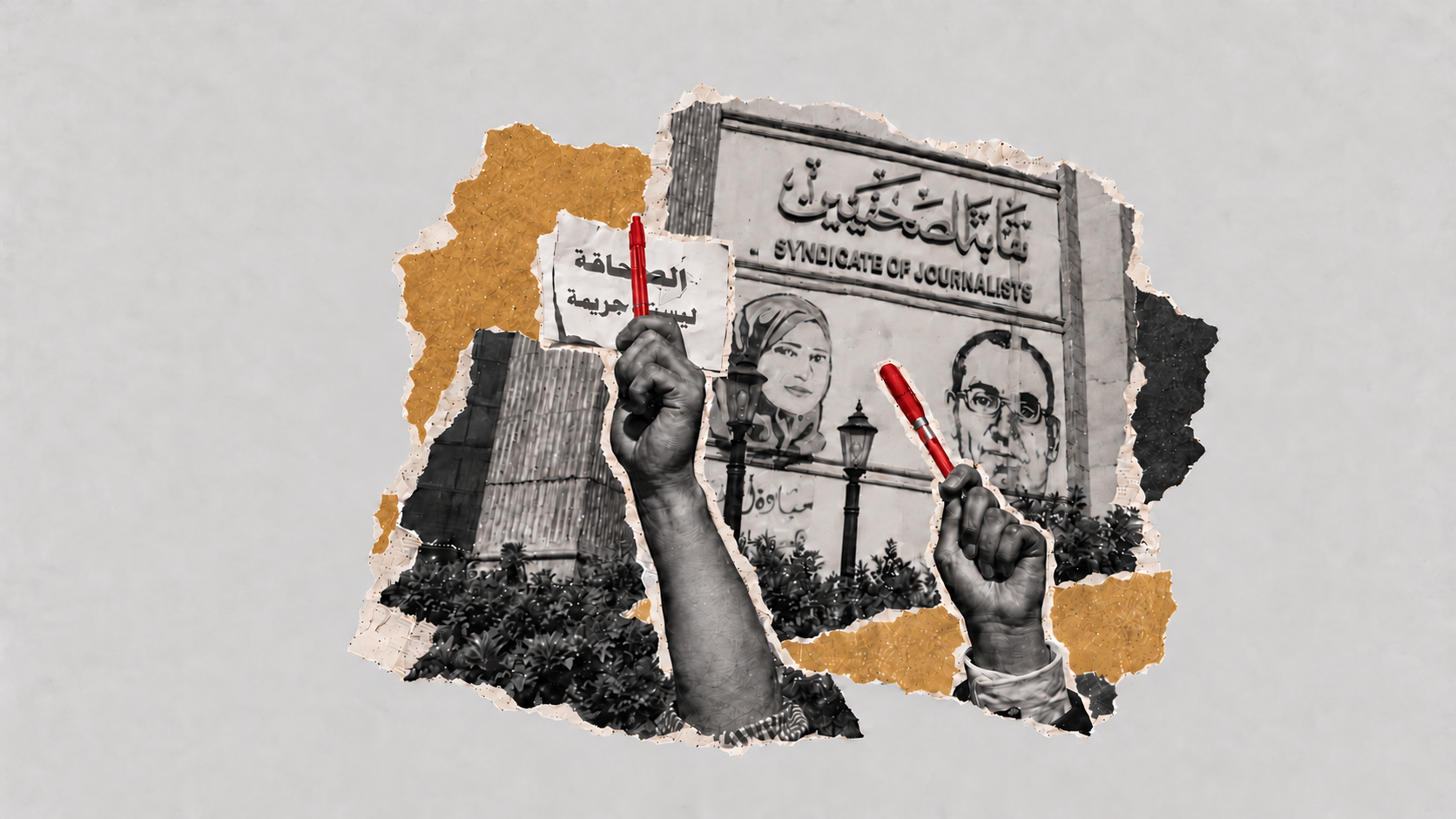
Human rights organisations and journalists call for protecting press and media freedom in Egypt
On 26 November 2024, a group of human rights organisations and journalists issued a joint statement affirming the urgent need to defend press and media freedom in Egypt, amid the escalation of violations against freedom of expression. The statement pointed to the Supreme Council for Media Regulation’s refusal to register the website of journalist Faker Tani, in addition to the judicial prosecution of journalists Khaled Mamdouh and Ashraf Omar and their enforced disappearance.
The statement explained that these incidents are part of an integrated system for suppressing dissenting voices in Egypt. Since President Abdel Fattah El-Sisi took power, the media landscape has witnessed a sharp decline, as pro-government entities and individuals control most television channels, news websites and newspapers, which restricts press freedom almost completely. According to the 2024 World Press Freedom Index issued by “Reporters Without Borders”, Egypt ranked 170th out of 180 countries.
The 2023 annual report of the Egyptian Commission for Rights and Freedoms recorded that journalists, bloggers and press photographers continued to be subjected to smear campaigns, security raids and arbitrary arrests. Independent media institutions, such as “Mada Masr” and “Al-Manassa”, are also subjected to censorship and the blocking of their websites, with continuing legal and security prosecution. In addition, the press faces strict restrictions on the flow of information and access to sources, which negatively affects local journalists and those working in exile.
The statement pointed out that initiatives such as the “National Human Rights Strategy” have achieved no notable progress. The signatories of the statement called on international decision-makers, especially the European Union and the United States, to press the Egyptian regime to implement reforms including:
- The immediate and unconditional release of all journalists and bloggers detained over cases related to freedom of expression.
- Lifting the restrictions imposed on journalists, including travel bans and asset freezes.
- Ending censorship and the blocking of websites, and guaranteeing the right of access to information.
- Amending the laws that restrict freedom of expression, such as the Anti-Terrorism Law and the Anti-Cybercrime Law.
7. Political satire and freedom of expression
Political satire and freedom of expression
A new report issued by the organisations “HuMENA” and “Redword” revealed that political satire is one of Egyptians’ most prominent tools for expressing anger and protest, pointing out that it is not merely a means of entertainment but part of the Egyptian identity, whose roots stretch back many decades. The report explained that satire has historically been used to ease daily crises and confront repression, but that it has become a direct target of the authorities in recent years.
From Mubarak jokes to El-Sisi’s grip
The report takes the reader on a journey through the history of political satire in Egypt, starting with the poems of Ahmed Fouad Negm in which he mocked the Nasserist regime, through the jokes that spread widely in the era of Hosni Mubarak, to the current scene, which is witnessing unprecedented targeting of political satire. The report points to the arrest of cartoonist Ashraf Omar in 2024 after satirical drawings, and the detention of poet Galal El-Behairy and members of the “Atfal Shawarea” band, which reflects an escalation in repression against forms of artistic expression.
How do Egyptians resist?
Despite the restrictions, the report explains that political satire is still alive in Egypt, but that it has taken new forms to avoid repression, such as the use of symbolism or expressing criticism in indirect ways. The report indicates that this type of resistance has become an outlet for Egyptians amid the political deadlock and the absence of freedom of expression.
Repression extends to advertisements and the streets
The report highlights the incident of the Faisal Street screen, which displayed images mocking President El-Sisi, which led to strict restrictions being imposed on commercial advertisements. It pointed out that this incident represents an extension of the authorities’ policy of preventing any space for satire, even if it is spontaneous or non-political.
Urgent recommendations
The report concluded by calling on the Egyptian authorities to respect political satire as a fundamental right, and demanded the repeal of laws such as the Anti-Terrorism Law and the Cybercrime Law, which are used to suppress freedoms. It also called on the international community to press the Egyptian government to guarantee freedom of expression and protect creators and journalists from security prosecution.
Satire continues despite repression
The report affirms that Egyptians are proving their ability to use satire as a means of confronting repression, even in the darkest circumstances. Despite the restrictions, political satire remains a witness to the people’s determination to express their opinion and resist the restrictions on their freedoms.