

Photography: Zawia3
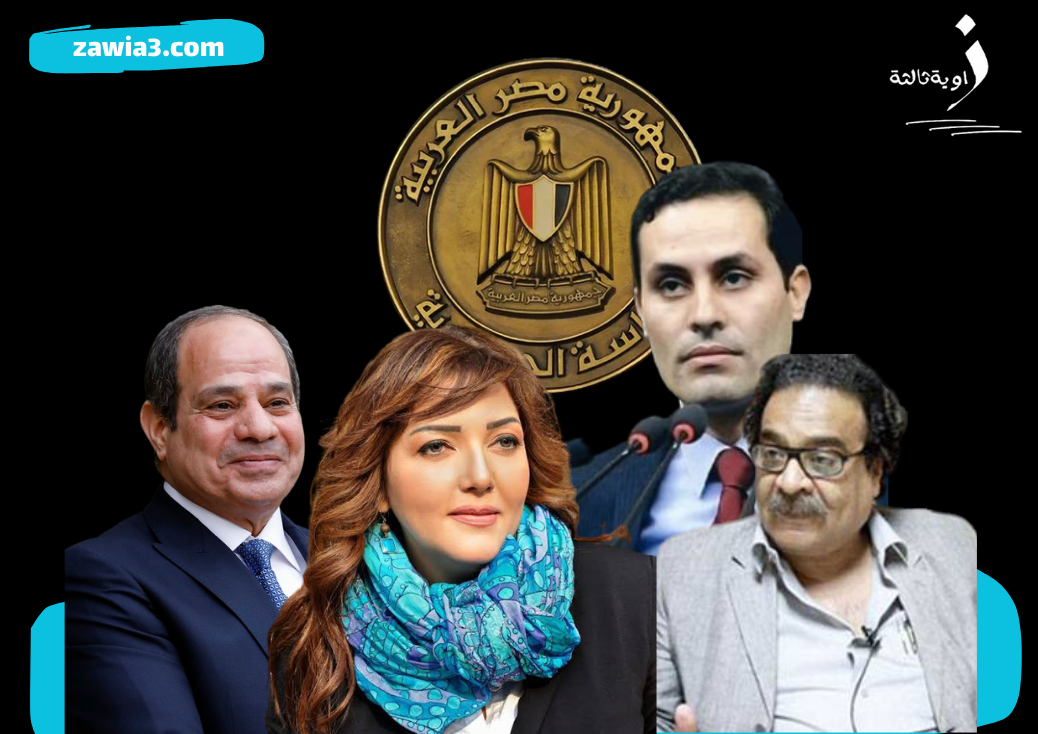
The poet Ahmed Douma became known as a political activist and was convicted in a case known in the media as the Cabinet clashes, which began in December 2011, when a number of political activists and young revolutionaries announced a sit-in in front of the Cabinet building. The sit-in turned into violent events, during which many altercations and clashes took place, and as a result the case began in which Douma was listed among the defendants.
The authorities continued to punish Douma, and many attempts to get him released failed. However, he found in literature, and especially poetry, his last refuge to stay alive, gathering what remained of his strength and writing again and again about feelings and experiences that haunted him and a number of his fellow prisoners behind the prison walls.
The collection “Curly” was one of three collections that Douma managed to smuggle out of prison over the past ten years, so that it could see the light and its publication could be announced. But after his release and his announcement of a signing ceremony for the collection and its publication, he was surprised by an intensive campaign to discredit him and declare him an unbeliever, which places him under the threat of blasphemy and contempt-of-religion laws that constantly pursue thinkers and creative people.
Zawia3 met Douma and spoke with him about prison literature, how it was his means of salvation, and the story behind the banning of his latest collection.
The Interview
– First, could you tell us the story behind the cancellation of the signing and discussion of the poetry collection “Curly”?
First, I am happy to give this interview to Zawia3, and I greatly appreciate the existence of a window like Zawia3 at a time when we all know how the press is pursued and blocked.
As for “Curly”, it is a literary work that does not have a wide audience, as is usual for poetry in our country, and it was written, smuggled and published while I was in detention; so the collection does not have a wide audience, and the circle of people who know about it is very limited.
It was confiscated at the moment of its first release, when it was first displayed in 2021 at the Cairo International Book Fair. According to what the publishing house published, a security force went and prevented those responsible from displaying the collection, whether in their bookshops or at the book fair, or from distributing it, and since then the collection has not been allowed to be discussed, published or reviewed.
What is happening is a crime, because the collection meets the official publishing requirements and obtained a deposit number at the government’s National Library; despite that, it was confiscated and banned from publication on the pretext that its author was in detention at the time.
After my release from prison, we tried to republish the collection with the same deposit number, and my release had invalidated their justifications. But this time the first tools proved to have failed, as we printed the collection again and there is interaction and a desire among many readers to read and acquire it; so they tried to use other tools that are vile and very dangerous to the state and the homeland, coming out with the weapon of takfir (declaring someone an unbeliever) against me. And I say to them: “Every time you use the weapon of takfir, it explodes in society and in the authorities, and you cannot control it.”
– Did the harsh conditions of prison and detention tip the balance in favour of the poet over the politician?
I am now keen to give poetry and literature their due, and to set aside a little the political side and its recurring problems throughout my life; so I will focus on talking about poetry and literature more than politics.
As for the question, the long experience of detention inspired me to write many poems and stories. “Curly” is my third collection in terms of publication, after my two collections (Your Voice Rises, and Like a Chant… Like a Moan), and it is the seventh or eighth in terms of my unpublished output. I am currently looking for a publisher to take on the rest of my work without being threatened or banned from publishing, but we have not yet managed to reach such a window.
Therefore, it can be said that most of what I have written in my life was written in prison, in what is classified as prison literature.
My release from detention coincided with the start of the war on Gaza, which affected everyone and their ability to carry out their daily routine activities. What I miss most from the long detention, which approached 13 years (the last 10 years, and three separate years before that), is the number of hours available for reading and writing alone, which reached about 12 hours a day, as it was an ideal time for writing and producing more literary works. For example, I wrote a number of poems, then wrote a novel whose first draft was confiscated in prison, or a personal experience published in the collection (Like a Chant… Like a Moan). So the period of detention each time was the most important opportunity in my life to write, and without it I would not have gone through several experiences of writing in different literary genres.
– And how did the detainees take part in your creativity?
We used to sneak and snatch fleeting moments with some detainees, by voice or by meeting. For example, the poet Galal El-Beheiry once let me hear part of a poem sung by the singer Ramy Essam (The Checkered Shirt), and I heard it over three meetings in the prison clinic. I would also seize the opportunity to smuggle some poems in writing to other prisoners for discussion and critique, or we would exchange everything through the easiest means, the “nazzara”, an opening in the cell door through which we would discuss and talk every day. We would do what we called the broadcast: the Islamists would start with the Quran or religious hymns, then each of us would in turn present a political, literary, artistic or other segment, and we would discuss it.
This was part of the communication and a means of discussing and critiquing my literary output and that of others; we would circulate them among ourselves.
Perhaps they were my first and only audience at that time.
– How did the collection get out of prison?
I smuggled the collection out between 2017 and 2021, in dozens of stages through dozens of people, including lawyers, family members who memorised it, or prisoners who were freed before me.
In the first edition, the poems were published in the order and numbering in which they were smuggled out of prison, as if they were a single poem cut into pieces, and I consider this one of the amusing things: “During visits I would ask whether number 35 had arrived, and they would answer no or yes. We talked that way because my visits were also solitary, in the presence of a security officer who reported every detail of the visit to officials.”
– Does your literary experience end with prison literature?
It certainly will not end with prison literature, because it preceded it. Although I did write most of my poems in detention, I am now continuing my writing after leaving detention, because I see it as almost the only way to survive, fleeing from declaring defeat and brokenness or even explosion; writing is one of the most important tools of resistance of all.
The means of smuggling varied: I would write on tissues or very small pieces of paper, among a number of other smuggling tools. It is an extremely complicated process, and those poems did not arrive on time; they might arrive months later, or perhaps never arrive.
– How do you assess the authorities’ use of blasphemy laws?
In a state of law, the only people who should be tried are the inciting sheikhs, because they violate articles of the Egyptian constitution, having used against me phrases used in the punishment for apostasy, which may incite killing and violence.
Here we are not talking about contempt of religion or insulting the Divine Being, for God does not need defenders, and all these charges are vague, used to settle scores with opponents at any moment.
The existence of such charges in our lives is a crime in itself and must end. It is not acceptable for a society like ours, or a state like Egypt, to continue to have charges that were used in the Middle Ages, when we are in 2024.
A number of clerics, who know nothing about religion, most likely moved against me on the instructions of the same body that confiscated the collection the first time, and extremely insane and dangerous fatwas were issued, which I describe as terrorism, accusing me and my poems of unbelief, heresy and apostasy.
Assuming these sheikhs declared me an unbeliever to curry favour with the authorities, it would have been expected that those authorities and the security agencies would make them keep silent, but that did not happen, and the fatwas declaring me an unbeliever escalated. We know very well the danger of using such accusations, especially given the extent of public interaction with this type of discourse, which leads to a flood of incitement messages.
I see this as terrorism in my view, and also in the view of the authorities, which fought the discourse of ISIS and extremist groups and previously described it as terrorism; but the state’s sheikhs used the same ISIS discourse to remove and declare unbelievers those who oppose the authorities, under its eyes and with its protection. This time the discourse is protected by the state, in action, by decision or in reality, and every time it has been used, either the creative person was assassinated or subjected to violent attacks.
– How will you respond to the incitement attacks against you because of the collection?
We decided, together with the legal team headed by lawyer Khaled Ali, to go to court to stop the incitement attacks against me, and to try to prevent double harm before it happens, although harm has already happened, after the collection was banned for the second time from publication and distribution, and the signing ceremony was cancelled a few days ago.
The publishing house announced that it is consulting its legal team to find out whether there is a legal reason for not publishing the collection and for the decision of the security agencies in this regard.
Personally, I do not accept being tried, or having the collection tried, in the media or by society on the basis that I am accused of faith or unbelief and must justify myself, and I will not get drawn into this in any way. At the same time, the authorities must realise that they are using a dangerous weapon that will later reach the state itself.
– Did the authorities negotiate with you over your release?
There was a lot of bargaining from the first period of my detention in 2014, but each time we would start with a long list of conditions from the authorities that I had to accept in order to be released. I would refuse, betting that holding out longer each time would reduce the number of their conditions, and this was achieved, but over ten years.
The negotiators previously dictated to us a list of 12 conditions which, had I accepted them, would have deprived me of a life after my release, so I refused them. In the end, I accepted the negotiations on condition that I would be released into a truce, on a long recovery journey of no less than two years, during which I would complete my master’s studies and other postponed matters. But my problem with the authorities is that they thwarted my plan for the recovery journey from the first day, by banning me, monitoring me and banning my collection from publication.
For example, my bank account is seized and frozen for the value of the fine from the 2015 ruling, which was estimated at EGP 18 million at the time, despite the issuance of a presidential pardon decree that includes cancelling all those complications. I also still cannot obtain a passport, even though I left detention ten months ago.
I asked one of the members of the National Dialogue’s board of trustees, despite my having announced my firm position on the National Dialogue, to inform officials of the need to give me space to live, and in the end someone decided that they would not leave us any space for freedom and life.
– Who intervened to get Ahmed Douma released after all these years?
The efforts made over the ten years were enormous, starting with Heikal, El-Abnoudy and some names who were in direct contact with the authorities at the time, through interim President Adly Mansour, who wrote on a press platform that he sympathised with Douma and wanted him released but the state agencies were preventing it, and through others who made efforts on this file.
But in the end, there were three people, Hamdeen Sabahi, Hossam Moanis and Khaled Youssef, who settled the final efforts directly with the state, and they were the first to receive me out of prison. I know of the almost daily efforts they made over the two years before that to get me out of detention.
– And how do you assess the current regime’s performance regarding what has been happening in Gaza since the start of the war?
I divide the positions on Gaza into two camps: a camp that supports the resistance, which includes Iran, southern Lebanon, Yemen and some Iraqi factions, regardless of my political and intellectual position on them in other files.
And the enemy camp, represented by the official Egyptian position and all the Arab positions, which I clearly and decisively count in the enemy camp, and everything they do is against the resistance and with Zionism. Some decisively announce their position in support of Tel Aviv, and some try to dress up their position.
In the official Egyptian position, there is something clear: dozens, perhaps hundreds, of Egyptians who showed solidarity with Gaza have been arrested as a result, something that has not happened even in Tel Aviv. You may find a Palestinian flag raised against the Netanyahu government in the occupied territories, but you do not find it in Egypt.
I hope this scandal ends as soon as possible and that the young women and men who support Gaza are released. It is a disgrace that there are demonstrations of thousands in every country in the world, while in Egypt there is no demonstration against the genocide in Gaza.
– Have the deteriorating social and economic conditions in Egypt forced the Egyptian people to choose between their harsh conditions and supporting Palestine?
If we set aside the authorities’ discourse in the media and elsewhere, which reinforces the official discourse, steers it and promotes the idea that 7 October was a wrong idea, I am certain that the people strongly support and believe in the resistance, without debate or limit.
I believe that without repression the situation would be different. The economic situation does not affect Egyptians’ support for Palestine, and if all spaces had not been crushed and banned, we would have seen a truly dazzling scene from Egyptians.
– What about the economic deals that have allowed parts of Egypt to be carved out for some countries?
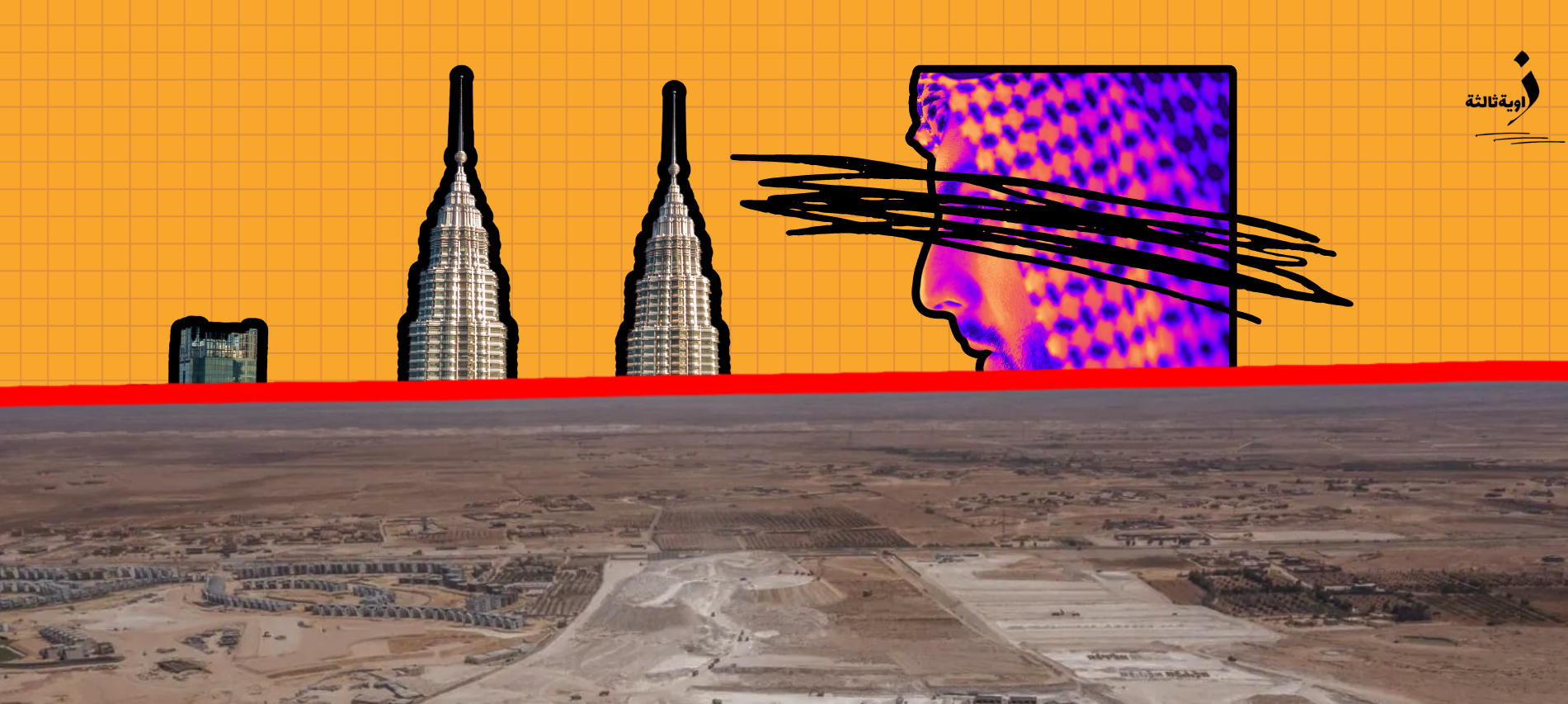
This is acceptance of multinational occupations hidden behind the economy, loans and long-term investments, but I treat them as real occupations that must be got rid of immediately.
We must deal with them as happened at the time of Tiran and Sanafir, and whoever signs these agreements must be well aware that they should not bet on the situation never changing; in the end, Egyptians will not accept giving up their rights or part of their land.
– Do you think it is possible for Egypt to become a democratic state?
It may seem strange and ironic that I repeat what I said years ago: the choice between religious rule and military rule is absolutely unacceptable, but our crisis now is with military rule, which is extremely dangerous to Egypt’s national independence, its map and its territory.
The only solution, in my opinion, is for those who believe in civilian rule, democracy, the values of justice and dignity, and the main slogans of January, to keep believing in them, and even to preach them and struggle to achieve them.
The widening of the spectrum of conscious believers in these principles, and in the vision of a civil state governed by the constitution, is the only way to resolve the state’s crisis and break this circle. I believe that everything is possible in Egypt as long as Egyptians believe in it; revolutions, change and the like come through strong faith and continuous resistance. And there has never been a battle for freedom that came without heavy prices.
– Finally, what does Douma dream of for Egypt?
First, I dream that Egypt will remain in existence at all, as we have become a homeland struggling for its existence, and in that battle for existence I still dream the dreams of the glorious January revolution (the homeland, the citizen with his freedom, and justice).
I cannot separate my dreams for Egypt from my dreams of national liberation in Palestine, the Golan, southern Lebanon and the Egyptian Umm al-Rashrash. I cannot say that the dream of liberating and restoring all Palestinian and Arab land should be separated from January and its revolution, because Palestine was at the top of the revolution’s discourse and dreams, and the only time the revolutionaries left Tahrir Square was to close the Israeli embassy and bring down the flag from it. Perhaps this explains why everyone has ganged up on January and wants to get rid of it.
The Full Interview
Read also:
- Hisham Kassem: I Asked the President Not to Run… They Imprisoned Me (Interview)
- Khaled Dawoud to Zawia3: 10 Years of Oversight Bodies Failing to Hold the Authorities to Account (Interview)
- Ahmed Tantawy: Egypt Needs an Alternative to Both the Authorities and the Opposition (Interview)
- Gamal Eid: Some Regime Supporters Back It Out of Fear… Rule by Repression and Impoverishment Cannot Last (Interview)