

For the first time in more than 30 years, Ibrahim Hammam’s family will not buy an animal for Eid al-Adha. A calf costing between EGP 80,000 and EGP 100,000 is beyond their means.
In Girga, in Sohag governorate, the ritual has long been part of the family’s holiday. This year, mounting household expenses have made it impossible.
“I feel sad, and I hope God forgives us for something beyond our control. We set aside some money to buy a few kilograms of meat and distribute them,” Ibrahim tells Zawia3.
A few metres from his home lives Fatma Aziz, a widowed mother of four who relies on meat distributed at Eid because she cannot afford to buy it during most of the year. Her oldest child is in the final year of preparatory school.
Her husband was an agricultural labourer. She says the family receives no pension from his employment, but began receiving support under the Takaful and Karama cash-transfer programme several years ago. According to her account, the payment was initially EGP 400 and later increased to EGP 560.
“You know what prices are like. What we receive is barely enough for a kilogram of meat and some vegetables to cook with,” she says. The family depends on charitable assistance for both monthly expenses and food for the children.
Learning that neighbours such as Ibrahim will not sacrifice an animal this year has brought another worry. “Of course I was sad, because people like me used to receive a share. But there is nothing we can do. We hope God brings relief.”
People interviewed for this report point to inflation, the pound’s depreciation and the cost of imported livestock and feed as pressures on household budgets and producers alike. CAPMAS recorded nationwide annual inflation of 13.5% in April 2025, up from 13.1% in March.
The dollar traded at around EGP 50 in May 2025, compared with National Bank of Egypt rates of EGP 24.66 to buy and EGP 24.71 to sell on 30 December 2022. A weaker pound raises the local-currency cost of imports, including inputs used in livestock farming.
Why are sacrificial animals so expensive?
Feed is a major livestock-production expense, although price trends differ across ingredients. A May comparison by Al Masry Al Youm reported imported yellow maize at EGP 13,700 a tonne, 12% above the previous year, and imported soybean seeds at EGP 50,000, up 85%.
However, the same report recorded falls of 16% for cattle feed, 10% for sheep feed and 30% for imported soybean meal. These are different products: it would be misleading to describe all feed prices as rising at the same rate.
Butchers’ representative Haitham Abdel Baset told Asharq Al Awsat that diesel and feed costs had affected this year’s livestock prices. Farmers also face other expenses they seek to recover when selling their animals.
Figures reported from CAPMAS put livestock numbers at about 7.6 million in 2023, down from 8.3 million in 2022—a decline of roughly 8.4%. The agriculture minister has put Egypt’s annual red-meat requirements at around one million tonnes, of which domestic production supplies approximately 600,000 tonnes. Imports cover the gap.
Price comparisons depend on an animal’s species, weight and seller. Citizens and traders interviewed by Zawia3 reported meat selling for roughly EGP 400–600 a kilogram in major retail outlets and parts of Greater Cairo, and EGP 380–420 in other governorates. They recalled prices of around EGP 350–400 during the 2024 season.
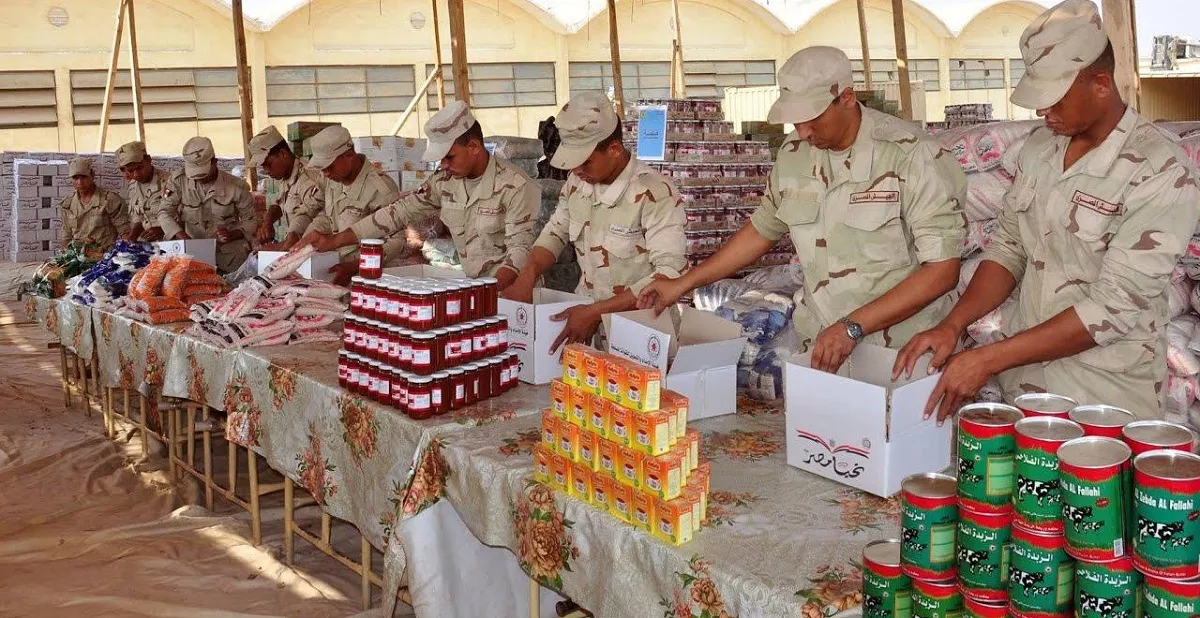
State-supported outlets generally sell at lower prices. The report’s market comparison placed prices in some armed forces and Agriculture Ministry outlets at EGP 280–300 a kilogram, against EGP 200–220 during the previous season. These ranges describe particular outlets and testimonies, rather than a single uniform national price.
Writer and economic researcher Mirvana Maher says the economic crisis is reshaping how Egyptians mark Eid. Some households are buying smaller animals or switching species; others are abandoning the sacrifice and directing what they can afford to charities instead.
Maher says even the familiar practice of distributing meat to relatives and friends is shrinking as families redirect spending towards their most pressing needs.
Families cannot stop buying food and drink, she explains, but they can reduce quantities, choose local alternatives to imported products and cut non-essential purchases. Instalment buying has also become a way of easing immediate pressure on household budgets.
Charities occupy both sides of this changing picture: they receive contributions from people unable to afford a whole animal while supporting households whose own income no longer covers basic necessities.
Maher expects the pressure to continue amid changes to service prices and subsidy arrangements. Where income fails to keep pace with expenses, families must repeatedly reconsider their priorities and how to stretch limited resources.
Women supporting families bear a heavier burden
The Planning Ministry cited a poverty rate of 29.7% in 2019/20 and a target of 27.9% by the end of fiscal year 2025/26 in its October 2023 social-welfare plan. The target is not an achieved result, and the earlier figure should not be treated as a measurement of poverty in June 2025. It nevertheless shows the scale of hardship already facing households before the most recent price increases.
Women who are their families’ main providers face particular difficulties meeting food and holiday expenses. Entesar El Saeed, a cassation lawyer and chair of the Cairo Foundation for Development and Law, says the economic crisis has left many households struggling with essentials, let alone a sacrificial animal or Eid purchases for children.
She tells Zawia3 that unequal expectations within families intensify the burden. Women are often held responsible for ensuring both food security and the “joy of Eid”, even when they lack the necessary income or resources.
Financial hardship consequently brings emotional pressure too. Feeling unable to meet children’s needs deepens the gap between rights recognised in law and women’s everyday circumstances, El Saeed argues.
“What we need today is real intervention that restores social justice and ensures that holidays do not become a psychological and economic burden, but remain a space for joy and human dignity for everyone,” El Saeed says.
She believes occasions intended for celebration and solidarity are becoming sources of anxiety amid inadequate social protection, pressure on subsidies and persistent inflation.
Earlier CAPMAS agricultural-production figures cited in the report put red-meat production at 554,000 tonnes in 2022, up from 512,000 tonnes in 2021, an increase of 8.2%. Reported annual per-capita availability was 7.4 kilograms, while the self-sufficiency ratio was 56.6%. These are historical indicators, not estimates of this year’s Eid market.
A strained livestock market
Livestock trader Mohamed El Sherif, from Minya, says higher input costs weigh heavily on farmers and traders. He puts the price of a tonne of the feed he uses at EGP 13,000–15,000 and says his costs have risen substantially over the past two years.
Veterinary care and feeding expenses add to the burden on small and medium-sized breeders. Some sell part of their herds or offer lighter animals to keep expenditure manageable, he says.
El Sherif also attributes rising transport bills to fuel prices. He estimates that moving one load of feed can cost more than EGP 1,500, compared with less than EGP 700 a year earlier. These are his own transport-cost estimates. The official diesel price rose to EGP 15.50 a litre on 11 April 2025.
The long-term increase in meat prices helps explain why even families accustomed to saving for Eid are struggling. A comparison published by fact-checking platform Matsda2sh put fresh meat at around EGP 81 a kilogram in 2014 and EGP 377 in June 2024—an increase of approximately 365% over a decade.
Price comparisons cited in this report also show a rise from around EGP 170 in July 2022 to EGP 325 in June 2023, roughly 91%. Prices vary considerably by cut, location and outlet, but the direction of the pressure on household purchasing power is clear. Traders and consumers describe prices exceeding EGP 500 in some affluent parts of Greater Cairo during the first half of 2025.
Behind the immediate market pressures are structural challenges in livestock production. Limited grazing land, water scarcity and competition with food crops for resources constrain expansion. Agricultural policy and access to inputs also affect breeders’ ability to raise productivity.
Egypt has launched integrated livestock projects, artificial-insemination centres and genetic-improvement programmes. Yet access to affordable feed and suitable finance remains a barrier for smaller breeders, despite the availability of some concessional lending schemes.
Dependence on imported livestock and improved breeds creates further exposure to foreign-currency and import costs. Gaps in infrastructure, including slaughterhouses and dairy-processing facilities, also affect efficiency and quality.
As Eid al-Adha 2025 approaches, some sheep are selling for around EGP 20,000, with prices varying by weight and breed. For families such as Ibrahim’s, the result is a painful change to a decades-old tradition. For Fatma and her children, fewer sacrifices in the neighbourhood also mean less meat reaching their table.