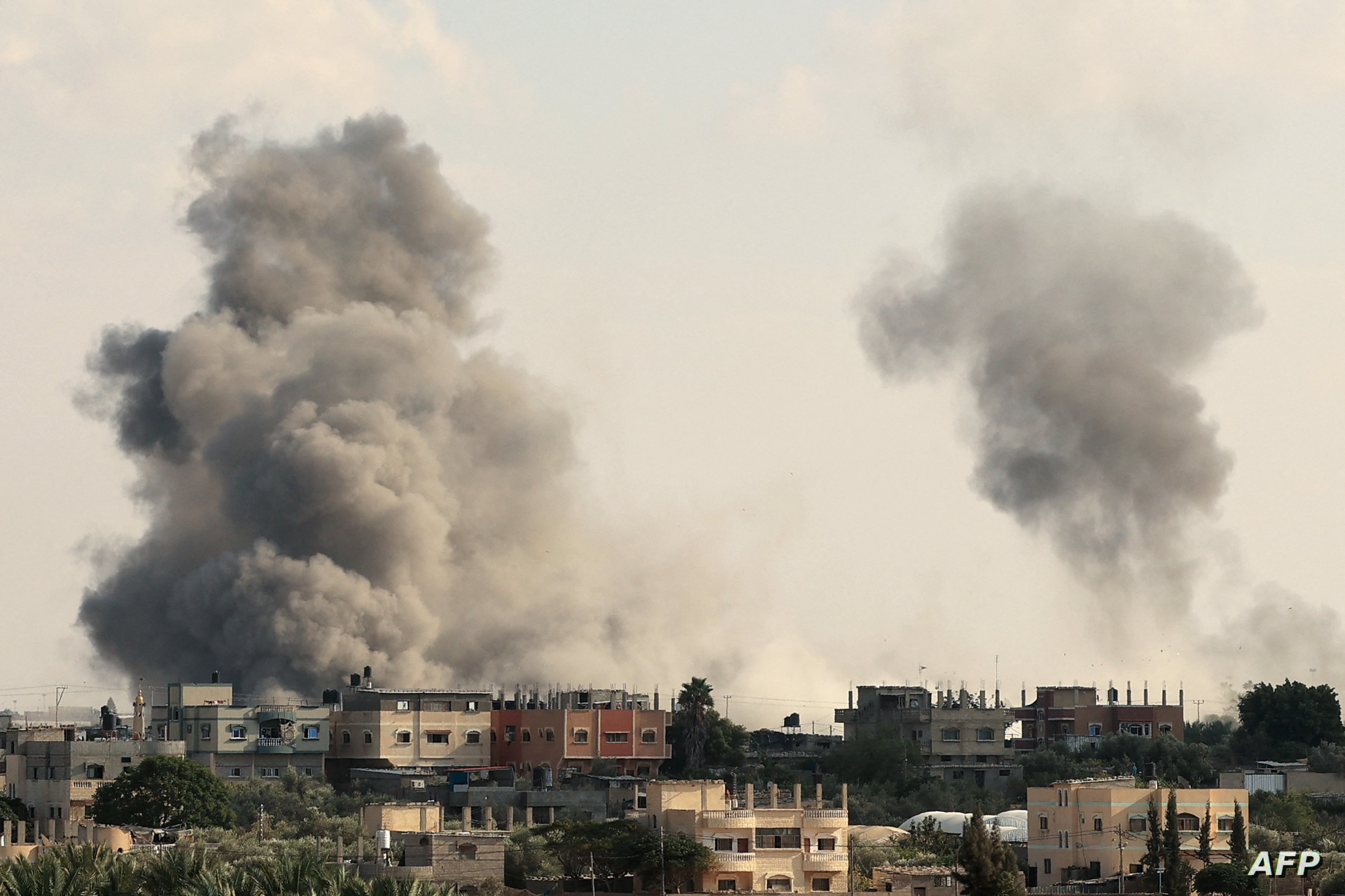


Members of the Egyptian community in Lebanon are living in a state of terror and anticipation, fearing being killed by the Israeli occupation forces, after Tel Aviv began extensive operations in southern Lebanon last week that extended to areas of Beirut. These operations also led to the assassination of Hezbollah Secretary-General Hassan Nasrallah and the displacement of about one million people from the south within a few days.
As the situation in Lebanon worsened, EgyptAir suspended its flights to and from Lebanon, leaving Egyptians stranded in harsh conditions. Some remain unable to afford the cost of travel should the Egyptian national carrier resume its flights, having lost their jobs as the economic crisis Lebanon was experiencing before the war deepened, while others are waiting for the Egyptian authorities to contact them so they and their families can return home. This comes at a time when the Egyptian embassy has merely sent warning messages telling them to stay away from places targeted by the occupation forces, without informing them when they will be evacuated, which reminds them of the crisis of Egyptians stranded in Gaza, some of whom have still not been able to cross into Sinai a year into the war.
Flights Cancelled
According to the testimonies of a number of Egyptians Zawia3 contacted, most Egyptians living in southern Lebanon, which is under continuous bombardment by the occupation forces, work in manual trades, most notably agriculture and baking.
Youssef Nour (38) moved from Egypt to Lebanon 19 years ago and works making pizza, for which he became known. He and his friends live in the Mountain area, away from the attacks the Israeli occupation forces are launching on the southern suburb. He says: “The number of Egyptians had fallen because of the economic crisis before the war, especially since the Beirut port explosion in 2020, which affected electricity and aspects of economic life in Lebanon; but landlords have recently exploited the war and tripled rents, even though services are available in the area where I live, and we are now under threat of those services being cut if the war drags on. We contacted the Egyptian ambassador in Lebanon to request the evacuation of the Egyptian community and are waiting for them to contact us.”
Egypt’s national carrier, EgyptAir, announced the cancellation of its flight MS713 from Cairo to Beirut last Tuesday, which was scheduled to take off at 5 am, because of the events in Lebanon, as well as flight MS709 scheduled to take off at 9:15 am, until the situation in the country stabilises, with flights to resume once the Israeli attacks end and the situation stabilises.
Among those whose flights were cancelled is Mohamed Ibrahim (35), an Egyptian who works for a fashion design company, travelled to Lebanon 13 years ago and lives in the Mountain area, away from the areas under Israeli attack. He has been unable to leave his home or his work since the attacks began.
He says: “We do not know how we will return to Egypt at a time when our national carrier has suspended its flights to Beirut. I had booked a return flight to Egypt the day before yesterday, Sunday, but we were surprised by its cancellation, and my friend’s flight, scheduled for 8 pm last Saturday, was also cancelled. When I contacted the Egyptian embassy to enquire, they took my details, and I am waiting for their evacuation instructions.” He criticised what he called the slow pace of the procedures.
The events forced Hossam Ahmed (a pseudonym), in his forties, to flee after the building where he and his friends lived was destroyed in the bombing of buildings in the Ain El-Delb neighbourhood. He explains: “Since we fled, we have been staying either in the street or in a room shared by five people at a friend’s place. This comes while we lack services, in addition to war brokers exploiting the situation by raising rents exorbitantly; an apartment’s rent has risen from USD 300 to USD 1,000, sometimes reaching USD 1,500.”
This comes at a time when Hossam and his companions are unable to pay the required rent after leaving their jobs and with shops closed because of the continuous bombardment. Hossam criticises the Egyptian embassy for not contacting them to evacuate them or inform them when they will return to Cairo, noting that in his last contact with them he was surprised by an employee’s response asking him to book with the Lebanese airline, which told him he would have to wait 25 days for his turn.
Economic Conditions Complicate the Situation
Amal Imam (27) was born to an Egyptian father and a Lebanese mother and has lived with her family in Tripoli, Lebanon, since birth. She lives in a state of terror, fearing that Israeli occupation attacks will reach where she lives, and although she and her sister lost their jobs because of the poor economic situation, she has stayed in the country her mother comes from.
She says: “Since the war broke out I have been living in a state of depression, following the news constantly until I developed a trauma towards any sound, fearing it is an explosion or an attack on our area. Although I have legal residence, I do not have enough money to return to Egypt. At first I thought the war would remain confined to the southern border, but I was surprised by how quickly things escalated into explosions, assassinations and displacement; I feel as if I am living a nightmare, and the shock of the events of the occupation of Lebanon in 2006 is repeating itself.”
Leaving Lebanon is not easy for Amal, especially as it is the country that has embraced her since birth, as she describes it, and she cannot return alone, as she has to cover the costs of returning to Egypt for herself and her family of seven, which she has not been able to afford so far.
She says: “I hope the Egyptian authorities will put in place an alternative plan that includes evacuating Egyptians, protecting them and returning them to Cairo. I am one of thousands who have lost their jobs and source of income, and it was not in our plans for the war to reach us.” Amal fears that the situation in Lebanon will worsen further and that she will lose a family member or her own life.
Egyptians are also deeply worried, especially as many members of the Egyptian community in Lebanon hold mixed Egyptian, Lebanese and Syrian nationalities, which makes them anxious about the Egyptian authorities’ position on evacuating them, asking: will they be treated, should the Egyptian authorities decide to start evacuation operations, in the same way as Egyptians who do not hold other nationalities? Some said the Egyptian embassy has told them it will not be able to help them as long as their papers are held by Lebanon’s General Security.
While most of the stranded people we contacted were already living in Lebanon before the latest attacks, Diaa El-Sheikh, the owner of a printing press in Egypt, had come on an 11-day holiday. He did not know his trip would turn into a disaster and that he would remain stuck because of the war, not knowing how he will return home to resume his work and his family life. He says: “I arrived in Lebanon on 23 September. After I arrived, I was surprised by the outbreak of war, continuous bombardment of Beirut, where I am staying, and the suspension of flights to and from Lebanon. Unfortunately, I have nowhere else to go; although my return flight is booked with EgyptAir, I do not know when I will return, especially after the cancellation of my flight to Egypt scheduled for 4 October.”
Ali Mohamed Gozo, secretary of the Egyptian Community Association in Lebanon, tells Zawia3 that there are no official statistics on the size of the Egyptian community in Lebanon, as most entered the country covertly on tourist visas, but according to his estimates the current number does not exceed 10,000 Egyptian men and women, especially after many left because of the economic crisis that persisted before the war. He points out that most Egyptians are not registered with any body, as some have married Lebanese women or men, and their contact is limited to Lebanon’s General Security when they want to renew their residence.
Gozo points out that the embassy sent messages asking Egyptians wishing to return to Egypt to register their names with the embassy, while some Egyptians moved from unsafe locations to safer places north of Beirut.
According to the secretary of the Egyptian community in Beirut, launching special EgyptAir flights must coincide with guarantees obtained by Egypt that its aircraft will not be targeted after take-off, and these matters are taken into account by the Egyptian authorities before deciding to operate flights to and from Lebanon. Egypt has the capacity to operate flights when the right conditions are in place and once those wishing to return have been counted, he said, pointing to the continuation of daily flights by the Lebanese carrier Middle East Airlines and urging Egyptians to follow the Egyptian embassy’s instructions and official announcements.
Zawia3 tried to contact the Egyptian embassy in Lebanon to learn about its plan to evacuate Egyptians in Lebanon and to obtain estimates of Egyptian victims or injured, but we had received no response by the time this report was published. On 27 September, Lebanon’s General Security issued an order allowing Arabs and foreigners in Lebanon to leave, whether their residence is valid or expired or they hold no residence, without any legal penalty.
Egyptian Political Activists Between Escape and Death
According to Said Mahmoud (a pseudonym), the war pushed Egyptians living in the south, where most Egyptians work, to flee to Beirut without their belongings, without housing or money, like the people of the south. He revealed that members of the Egyptian community in Lebanon who hold valid residence have come together to provide housing and cover living costs for the displaced, some of whom moved to the Dora suburb in the Bourj Hammoud municipality, north-east of Beirut, one of the areas where Egyptians gather in Beirut.
He says: “We all fear the escalation Lebanon may witness in the coming period. The tension has not stopped at the occupation forces’ successive bombardments and the assassination of civilians or Hezbollah leaders.”
Said refuses to return to Egypt. He adds: “I am at risk of being targeted and persecuted in Egypt for my political views, even though I am currently in a country suffering from war, and that is a great tragedy that all of us suffer, without exception.” Said hopes to find a way to travel out of Lebanon.
The same was experienced by Egyptian journalist and political activist Abeer El-Safty (29), who left Egypt because of her political views and repeated arrests, which led her to travel to Lebanon with her husband and child in October 2023, living there for 11 months.
Abeer (who helped us collect some of the testimonies published in this report) suffered financial hardship there, but managed to move to France with her family just four days before the attacks were launched. She says: “The Israeli occupation forces regularly targeted southern Lebanon throughout my stay in Lebanon, except for a few times when they targeted the southern suburb: the first in January 2024, when they assassinated Hamas leader Saleh Al-Arouri, who lived in an apartment in the suburb; the second in April 2024, when they targeted Iran’s embassy in Damascus, when we heard Israeli aircraft breaking the sound barrier and lived through what was the most terrifying day at the time. In July, the occupation forces assassinated commander Fuad Shukr in an attack more violent than the previous one.” Things became more complicated, and sound barrier breaches over Beirut became daily and violent, causing severe damage to buildings, according to Abeer.
She adds: “I will not forget that harsh period I lived through: continuous attacks, which terrified my child, who was not yet a year and a half old. The threats of continuing escalation after the events of 7 October in Gaza put us in a state of terror, especially as Tel Aviv began targeting Lebanon daily because of Hezbollah’s support for the resistance factions in Gaza.”
The Egyptian political activist reveals that those with financial means fled to safer areas inside Lebanon, while ordinary people could not.
Abeer’s journey from Lebanon to France was disrupted several times: after she arrived in Lebanon at the beginning of October 2023, the Al-Aqsa Flood operation took place in Palestine, leading to the closure of embassies and life coming to a standstill, which kept her in Lebanon for 11 months until she decided to travel to France for good just four days before the war broke out.
Mohamed Amer, an Egyptian doctor and political activist (33), arrived in Lebanon in October 2022, after previously being arrested in a political case. He recalls: “After my release from pretrial detention, the pursuit against me pushed me to flee to Lebanon, after I suffered security harassment and received threats. I left Egypt for Senegal and from there went to Lebanon. I am currently in Lebanon illegally, as I travelled there on a tourist visa in February 2023, and before that I used to go on work trips to Senegal until I was dismissed from my job because of my illegal status in Lebanon.”
He adds: “My situation is extremely bad at the moment. I applied for residence in February 2023, but was surprised by the rejection for political reasons, even though I had applied to study at a Lebanese university. I also received calls from Lebanese intelligence informing me that my residence had been rejected and a deportation decision issued; so I am in real danger. I cannot practise medicine, because doctors are not allowed to obtain a licence to practise in Lebanon, and I cannot work in another profession.”
The Egyptian doctor explains: “I will not be able to return to Egypt because of the harassment I face after taking part in human rights events and in presidential candidate Ahmed Tantawy’s campaign in Lebanon. I fear the deployment of security forces in the streets as the war escalates, which increases the likelihood of my arrest and deportation at any time; so I no longer leave the house at all.”
He points to the closure of all shops and the difficulty of obtaining supplies after the assassination of Hassan Nasrallah, which has made things worse than before; as he describes it, he has been unable to get bread for three days. Despite the harsh conditions, Amer dreams of stability, of practising his profession as a doctor again and of returning to his work defending human rights.
Egyptian Parties
For its part, the Egyptian Liberal Party issued a statement published on its “WhatsApp” group, demanding the protection of Egyptians living in Lebanon and their swift evacuation in light of current developments and the deteriorating security situation, which poses a direct threat to their safety, and calling on the Egyptian Ministry of Foreign Affairs to take urgent and decisive steps to evacuate its nationals as soon as possible.
Fady Saleh, head of the party’s international relations committee, tells us that the current situation requires swift and effective action to protect the lives of the Egyptian community, calling on the foreign ministry to draw up an emergency evacuation plan in coordination with the Egyptian embassy in Beirut and the relevant authorities to secure their transfer to Egypt.
According to Fady, the party stresses in its statement the need to immediately set up a hotline available to nationals and their families for constant contact with the responsible authorities and enquiries about any information relating to the evacuation, which would provide psychological and moral support to citizens in these difficult circumstances, affirming the party’s full readiness to cooperate with the relevant authorities and stressing the importance of taking these measures immediately.
Shady El-Adl, head of the Egyptian Liberal Party, tells Zawia3 about their contacts with members of the Egyptian community in Lebanon, whom he estimates at about 30,000 Egyptian men and women, whether they entered officially or not, adding: “The Egyptian embassy promised Egyptians they would be evacuated soon, before the events flared up, and they are living in the worst conditions.” He called for reducing the price of plane tickets from Lebanon to Egypt so that Egyptians can return later, especially since the cost has risen exorbitantly to more than USD 1,500 because of increased bookings, or making them free for those unable to pay.
The head of the Egyptian Liberal Party calls on the Egyptian foreign ministry to send messages reassuring Egyptians who are there illegally that they will not face legal accountability on their return, given the current exceptional circumstances and the continuing Israeli escalation.
For its part, the Socialist Popular Alliance Party issued a statement expressing its solidarity with the resistance and with the Lebanese people in their loss after the assassination of Hezbollah Secretary-General Hassan Nasrallah, demanding the expulsion of the Israeli mission and diplomatic missions from Egypt and from all the capitals of normalising countries.
The party announced in a statement that it shares the feelings of millions over the great loss, saying: “What happened to us happened while we sat shackled in the spectators’ seats. We demand the full extension of Egyptian and Palestinian sovereignty over the Rafah crossing and the Salah El-Din axis, with the US administration treated as a partner in the aggression against Palestine, Lebanon and our people.”
The statement continued: “Resistance is life, however much it requires will and wisdom in choosing forms of struggle according to changing circumstances and the specific fields of the conflict, and the measures and procedures that the safety of fighters requires. We will continue on our path, however silent as the grave the Arab rulers remain.” The party did not address the situation of the Egyptian community in Lebanon in its statement or call for their evacuation.
Meanwhile, Fatma Fouad, workers’ secretary of the Conservative Party, describes the party’s role in contacting international federations such as Public Services International and the Arab Trade Union Confederation, and helping those affected through international federations and trade unions. But in her conversation with us she did not address how the party is helping Egyptians stranded in Lebanon during the current events.
In the same context, Sayed El-Toukhy, acting head of the Karama Party, tells us that the Egyptian embassy and the foreign ministry must coordinate with members of the Egyptian community in Lebanon and provide safe places for them until a date is set for their evacuation.
With Egyptian parties and authorities ignoring the crisis of Egyptians stranded in Lebanon, they remain caught between the two millstones, in a war that reminds them of what happened in the Gaza Strip a year ago, without the Egyptian authorities showing any interest in evacuating them immediately, while the embassies of some countries have announced similar evacuation operations for their nationals.