
Hundreds of workers gathered outside the Baby Coca–Hela factory in Abis to protest sudden dismissals and overdue wages. Zawia3 traces the crisis to its origins: a Sri Lankan group that applied for court-ordered liquidation and had entrusted management of its Egyptian factory to another company two months earlier, while directors of its Sri Lankan subsidiary face allegations from creditor banks that the court has yet to rule on.
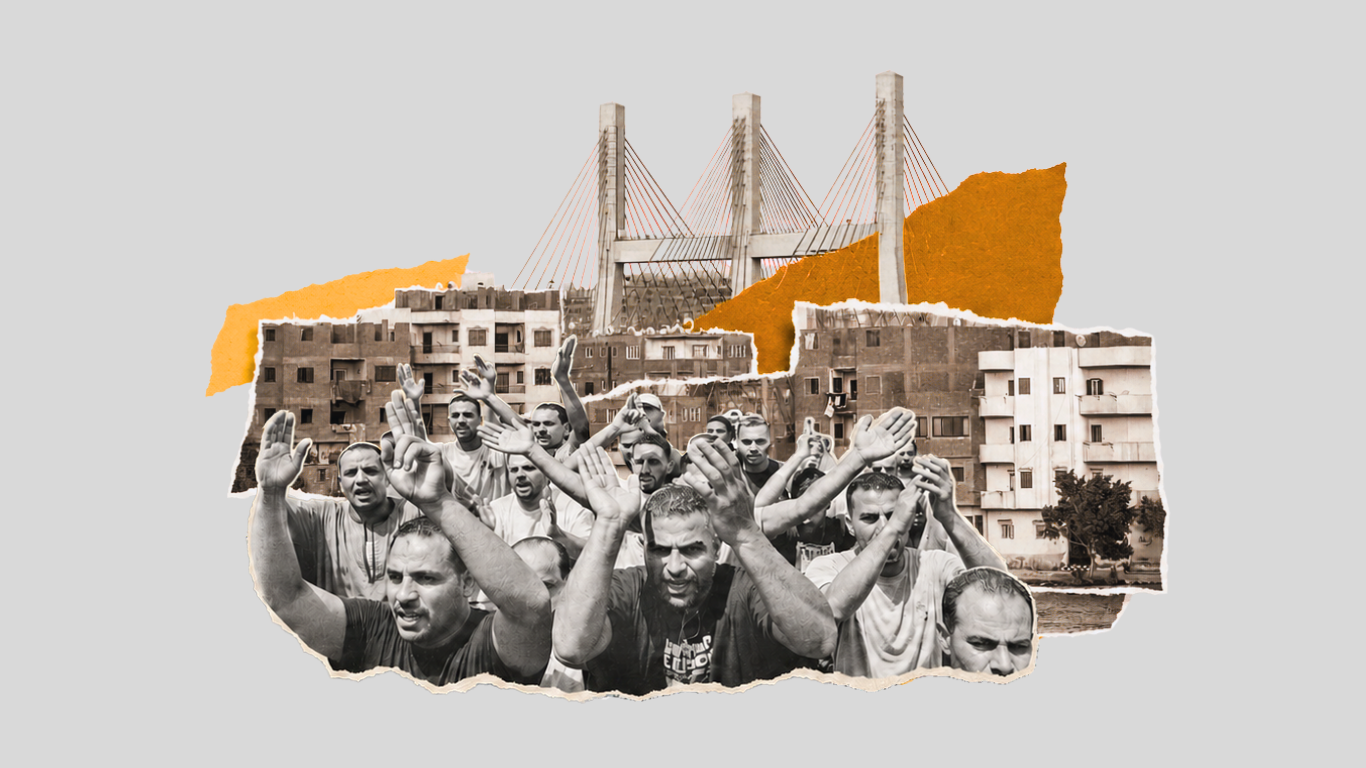
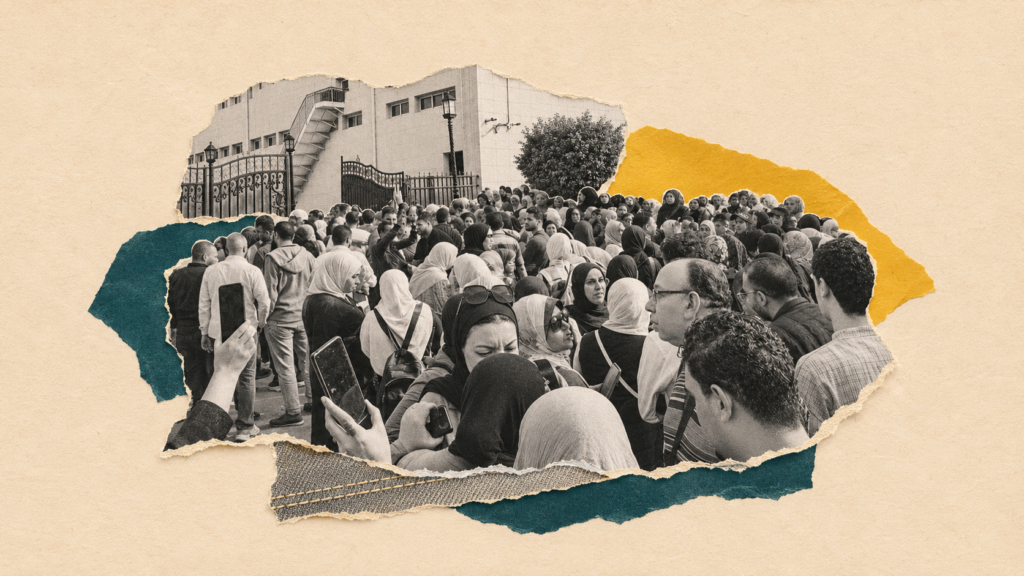
On Sunday morning, 1 November 2026, hundreds of workers held a protest outside the Baby Coca–Hela factory in the Abis district of Alexandria against what they described as arbitrary decisions affecting them. The factory stands at kilometre 11 of the Alexandria–Cairo Agricultural Road, beside the Abis gate.
The workers’ accounts reveal that the protesters belong to two groups within the same site. The factory was originally managed by the Egyptian company Baby Coca, whose chairpersons are listed as Sherine Eleish and Amr Aboul Ela in the Apparel Export Council’s directory. A foreign investor subsequently entered in recent years, and new workers joined under Hela’s name, continuing to work at the same premises. Workers said Hela’s management delayed paying their wages, then decided, days before the protest, to dismiss its entire workforce and asked them to sign resignations on the pretext of renewing their contracts. Baby Coca’s management, meanwhile, placed its workers on indefinite leave pending a review of their circumstances.
Workers stressed that they had been dismissed without prior warning, that those dismissed had still not received their wages on the day of the protest, and that they did not know what would happen to them after years at the company. According to their accounts, company representatives refused to speak to them or discuss their demands and closed the factory pending further decisions. The protesters urged the labour minister to intervene, investigate their complaint and require the company to pay their entitlements. They warned that they would turn to the labour office and the courts if their demands were not met promptly.
The workers’ demands centre on payment of overdue wages and all entitlements; a halt to dismissals and a review of termination decisions; an investigation into resignations signed on the promise of renewal; clarification of their legal status following the management change; direct negotiations between their representatives and management; and intervention by the Ministry of Labour and the competent labour office.
These events remain based on workers’ accounts. No official record or written dismissal decision has yet been published specifying how many workers were dismissed or how many months of wages are overdue. Neither the company nor the Ministry of Labour had issued a public statement on the crisis as of the morning of 2 November.
A Distressed Factory Acquired by Hela
In September 2021, Sri Lanka’s Hela Apparel Holdings announced its entry into the Egyptian market as the first major Sri Lankan apparel manufacturer operating in Egypt. Its chief executive, Dilanka Jinadasa, said at the time that Egypt offered faster access to European and American markets and shorter lead times. In its announcement, the company disclosed that it had acquired a “distressed asset”: an apparel factory in Alexandria employing 1,000 workers, previously operated by a company from the Far East, covering 220,000 square feet and including fabric and accessory manufacturing facilities.
In January 2022, Jinadasa announced that operations at the Egyptian factory would begin within weeks, after the company obtained an import and export licence. The group subsequently formally opened a 275,000-square-foot facility, approximately 25,500 square metres, capable of accommodating up to 2,500 workers per shift. Sanath Amaratunga, chief executive of Hela Kidswear, said in February 2022 that the group’s medium-term goal was to reach $100 million in exports from Egypt. The choice of Egypt was linked to the Qualifying Industrial Zones (QIZ) arrangements, which allow duty-free exports to the United States subject to local-content requirements.
The Egyptian Apparel Export Council’s directory reflects part of the site’s history: it lists Baby Coca for Wears & Textiles at the same address since 1994, with a capacity of 250,000 pieces a month and approximately 1,850 workers. Hela says on its website that its Egyptian factory employs around 2,000 workers and specialises in children’s clothing. Published documents do not clarify the relationship between the Baby Coca factory and the facility Hela said had been run by “a company from the Far East”. The council’s directory lists a factory area of no more than 3,720 square metres, whereas Hela gives an area ranging from 220,000 to 276,000 square feet. An International Finance Corporation review states that Hela leases the Egyptian facility rather than owning it. This raises a central legal question: what is the relationship between the owner of the land and buildings, the operating company and the employer named in each group of workers’ contracts?
Clothing for Calvin Klein and Tommy Hilfiger
Hela manufactures underwear, sportswear and children’s clothing for international brands and has presented itself as a supplier to Tommy Hilfiger, Calvin Klein, Michael Kors and VF Corp. Data from a shipping-information provider show exports attributed to Hela Clothing Egypt from its Abis address to buyers in the United States, including New York-based Br Intimates, through June 2025. These remain commercial data rather than customs records, and Zawia3 has not verified the identity of the factory’s buyers during its new management period.
As of 2023, the group operated six facilities in Sri Lanka, one in Kenya, two in Ethiopia and one in Egypt, alongside four design centres, employing more than 18,000 people, 70% of them women. That number fell to around 12,400, according to Sri Lankan reports, matching the figure recorded in the group’s annual report at the end of March 2025.
In February 2022, the group listed its shares on the Colombo Stock Exchange in the market’s largest initial public offering in years. Three years later, the independent auditor declined to express an opinion on its financial statements for the year ending 31 March 2025. Its shares were therefore placed on the watch list from 12 December 2025. The exchange then warned that trading would be suspended from 18 June 2026 because it had failed to complete its debt restructuring. Its shares were suspended when the liquidation was announced.
In the nine months ending December 2025, the group recorded net losses of 7.59 billion Sri Lankan rupees, compared with 6.46 billion rupees in the corresponding period. Revenue fell approximately 29% to 43.95 billion rupees, while equity stood at negative 18.8 billion rupees and accumulated losses at approximately 31.6 billion rupees, according to a summary of its disclosures. These figures concern the group as a whole, not the Egyptian factory alone.
On 4 August 2026, the board decided to seek court-ordered liquidation. On 5 August, the company notified the exchange that winding-up petitions had been filed before the Commercial High Court of the Western Province in Colombo for the parent company and its subsidiaries Hela Clothing (Private) Limited and Foundation Garments (Private) Limited. The board said it had resorted to liquidation only after exhausting alternatives involving restructuring, debt rescheduling and strategic investment. A liquidation petition does not mean a final liquidation judgment has been issued. The petitions also concern entities registered in Sri Lanka, not an order liquidating the Egyptian company, Hela Clothing Egypt S.A.E.
A Bank Accuses Directors of Diverting Export Proceeds
On 13 October 2026, Judge Chamath Madanayake of the Commercial High Court in Colombo upheld an interim order restricting travel by Hela Clothing’s five directors, while allowing travel for specified periods with prior court permission. The directors are Dilanka Jinadasa, Albert Rasakantha Rasiah, Gayan Priyanka Gunawardana, Ranjith Sanath Perera Amaratunga and Aruna de Silva Muthumuni.
The order is based on an application by Commercial Bank of Ceylon seeking to hold the directors personally liable for the company’s debts. The bank says it extended facilities of up to $1 million to Hela Clothing and $3 million to Foundation Garments on condition that export proceeds pass through its accounts. It accuses the directors of failing to route those proceeds through the bank and concealing exports, and says the parent company sought to sell subsidiaries without creditors’ consent. It also accuses them of disposing of $8 million received by the group from Emerald Investments without disclosing it in the liquidation petition. Hela’s disclosure to the Colombo Stock Exchange, however, says that the amount actually received from the Focus Brands transaction up to that point did not exceed $2.016 million. The court report noted that DFCC Bank had filed a similar application that had not yet come before the court and that other banks intended to do so. The court has not ruled on these accusations: they are a bank’s allegations in a lawsuit, not facts established by a judgment.
Emerald: Management Without Ownership
Two months before the liquidation petition, on 7 June 2026, Hela Investment Holdings signed a management services agreement with Emerald Investments. A Hela disclosure published on 9 July revealed that the Egyptian company faced working-capital constraints and that Emerald would manage manufacturing operations and the factory’s workforce until 31 December 2026, allowing production and deliveries to foreign customers to continue. The agreement gives Emerald an option to purchase the Egyptian company on terms agreed by the parties and creditors. Hela Investment Holdings owned 99% of the company at the time of the announcement. The disclosure described developments at the factory as a “stabilisation programme” to protect revenue and maintain production.
The Abis factory is thus divided into layers that do not coincide: operational management transferred to Emerald; ownership that, according to the announcements, remained with Hela’s investment arm; premises leased from another owner; and employment contracts registered under an entity whose ability to pay is unknown to the workers. As of 2 November, no published announcement confirmed exercise of the purchase option or early termination of the agreement.
Emerald features in more than one transaction dismantling Hela’s assets during 2026. On 14 April, Mauritius-registered Hela Brands sold its entire stake in Britain’s Focus Brands to Mohamed Saleem Sahardeen and Mohamed Saleh Fazledeen, Emerald’s shareholders, for $8 million. Under the transaction’s official disclosure, $2 million of the consideration is payable through a mechanism linked to future performance. Hela received $1.5 million in cash upon transfer of the shares, while the buyers paid $516,000 on its behalf to finance April 2026 wages, leaving $3.984 million outstanding. The disclosure did not identify that payroll amount as entitlements owed to Alexandria’s workers. Also in April, Emerald Clothing took over operation of the Thihariya and Palapathwala factories in Sri Lanka and design functions in Britain and the United States.
Sri Lankan Workers Transferred With Their Rights Intact
A comparison with Sri Lanka reveals differences in how workers within the same group were treated. Two days after the liquidation petition, Sri Lanka’s Board of Investment announced the transfer of 3,674 workers, including 251 executives, 393 staff members and 3,030 production-line workers, to Emerald Clothing in two phases: 2,504 workers on 1 May 2026 and 1,170 on 1 June, with continuity of service, wages and rights under their existing contracts. The board confirmed that it had overseen the transfer through its Industrial Relations Department and that the liquidation proceedings did not affect these workers.
By contrast, the Sri Lankan press noted that no official clarification had been issued about the future of employees in the group’s operations outside Sri Lanka. Neither Egypt’s Ministry of Labour nor its General Authority for Investment announced arrangements preserving Abis workers’ seniority or guaranteeing their wages following the management transfer. The comparison alone does not establish a legal violation in Egypt, but it raises a direct question: why did Sri Lankan workers receive a publicly announced process for transferring their contracts, while Alexandria’s workers were presented with resignations described as renewals?
The Same Scenario in Kenya
Kenya witnessed this scene before Egypt. On Labour Day, 1 May 2026, workers at Hela Intimates EPZ in Athi River protested, accusing the company of terminating their contracts without lawful procedures and failing to pay their wages. Kenya’s Export Processing Zones Authority said the company had promised to settle terminal dues by 30 April and that unionised workers had received their March wages. Two days later, the Kenyan government expressed concern about overdue entitlements for more than 3,000 workers laid off following the company’s closure. The authority’s chief executive, Richard Ibero Omelo, urged workers to remain calm.
This was not the first complaint at the Kenyan factory. In February 2022, workers accused management of unlawfully transferring them to a new employer and dismissing colleagues. Worker Nancy Akoth said management relied on intimidation and imposed unpaid overtime. Earlier, in November 2018, a Kenyan union had filed a lawsuit against Hela Intimates before the labour court in Nairobi, accusing it of dismissing pregnant workers who requested maternity leave and refusing to honour the collective bargaining agreement signed by Alltex EPZ, the company it had acquired.
In April 2023, the World Bank Group’s International Finance Corporation published project file 47052, concerning a proposed loan of up to $20 million to Mauritius-registered Hela Investment Holdings to finance working capital and manufacturing expansion. The project file shows approval on 18 January 2024, but its status has been “on hold” since the last update on 30 October 2024. There is no confirmation that the loan was disbursed.
Following a site visit to the Egyptian factory in November 2022, the environmental and social review recorded that, in February 2023, the facility employed approximately 1,989 workers: 1,080 women and 909 men. Women thus represented 54.3% of the workforce. The company leased 77 buses to transport workers, and the factory was registered in the International Labour Organization’s Better Work programme. The group’s 2024/2025 annual report states that Egyptian workers represented 18% of the group’s manufacturing workforce at the end of March 2025.
In the project’s accompanying action plan, Hela committed to measures that address the substance of Abis workers’ complaints: amending Egyptian workers’ contracts to clarify working hours, leave, wages, overtime and benefits by 30 September 2023; developing a retrenchment policy and rolling it out at the Egyptian factory by 27 February 2024; strengthening the grievance mechanism through an explicit prohibition on retaliation and provision for anonymous complaints by 31 December 2023; and reinforcing the workers’ representative council, elected every two years and meeting management monthly. The Office of the Compliance Advisor Ombudsman (CAO) enables people affected by IFC projects to submit independent complaints. This document alone does not establish shortcomings in November 2026, but dismissals without notice and resignations signed on the promise of renewal lie at the heart of the group’s commitments.
A Wave of Protests
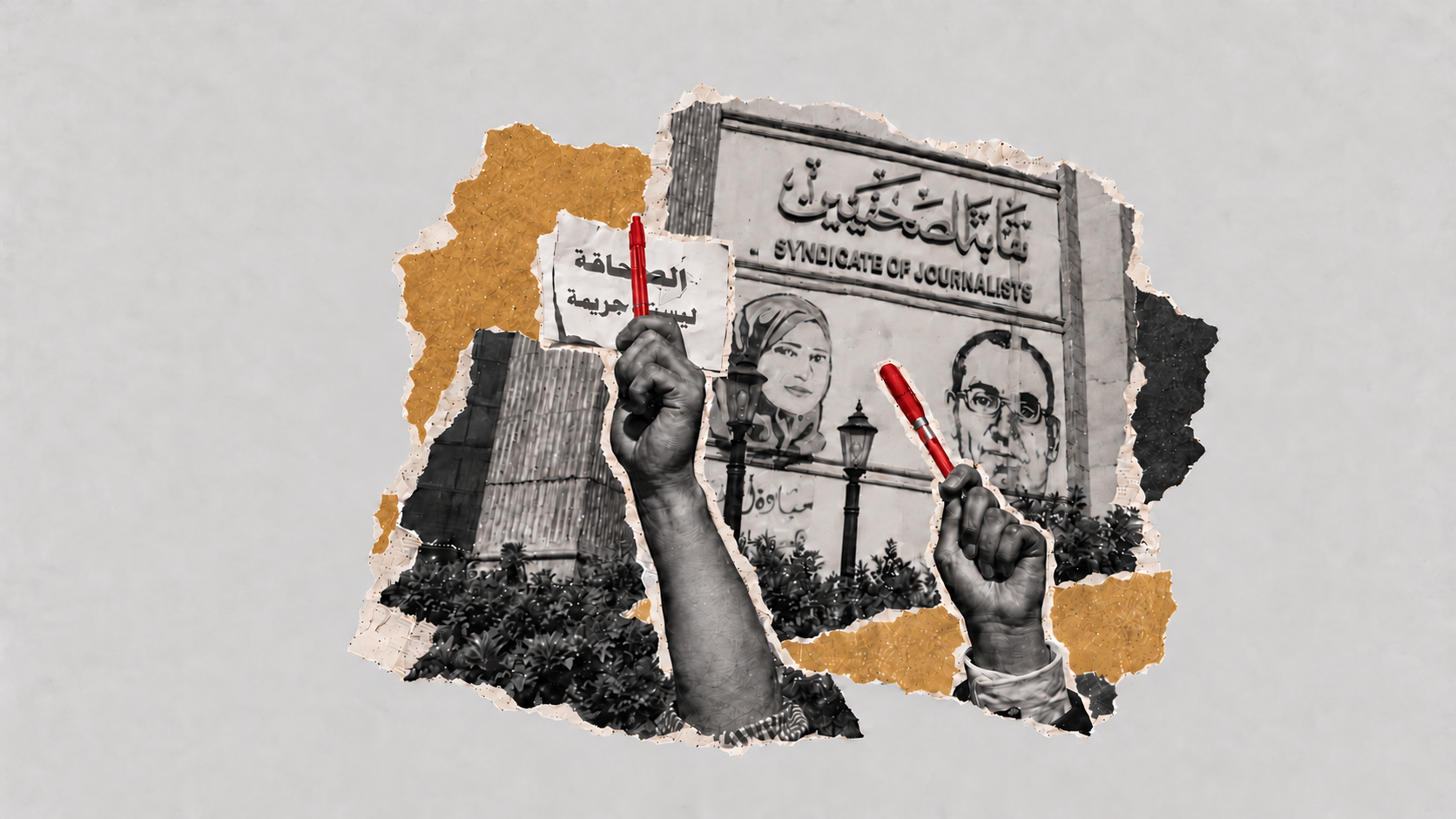
The Abis protest comes amid a wave of protests at textile and garment factories during 2026. In mid-September, approximately 1,200 workers at Arab and Polvara Spinning and Weaving Company in Alexandria held a sit-in over wages they said did not exceed EGP 2,500 a month ($45.07), failure to apply the minimum wage and failure to remit their social insurance contributions. The official private-sector minimum wage has been EGP 7,000 ($126.20) since March 2025. That same month, approximately 550 women in the clothing department of Samannoud Weaving Company in Gharbia renewed their strike after management paid just EGP 900 ($16.23) of their EGP 3,100 ($55.89) August wages, according to the same coverage. Monitoring reports from January 2026 also documented similar protests in Alexandria that ended with promises from management.
The Hela crisis is among the early tests of Labour Law No. 14 of 2025, which took effect in September 2025 and repealed the 2003 law. Article 4 of its promulgating provisions stipulates that workers’ previously acquired rights and benefits under wage arrangements, regulations and agreements must not be prejudiced. Identifying the employer responsible for wages remains contingent on the management agreement signed on 7 June, individual employment contracts and the employer’s registration with the National Organization for Social Insurance: is it Hela Clothing Egypt S.A.E., Emerald as workforce manager, or the original company employing Baby Coca’s workers?
The crisis raises questions that no party has answered publicly. How many workers have actually been dismissed, and how many months of wages are overdue? Does the management agreement include an obligation to pay wages, or is it limited to operating production lines? Who issued the dismissal decisions: Emerald or the Egyptian company? Were the commitments on contracts and retrenchment that Hela submitted to the IFC implemented? Who receives the Egyptian company’s export proceeds under the new management? And what will happen to the workers if the agreement expires on 31 December without the purchase option being exercised?