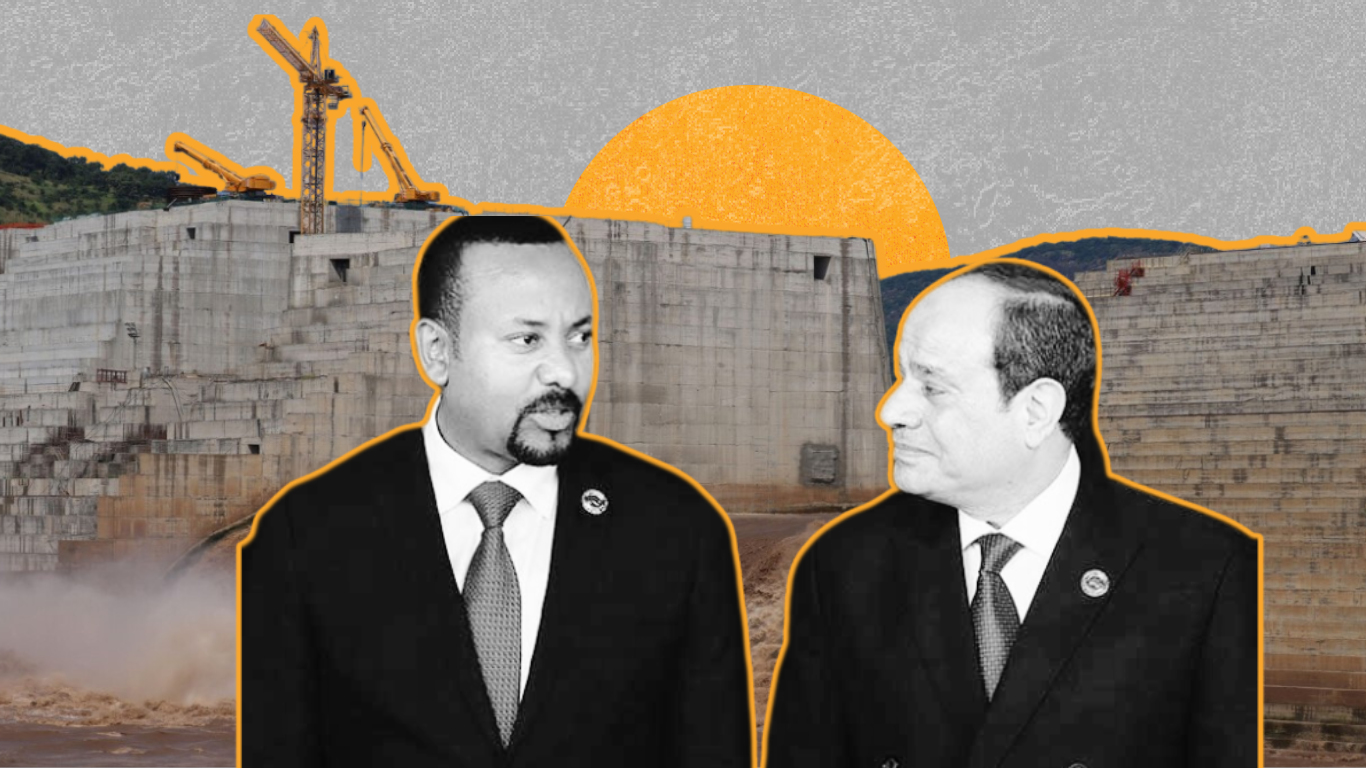


On Wednesday, 11 February 2026, President Abdel Fattah El-Sisi witnessed the swearing-in of a new deputy prime minister, ministers and deputy ministers at the presidency in Heliopolis. Prime Minister Mostafa Madbouly, retained for a third consecutive government formation, attended as the appointees prepared to begin their duties.
As part of the reshuffle, El-Sisi abolished the Ministry of Public Business Sector. Presidential spokesperson Mohamed El-Shennawy said Article 4 of Presidential Decree No. 75 of 2026 authorised the prime minister to organise the consequences, including the transfer of functions, powers and administration to other relevant bodies.
The changes generated political and media criticism. Several ministers previously criticised remained, while some new appointees’ records raised questions about selection criteria, including reported court rulings or investigations involving them.
The reshuffle came amid difficult political and economic conditions and as a new parliament began its legislative and oversight work. The previous broad reshuffle had taken place in July 2024, after the December 2023 presidential election, with Madbouly remaining prime minister.
The officially stated priorities included national security and foreign policy, economic development, production and energy, food security, social development and human development.
The return of a minister of state for information also raised questions about the office’s future role, given the existing media and press bodies and the Supreme Council for Media Regulation operating under the 2018 framework.
Parliamentary approval amid objections
The House of Representatives approved the changes despite objections from opposition MPs. Tensions delayed the session by about two hours, but it ultimately endorsed the reshuffle.
Freddy El-Bayady, MP and deputy leader of the Egyptian Social Democratic Party, calls the changes disappointing and inadequate to the country’s economic, service and social crises.
He tells Zawia3 that retaining the prime minister means continuing the same policies and management style, which he considers unsuccessful, especially on an economy whose failures citizens pay for daily.
He regards the changes as cosmetic rather than genuine reform: some individuals were replaced without clear indications of a different direction or correction of earlier mistakes.
El-Bayady says his party voted against the reshuffle because it does not address underlying problems, offer real solutions or respond to citizens’ aspirations.
The Justice Party’s parliamentary group also announced its opposition. In a statement on Tuesday, it said its MPs had submitted a letter to Speaker Hisham Badawy explaining their objections and requesting inclusion in the session record under Article 332 of parliament’s internal rules.
The party argued that some appointees had not demonstrated sufficient practical or executive competence, that the reshuffle fell short of the minimum change needed for effective government, and that no objective assessment of outgoing ministers or reasons for their replacement had been provided. This, it said, limited transparent parliamentary scrutiny.
Education minister remains amid controversies
Education Minister Mohamed Abdel-Latif remained despite criticism dating from his appointment in 2024. Questions over his academic qualifications, particularly a doctorate attributed to Cardiff City University in the United States, and a separate court case have drawn controversy.
Lawyer Amr Hassan Abdel-Salam, a member of the legal team challenging his appointment, tells Zawia3 that the institution denied the minister appeared in its records or attended its programmes, and said the serial number on the attributed certificate belonged to another person. Lawyers brought cases seeking his removal over alleged falsification of qualifications. These claims remain attributed to the legal team rather than presented here as a criminal conviction.
A separate case before the New Cairo Misdemeanours Court concerned alleged deliberate failure, in his official capacity, to implement a final 2013 ruling requiring the return of Towa Primary School in Minya to its owners after its lease expired. A hearing was set for 13 May. The claim sought imprisonment and removal under Article 123 of the Penal Code, as well as EGP 1 million in provisional civil compensation.
The ministry said the dispute predated the current minister and was a direct misdemeanour complaint against the officeholder in his official capacity, not a personal case against him. It said the administrative dispute remained under legal consideration and denied reports that a prison sentence had been issued.
The minister also faced criticism over repeated sexual abuse incidents in schools and the absence of comprehensive prevention and accountability mechanisms. The new baccalaureate system added controversy: MPs opposed its rapid implementation, arguing that students and teachers were insufficiently prepared and that it increased burdens without guaranteeing better education.
Lawyer Ali Ayoub, who participated in the removal case, explains that the court ruled the action inadmissible because it did not identify an administrative decision requiring withdrawal of the ministerial portfolio. The result allowed Abdel-Latif to remain and defeated the challenges to his appointment.
Ayoub says the lawyers requested inquiries from the Supreme Council of Universities concerning the qualifications, but the court did not incorporate those requests into its ruling. They did not appeal to the Supreme Administrative Court, citing frustration and doubts about the usefulness of continuing.
The lawyer interprets the absence of an official state response as supporting the information they obtained about the qualifications, although the ruling favoured the minister. That is his interpretation; silence does not itself establish the allegations.
Education specialist Moheb Abboud sees the minister’s retention as a question of the system’s approach to selecting leaders, rather than the individual alone.
He tells Zawia3 that appointments are drawn from a narrow pool of roughly 200–300 people—what he calls the “cream”—who circulate between positions, rather than from a real system for preparing qualified leaders and renewing power. He questions retaining the minister despite alternatives and the qualifications controversy, alleging that the minister and his mother have a strong network within state institutions.
Abboud calls current educational policies largely illusory. First-year primary pupils spend long evenings on homework, while teachers are overwhelmed by schedules, assessments and marking, reducing education to paperwork that fails to reflect reality.
He warns that retaining controversial figures does not serve public administration or even the political system’s immediate interests: accumulated anger and lost trust can damage the stability of the state and its institutions.
Finance and supply policies continue
Finance Minister Ahmed Kouchouk also remained. Before taking the portfolio in 2024, he had served as deputy minister for fiscal policy and institutional development since March 2016. His retention came despite criticism of reliance on volatile portfolio investment, or “hot money,” and rising debt-service costs that intensified pressure on public finances.
Sherif Farouk remained minister of supply and internal trade despite extensive criticism concerning food security and essential commodity prices.
Among the most controversial developments was the transfer of wheat import responsibility from the General Authority for Supply Commodities to the Future of Egypt for Sustainable Development agency, raising questions about transparency and the true cost of imports.
Criticism also concerned market prices and reliable access to essential goods. The minister cited mechanisms such as one-day markets and continued subsidised bread and sugar supplies, but economists regard these as insufficient to address rising prices or protect purchasing power.
The food subsidy system has also been criticised for reducing ration-card beneficiaries in recent years, removing households from bread and commodity support. The ministry has defended these measures as better targeting assistance to those most in need and improving efficiency.
Economic and political researcher Elhami El-Merghany considers the reshuffle limited. The main problem, he says, is not the finance minister alone but the continuation of economic and social policies that produced dozens of laws he regards as hostile to poorer and vulnerable groups.
He tells Zawia3 that retaining the finance minister despite budget deficits, growing debt and what he considers failed tax policy signals continued borrowing, inflation and collection of burdens from poorer households.
Keeping the supply minister amid debate over Future of Egypt’s wheat deals likewise symbolises continuity, he argues. He extends this assessment to education, health, transport and foreign policy, concluding that the reshuffle shows little appetite for fundamental reform meeting citizens’ needs.
Questions over the culture and housing appointments
New Culture Minister Gihane Zaki also faced controversy over a July 2025 court ruling concerning another writer’s intellectual property. The source article describes an initial ruling in case No. 1631 ordering confiscation and destruction of Zaki’s book and EGP 100,000 in compensation. The appointment raised questions about suitability for overseeing culture following such a ruling.
Al-Ahram managing editor and writer Soheir Abdel-Hamid explains that the dispute concerned her book The Assassination of Qut Al-Qulub Al-Demerdashiya, which required substantial research into a woman who supported writers and established an annual literary prize in 1940, first awarded to Naguib Mahfouz.
Abdel-Hamid tells Zawia3 that Zaki’s book on Coco Chanel and Qut Al-Qulub reproduced nearly half her work, including chapter titles, narrative approach and her own imaginative writing. She says a court-appointed technical committee confirmed this.
She describes the July 2025 ruling in her favour as final, ordering confiscation, destruction and compensation. The original report elsewhere calls it an initial ruling; that distinction is retained here rather than resolved without the judgment. She adds that Zaki filed a defamation complaint after she discussed the book dispute, but it was later closed.
Abdel-Hamid expresses moral and cultural shock at Zaki’s appointment. She considers it a striking contradiction for someone found to have violated authors’ rights to become responsible for creativity and culture. Her case, she stresses, protects all creators’ rights, distinguishing publicly available historical facts from a writer’s own literary and artistic expression.
The appointment of engineer Randa Ali Saleh El-Menshawy as housing, utilities and urban communities minister also revived earlier allegations concerning public money. She had been questioned in Supreme Public Funds case No. 641 of 2017 concerning rewards, allowances and profits from board memberships in bodies affiliated with the ministry, when she headed the minister’s office sector.
According to the investigation accounts cited in the original report, prosecutors requested information from bodies including the Housing and Development Bank. El-Menshawy reportedly returned EGP 1 million in improperly received board profits to the bank and EGP 450,000 obtained from another ministry-affiliated body. These are reports of the investigation and repayments, not an assertion of a criminal conviction.
El-Menshawy progressed through senior positions from the late 1990s, including specialist and deputy head roles at the Building Research and Studies body and other executive posts. Madbouly appointed her first assistant to the prime minister for follow-up in December 2019, before parliament approved her appointment to housing in this reshuffle.
A returning information ministry—but with what powers?
The minister of state for information returns to a landscape regulated by three constitutional bodies: the National Media Authority, National Press Authority and Supreme Council for Media Regulation. Their framework derives from Articles 211–213 of the 2014 constitution and legislation adopted in 2016 and 2018.
Former Journalists Syndicate president Diaa Rashwan took the information portfolio, prompting questions about its actual powers and intervention limits alongside those bodies.
Media professor and former syndicate secretary-general Karem Mahmoud describes a disordered media scene with weak regulatory safeguards. He says the three major bodies have not successfully organised it or produced media capable of competing nationally, regionally or globally.
State television and Maspero have declined sharply, he says, despite efforts by the current National Media Authority under Ahmed El-Moslemany. Severe resource shortages and the lack of a clear vision obstruct development, while state-owned newspapers deteriorate without a clear restructuring or recovery plan.
In Mahmoud’s assessment, the Supreme Council’s work has largely consisted of punitive decisions and suspending programmes or presenters, with no evident development strategy for traditional or new media. A government committee’s months of meetings and recommendations, he says, amount to an official recognition of the crisis.
This recognition is the positive aspect behind the returning ministry: it could help organise the sector and develop real plans. The negative aspect lies in uncertainty over the minister’s powers, ability to work alongside the three bodies and the space available for media freedom. Development requires legislative reform, a more open public sphere and genuine executive powers, he argues.
Mahmoud warns against repeating an earlier information ministry experience in which the office lacked real powers and operated in an environment hostile to freedoms and journalists. Will the state reproduce the same scene and expect different results, he asks, or provide practical tools and freedom for meaningful development?
The retention of controversial ministers and appointment of figures whose records include reported rulings or public-money investigations raise serious questions about competence and integrity in government selection. The experts and politicians interviewed argue that the issue extends beyond appointments to policy continuity—and the likelihood that longstanding political and economic crises will persist.