Photography: Haidar Kandil. Design: Aya Saber. Video editing: Khaled Abdallah.
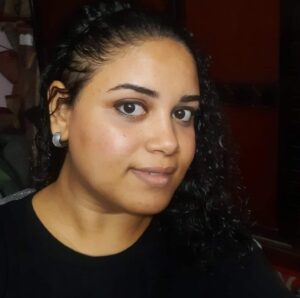
Freddy El-Baiady, a member of Egypt’s House of Representatives for the Egyptian Social Democratic Party, has raised parliamentary questions on issues ranging from changes to secondary education and railway accidents to the government’s economic policies.
In this interview, he discusses parliamentary oversight, the opposition’s limited influence, borrowing and asset sales, health and education, human rights and the future of political life. The discussion reflects the situation at the time of publication in March 2025.
Parliament and the opposition
You have submitted briefing requests on several contentious issues. Have you received responses?
It is important to explain that not every briefing request is discussed. Some have been debated, while others have received neither discussion nor a response. Nevertheless, they have attracted considerable attention in the media and among the public.
Requests are submitted to parliament, which considers them in coordination with the relevant committee, and officials study or respond to them. We have secured responses in some cases. For example, I raised the construction of a bridge in Heliopolis, an area with an important urban and cultural character. The bridge would have disfigured it. We requested that construction stop, and it did.
Other requests have not been discussed or answered. But this is our role, and we will continue fulfilling it until our last day in parliament. It is a responsibility entrusted to us by the people, regardless of the response.
Parliament faces criticism over its scrutiny of the government. What is your assessment?
Parliament’s fundamental role is oversight and legislation. Is it performing that role adequately? Unfortunately, no.
When it comes to holding a minister accountable or rejecting a government bill, the majority tends to side with the government because it consists of pro-government parties. Some opposition MPs speak forcefully, but the majority backs the government even when its position is not the best one for citizens or the country.
A dissenting opinion is not necessarily harmful to the government or the country. Opposition proposals can serve both. Yet the government ignores them, only to discover later that listening would have produced better results. Different views need to be examined before they are rejected.
Why are some briefing requests never discussed?
Parliament’s own policies determine which requests are considered and which are ignored. It assesses their importance, and factors outside the submitting MP’s control influence that decision.
How do you assess the opposition’s performance?
Its problem is its small size. Some members counted as opposition do not actually play that role. Those who genuinely oppose government policies are few. Their voices can be loud, but their influence is limited because the majority ultimately prevails.
This comes back to parliament’s composition. A larger opposition would benefit citizens and the country, not merely opposition parties. Greater diversity of opinion improves decision-making and helps secure more useful decisions.
Does that mean the opposition’s electoral alliance with pro-government parties in 2020 was positive and should be repeated?
It is too early to decide; too much remains unclear. In 2020, we considered the electoral alliance the only available route into parliament. We had many candidates running for individual seats, but they did not win, despite deserving to. Some challenged the results in court, and those cases had still not been resolved.
The Egyptian Social Democratic Party tries to participate positively whenever there is an opportunity. Our condition was clear: this was an electoral alliance, not a political one. We did not surrender our principles or our opposition to government policies.
Observers have seen the party and its MPs express their positions clearly. At times we were the only party strongly opposing a government policy.
We have not yet decided our position on the next election. There was disagreement within the party before the previous alliance, but the majority supported it. We need a clearer picture before deciding what comes next.
Some argue that such alliances cost the opposition its independence. What do you say?
I respect that view and understand its reasoning. But how did this alliance deprive us of independence? It imposed no political conditions. Our MPs were not pressured to adopt particular policies, and no special restrictions or red lines were placed on them.
We acted according to our principles and political outlook. We remained subject to the restrictions that affect everyone in political life, the media and freedom of expression, but the alliance itself did not impose additional constraints on our party or its MPs.
Critics say parliament pushes through unfair legislation despite objections, including the criminal procedure proposals. Why?
That question is better addressed to the government and the parliamentary majority. We rejected the criminal procedure bill in principle. Parliament received many objections, and although the majority supported it, we engaged with the provisions and proposed numerous amendments. They were rejected.
Why will the government and majority not listen to proposals from representatives of different sections of society? We are defending the interests of lawyers, journalists, justice and citizens. We have no personal interest; we want fair legislation.
Some alternative views may be right and others wrong, but rejecting them all raises a serious question. It should be put to those insisting on proceeding without accepting the amendments we proposed.
We have also opposed other measures we consider harmful, including loan agreements presented to parliament over the past five years and successive state budgets. We insisted on constitutional spending commitments for education and health, and offered alternatives based on our party’s policies.
We do not oppose for opposition’s sake. We ask what we would do if we were governing. When we rejected the latest budget, we proposed reprioritising expenditure, cutting unnecessary items and increasing health and education allocations. Those proposals were also rejected.
Editorial clarification: at the time of this interview, the criminal procedure bill was still in the legislative process; it was not a new law already in force.
The economy
What is your response to Egypt’s decline in the recently announced corruption index?
It was distressing. Egypt fell to 130th out of 180 countries, after being around 100th. Our score was 32 in 2012, reached 37 in 2014 and has now fallen to 30 in the index released last month. That raises serious questions and sounds an alarm.
Editorial clarification: Transparency International’s 2024 Corruption Perceptions Index gave Egypt 30 points and a rank of 130, compared with 35 points and 108th place in 2023. The index measures perceptions of public-sector corruption. Its comparable score series begins in 2012; this was not the date Egypt “joined” the organisation.
Corruption is like a cancer eating away at the country. If we cannot eradicate it, it threatens us all.
It affects the country’s reputation, foreign investment, investor confidence and the economy. It also damages citizens’ trust in government. Some evade taxes because they see a lack of transparency and do not believe their money will be spent properly.
I see this alongside a lack of social justice: very high salaries in parts of government while others do not receive even the minimum wage, and a shortage of teachers attributed to financial constraints.
The prime minister should examine the reasons for the decline. Oversight bodies, including the Central Auditing Organization, the Administrative Control Authority and bodies tackling tax evasion, must be enabled to perform their roles effectively. Their reports should be acted on rather than ignored.
The press and media must be free to confront corruption without fear. No one should be above the law or use an official position to exploit the state. Everyone must be accountable within their area of responsibility.
How do you assess the economy and the causes of the crisis?
Everything is connected. Economic reform is linked to political reform. An open political environment and political stability increase investor confidence and support the economy.
Transparent accountability and an end to the state’s monopolisation of economic activity would improve conditions. Our party has called on the state to make room for the private sector, as international institutions have also urged.
But the announced steps have not been implemented as promised. The State Ownership Policy Document is one example. We have also seen a national anti-corruption strategy and an anti-corruption academy, but in my assessment these initiatives have not produced the practical change required.
Economic decline is linked to political decline. Political, social and economic reform must proceed together.
Editorial clarification: the State Ownership Policy Document was approved in December 2022, a little over two years before this interview, rather than more than three years earlier.
What is your view of selling state assets?
The ownership document was a positive step; failure to implement it is the problem. Asset sales cannot be discussed in the abstract. Many countries sell assets, but there must be clear rules.
We need to know what is being sold, how, to whom and why. Assets linked to national security should not be offered for sale. Other assets can be sold if the process is transparent, the price is fair and the proceeds are invested properly.
If an investor builds and sells a residential development, they can build another. If the state privatises a small bank, that could benefit it. The essential requirements are clear safeguards, fairness and transparency.
Did the government have alternatives to asset sales?
It certainly had other options before, but they have now become very limited. If the government says it has no alternatives, it must explain how it reached that point.
It expanded borrowing and spent trillions on enormous projects, leaving us heavily indebted. We no longer receive grants and assistance as we once did because some countries have stopped providing them. That has put us under pressure to sell assets.
Are measures to protect poor and middle-income households sufficient?
The crisis is severe and more people urgently need support. Although the government has increased assistance and social protection packages, poverty and prices continue to place pressure on households. What is being provided is insufficient.
The government must work on two tracks: improving the wider economy to create jobs and reduce poverty, and providing immediate, effective assistance to those in greatest need. In my view, it bears responsibility for the conditions that pushed them into such hardship.
What do you think of replacing in-kind food subsidies with cash support?
Opinion is divided. Personally, I think cash support can be a good idea if implementation is clear and the money reaches those entitled to it.
The amount must be reviewed regularly to reflect inflation and rising prices. It needs to cover basic needs, or a meaningful part of them, particularly when so many people living below the poverty line cannot afford essential food.
What is your assessment of continued external borrowing?
We face a catastrophe because of accumulated loans and debt. Our party’s MPs opposed the loans submitted to parliament because we believed they deepened the crisis.
We are talking about roughly $155 billion in external debt. In local currency, that is approximately EGP 7.5 trillion, alongside about EGP 8 trillion in domestic debt.
If you spent EGP 1 million every day, it would take about 2,739 years to reach just EGP 1 trillion. The larger question is: where did the money go, and why did we borrow so much?
Every country has debt, including developed countries. What matters is how the borrowed money is used. My concern is that it went into projects without adequate feasibility studies and vast spending on non-essential items, rather than education or projects that ease people’s hardship.
Editorial clarification: the figures above are El-Baiady’s rounded estimates, and the pound conversion depends on the exchange rate. His description in the original interview of about $155 billion as a record high is inaccurate: CBE figures had already put external debt at about $168.03 billion in December 2023. Total external debt includes obligations beyond central government alone, so it should not automatically be combined with a domestic-government-debt figure as if both had identical coverage.
Health and education
How do you assess the government’s policies in these two areas?
I strongly criticised the new education minister and submitted a briefing request concerning his qualifications. I challenged the authenticity of his credential and asked that the title “Dr” be removed from his name. I then criticised his rapid changes to curricula shortly after taking office without consulting parliament’s Education Committee.
The allegation concerning the minister’s credential is El-Baiady’s account of his parliamentary challenge; this interview does not establish it as a judicial finding.
I am not satisfied with the secondary-school system or education more broadly. Development is necessary, but it must be systematic and properly studied. The minister should consult specialists and the parliamentary committee, which includes experts and representatives of the public.
Instead, the government put forward a proposal and tried to impose it after speaking mainly to its supporters. That is a one-sided conversation, not genuine public consultation. Both supporters and opponents should be heard.
The central problem is human resources. There is a serious teacher shortage, and salaries are inadequate. Improving teachers’ conditions must come before another change to curricula or examinations.
The fundamental crisis in health and education is how the government views them. It does not treat them as priorities, and the budget allocations reflect that.
Reform requires political will, a clear vision and adequate investment. Without those, neither sector can achieve the improvement it needs.
Human rights
How do you respond to criticism of Egypt’s human-rights record?
Every country receives observations during the Universal Periodic Review. But I do not want Egypt to participate merely to look good internationally. I want the government to demonstrate to its own people that it respects human rights.
Egyptians deserve to live in an environment that protects their rights, regardless of international approval. We have a crisis in rights and freedoms. Other countries, including the United States, have problems too, but that is no reason to remain silent about violations here. We deserve greater rights and freedoms.
Does parliament have real authority to address rights and freedoms?
Constitutionally, it has extensive powers, including holding the government accountable or removing it. In practice, the overwhelming pro-government majority prevents that. I estimate its support at around 90%, and it stands by the government whether it is right or wrong.
When we try to question or scrutinise the government, we run into a majority that supports it automatically.
You called for Alaa Abd El-Fattah’s release despite the criticism you expected. Why?
I was the only MP to use a formal parliamentary instrument in his case, and I do not regret it. It is my duty. I knew supporters of the state’s position would attack me, and I faced many accusations, but I did what I believed was right.
Some wrongly associate Alaa with the Muslim Brotherhood or simply insist that he should remain imprisoned. From the legal perspective I set out in my request, he should have been released in September after completing his sentence.
From a humanitarian perspective, his mother has been on hunger strike for almost five months. She is elderly, her health has deteriorated and she wants her son free after the end of his sentence.
I submitted the request both as a doctor concerned for a mother’s life and as an MP demanding respect for the law and constitution. It also covered Mohamed Adel, Mohamed Oxygen and others whose cases I know, even if I do not know them personally.
I hope Alaa and everyone imprisoned for expressing a view the government dislikes will be released. Even an objectionable opinion should not lead to imprisonment. No one should be jailed over a Facebook post or words that anger the government.
Why have the calls for his release gone unanswered? Do you expect a breakthrough?
That is exactly the question I put in my briefing request. I hope there will be a breakthrough. Releasing prisoners held over their opinions would serve the government’s interests as well as theirs and their families’. More freedom would contribute to stability and benefit everyone.
Can the criminal procedure bill end the pretrial detention crisis?
The problem is not only legal; it is primarily about practice. The existing law already sets limits on pretrial detention. Yet some people reach the limit and are placed in new cases on the same accusations so that they can be detained again.
This practice, known as “case recycling”, is an even greater problem. Legislation alone cannot solve it. We need genuine political will and transparent practices that protect liberty and end these violations.
Zawia3 was recently blocked without an official explanation. What should parliament do about website blocking?
Parliament can demand explanations, question those responsible and call for the blocking to end. But the authorities must recognise that this is 2025: information cannot simply be sealed off. People have many ways to reach it.
Blocking opinions is not the solution. If a platform criticises the government, respond with another view and correct inaccurate information instead of blocking the website.
People will search for the information precisely because they want to know why it was withheld. Suppressing voices is neither logical nor acceptable, even from the government’s perspective. The answer is open discussion and transparency.
Regional issues
How do you assess parliament’s role on Palestine and the Foreign Ministry’s performance?
Our party supports the Palestinian people, rejects forced, voluntary or temporary displacement, and supports their right to establish a state. This is one of the few areas in which we agree with the government’s foreign policy.
The state prefers to handle sensitive regional issues directly through the Foreign Ministry and security agencies, so parliament has not played a major role.
On the Grand Ethiopian Renaissance Dam, I believe shortcomings and delays over many years brought us to a difficult position. On Palestine and other issues, I consider the Foreign Ministry’s performance good. The recent summit had positive results, and the Egyptian plan received broad Arab and Islamic support. There are encouraging efforts to gain wider international backing.
Should parliament have a larger foreign-policy role?
Yes, in foreign and domestic policy alike. Its oversight and legislative role must expand beyond passing government bills. Parliament needs greater influence and independence.
Political reform
Can the present parliament hold ministers accountable?
It is very difficult when the majority supports the government, opposition members account for less than 10% and what I consider the genuine opposition is below 5%.
I hope the next parliament has a much larger opposition, perhaps 40%. That would create a better balance and make the government think carefully before taking decisions. Parliament would then be more capable of effective scrutiny.
What criteria should govern the selection of ministers?
A minister is not merely an executive official; the role is fundamentally political. Ministers should formulate policy, with advisers helping them implement it.
Appointments must be transparent and free of conflicts of interest. In my view, an education minister should not have private-school interests that conflict with the role, nor a health minister private-hospital interests that do so.
Does the political system need reform?
Absolutely, and that is not only my view. I attended the Egyptian Family Iftar in 2022, when President Abdel Fattah El-Sisi called for a National Dialogue. I heard him say political reform had been delayed and that it was time to begin.
The dialogue started with political reform, followed by economic and social questions. I welcomed that direction. Recognising a problem is the first step towards treating it. We may have begun addressing the crisis, but we have not finished.
How do you assess the National Dialogue and the treatment of its recommendations?
It was a good idea, and our party supported it early on. We took part in the sessions and submitted policy papers and reform proposals.
I hope it becomes an approach to managing political life, bringing together the opposition, government supporters and different political currents, rather than a temporary event.
The beginning had momentum and strong specialist participation, but the outcomes were not as strong. Its recommendations must be taken seriously and implemented so that the effort benefits citizens and the country.
What future do you see for political parties?
It depends on political will to open the public sphere. Parties grow when they participate in government, or at least have a meaningful presence in parliament and the media. Today, opposition MPs are few and media access is limited, making it difficult to reach the public.
Political parties are not charities. Their role is to practise politics.
They need space to communicate their policies and participate in decisions.
What message would you send to the authorities?
Political life requires strong parties and pluralism. Strong civilian parties protect the state and national security. Fear of the Muslim Brotherhood’s return must not justify a monopoly on opinion.
Citizens need genuine political alternatives. Opening political and media space to civilian parties is how to strengthen them and safeguard a modern civil state.