Minister of Supply: “Who Wants Sugar?”
Minister of Supply Dr Ali Moselhy denied, during the “Food Africa” conference, that Egypt has a sugar crisis, saying: “What happened is a matter of distribution only, and any company that wants sugar will receive it within a week of writing to the Ministry of Supply.” He asked: “Who wants sugar?”
The Minister of Supply and Internal Trade had pledged to end the crisis in cooperation with the private sector before mid-December. Before that, he made statements hinting at the use of compulsory pricing to confront the crisis, but he later stressed that he does not support this idea, noting that the Egyptian constitution stipulates that Egypt’s economy is free and regulated, and that the State Ownership Policy Document provides for raising the private sector’s share of investment to 70%.
TV presenter Ahmed Moussa commented: “The Minister of Supply says sugar is available in the markets… but reality is completely different from the statements, and the 10 days the minister spoke of for the crisis to end have passed, and the Minister of Supply must keep his promise to citizens.”
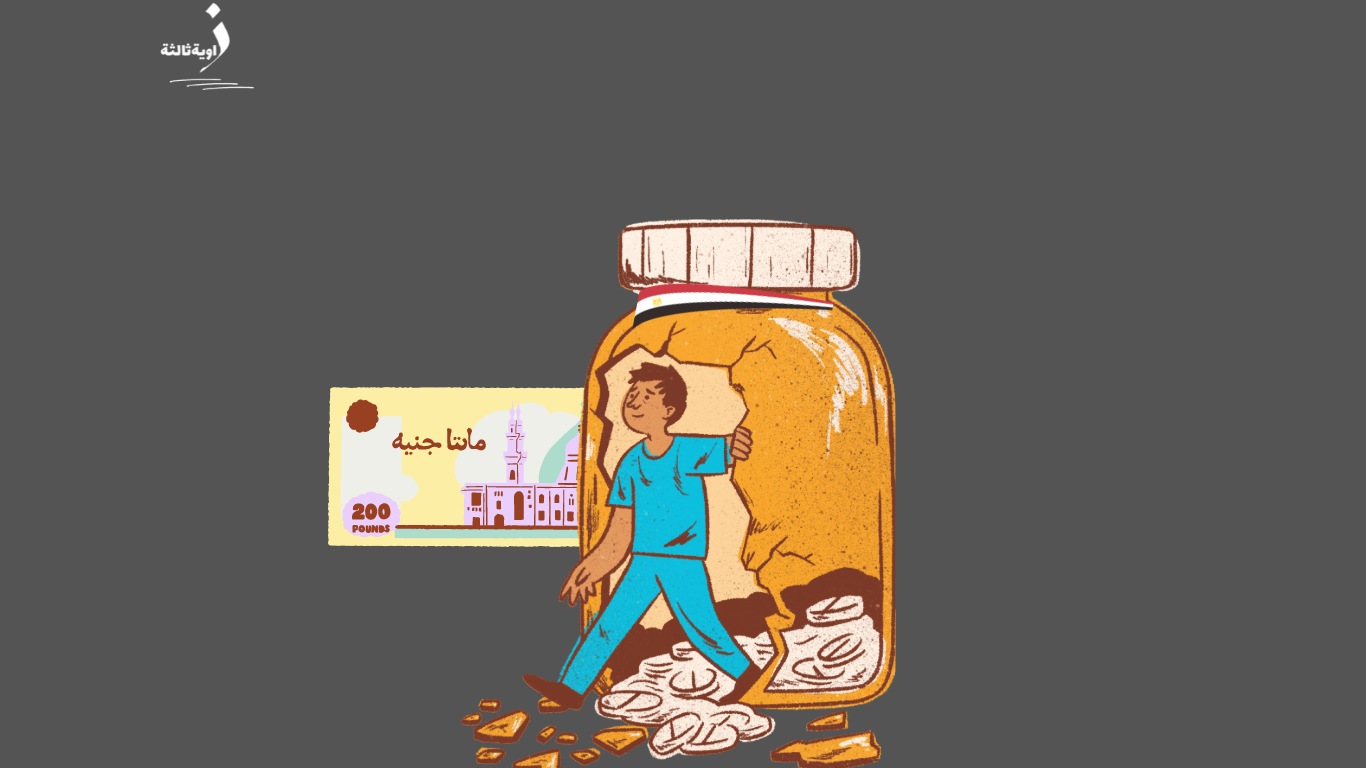
Sugar disappeared from Egyptian markets last October and returned in November, after its prices rose to unprecedented levels; the price of a kilo on home delivery apps and in the local market reached EGP 50 ($1.62), compared with EGP 12 to 15 ($0.39 to $0.48) last year.
Onions in “Parliament”, and the Kilo Nears EGP 50
The price of onions rose today to about EGP 50, recording an increase of more than 400% during the current year.
A number of members of the House of Representatives submitted urgent questions to Prime Minister Dr Mostafa Madbouly and the ministers of agriculture and supply regarding the crisis of rising prices of onions, sugar and vegetables.
MP Diaa El-Din Dawoud and MP Abdel Moneim Imam held the Minister of Supply responsible for this price chaos, due to the lack of oversight of the markets and of measures to control prices.
Morgan Stanley Expects a Devaluation of the Pound and Continued Privatisation
Morgan Stanley expects Egypt to complete its “economic programme” after the presidential election, in terms of both privatisation and debt reduction.
It said a phased devaluation of the pound was likely, rather than a shift to a floating exchange rate in the short term.
In its latest report, the international bank expects the government’s efforts to sell state assets to continue, and officials to work on increasing the size of the International Monetary Fund loan from $3 billion to more than $5 billion.
Morgan Stanley based its assessment on several factors that determine the course of exchange rate policy, including concerns about the potential impact of economic policy on the cost of living and the fiscal deficit, the extent of IMF conditionality regarding a flexible exchange rate policy, and the prospects of obtaining additional financing from multilateral partners.
Morgan Stanley warned that if the phased devaluation does not develop into a free float, pressures will return in the parallel market and on reserves, as happened on previous occasions, according to the report.
Britain’s HSBC Expects a Lower Exchange Rate
Britain’s HSBC expects the Egyptian pound’s exchange rate to be lowered to between EGP 40 and 45 to the dollar during the first quarter of next year, compared with its previous expectations of between EGP 35 and 40.
Institute of International Finance: Egypt Faces a $7 Billion Financing Gap
The Institute of International Finance said that the financing gap Egypt will face in the 2023-2024 fiscal year is estimated at about $7 billion, noting that this gap will be financed mainly through foreign direct investment and official financial flows.
The institute expects Egypt’s real gross domestic product to grow by 3.3% during the current fiscal year, which ends in June, below the International Monetary Fund’s forecast of 4%.
It said that high inflation, foreign currency shortages, supply bottlenecks and the war in Gaza are all factors that would curb private consumption and limit exports.
The institute bases its expectations on the assumption that the IMF programme with Egypt will resume early next year after the presidential election, and that the state will approve another large devaluation of the Egyptian pound and move to a flexible exchange rate system.
The report stated that Egypt obtaining additional financing from the IMF would help the country avoid a further decline in official reserves.
New Metro Ticket Machines That Accept Coins
Ahmed Abdel Hadi, spokesperson for the Egyptian Company for Metro Management and Operation, said that “TVM” machines have begun operating at Line 1 and Line 2 stations, explaining that the machines allow passengers inside metro stations to buy trip tickets automatically instead of at the ticket window, with the aim of easing congestion.
He explained that 50 machines have been installed at the 35 stations of Line 1, and 36 machines at the 20 stations of Line 2.
He noted that the machine accepts all banknotes and coins, including the half-pound coin, explaining that the machine dispenses up to 10 tickets per person.
Flying Object Shot Down off the Coast of Dahab
Egyptian air defences shot down a flying object off the Red Sea coast on Saturday, according to Egyptian media.
The media quoted sources they described as high-ranking as saying that the flying object was detected near the city of Dahab, in South Sinai governorate.
Presidential Election Result on Monday, and No Appeals
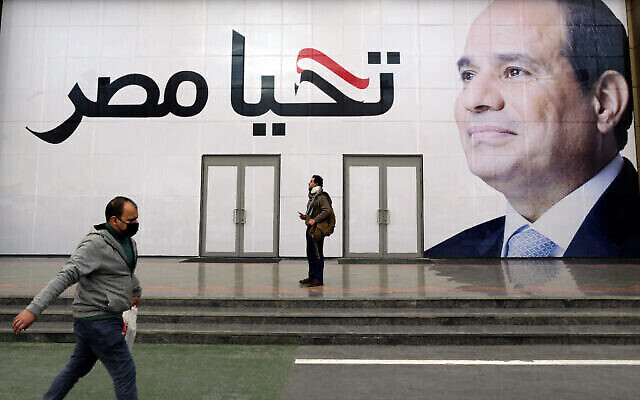
The National Election Authority set the day after tomorrow, Monday, as the date for its press conference to announce the result of the presidential election.
The National Election Authority said in a statement yesterday, Friday, that it had not received any appeals from the four candidates in the presidential election or their agents against the decisions issued by the general committees regarding the voting process.
Nazaha: The Election Was Democratic and the Atmosphere Neutral
Ayman Okeil, spokesperson for the Nazaha coalition, said that the presidential election was conducted democratically and in a neutral atmosphere.
He added, during an interview with DMC channel on Saturday, that the presidential election met all international standards of freedom and integrity.
What Is the Nazaha Coalition?
The “Nazaha Coalition” was formed to give an international form to the monitoring of the 2024 Egyptian presidential election, through cooperation bringing together 5 foreign organisations and two local organisations: “ECO, Greece; ELISKA, Ghana; Human Act, Romania; the National NGO Forum, Uganda; Gals Forum International, Uganda; Maat Foundation for Peace, Development and Human Rights, Egypt; Partners for Transparency, Egypt”.
Rights Groups: The European Union Must Support Human Rights in Egypt
Fourteen non-governmental organisations urged the European Union and its member states to prioritise accountability for improving the human rights situation during the ongoing negotiations on an EU strategic partnership with Egypt, particularly regarding the general framework of the deal, the provision of financial support, and cooperation on migration and security.
The organisations said that the European Union has failed to address the human rights crisis in Egypt in favour of focusing only on curbing irregular migration by strengthening the security services and the army, and that financing the state without prior reforms represents a short-sighted approach that will not address Egypt’s chronic issues of instability, but will rather lead to reproducing authoritarianism in a way that proves ineffective. Egypt’s severe economic distress and its human rights crisis are linked to the fundamental problems of unaccountable governance and the pursuit of regime survival, problems that must be addressed decisively.
The organisations added that it is essential that the new strategic partnership between the European Union and Egypt be built on subjecting any direct and indirect financial support from the European Union to Egypt to clear, public and measurable conditions in the areas of human rights and accountability, and on setting the relevant benchmarks that must be met.
This should also apply to new funds from the European Investment Bank or the European Bank for Reconstruction and Development, and to European encouragement of foreign direct investment in the country.
In the area of migration and asylum, the organisations said that the European Union must ensure that any negotiations with Egypt consistently highlight rule-of-law problems and concerning human rights issues. In the past two years alone, the Egyptian authorities have prevented people fleeing the conflict in Sudan from entering without visas, leading to life-threatening delays in obtaining asylum, and have repeatedly violated the principle of non-refoulement by forcibly returning Eritrean asylum seekers to Eritrea and deporting Uyghur students to China. According to Refugees Platform in Egypt, citing Egyptian border guard data, the Egyptian authorities detain thousands of foreign nationals every year indefinitely for entering the country illegally, without enabling them to access the UN High Commissioner for Refugees, in inhumane and extremely poor conditions, in military or civilian facilities that independent rights organisations cannot access.
The US State Department’s 2022 report also noted that the Egyptian authorities resorted to brutal repression of Sudanese human rights activists, refugees and asylum seekers on Egyptian territory, while failing to protect refugees who were subjected to sexual assaults or to support their effective right to access basic services, according to the US State Department’s 2022 report.
Dozens of Palestinians Killed and Injured
Dozens of Palestinians, including children and women, were killed on Saturday and others injured, and dozens of homes, buildings, residential apartments and public and private property were destroyed in the ongoing Israeli occupation bombardment of the Gaza Strip by land, sea and air.
Occupation warplanes bombed two homes on Old Gaza Street in the north of the Strip, killing at least 14 people and injuring others.
Journalist Samer Abu Daqqa Killed
Palestinian journalist Samer Abu Daqqa, a cameraman for Al Jazeera, was killed on Friday in an occupation drone strike on a school sheltering displaced people in Khan Younis in the south of the Gaza Strip, after the occupation forces left him bleeding for more than 5 hours.
The channel’s correspondent and Gaza bureau chief, journalist Wael Al-Dahdouh, was also injured in his hand and side while covering the situation at Khan Younis Secondary School for Girls (Farhana), after it came under an earlier Israeli bombardment yesterday morning, noting that both were wearing helmets and protective vests indicating that they were journalists.
Later, Abu Daqqa’s body was transferred to Nasser Medical Hospital.
With the killing of journalist Abu Daqqa, the number of journalists killed since the start of the aggression on 7 October has risen to about 75, including 9 women journalists, according to the Palestinian Journalists Syndicate.
The White House: We Will Not Be Able to Achieve the Two-State Solution
John Kirby, spokesperson for the US National Security Council at the White House, said that US National Security Adviser Jake Sullivan’s visit to Tel Aviv aims to discuss reaching a humanitarian truce to allow the exchange of prisoners and the delivery of humanitarian aid to the Gaza Strip.
In an interview with the Al Jazeera network on Thursday evening, he reiterated the White House’s rejection of a general ceasefire in the Gaza Strip, saying: “We do not support a ceasefire; that is why we are seeking an imminent agreement for a humanitarian truce, and we are working very hard to achieve that.”
He added that US President Joe Biden still believes that a two-state solution can one day be reached, continuing: “We realise that, given what happened on 7 October, we will not be able to achieve the two-state solution in the near future, but that does not mean we are not pursuing it.”
France Calls on Israel to Stop Unprecedented Violence
France called on Israel to take concrete measures to stop the “unprecedented” violence committed by Israeli settlers in the occupied West Bank.
In a statement yesterday, Friday, the French Foreign Ministry expressed its deep concern over the unprecedented number of attacks committed by extremist settlers against Palestinians in the West Bank.
Since the beginning of October, settlers have carried out more than 343 violent attacks, in which eight Palestinian civilians were killed and more than 83 others injured, and more than a thousand Palestinians were forced to leave their homes.
The French Foreign Ministry strongly condemned the violence committed by extremist settlers, who terrorise Palestinian communities, reiterating its position on the settlement policy, which is illegal under international law, and reminding Israel of its obligations under international law, in particular Article 49 of the Fourth Geneva Convention.