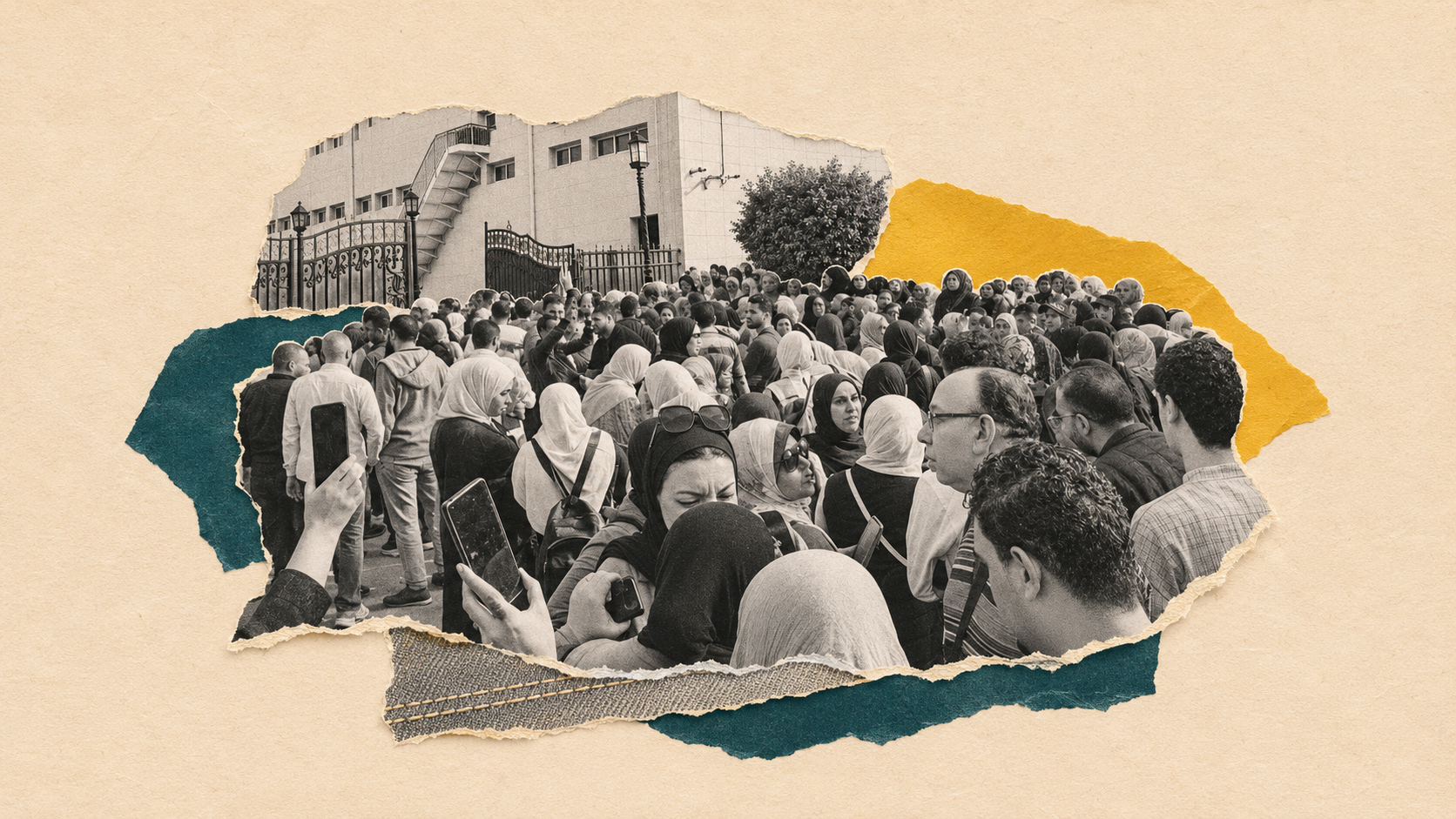

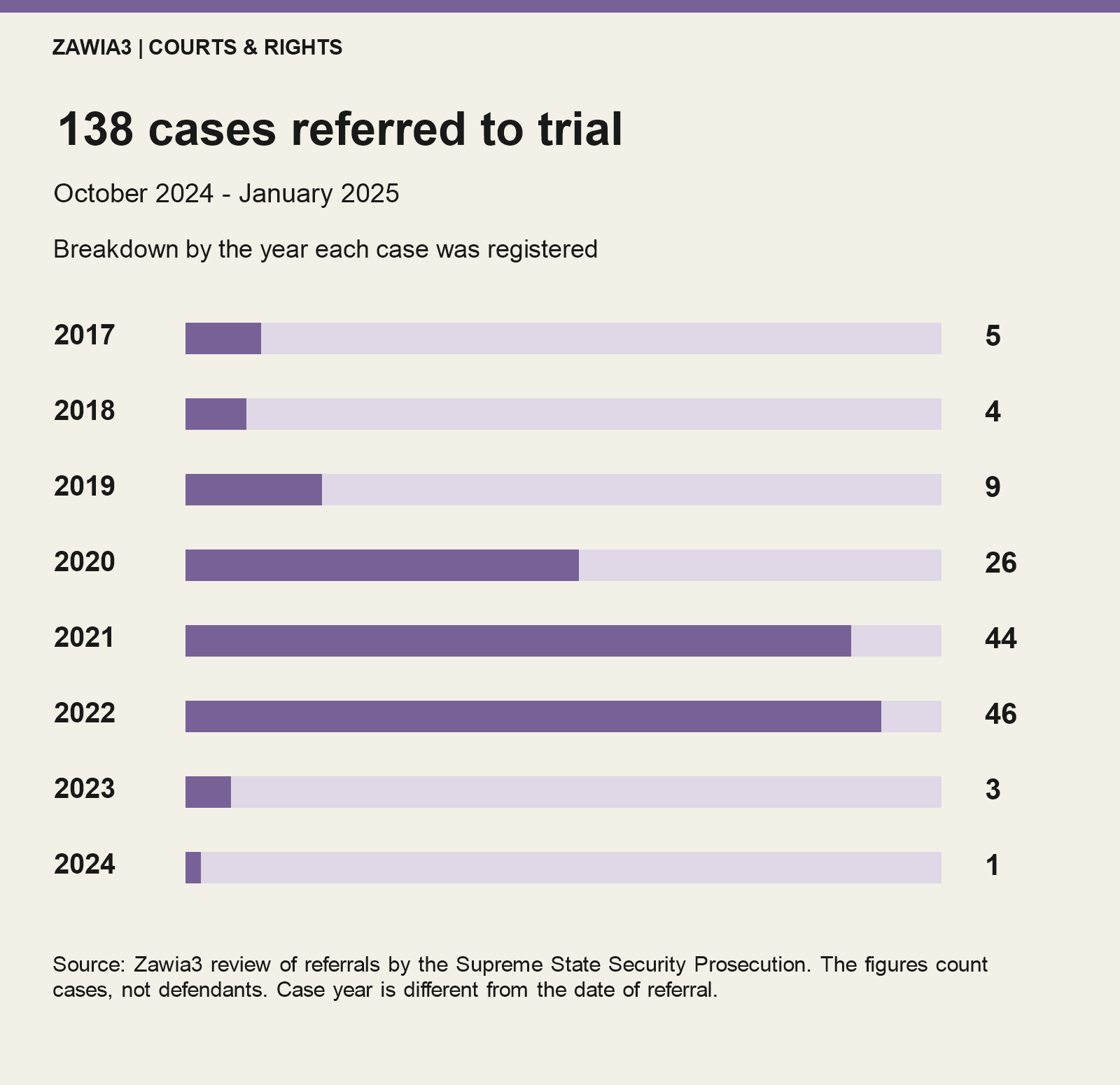
Egypt’s terrorism courts are witnessing an unprecedented wave of referrals, as Zawia3 has monitored the referral by the Supreme State Security Prosecution of 138 cases to criminal trial in just four months, from October 2024 to January 2025. These cases date back to the period between 2017 and 2024 and include more than 8,000 defendants, most of whom remain in pretrial detention, while a limited number of them have been released pending investigation.
This number of referred cases represents the largest wave of referrals since 2013, particularly given that the terrorism courts are limited to only three circuits, which has raised widespread concern among lawyers and human rights defenders about the ability of these courts to provide fair trials that guarantee the legal rights of the defendants. Defence teams have expressed concern that this volume may lead to the trials dragging on for years.
A review conducted by Zawia3 indicates that the referred cases are spread over eight years: they include five cases dating back to 2017, four cases from 2018 and nine cases from 2019, in addition to 26 cases from 2020, 44 cases from 2021 and 46 cases from 2022, along with three cases from 2023 and only one case from 2024.
Observers believe that this judicial move aims to transfer the file of pretrial detainees to the authority of the judiciary, in an attempt to improve the image of human rights in Egypt, especially in light of the growing criticism from civil society organisations and international human rights organisations, which have condemned the exceeding of the legal periods of pretrial detention stipulated in Egyptian law, set at a maximum of two years. Cases of pretrial detention exceeding seven years are recorded in cases dating back to 2017, without any judicial progress.
Despite this move, concern remains that the accumulation of cases will lead to the trials dragging on, raising questions about whether there is a genuine intention to close the file of pretrial detainees, or whether the matter is no more than a reformulation of the problem under a new judicial cover.
Prominent politicians, journalists and human rights defenders
The Supreme State Security Prosecution has referred more than 8,000 people to trial, as a senior judicial source confirms to Zawia3. These referrals included prominent political, journalistic, academic and human rights figures, among them three former members of the People’s Assembly: Bahey El-Din Mohamed Abdel Dayem Mansour, Ahmed Mohamed Abdel Hady and Abdallah Ahmed El-Hendawy.
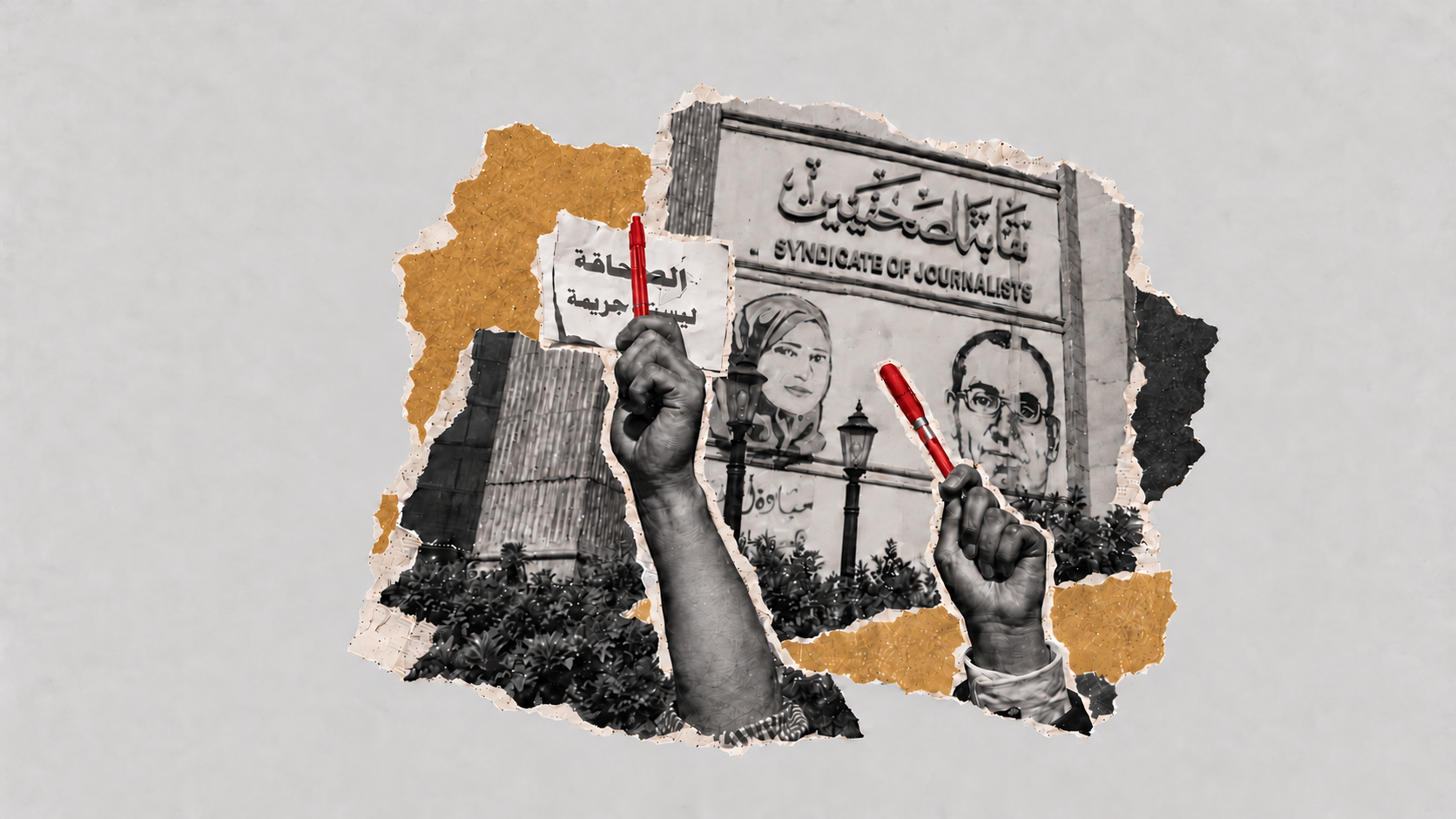
The list included a number of prominent journalists, such as Gamal El-Gamal, Ahmed Abu Zeid El-Tanoubi and Hossam El-Sweify, in addition to Tawfik Ghanem, the former regional director of the Anadolu Agency, and photojournalist Hamdy El-Zaeem. The referrals also included Riyad Kamal El-Din, brother of the media figure Sami Kamal El-Din.
In the human rights field, lawyer Hoda Abdel Moneim, human rights activist Ibrahim Abdel Moneim Metwally, founder of the Association of Families of the Forcibly Disappeared, and lawyer Ahmed Nazir El-Helw were referred to trial.
On the academic and political side, the referrals included political science professor Amgad Khalil El-Gabbas, researcher Moataz Bellah Hasab El-Naby and the doctor Hatem Mohamed Rashed, adviser to a former Minister of Supply.
The referrals were not limited to public figures; they also reached members of the families of political leaders, such as El-Hussein Khairat El-Shater, son of the deputy general guide of the Muslim Brotherhood, and Anas Mohamed El-Beltagy, son of the leader Mohamed El-Beltagy. They also included Ola El-Qaradawi, daughter of the late preacher Youssef El-Qaradawi.
These referrals come amid growing criticism from human rights defenders of the use of trials as a means of tightening the noose on opposition voices, and amid questions about the authorities’ intentions in dealing with the file of public freedoms.
Uniform charges in all cases
Zawia3 obtained documents confirming that the cases referred by the Supreme State Security Prosecution to the terrorism courts during the past four months contained identical charges. A senior judicial source at the Supreme State Security Prosecution tells Zawia3 that the main charges in all the cases were identical, without exception.

The charges included some of the defendants assuming leadership positions in a terrorist group, namely the Muslim Brotherhood, which was charged with calling for the system of government to be changed by force, attacking members of the armed forces and the police and their facilities, and targeting public facilities, using terrorism as a means of achieving these aims.
Others were charged with joining a terrorist group founded in violation of the provisions of the law, with the aim of disrupting the provisions of the constitution and the laws, obstructing the work of the public authorities and state institutions, attacking citizens’ personal freedoms, and harming national unity and social peace.

The charges also included a number of defendants participating in carrying out the group’s aims with knowledge of its purposes, in addition to some of them committing crimes of financing terrorism, by collecting, providing, possessing and transferring funds, documents and safe havens and supplying them to the group and its members, with knowledge that they would be used to commit terrorist crimes.

A senior judicial source at the Supreme State Security Prosecution reveals to Zawia3 that the Public Prosecutor, Counsellor Mohamed Shawky Ayyad, issued direct instructions to the First Attorney General of the Supreme State Security Prosecution, Counsellor Khaled Diaa El-Din, on the need to decide on cases that have been pending for years, whose defendants have exceeded the maximum period of pretrial detention prescribed by law.
According to the source, the instructions covered cases dating back to the period between 2017 and 2022, in which the defendants had exceeded the period of pretrial detention stipulated in Egyptian law, which should not exceed two years at most. He explains that this step came in response to growing complaints about the continued detention of defendants for periods longer than the legal period, which prompted the Public Prosecutor to take a decisive decision to close the file of those held in pretrial detention for long periods, in implementation of the provisions of the law and the recommendations of the National Dialogue committee.
The source points out that the instructions stipulate the need to conclude all cases relating to pretrial detainees up to 2022, so that no case remains in which the period of pretrial detention exceeds two years. He explains that these cases will be disposed of either by shelving them for insufficient evidence and releasing the defendants, or by referring them to criminal trial if sufficient evidence for their conviction is available.
The source stresses that the Supreme State Security Prosecution is continuing its investigations into these cases on a daily basis, and has already referred a large number of them to the criminal courts after completing the investigations and establishing the charges against the defendants.
Mass referrals to improve the image
Legal expert and lawyer before the Court of Cassation and the Supreme Constitutional Court Ahmed Helmy, head of the defence team for hundreds of those referred to trial, says in statements to Zawia3 that the Egyptian authorities are trying to improve their image before the international community by referring pretrial detainees whose periods of detention have exceeded the legal period stipulated in Egyptian law, set at a maximum of two years. Helmy considers that this step comes in the context of confronting broad international criticism, both political and legal, over what he describes as “detention outside the framework of the law”.
Helmy adds that these referrals, unprecedented in their number within a short period of time, came in response to pressure from the International Monetary Fund, which made the introduction of reforms in the human rights file a condition as part of the economic reform programme. He explains that the Fund demanded that the Egyptian government abide by the law regarding the period of pretrial detention and close the file of pretrial detainees whose periods of detention have exceeded the legal limits.
Helmy points out that the authorities resorted to referring cases that have dragged on for about eight years to the courts, with the aim of transferring the file of pretrial detention from the authority of the Public Prosecution to the judiciary, to avoid the criticism associated with exceeding the legal periods of detention. He adds: “In this way, the authorities can deny the existence of pretrial detainees outside the legal framework, while in reality the defendants remain in detention, but by judicial decisions.”
Helmy stresses that this large volume of cases referred to trial, with only three terrorism court circuits in existence, means that the defendants’ cases will not be decided quickly. He says: “No rulings will be issued in any of these cases for at least two to three years, and it may extend to five years or more.” He explains that the length of these procedures is due to several factors, including the scheduling of hearings, the procedures for issuing powers of attorney to the lawyers, photocopying the case files, holding the hearings, hearing the witnesses and the pleadings, especially in cases involving hundreds of defendants.
Helmy concludes his statements by stressing that this process amounts to a disguised transfer of pretrial detention from the prosecution to the courts, as the detention of the defendants continues, but by decisions issued by the terrorism courts instead of the State Security Prosecution, which allows the regime to get out of the predicament of exceeding the legally set maximum for pretrial detention.
Continuing suffering and appeals for health pardons
Human rights lawyer Hoda Abdel Moneim topped the list of prominent names referred to criminal trial, in a case that is the third of its kind in which she is being tried on the same previous charges. In an exclusive statement to Zawia3, her husband, human rights lawyer Khaled Badawy, says that the family is going through the worst period of its life after his wife was referred in a new case, despite the end of her previous sentence.
Badawy adds that his wife suffered an acute health setback after learning of the news of her referral in the third case, which led to a marked deterioration in her psychological and physical condition. He appeals to the President of the Republic to intervene to issue a health pardon for her, pointing out that his wife is over the age of 66 and suffers from difficult health conditions.
He points out that Hoda Abdel Moneim had been held in pretrial detention for 13 months pending case No. 730 of 2020, which came after she completed a five-year prison sentence in case No. 1552 of 2018, Supreme State Security registry, on similar charges whose rulings became final and conclusive. He explains that just as the family was preparing for her release, they were surprised by her referral to trial in a third case on similar charges, which caused her a new health and psychological crisis.
In a similar context, Mohamed Abdel Gawad Bedeq, brother of the defendant Hamada Abdel Gawad Bedeq (60), tells Zawia3 that his brother obtained acquittals in three previous cases and was released in a fourth case, although all of them included identical charges. He expresses his shock at his brother’s “recycling” into a fifth case carrying the same charges, which has led to his continued detention despite the previous acquittals.
Mohamed explains that his brother suffers from extremely serious health conditions, as he suffers from asthma and a severe chest allergy, which are aggravated by detention in cramped places lacking adequate ventilation. He adds that they have submitted multiple appeals for help to the Public Prosecutor, the Minister of Interior, the Prisons Authority, the Supreme State Security Prosecution and the Minister of Justice, demanding his release or the replacement of his detention order with appropriate precautionary measures, to save him from what he describes as “slow death” as a result of the deterioration of his health.
Counsellor Mohamed Nagy Derbala, former vice-president of the Court of Cassation, stresses in his statement to Zawia3 that the “terrorism circuits” are illegal and unconstitutional and do not comply with international standards of judicial independence. He explains that there is a fundamental legal principle stipulating that a specific judge may not be appointed to hear specific cases, which is what these circuits lack.
Derbala adds that cases must be distributed among competent judges on a periodic basis, rather than their jurisdiction remaining fixed in specific, permanent circuits. He points out that the same judges remaining in these circuits for more than ten years constitutes a breach of the principle of judicial neutrality, raising suspicions about the steering of rulings, which is a flagrant violation of the international standards that guarantee judicial independence.
Regarding the referral of this large number of cases from the Supreme State Security Prosecution to the terrorism courts within a short period, Derbala explains that the main reason behind this step is the Universal Periodic Review session on Egypt’s human rights record at the United Nations Human Rights Council. He stresses that the aim of these referrals is to beautify Egypt’s image before the international community, by suggesting that there are no longer any pretrial detainees who have exceeded the maximum legal period of pretrial detention, which Egyptian law sets at two years.
Derbala points out that referring the cases to the courts does not reflect a real intention to end these files or to settle cases of a political nature, but only aims to transfer the file from the authority of the prosecution to the judiciary, allowing the defendants to be kept in detention under a different legal umbrella. He adds that the courts will not be able to hear these cases within a reasonable period of time, which in practice means that pretrial detention will continue for long periods.
The former vice-president of the Court of Cassation stresses that the Egyptian judiciary currently lacks full independence. He points out that the terrorism courts convene inside prisons, which limits the judges’ ability to see the defendants directly or to question witnesses freely. He adds that judges do not enjoy the minimum standards of independence according to international standards, pointing out that those among them who exercise independent judgement or take an independent position may face disciplinary measures or be transferred to other courts, such as the family court, which strengthens the executive authority’s control over the judiciary.
Derbala concludes his statement by stressing that the current practices undermine the integrity and independence of the judiciary and make the trials vulnerable to domestic and international criticism, especially in the absence of the basic guarantees that ensure defendants’ rights to fair trials.
The backlog of terrorism cases
A member of the technical office of the Cairo Court of Appeal says, in a statement to “Zawia3”, that the court is currently studying ways of dealing with the large number of cases referred from the Supreme State Security Prosecution to the terrorism courts, especially as there are only three circuits dedicated to hearing these cases. The source, who requested anonymity because of a ban on speaking to the media, explains that this backlog has raised concerns among defence teams about the courts’ ability to provide fair trials within reasonable periods of time.
The source stresses that the volume of referred cases exceeds the capacity of the three circuits, pointing out that the Cairo Court of Appeal is studying the possibility of distributing the cases to other criminal circuits, other than the terrorism circuits, to ease the pressure and ensure that the trials proceed more effectively. He adds that this approach is entirely legal and is subject to the discretion of the president of the court and the general assembly, after being presented to the Supreme Judicial Council.
He also explains that all the presidents of the criminal courts are members of the Cairo Court of Appeal and may consequently hear Supreme State Security Prosecution cases, which facilitates the redistribution of the files without the need for complex legal amendments.
The source points out that the decision to allocate only three circuits to terrorism cases was based primarily on security considerations, to ensure the protection of the court panel and the defendants, especially given the sensitivity of these cases. The seat of these circuits was set at the Badr court complex, attached to the Badr City Reform and Rehabilitation Centre, in order to secure the trials tightly.
The source concludes that the court is currently working to balance the security dimension with the need to speed up judicial procedures, in an attempt to ensure fair trials without compromising the required security controls.
It is worth noting that following the removal of the late President Mohamed Morsi on 3 July 2013, the authorities launched a wide-ranging security campaign against the Muslim Brotherhood and opponents of the removal decision, resulting in the arrest of tens of thousands, especially after the dispersal of the Rabaa al-Adawiya sit-in in Nasr City and the Nahda sit-in in Giza. The Supreme State Security Prosecution took charge of investigating hundreds of cases until December of the same year, when the Cairo Court of Appeal decided to establish 6 terrorism circuits in the Greater Cairo criminal courts, dedicated to hearing cases related to terrorism crimes and incidents of violence and exempted from hearing any other criminal cases, with the aim of speeding up judicial procedures.
With the growing number of terrorism cases and detainees, the court decided to increase the number of circuits to 7 in 2014, then to 9 circuits by 2018, thereby covering all political opponents, activists, media figures and holders of views opposed to the regime.
With the beginning of 2019, matters calmed relatively, as the number of cases referred from the State Security Prosecution to the terrorism circuits declined, and many cases became “frozen” under investigation. As a result, the Cairo Court of Appeal decided in November 2019 to abolish 4 circuits and keep only 5.
In November 2023, the court again reduced the number of terrorism circuits to only 3, based at the Badr court complex, in a step considered to be aimed at strengthening security measures, and these circuits remain in place to this day.
The legitimacy of the terrorism circuits
Despite mounting criticism, work continues in the terrorism circuits, which Counsellor Mohamed Awad, former president of the Tanta Court of Appeal, described as contradicting the provisions of the Egyptian constitution. He explained in press statements that trials must be held before natural courts that adhere to the principles of justice and integrity, while the circuits specialised in terrorism cases are considered prohibited exceptional courts, like the military courts and the emergency State Security courts that were established specifically to try opponents. Awad stressed that only the natural judge should hear these cases, provided that he possesses the attributes of independence and competence, away from any external direction.
In the same context, Amnesty International issued a report in which it criticised the role of the Supreme State Security Prosecution and the exceptional courts in Egypt, as Philip Luther, the organisation’s Research and Advocacy Director for the Middle East and North Africa, stated that “the Supreme State Security Prosecution, the National Security Sector and the terrorism circuits have become a parallel justice system for arresting, investigating and trying peaceful dissidents”. He added that this normalisation of the role of the State Security Prosecution points to a permanent state of exception that suspends fundamental rights, such as the right to liberty, to a fair trial and to protection from torture, in the event of an accusation of “terrorism”.
Legal research has also addressed similar criticisms, most notably a study entitled “Terrorism Circuits: The Transformation of Exceptional Criminal Rules into Permanent Rules”. The study indicated that the terrorism circuits are considered a continuation of the circuits of the Supreme State Security Courts that existed under the late President Mohamed Hosni Mubarak, under the umbrella of the Emergency Law, under which the declared state of emergency ended following the 25 January 2011 revolution.
With domestic and international criticism continuing and the number of cases referred to the courts increasing, fears remain in the file of pretrial detainees over whether the authorities will commit to implementing the recommendations of the National Dialogue committee and the demands of human rights defenders and society. The question remains about their ability to close the files of pretrial detainees while ensuring urgent trials that adhere to international legal rules and provide the defendants with all their rights of defence. On the other hand, some fear that these steps may be merely formal, with detention moving from the Public Prosecution to the courtrooms without radical solutions being offered, so that the cases remain in circulation for more years, leading to the continued suffering of pretrial detainees for long periods.
Editorial correction: The first version of the report stated that the Emergency Law was repealed following the 25 January 2011 revolution; in fact, Law No. 162 of 1958 was not repealed, but the state of emergency declared under it ended on 31 May 2012.