
In 2008, agricultural engineer Mohamed Attia first encountered stevia, a herb in the daisy family that is used as a natural alternative to sugar. Attia holds a master’s degree in agricultural sciences and specializes in organic farming and modern irrigation systems.
The plant was then little known in Egypt. Attia brought seedlings from Canada and planted them in Kafr el-Sheikh. What encouraged him to launch the project eighteen years ago was Egypt’s need for alternatives to cane and beet sugar, particularly as diabetes and obesity became increasingly prevalent.
According to the International Diabetes Federation’s 2024 figures, 13.2 million Egyptians have diabetes. Egypt ranks ninth worldwide by the number of people affected, with prevalence exceeding 20% among adults.
The report cites approximately 30 million people with hypertension, a prevalence rate exceeding 26.3% and approaching 40% in some age groups, with nearly 300 deaths a day attributed to the condition. World Health Organization estimates put hypertension at around 40% of Egyptian adults and excess weight at approximately two-thirds of the population.
A study titled “The Burden of Obesity in Egypt” estimated around 115,000 obesity-related deaths in 2020, or 19.08% of total deaths. In 2023, Health Minister Khaled Abdel Ghaffar said 40% of adults were obese, rising to 50% among women. Former National Nutrition Institute dean Gehan Fouad stated in 2024 that around 75% of Egyptians over eighteen were affected by obesity. These figures illustrate the growing relevance of alternatives to sugar, including stevia.
Attia says a feddan requires approximately 20,000–30,000 seedlings, each costing EGP 5–10. He estimates annual yields of six or seven tonnes of dried leaves. Harvesting only the leaves while leaving the stems allows repeated collection during the season.
“Although establishing a feddan is initially expensive, the economic return is good. A kilogram sells for EGP 500–600 wholesale and can reach EGP 800 retail,” he told Zawia3.
Stevia is a semi-perennial crop that remains in the ground for three to five years and adapts to newly reclaimed land and modern irrigation. A feddan can produce four to six cuts annually, approximately one every two months during active growth. The report also cites average annual yields of three to four tonnes of dried leaves per feddan.
Attia says Egypt’s climate is suitable, particularly in desert areas and newly reclaimed land, provided drip irrigation supplies water consistently. Higher temperatures, he believes, support growth and productivity.
Obstacles include expensive seeds, costing more than EGP 20,000 a kilogram, and difficulty handling them because of their small size and sensitivity during transport and storage. Attia prefers raising seedlings in greenhouses before transplanting them to reduce losses and improve establishment.
Over time, he found that crop quality depends strongly on the concentration of steviol glycosides, the compounds responsible for sweetness. He therefore uses organic carbon and phosphorus in fertilization, with limited nitrogen, to increase the concentration of active compounds in the leaves.
He distinguishes two varieties cultivated in Egypt. The Canadian variety has less bitterness and stronger overseas demand. The Indian variety grown in some areas has relatively higher yields but more bitterness and less acceptance among some consumers.
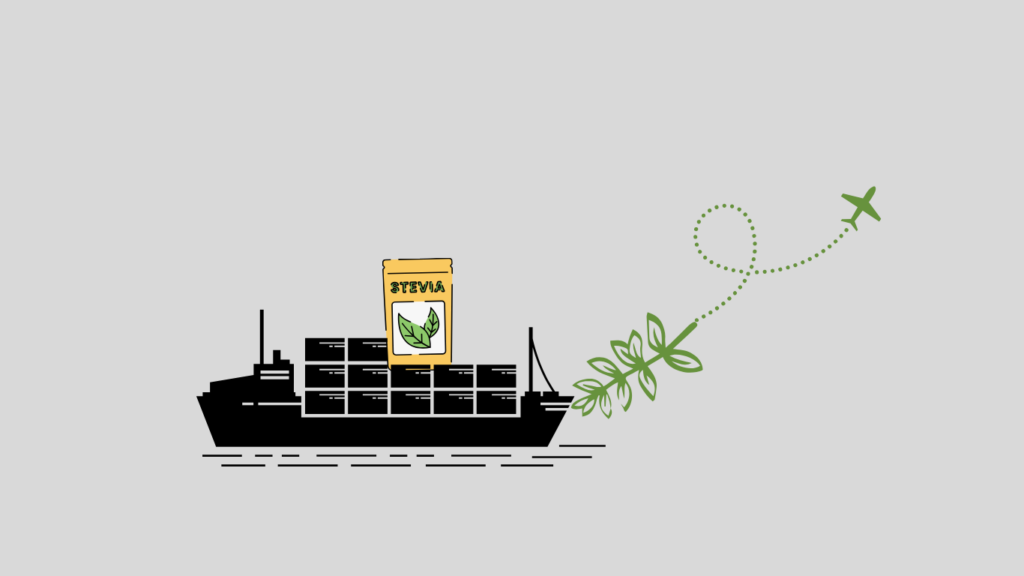
Throughout his years of cultivation, Attia has faced the absence of specialized domestic factories extracting sweetening compounds from stevia leaves. The domestic market consequently depends largely on imported or repackaged products. Most output is exported to Gulf states and some European countries, where demand for natural sweeteners is growing, as seedlings, dried leaves or seeds.
This pattern creates seasonal shortages in Egypt, particularly in March and April. Attia proposes local extraction units or factories to lower prices and improve product quality instead of relying on imports or substitute products sold in the market.
He recently changed his business model from wholesale and exports to selling seedlings directly to consumers, particularly people with diabetes. He believes growing stevia on rooftops and balconies offers households a practical source of sweetness for drinks and some foods. The plant needs little space and can even be grown in plastic bottles.
Studies by the Agricultural Research Center’s Sugar Crops Research Institute suggest expanding stevia cultivation could help narrow Egypt’s annual sugar production–consumption gap, estimated at 400,000–800,000 tonnes, while using less water than sugarcane.
Khaled Ayad, a professor of biological control at the Agricultural Research Center, says stevia adapts readily to different Egyptian environments. It can grow on traditional farmland, desert land, in gardens and on balconies. Its dried leaves can be used directly or processed to produce ready-to-use sweeteners for food and drinks.
“The plant is still cultivated on a limited scale, and some consumers use its dried leaves directly. Turning it into a large economic industry requires an integrated system of cultivation, processing, marketing, and medical and nutritional awareness to build a sustainable market,” Ayad told Zawia3.
The global trend toward natural sweeteners gives stevia increasing importance in food and health markets, he says. The main challenge is marketing and building consumer demand. Private farms, projects and factories have tried producing and packaging stevia, but many did not achieve the expected commercial success because public awareness was weak and the market was not prepared for widespread adoption.
Why sugar alternatives matter
Ali Abdallah, director of the Egyptian Center for Pharmaceutical Studies, Statistics and Addiction Control, says stevia has gained prominence in the sugar-alternative market as use of aspartame and saccharin has declined amid concerns over potential health effects. He describes stevia as having a good safety profile, although some users initially complain of bitterness or a taste different from sugar, often diminishing with familiarity.
“Stevia is among the main sugar alternatives sold in Egyptian pharmacies, as tablets or powder. Some products are imported; others are packaged or manufactured locally by companies such as SEKEM, ISIS and Atos Pharma. Use is concentrated among people with diabetes and those seeking weight loss or lower-calorie diets,” he told Zawia3.
Price is a major obstacle, Abdallah says. Traditional sweeteners can cost less, while stevia products are relatively expensive. A pack of 100 Atos Pharma sachets costs EGP 250 in pharmacies. A 250-gram jar of Sweetal Stevia, produced by Hygint Pharmaceuticals, costs approximately EGP 170.
The source also cites a general package price range of $6.50–13, alongside EGP 200–400; those quoted ranges are not presented here as a current currency conversion. Prices vary by brand and pack size. Imtenan stevia costs EGP 105 for 50 grams, EGP 215 for 125 grams and EGP 225 for fifty sachets. A 200-gram Steviana pack costs around EGP 225. Abu Auf’s fifty-sachet pack costs about EGP 95, while a 250-gram Sweetal Stevia jar costs around EGP 170. Steviola products cost approximately EGP 480 for 250 grams, EGP 410 for 150 tablets and EGP 400 for fifty sachets.
Abdallah says Egypt needs education about sugar alternatives, particularly among people at greater risk of diseases associated with excess sugar consumption, as much as it needs higher production. Stevia may suit certain health needs, he adds, but cannot replace a balanced diet.
Eman Kamel, a clinical nutrition consultant and professor at the National Research Center, explains that the sweet compounds in stevia are called steviol glycosides. They do not directly raise blood glucose or stimulate insulin secretion because they are not digested in the small intestine, making purified forms low in calories and relatively safe for people with diabetes, she says.
Kamel told Zawia3 that some small clinical studies found limited improvements in certain patients, but there is no scientific consensus that stevia treats insulin resistance. She also cites trials in which high doses of stevioside, one of its principal sweetening glycosides, reduced blood pressure in people with mild to moderate hypertension.
Comparing stevia with aspartame and sucralose, Kamel says none of the three raises blood glucose when used within recommended limits. Stevia comes from a plant, sucralose is heat-stable and suitable for cooking and baking, and aspartame must be avoided by people with phenylketonuria (PKU), a genetic disorder that prevents breakdown of phenylalanine.
Stevia’s role in weight management mainly comes from replacing sugar and reducing daily calorie intake, rather than directly burning fat, she says. It can be a useful tool in a balanced diet but does not independently treat obesity or metabolic syndrome, a cluster of risks involving excess weight, high blood pressure, glucose and blood fats. Those conditions require broader changes to diet, lifestyle and physical activity.
Kamel warns against confusing purified stevia with commercial products containing fillers such as dextrose, a glucose-derived sugar, or maltodextrin, a rapidly absorbed carbohydrate used as a carrier. Many marketed products are not pure stevia. Added ingredients can increase carbohydrate content and affect calculations for people with diabetes. She advises reading labels carefully and checking for steviol glycosides or rebaudioside A, widely used because of its relatively low bitterness.
She says international food-safety authorities consider stevia safe within recommended daily limits, citing four milligrams per kilogram of body weight per day. She advises pregnant women, children, people with kidney disease, and those taking diabetes or blood-pressure medication to use it moderately and consult their treating physician when necessary.
Exporting raw leaves, importing extracts
Four years ago, agricultural investor Ismail Ali began growing one feddan of stevia in Kafr el-Dawwar before expanding greenhouse production. He considers greenhouses more suitable than open fields because the plant needs good light and moderate humidity with protection from scorching sunlight.
After harvesting, he began drying the leaves, which he describes as the most sensitive production stage. Care and suitable temperatures are needed to preserve quality, requiring additional labor and dedicated drying space. Properly stored dried leaves can keep for up to a year without appreciable deterioration if protected from moisture.
Ali then launched a project packaging dried leaves in 45-gram packs sold to herbal-product shops for EGP 30. He also markets the product on social media and delivers to consumers in Greater Cairo.
He says stevia has been available in Egypt for more than ten years but remains a limited crop. Special care requirements and difficult domestic marketing keep many growers focused on exports, which they find more profitable. Local demand remains restricted by low awareness of the product and its uses.
“Demand is concentrated among people more aware of healthier food alternatives, particularly in new cities and higher-income areas. Stevia remains less widespread in working-class neighborhoods because it is relatively expensive and tastes different from ordinary sugar,” Ali told Zawia3.
Traders buy a kilogram from farmers for EGP 250–300, he says, and generally resell it for EGP 600, rising to EGP 700 during the March–April shortages associated with exports. Small pack prices vary with quantity and packaging.
Only a limited number of health-product companies and factories use stevia, alongside traders exporting quantities particularly to Arab markets such as Libya, he says.
Ali warns that most white powders sold as “stevia sugar” differ from ground whole leaves, which are green. He believes these commercial products contain other ingredients and sweeteners that give them a color and taste closer to ordinary sugar.
Although private initiatives and agricultural projects have expanded cultivation to approximately 300 feddans, Egypt’s stevia sector still lacks large-scale commercial factories extracting active compounds from the leaves. Most producers consequently turn to exports.
Most companies in the stevia-sweetener market import purified extract, then blend and package it locally. Domestic processing of the crop is largely limited to drying, sorting, grinding and packaging, either as powdered dried leaves or for herbal drinks and other foods.
Ayman al-Ash, former director of the Sugar Crops Research Institute, says domestic dried-leaf production exceeds demand. Limited consumer familiarity and direct use restrict its benefits, while demand is concentrated on processed extracts used by low-calorie drink producers and pharmaceutical companies.
He believes extraction factories could lower domestic consumer prices and reduce import dependence. Achieving this requires private investment in extraction and processing units, alongside market development and greater awareness of the plant’s uses.
“Stevia’s future in Egypt depends on investors’ willingness to enter processing, rather than cultivation alone. The fundamental challenge is ensuring a market capable of absorbing finished products and generating a sustainable return,” al-Ash told Zawia3.
He dates Egyptian cultivation trials to 1993 and 1994. They demonstrated that the plant could grow successfully in local conditions, although winter reduces productivity compared with the tropical countries from which it originates.
Stevia is perennial and can remain in the ground for five or six years, with repeated harvests annually, he explains. Egypt’s climate means returns in practice depend on three main cuts a year, rather than the four or more possible in some other countries.
The plant’s glycosides can provide sweetness around 300 times that of conventional sugar without calories, he says, explaining international interest in pharmaceutical and food applications for people with diabetes and those following diets.
Al-Ash identifies two obstacles: limited public awareness, restricting demand for dried leaves and related products, and, more significantly, the absence of specialized factories extracting valuable compounds, especially stevioside and rebaudioside, for natural sweeteners.
Egypt continues to import these compounds as ready-made white powder, particularly from China, despite having the raw material locally. The real economic value lies in processing leaves and extracting active compounds within Egypt rather than exporting dried leaves, creating higher returns and added value, he argues.
Tarek Abu Moussa, professor of agricultural economics at the Agricultural Research Center, describes stevia as promising economically and for health. Cultivation remains limited, including experimental plots at research centers.
“Assessing its economic feasibility requires sufficient cultivated land for large-scale commercial production, which Egypt has not yet achieved. Current areas are limited, insufficient to cover domestic demand fully and unable to support significant exports,” he told Zawia3.
Global demand for natural sweeteners already exists, Abu Moussa says, but discussion of export expansion is premature given limited output. Maximizing benefits requires expanded cultivation, production and processing, greater awareness among farmers and consumers, and stronger agricultural extension linking growers to research centers and their findings.
As diabetes, obesity and hypertension become more prevalent, stevia offers potential health, economic and environmental benefits. Turning a limited crop into an integrated industry requires more than successful cultivation: it depends on market demand, investment in processing and extraction, and consumer understanding.
As Egypt continues exporting raw leaves and importing high-purity extracts, the question remains whether stevia can move from the market’s margins into food-security and health-industry strategies, or remain a promising crop whose potential has yet to be fully realized.