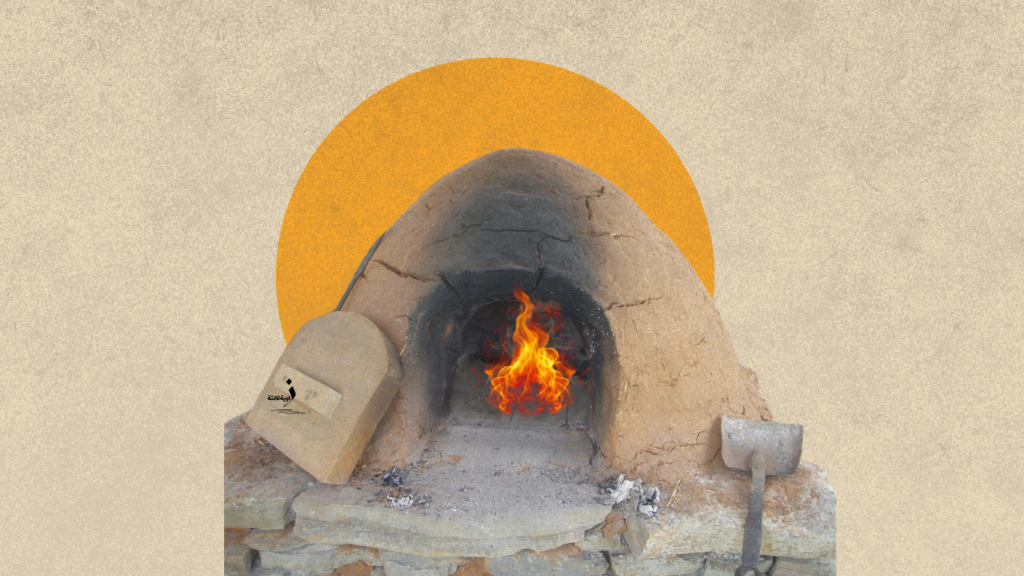
Following Prime Minister Mostafa Madbouly’s decision to raise the price of a butane gas cylinder to EGP 150, individual calls escalated on social media, particularly in the governorates of Upper Egypt, to return to using the “baladi oven” and the “kanoun”, both of which rely on solid fuels such as animal waste, rubbish and corn stalks. Although these solutions may seem an economic alternative amid rising prices, they carry serious environmental and health repercussions; the increasing use of solid fuel worsens air pollution, which raises rates of respiratory diseases and negatively affects quality of life and the environment, at a time when the authorities are seeking to reduce reliance on polluting energy sources.
Prime Minister’s Decree No. 3001 of 2024 on amending the prices of butane cylinders was issued on 18 September, stipulating an increase in the price of a 12.5-kilogram liquefied gas cylinder to EGP 150 when delivered to consumers at distribution depots.
Following this decision, citizens called for a return to using baladi straw ovens and the kanoun, a traditional call that coincides with every increase in gas prices, but this time it spread more widely, given the economic pressures citizens are suffering because of rising prices.
7 Increases in 13 Years
The latest increase in gas cylinder prices is considered the seventh in 13 years, with a total increase of about 2,000%. 2012 saw the first notable increase, as prices rose from three to five pounds (an increase of 100%), and in 2013 prices rose from five to eight pounds, an increase of 60%. Then 2016 saw a new increase, as the cylinder price rose to about EGP 15, an increase of 87.5%. In 2017, the price jumped to EGP 30, while in 2018 prices rose again, bringing the cylinder price to EGP 50, an increase of 66.7%. In March of this year, it reached EGP 100.
The government did not stop at the latest March increase, but went on to impose a new one; based on Egyptian Cabinet Decree No. 3001 of 2024, and after reviewing the Constitution, Decree-Law No. 163 of 1950 on the Compulsory Pricing and Profit Determination Committee and its amendments, and Law No. 20 of 1976 on the Egyptian General Petroleum Corporation, it was decided to raise the prices of butane cylinders.
According to the joint decision of the Cabinet and the Ministry of Petroleum (based on Law No. 88 of 2024, which regulates butane selling prices, in addition to Prime Minister’s Decree No. 917 of 2024, which sets the new prices), the prices of household and commercial butane cylinders rose. The price of a household butane cylinder was raised from EGP 100 to EGP 150 ex-factory, while the price of a commercial butane cylinder was raised from EGP 150 to EGP 200.
The latest increase coincides with a difficult economic situation the Egyptian people are suffering from, amid rising inflation and price increases for various goods and products, which has pushed citizens towards primitive, traditional heritage methods of cooking, and consequently the professions linked to these methods have flourished again, including the profession of building baladi ovens. On the other hand, this, along with rising cylinder prices and the connection of natural gas lines to homes, threatens cylinder sellers, as the more the government succeeds in expanding household natural gas projects, the more the number of butane cylinder users and of workers in that profession declines.
About 1,450 villages in various governorates are planned to benefit from the natural gas connection projects implemented by the petroleum sector since January 2021, as part of the first phase of the Decent Life initiative to develop the villages of rural Egypt, targeting the delivery of gas to the neediest villages and hamlets. According to Rania Al-Mashat, Minister of Planning, Economic Development and International Cooperation, natural gas networks have been connected to about 481 villages under the initiative.
In April 2024, the Ministry of Petroleum announced that gas had been connected to about 14.7 million housing units from the start of the project until the end of last March. The number of beneficiary housing units rose from 6 million in 2014 to 14.2 million units in 2023, providing the service to more than 62 million citizens. More than 60% of these units were connected between 2014 and 2023, the period that saw gas connected to 8 million units at a cost of EGP 40 billion, compared with only 6 million units connected over 34 years between 1980 and 2014.
This development has helped save about 265 million butane cylinders a year, highlighting the enormous economic benefits of the project, according to government data. The household natural gas connection project also covered 11 governorates: (Giza, Alexandria, Ismailia, Qalyubia, Menoufia, Dakahlia, Qena, Gharbia, Aswan, Sohag and Marsa Matrouh).
Rising Prices
The crisis of rising butane cylinder prices poses a threat to workers in this sector, especially cylinder sellers, as citizens’ declining demand for cylinders hurts their sales, threatening their livelihoods and stability.
In this context, Nagi Abdel Fadil, a butane cylinder seller in the village of Deir El-Ganadla in Assiut Governorate, says he and his sons worked in this field for many years, but he recently decided to leave it, specifically after the penultimate increase in butane cylinder prices, adding that he moved to delivering bread to homes, while one of his sons works in a café and the other in a baladi bakery.
He explains that several factors pushed him to stop selling butane cylinders, most notably the decline in demand for the “delivery” service, as people now prefer to go to butane depots themselves to buy cylinders at the base price, avoiding any additional costs amid the high cost of living.
He points out that the availability and variety of private means of transport, such as cars, tricycles and motorcycles, has helped reduce reliance on itinerant cylinder sellers, in addition to some people returning to old traditional means, such as the donkey and the “barouta” cart, to exchange empty cylinders.
Regarding the future of butane cylinder sellers, Nagi stresses that this profession is threatened with extinction over time, given the expansion of natural gas connections to all cities and villages in the near future, explaining that the profit margin from selling butane cylinders is no longer enough to meet basic living needs, such as food, drink and medicine, which have become the biggest worry for ordinary citizens.
Accordingly, he advises butane cylinder sellers to think about finding additional work alongside this profession, or to change their activity entirely, because this profession is about to end.
For his part, Alaa El-Sayed, a butane cylinder seller in the village of El-Mashay’a in Assiut Governorate, explains that he buys the cylinder from the butane depot for EGP 155 and sells it to citizens for EGP 170, making a profit margin of about EGP 15 per cylinder for delivering it to the home.
He adds that he faces great difficulties in his work, starting with waiting for long hours in high temperatures in front of butane depots to exchange empty cylinders, through the great physical effort of unloading the empty cylinders from the tricycle and carrying them into the depot, and ending with loading the full cylinders again.
The cylinder seller points out that being unable to exchange the full quantity hurts the profit margin, which is an additional challenge for him. In times of crisis they may face further difficulties in exchanging cylinders. Besides that, he is forced to roam the streets and different areas every day to sell as many butane cylinders as possible to make the required profit. He also sometimes has disputes with citizens over problems with fitting the cylinders, due to the corrosion of the cylinder openings and their instability on the butane regulator, which leads customers to return them.
Alaa responds to Zawia3’s question about whether he will continue working in this field after the rise in gas cylinder prices. He says he has decided to travel abroad and has already started contacting relatives and friends there to secure a suitable job, although he does not like living away from home, stressing that he will stay in his current job until he finds a new one and completes his travel procedures, as he cannot stop working because he supports a large family and is responsible for providing their necessities.
Returning to the Baladi Oven and the Kanoun
Khaled Abu Asal, a baladi oven worker and builder who lives in the village of El-Ghanayem in Assiut Governorate, tells Zawia3 that he abandoned the profession of making baladi ovens for more than 13 years, turning to trading in used furniture and supplies, but his return to making baladi ovens began in 2018, when a friend asked him to build one.
He explains that the high cost of the butane cylinder has become a heavy financial burden, amid difficult living conditions that cannot bear more increases; so he decided to return to using the baladi oven and the kanoun to cope with rising gas cylinder prices.
He adds: “Demand for baladi ovens was weak at first, as some people began coming to my house to ask me to build baladi ovens, but with every new increase in the price of the butane cylinder, demand gradually increases.”
He points out that after the cylinder price reached EGP 150, he was surprised by a large rise in demand for baladi ovens, which prompted him to order additional quantities of the materials needed to make them, such as red brick blocks, used iron, gravel, sand and cement.
Regarding the cost of building a baladi oven, Khaled explains that building the oven requires a sack of cement and 25 kilos of used iron, in addition to ground red brick, and it needs about 300 bricks to complete its construction. He continues: “Some prefer to use cement and red brick, while others choose green brick and clay. A large oven costs about EGP 850, while a small oven costs EGP 550”, noting that some citizens provide the materials and supplies themselves and only pay EGP 150 for his effort in building it.
The baladi oven maker expects the craft to revive and demand for it to grow for long periods, especially with the continued rise in butane cylinder prices and the worsening cost of living. He points out that this profession is old and the number of people working in it has become very low; some have died, and others have reached old age and are no longer able to work. Nevertheless, he believes that the sons of baladi oven makers may be the most capable of continuing this craft, especially if they devote themselves fully to learning and mastering it.
Speaking to us, Omar El-Keshky, a teacher in the village of El-Aghana in Tama district, Sohag Governorate, stresses that the Egyptian people face an unprecedented crisis due to rising prices, increasing inflation and the declining purchasing power of the Egyptian pound, noting that butane cylinder prices have risen enormously in recent years, rising to EGP 150 at the depot this year, 2024, but reaching him at EGP 180, and explaining that this rise has greatly affected the purchasing power of low- and middle-income citizens, especially with increased consumption in winter.
He explains that this situation has pushed many citizens, especially in villages and the countryside, to look for alternatives to the butane cylinder, such as “qalawih”, made from maize residues, and “qors el-gella”, made from animal dung left in the sun to dry and used as fuel, explaining that these alternatives are a solution in rural areas but are not available to all residents of district towns and cities.
He adds: “My family often resorts to the baladi oven to make bread when the cylinder is empty”, explaining that bread from the baladi oven tastes much better than bread from modern ovens.
He recalls childhood memories from the 1990s, when bread was made in the baladi oven twice a week, and they used to roast ears of maize, known as “qanadil”, in the oven, expressing his expectation that those old customs will return with increased reliance on baladi ovens and the kanoun amid rising butane cylinder prices. He noted that he had published posts on the social media site “Facebook” calling on citizens to return to using the baladi oven and the kanoun as an alternative to the butane cylinder, stressing that this option provides fuel without the need to buy it, as animal and crop waste is abundant in villages and the countryside.
“The people of Upper Egypt have once again returned to using baladi ovens, using animal waste, rubbish and corn stalks as fuel, and giving up the iron ovens that run on gas cylinders.” This is how Aziza Rihan, a housewife living in the village of El-Qatna in Sohag Governorate, summed up the situation after the government announced the increase in the price of a single cylinder to EGP 150.
Rihan explains that she supports a family of eight, and that the large increase in gas cylinder prices pushed her to stop using the iron oven for making bread and cooking and to return to the baladi oven.
She adds: “I now use butane only when necessary, given the difficulty of bearing the costs of the cylinders and the iron oven together, and I asked my husband to bring corn stalks to use as fuel for the baladi oven.”
For her part, Rouhia Gadallah, a housewife from the same village, says she bakes bread twice a week, using one gas cylinder for both times, stressing that she too was forced to return to using baladi ovens to ease the burden of difficult living conditions.
She points out that using the baladi oven has become a convenient option for many citizens thanks to the availability of corn stalks, animal waste and materials that can be used as fuel, such as plastic bags and glass, noting that many families struggle to buy gas cylinders regularly as their prices continue to rise.
Over the years, Upper Egypt has suffered from neglect and marginalisation, which has trapped thousands of families in poverty and the loss of a decent livelihood; Upper Egypt’s residents have faced difficulties in obtaining basic services such as health care, clean water, electricity and natural gas. Although the “Decent Life” initiative succeeded in connecting natural gas to many villages and hamlets, a large number of villages and hamlets are still waiting in line, hoping to benefit from this basic service.
A report issued by the petroleum sector explained that the presidential initiative “Decent Life” aims to connect natural gas to 374 villages in Upper Egypt as a first phase, including extending main lines to 82 villages, in addition to implementing internal and external networks for 292 villages; as of April 2024, gas had actually been connected to 109 villages. The number of housing units connected to natural gas in Upper Egypt since the activity began exceeded two million, in addition to about 8,400 commercial establishments and 186 factories, and gas has also been connected to 176 villages in Upper Egypt so far under the initiative.
A study by the Egyptian Center for Strategic Studies showed that the national rural development project, under the “Decent Life” initiative, aims to develop all Egyptian villages, numbering 4,741, in addition to 30,888 ezbas, kafrs and hamlets in 26 governorates, excluding Cairo Governorate because it contains no villages.
Environmental and Health Effects
On the potential effects of using these alternatives, Hossam Moharam, former adviser to the Minister of Environment, says the effects of using baladi ovens and the kanoun are largely similar to the effects of smoking shisha (hookah) in homes and enclosed or poorly ventilated places, as the smoke produced by these means, whether cigarettes, shisha, baladi ovens or the kanoun, rises and seeps into the indoor environment, affecting air quality.
This effect is not limited to rural homes; it extends to urban homes, offices, companies, shops and restaurants, and gradually and cumulatively affects indoor air quality, which may increase pollutant levels in this environment and harm the health of individuals who are frequently present there, as Hossam Moharam explains to Zawia3.
Asthma is one of the most common chest diseases in Egypt, and the latest statistics indicate that 6.7% of the population suffer from it, while this rate doubles among children to about 15%. The World Health Organization expects the number of people with asthma worldwide to rise to 400 million by 2025, and it is estimated that 70% of patients also suffer from allergies, in addition to concurrent nasal symptoms such as congestion.
These emissions affect the environment and the atmosphere, causing air pollution and increasing the greenhouse gases responsible for global warming. The smoke also contributes to the deterioration of air quality, which affects human health and contributes to an increase in respiratory diseases, in addition to its role in forming acid rain and reducing visibility because of smog.
These means are considered an alternative to open burning, which is more harmful than burning fuel within an organised system containing chimneys designed to prevent combustion products or smoke from leaking into the indoor environment, as these products are tightly directed to the outside air.
The former adviser to the Minister of Environment adds that using baladi ovens and the kanoun may be a form of social adaptation to economic challenges, such as the high cost of the butane cylinder and the rising cost of living. Under these conditions, some resort to these primitive means as a practical solution, despite the environmental risks associated with them.
Despite these challenges, Hossam Moharam offers some recommendations to reduce the negative effects on indoor air quality, including the need to use baladi ovens and the kanoun in open or well-ventilated places to avoid the accumulation of smoke and pollutants, which helps reduce the risk of diseases caused by passive smoking, the same diseases that may affect individuals as a result of continuous exposure to smoke from these traditional means.
Egypt was once again on the list of the world’s 10 worst countries for air pollution in 2023, according to a report by the Swiss company “IQAir”, ranking ninth after countries such as Bangladesh, Pakistan and India. At the city level, Cairo ranked tenth globally. The report monitored air pollution levels in 7,812 cities in 134 countries through 30,000 monitoring stations, measuring “PM 2.5” particles, which are among the most common air pollutants and the most dangerous to human health. The pollution rate in Egypt reached 42.4 micrograms per cubic metre in 2023, compared with 46.5 in 2022.
The World Health Organization recommends that “PM 2.5” air pollution not exceed five micrograms per cubic metre, a level achieved by only seven countries and some specific areas. Exposure to these particles causes major health risks, including heart attacks, asthma and strokes, according to an analysis by the US Environmental Protection Agency.
Economic and Social Repercussions
On the potential economic and social effects of returning to the baladi oven and the kanoun as an alternative to the butane cylinder, Khaled El-Shafei, economic expert and head of the Capital Center for Economic Studies and Research, explains that this rise has pushed citizens, especially in Upper Egypt and the rural areas of Lower Egypt, to return to traditional cooking methods to ease the financial burden on their budgets, explaining that these alternative solutions, which are temporary, reflect citizens’ creativity in dealing with price increases to ensure their daily needs are met at the lowest cost.
He says city residents find it difficult to return to traditional cooking alternatives such as baladi ovens and the kanoun, given the concrete nature of their homes, especially citizens living in rented units.
He adds: “This situation may push some to build again on agricultural land to provide a suitable environment for these alternatives, where those traditional methods can be used. The government must understand these aspects and act to deal with this challenge, to avoid negative effects on Egyptian citizens.”
The head of the Capital Center explains that rising gas cylinder prices may help narrow the gap resulting from importing gas from abroad and reduce reliance on imported oil resources, but this solution will be temporary until the government takes more sustainable measures, pointing to the importance of exploiting domestic reserves in oil wells and intensifying exploration to meet the country’s gas and oil needs, which helps reduce expenditure and preserve foreign currency.
An Egyptian government official revealed that Egypt imported fuel shipments worth an estimated USD 9.3 billion in the first eight months of 2024, compared with USD 8.3 billion in the same period last year, an increase of 12%, explaining that the Egyptian General Petroleum Corporation contracted to import shipments of petroleum products worth USD 1.35 billion last August, compared with USD 945 million in the same month of 2023. According to official data, Egypt’s natural gas consumption increased by about 300 million cubic feet per day, bringing total consumption to 6.1 billion cubic feet during last May. Egypt’s natural gas production fell last April by 710 million cubic metres year on year, while the country’s gas consumption for electricity generation and heating rose. According to recent data from the energy research unit based in Washington, Egypt’s natural gas production in April fell to 4.26 billion cubic metres, compared with about 4.97 billion cubic metres in the same month of the previous year.
Khaled El-Shafei continues: “The authorities are moving towards converting subsidies from in-kind to cash through smart cards; it is important to take all aspects into account to ensure that this shift is able to fully meet citizens’ needs.”
He stresses that this must include ensuring citizens are not forced to resort to traditional alternatives to butane cylinders, so that they are not subjected to further financial and psychological pressure, which requires careful consideration to ensure that subsidies achieve their goal of easing the burden on citizens.
The government is seeking to reduce the fuel subsidy bill, which weighs heavily on the state’s general budget. It meets about 55-58% of the local market’s butane gas needs through imports, equivalent to about seven thousand tonnes per day, while local production reaches about five thousand tonnes per day. Egypt consumes about 4.3 million tonnes of butane gas annually, half of which is produced locally, while the other half is imported.
Consequently, Cairo has relied mainly on importing its butane needs, as imports accounted for about 45-50% of total local demand in 2024, and this share has risen with increasing local consumption and notable population growth. While the government seeks to meet the needs of citizens and the state, discontent is multiplying among citizens after the successive and rapid increases in butane prices, along with all the goods citizens need to get through their day, which has forced them to look for traditional means in an attempt to cut expenses and carry on with life.