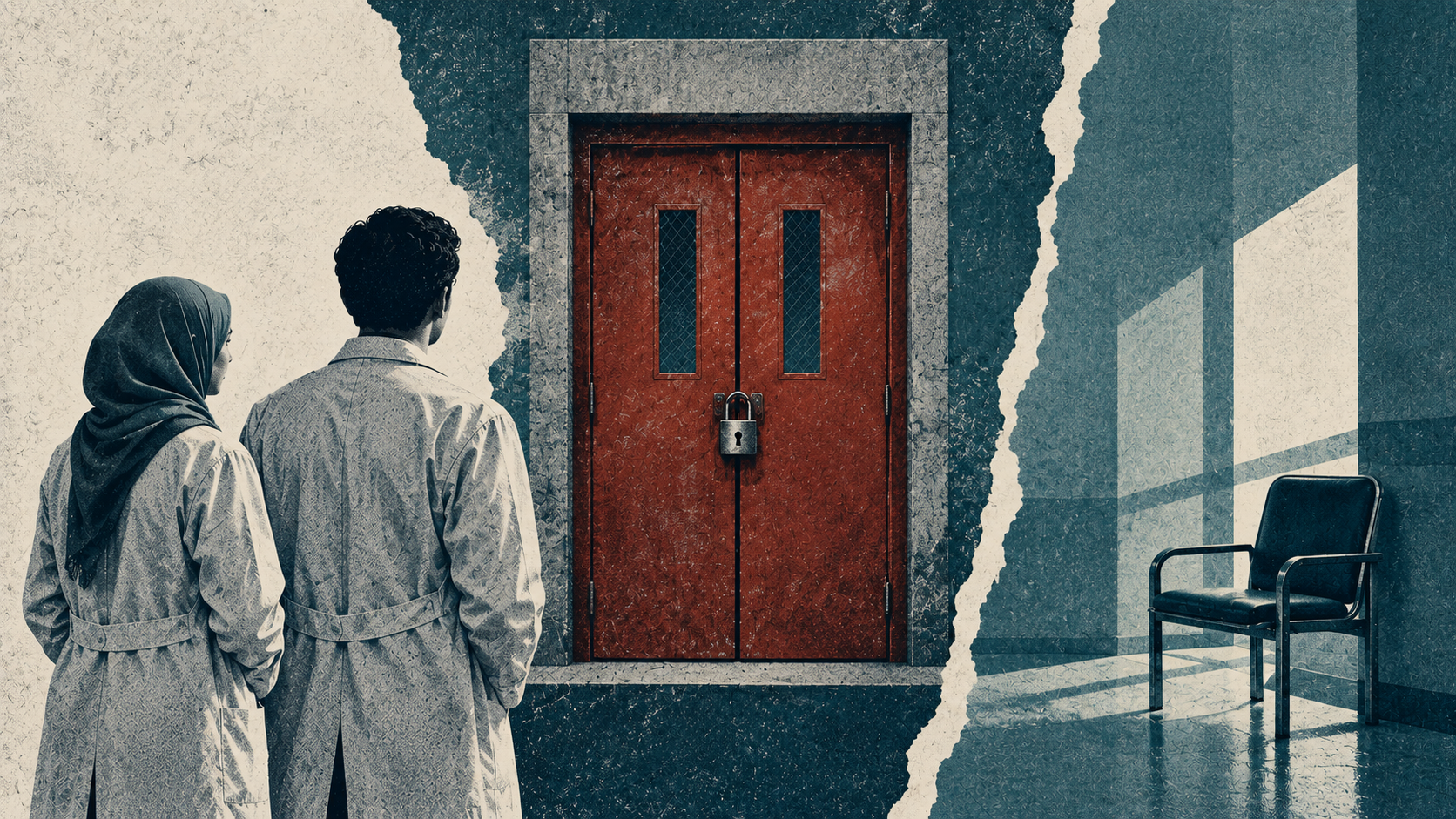

In the thirteenth issue of “Deleted Lines,” we track developments in Egypt’s human rights and political landscape over recent weeks: controversial legislation, parliamentary elections, arrest and arbitrary detention campaigns, and community mobilisation and rights initiatives against violence towards women and in defence of fundamental freedoms. We also examine journalists, workers and refugees amid continuing pressure on civil society and growing restrictions on expression, movement and work, presenting a comprehensive picture of the challenges facing Egypt at the end of 2025.
Amnesty International: NGO Law Strangles Egyptian Civil Society
In a new report, Amnesty International urged Egyptian authorities to repeal severe restrictions imposed by NGO Law No. 149 of 2019, saying they obstruct freedom to form or join associations and threaten the future of civic space.
Titled “Whatever Security Says Goes,” the report said the law grants the state and security sector almost complete control over independent civil society through burdensome regulations, arbitrary security interference and constant monitoring.
Sara Hashash, Amnesty’s deputy regional director for the Middle East and North Africa, said lifting some NGO workers’ asset freezes and travel bans last year was positive but insufficient while a restrictive law continued to enable surveillance and intimidation. She urged a notification system rather than prior licensing, protection from National Security interference and removal of unjustified funding restrictions.
The report said the Social Solidarity Ministry’s central NGO unit imposes advance registration procedures contrary to the Constitution and international standards, enabling rejection or delay of registration, interference in boards and funding restrictions. It documented intimidation by National Security officers through threatening calls, unlawful summonses and coercive questioning.
Financial restrictions included difficulties opening bank accounts, security approvals delayed for months and advance permission for any foreign funding, obstructing activities and salary payments.
Amnesty noted that repression intensified between 2011 and 2021 through criminal investigations, asset freezes, travel bans and arbitrary arrests. Although some aspects receded between 2021 and 2024 and foreign-funding Case 173 closed, the legislative framework still undermines civic freedom.
It urged authorities to bring the law into line with international obligations and enable independent organisations to work freely without retaliation or security interference.
Rights Groups Warn of Deteriorating Human Rights, “Punishment by Proxy” and Targeting Refugees
Twenty-two human rights organisations issued a statement urging decisive action by the African Commission on Human and Peoples’ Rights on Egypt’s continuing deterioration. They said the commission had identified clear African Charter violations but issued no decisions on Egypt since 2015. They criticised the government’s report at the commission’s 85th session in October 2025 as misleading and expressed concern that the country rapporteur’s report relied heavily on official accounts while ignoring widespread violations.
In a separate statement, Refugees Platform in Egypt and international and local organisations warned of increasing “punishment by proxy,” documenting twelve cases during 2024 and 2025 involving raids, arrests and enforced disappearances targeting families of activists and journalists abroad.
Platform director Nour Khalil also described a broad security campaign against refugees and asylum seekers, including mass stops based on skin colour or nationality despite most being registered with UNHCR. Release orders were not implemented, and some were deported to countries where their lives could be endangered, causing family separation. In an online post, he warned that these policies, amid a confused asylum system and inadequate funding and services, would worsen the crisis and drive refugees towards dangerous choices. He called for urgent political intervention.
El-Sisi Ratifies Criminal Procedure Law despite Rights Opposition; Bar Association Prepares a Challenge
President Abdel Fattah El-Sisi ratified the new Criminal Procedure Law No. 174 of 2025 after parliament approved most amendments intended to address previous objections. Published in the Official Gazette in November 2025, it includes controversial Article 105, allowing questioning without a lawyer in some circumstances.
Human rights and political debate continued, particularly over Articles 48 and 105. Critics regarded Article 48 as vague and intrusive on the inviolability of homes, and Article 105 as unconstitutional regarding defence rights and counsel’s presence. The Bar Association announced plans to challenge the law before the Constitutional Court and sought withdrawal of amendments before implementation, citing fundamental infringements of defence rights and constitutional and legal violations.
Bar Association board member Amr El-Khashab told Zawia3 the challenge would implement the syndicate head’s decision. He said the association continued to urge the president to withdraw amendments before they took effect. Its position also drew on the president’s recent acknowledgement of electoral problems, which El-Khashab described as evidence that the president listens to public concerns and revisits decisions involving constitutional and legal violations.
Rights Groups Demand Cancellation of Parliamentary Elections after Documented Violations
Ten human rights organisations accused authorities of stripping the 2025 House of Representatives elections of democratic substance. They demanded cancellation of a process entirely subject to the president’s will, citing lack of independence at the National Election Authority. Their joint statement said chaos and direct presidential intervention exposed a sham process; changes in results would merely redistribute seats among security agencies and government loyalists without genuine democratic representation.
The statement noted cancellation of first-stage voting in nineteen constituencies across seven governorates following presidential instructions to verify violations. The organisations said this did not mark a shift towards fair elections but confirmed continuing political and security control.
They called for cancellation and reform of legal, institutional and political structures to ensure free and fair elections. They said the second stage, held domestically on the preceding Monday and Tuesday and also abroad across thirteen governorates, reflected continued management behind closed doors through security decisions and presidential directives, denying democratic credibility.
Widespread Second-Stage Violations amid Continuing Legal and Political Debate
Voters cast ballots on the preceding Monday and Tuesday in thirteen governorates: Cairo, Qalyubia, Dakahlia, Gharbia, Menoufia, Kafr El-Sheikh, Sharqia, Damietta, Port Said, Ismailia, Suez, South Sinai and North Sinai. There were 1,316 candidates for individual seats and one list, the “National List for Egypt,” comprising pro-government parties and parties operating within permitted political space, including the Egyptian Social Democratic Party, Al-Adl, and Reform and Development.
Jihad Mokhalef, daughter of independent Matariya candidate Atef Mokhalef, documented electoral bribes outside a polling station without intervention by executive officials or nearby police, according to videos shared on social media.
Witnesses said vote buying in Port Said began around two hours after polls opened. Videos and audio received by Zawia3 showed prices in the first constituency starting at EGP 200 and reaching EGP 500 for Homat Watan candidate Tamer El-Hamzawy. Food vouchers were also distributed for independent Mohamed Abu Taleb.
In the second constituency, witnesses from campaigns reported counterfeit EGP 200 notes being distributed to influence voters. This stopped shortly after the forgery was discovered.
Zawia3 documented violations by Conservative Party candidate Islam Qortam and his campaign in Dar El-Salam and El-Basateen, including political money. Qortam allied with pro-government candidates, particularly Mostaqbal Watan, contradicting his opposition party’s stance. Ehab El-Kholy similarly presented himself in Imbaba as the “security candidate,” prompting MP Nashwa El-Deeb to withdraw.
El-Husseiny Mohamed Ibrahim, known as El-Husseiny Abu Qamar, National Front Party secretary in Port Said running as an independent, also distributed money. Zawia3 obtained footage from El-Salam and El-Nahda documenting payments after voters were asked to provide identity cards, seeking support for pro-government parties, particularly Homat Watan and the Republican People’s Party.
Read the full report: The Second Stage Mirrors the First: Cancelling Nineteen Constituencies Changed Nothing
Arrests of Candidates and Relatives Mark the Electoral Landscape
Observers described scenes as absurd despite the National Election Authority’s pledges of integrity and transparency after first-round controversy prompted the president to call on Facebook for review of violations and fair voting, even if full or partial cancellation proved necessary.
A prominent incident was detention of Civil Democratic Movement coordinator and Conservative Party presidential council member Talaat Khalil, a Suez candidate, and his sister at a youth centre, preventing his campaigning. He described this as unlawful, following a discussion with the polling committee chair, who filed a report against him and refused to register his complaint, according to Khalil’s live broadcast. Prosecutors ordered their release before dawn after hours of detention.
Shubra, Rod El-Farag and Bulaq Abu El-Ela candidate Monica Magdy said she and her family faced continuing restrictions during both voting days after documenting alleged political money violations, including cash and food distribution outside stations. Tension peaked when her sister was assaulted inside a school and a campaign representative’s phone was stolen. She, her mother and sister were taken to Shubra Police Station for legal procedures, and her mother and sister were detained for hours at the prosecution.
Recommended reading: What Was Not Officially Announced: Internal Messages Reveal the Election Authority’s Role in the 2025 Chaos
A New “Egypt without Prisoners of Conscience” Campaign
Politicians and human rights defenders announced the Committee for the Defence of Prisoners of Conscience, seeking release of all prisoners of conscience, fair trials and an end to recycling detainees into new cases. Based on freedom of expression guaranteed by the 2014 Constitution, the initiative responds to continuing use of pretrial detention against opinion, publication and scientific research, affecting thousands and their families.
The committee receives detention and disappearance reports, provides legal support, safeguards health and professional rights and publishes periodic reports and media updates. It includes political parties, union forces, human rights defenders, journalists and prisoners’ families.
Security Campaign against Nonreligious People Continues
EIPR documented six new arrests of nonreligious people, atheists and people holding dissenting religious opinions between mid-October and late November, bringing detainees in Case No. 6954 of 2025 to around twenty. Charges include joining an unlawfully established group and violating public religious rites, amid a campaign targeting beliefs and opinions without official recognition.
EIPR condemned denial of exercise and necessary medical care, threatening detainees’ physical and mental health and violating constitutional and international protections of religion, belief and opinion. It demanded immediate release and respect for fundamental rights.
Renewed Calls to Release Lawyer Hoda Abdel Moneim
Local and international human rights organisations demanded immediate release of cassation lawyer and former National Council for Human Rights member Hoda Abdel Moneim, 66, after more than seven years of prosecution and harassment related to documenting violations.
They said she was being tried for a third time on the same allegations of joining and financing a terrorist group in Case No. 800 of 2019 despite completing her previous sentence. Her health deteriorated dangerously over the preceding year after two successive heart attacks, chronic blood clots and severe kidney impairment leaving her left kidney nonfunctional, alongside other chronic illnesses.
Recommended reading: El-Sisi’s Ratification Is Not the End: A New Opportunity to Reject the Criminal Procedure Law
Challenges to Fair Representation of Women in Egypt’s Parliament
The Centre for Egyptian Women’s Legal Assistance and Tadwein for Gender Studies launched the “She Legislates” campaign to strengthen women’s participation in parliamentary decision-making. Their statement noted that representation remained limited after women gained voting and candidacy rights in 1956, fluctuating and declining substantially before a 25% constitutional quota was introduced in 2019, raising representation to 27% in the 2020 parliament.
Tadwein executive director Dr Amal Fahmy said the campaign supports women in elections and highlights social and cultural barriers to individual-seat competition. Despite limited legislative gains, such as personal status and violence bills, achievements fell short of expectations. She stressed sustained cooperation with women MPs and civil society to advance a feminist agenda. Low representation in the Senate and digital violence against candidates reflect continuing patriarchal attitudes in parties and public life, directly affecting Egypt’s global gender rankings.
Twenty-one associations and civil society organisations issued a joint statement on 22 October documenting escalating digital violence against women in campaigns, particularly defamation targeting candidates’ private lives to exclude them from public space. They warned this directly violates privacy protected by Constitution Article 99, threatens political participation and undermines women’s gains.
Gender-Based Violence: Feminist Campaigns and Justice Efforts during the Sixteen Days
Egyptian civil society and official bodies, with the UN, participate in the sixteen-day campaign against gender-based violence from 25 November to 10 December. Sawt, Awn, Genderist, Yaa Al-Melkiya and Kahila launched “Words That Hurt”, addressing roots of hate speech and its role in justifying exclusion and violence. Their statement said hate speech extends beyond insults and bullying to any expression diminishing women’s humanity or questioning their abilities, in proverbs, media and digital spaces.
Human rights and feminist groups issued a joint statement condemning escalating sexual and gender-based violence, including harassment, killings and sexual assaults, alongside digital violence enabled by unclear legislation and weak platform accountability. It described these violations as crimes against humanity, condemned violence in Sudan and urged a unified law against violence towards women and activation of an anti-discrimination commission.
495 Crimes against Women in Six Months
Edraak for Development and Equality Observatory’s semiannual report showed a sharp rise in violence against women and girls in the first half of 2025, recording 495 crimes involving killings, sexual assault, harassment and domestic and digital violence. It documented 156 killings, mostly within families, reflecting domestic violence’s severity and prevalence.
The observatory also recorded 122 sexual harassment incidents and 62 sexual assaults against children, including rape of minors and children with disabilities and incidents involving teachers and relatives, indicating serious institutional and legislative protection gaps. Digital violence, especially online blackmail, increased, alongside suicides linked to chronic domestic violence and economic pressure.
Edraak warned of repeated sexual assaults in major educational institutions, notably rape of children aged four to six at an international school. It said absent safeguarding and staff oversight enable extensive violations, requiring criminal background checks, mandatory training and prohibition of children being alone with adults in unmonitored spaces.
Twelve feminist initiatives also published a joint report on women’s experiences with reporting, investigation and litigation systems, finding legislative gaps, high economic costs, inadequate data and obstacles to proving violations. They called for a unified law against violence, accessible psychological and legal support and effective referrals between state institutions and civil society.
Digital Violence and Justice: “Justice, Not Leniency” and “Justice Has Many Faces”
Eleven human rights and feminist organisations launched “Justice, Not Leniency”, focusing on five Penal Code articles—7, 17, 60, 237 and 274—regarded as pillars of impunity for domestic violence. They said Amani El-Saeed’s killing belonged to a series of crimes ending in reduced sentences through these provisions, exposing a legal philosophy that legitimises family violence.
The New Woman Foundation launched “Justice Has Many Faces,” connecting increasing violence to different forms of justice. Executive director Nevine Ebeid told Zawia3 that legal provisions give judges broad scope for mitigation. The campaign seeks both to expose the causes of lenient rulings and change legislation to reduce impunity. She highlighted Criminal Procedure Code Article 18, permitting reconciliation in cases involving violence against women and exposing survivors to intense pressure to withdraw complaints.
Ebeid said “Justice in Reporting” and “Timely Justice” campaigns revealed structural barriers: thousands of police reports go nowhere unless publicised on social media, court fees are high and electronic platforms ineffective. Some survivors receive messages from within police facilities urging withdrawal, illustrating unequal access to justice.
Recommended reading: Three Oversight Bodies, Zero Protection: The Equation of Workers’ Deaths in Egyptian Factories
Criminal Court Renews Human Rights Lawyer Mohamed El-Baqer’s Terrorism Listing
The Criminal Court’s First Circuit renewed Mohamed El-Baqer’s listing as a terrorist for another five years on 18 November at prosecutors’ request, after expiry of the original 2020 listing by South Cairo’s 28th Circuit chaired by Judge Hassan Farid. El-Baqer submitted a request to the Public Prosecutor on 23 November to remove effects of the previous listing. EIPR condemned the decision, which entails a travel ban, passport cancellation or refusal to issue one, frozen assets, suspension of civic activities and exclusion from public employment or professions including law.
Cartoonist Ashraf Omar Referred to Criminal Court
On Saturday, 22 November 2025, authorities referred cartoonist and translator Ashraf Omar to Criminal Court, around a year and a half after arrest, for allegedly helping a terrorist group achieve its objectives, according to lawyer Khaled Ali. His wife Nada Moghith learned of the referral by chance during a visit to 10th of Ramadan Prison. He had been taken to the New Cairo prosecution on 18 November without prior notice to him or his lawyers.
Arrested in July of the preceding year, Omar was forcibly disappeared for more than two days before appearing before State Security Prosecution, which charged him with publishing false news, misuse of social media and joining an unlawfully established group without clear supporting evidence. Earlier in November, EIPR condemned continued pretrial detention after the Badr security complex’s review chamber extended it by 45 days.
Thirteen UN special rapporteurs expressed grave concern in September, seeking immediate release and describing criminalisation of political expression under national security and counterterrorism pretexts as deeply troubling.
Five Years of Travel Bans and Asset Freezes against Three EIPR Members, without Responses to Appeals
EIPR said five years had passed with travel bans and freezes on assets and property against former directors Mohamed Basheer, Karim Ennarah and Gasser Abdel Razek. These measures followed arrests and questioning over their human rights work in November 2020 on allegations of joining a terrorist group and broadcasting false news. Although released in December 2020 pending Case No. 855 of 2020, the case remains open without further investigations, and punitive restrictions continue without justification.
EIPR submitted grievance No. 364 to the Supreme Judicial Council and a complaint to the Public Prosecutor’s office the preceding year seeking removal of restrictions and dismissal of charges. Neither body responded or notified it of action for a full year.
Recommended reading: What Changed Four Years after the National Human Rights Strategy Was Launched?
Calls to Disclose Poet Abdel Rahman Youssef’s Detention Location
The Egyptian Human Rights Forum renewed its demand for immediate disclosure of Abdel Rahman Youssef Al-Qaradawi’s whereabouts. Arrested in Lebanon on 28 December 2024 and forcibly transferred to the UAE on 8 January 2025, he had been disappeared for more than three hundred days. The forum warned that incommunicado detention exposes him to torture and cruel treatment, held Lebanon responsible for unlawful transfer and the UAE for his safety, and demanded immediate contact with family and counsel.
Al-Bawaba News Sit-in for the Minimum Wage
Journalists at Al-Bawaba News announced a sit-in protesting editor-in-chief Abdel Rahim Ali’s decision to close and liquidate the organisation after demands for the minimum wage. They regarded closure as evasion of accumulated financial entitlements and an example of employer practices to avoid obligations. They said such actions threaten job security and distort the labour market, particularly without a provision preventing similar activity from reopening before old entitlements are paid.
The Egyptian Commission expressed full solidarity, stressing respect for journalists’ financial and legal rights and lawful management conduct. It sought prevention of similar practices and any new business activity before previous employee entitlements are settled, safeguarding economic justice and employers’ legal compliance.
Journalist Saad Khattab’s Health Deteriorates in Detention
Journalist Mohamed Saad Khattab’s health deteriorated sharply, preventing attendance at his last two detention-renewal hearings through severe exhaustion. Diabetes has caused tooth loss and inability to eat, alongside chronic heart, blood pressure and immune-system illnesses. Family and counsel’s request for dental treatment at his own expense remains unanswered, according to the Egyptian Commission for Rights and Freedoms.
Khattab, 73, has been in pretrial detention since August 2023 in State Security Case No. 2063 of 2023, exceeding the legal maximum. Charges include joining a terrorist group, publishing false news and misuse of social media.
Arab and Polvara Workers Strike; Warnings against Ignoring Rights
The Egyptian Commission for Rights and Freedoms issued a statement on the health insurance crisis and strike at Alexandria’s Arab and Polvara Spinning and Weaving Company. Workers began a limited strike after over forty days without effective management action to restore medical services, despite the board chair’s promises of a resolution before year-end. Measures taken were incomplete, providing only one blister pack of each medicine. Management also failed to implement the EGP 7,000 minimum wage and legal and internationally recognised wage progression, amid deteriorating conditions and neglect of healthcare and social welfare. The workforce has fallen to around 1,200 amid attempts at gradual liquidation under claims of financial distress.
The commission urged immediate restoration of medical services and settlement of health insurance debts, asked the National Organization for Social Insurance to consider humanitarian and social dimensions, and called on the Labour Ministry to ensure the new minimum wage and career progression and protect independent organising without pressure.
Political and Union Solidarity with Water Workers Seeking the Minimum Wage
Political parties, union committees and human rights organisations issued a joint statement supporting water and sanitation workers in Cairo, Giza, Sharqia, Beni Suef and Minya, who protested for the minimum wage, allowances overdue since 2016 and permanent status for temporary workers.
The statement urged the Housing Ministry to address demands urgently and the Labour Ministry to review compliance with wage requirements and employee rights. Political parties and human rights and union bodies signed it.
Mefco Helwan Management Ignores Workers’ Rights and Blocks the Minimum Wage
The Egyptian Commission for Rights and Freedoms condemned recurring violations against Mefco Helwan furniture workers, particularly refusal to implement the presidential minimum wage decision binding on private-sector employers. Around four hundred workers filed Labour Office complaints that month, but procedures were delayed, with a court hearing set after 66 days. Workers continued to face threats, questioning and wage deductions amid difficult living conditions and pay insufficient for basic subsistence despite long experience. The commission affirmed full support for their legitimate demands and urged immediate ministry intervention, payment of entitlements, review and activation of the 2011 collective agreement, investigation of occupational safety violations and injuries, and expedited labour justice.