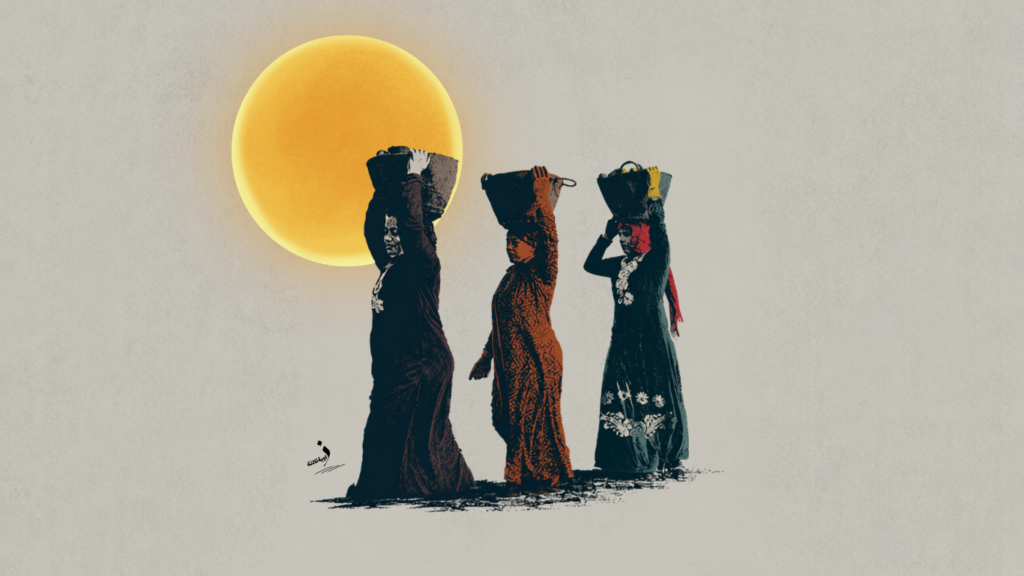

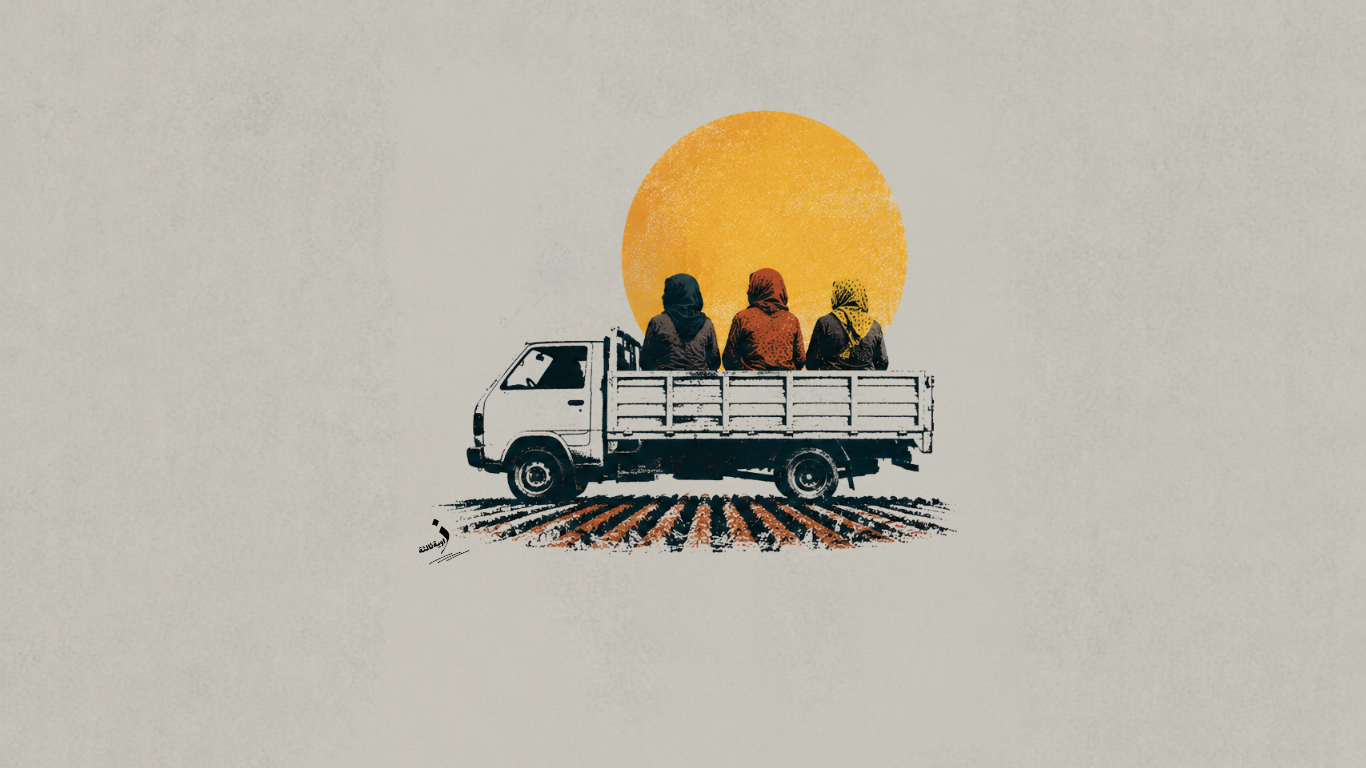
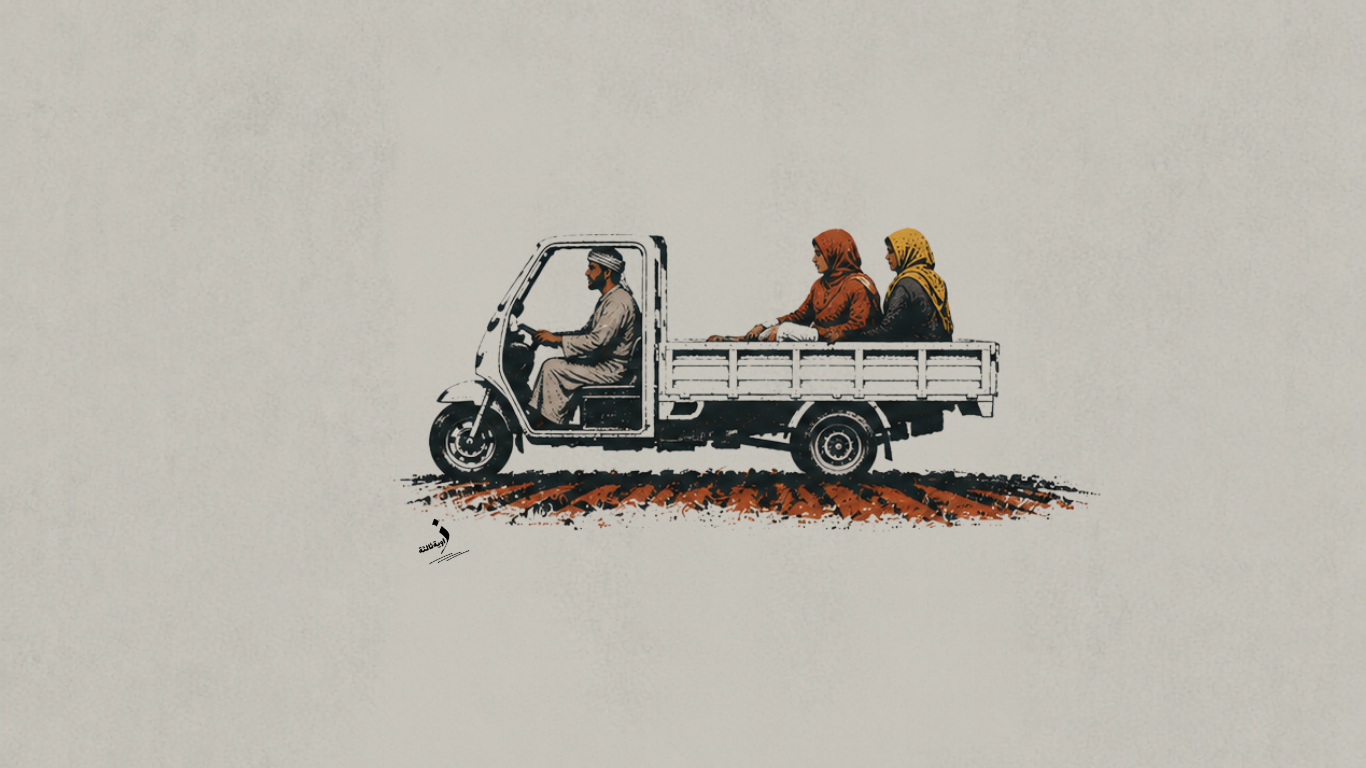
At five at dawn every day, Aziza and Soad wake up, and before sunrise they leave with dozens of women from their village in pick-up trucks or “tricycles” heading to the fields, where they spend long hours harvesting crops, removing weeds or sorting vegetables under direct sunlight while temperatures exceed 45 degrees Celsius at the peak of midday, for more than 10 hours.
Aziza El-Tobal (35 years old), from Sohag Governorate in southern Egypt, says she is used to the heat of the sun, having inherited work on agricultural land from her family, but she describes the temperatures over the past three years as “a blazing fire” that no human being can bear. She also speaks of herself, her sister and their colleagues suffering repeated bouts of ill health because of direct exposure to the sun throughout the day, yet at the same time they cannot give up the work because it is their only source of livelihood.
As for Soad Hussein (25 years old), she feels a great injustice. She says that what she earns daily does not exceed two hundred pounds for more than 10 hours of work under the scorching sun, without rest. She says:” We eat while working; they do not allow us to rest or even to go to the toilet. All the employer cares about is getting all the work done in one day so that he does not have to pay the wage for a new day, while we are not treated as human beings”.
The agricultural sector is one of the largest employers of labour in Egypt, absorbing about a fifth of the employed and contributing nearly 11–12% of gross domestic product. According to the latest labour market data, about 6.57 million people work in the agricultural sector, equivalent to 20.5% of all employed people in Egypt, so that it remains the second-largest employer of labour after the services sector, amid the decline in its economic contribution compared with previous decades. This reflects a striking paradox: agriculture employs one in every five workers but produces only about a tenth of the economy, which reflects low productivity and high rates of low-paid work within this sector.
Women form a fundamental pillar of this sector, yet their contribution appears smaller than its true size in official statistics. The National Climate Change Adaptation Plan indicates that about 45% of working women in Egypt work in agricultural activities, while most of them are concentrated in the informal economy.
The document explains that 94% of agricultural labour relies on informal employment, while women make up no more than 20% of those formally employed in agriculture, which means that most women workers do jobs that provide them with no contracts, social protection or health insurance.
In addition, the document indicates that women carry out about 94% of manual harvesting in Upper Egypt and about 67% of it in Lower Egypt, especially for crops that require intensive physical effort such as wheat, sugar cane and fodder.
The absence of protection is not limited to the agricultural sector alone: data from the International Labour Organization and the Central Agency for Public Mobilisation and Statistics, which were reviewed by the Organisation for Economic Co-operation and Development (OECD), reveal that 57% of working women in Egypt work in the informal economy, while the International Labour Organization estimates the share at about 62%.
This means that millions of women work outside the systems of social insurance, work-injury insurance and job-linked health care, conditions in which any stoppage of work because of illness, pregnancy or heatwaves means an immediate loss of income.
In addition, field experiences carried out by the International Labour Organization in agricultural production chains, such as the jasmine sector in Gharbia Governorate, indicate that agricultural work relies heavily on women and children in unstable, low-paid jobs, with clear weakness in social protection and income levels, a pattern that is not limited to this sector alone but reflects broad features of the agricultural labour market
A longer summer… and multiplying risks in the fields
Over the past two decades, Egypt has recorded a gradual rise in temperatures and an increase in the number of extremely hot days, along with the recurrence of heatwaves for longer periods, especially in July and August, the same period that sees the peak of a number of agricultural seasons.
The National Climate Change Adaptation Plan indicates that Egypt is among the Middle East and North Africa countries most exposed to rising temperatures, and climate scenarios forecast an increase in average temperatures of between 1.5 and 2 degrees Celsius by mid-century if current emission rates continue, which means an increase in the number of days on which temperatures exceed 40 degrees Celsius, especially in the governorates of Upper Egypt and the Delta.
During the summer of 2023, several Egyptian governorates recorded temperatures approaching 46 degrees Celsius, while temperatures in some areas of southern Upper Egypt exceeded 47 degrees. Heatwaves continued during the summers of 2024 and 2025, with repeated warnings from the Egyptian Meteorological Authority because of persistent extremely hot air masses and high humidity levels, which raised what is known as the “felt temperature” to levels exceeding the temperatures actually recorded.
Aswan, Luxor, Qena, Sohag and New Valley top the list of the hottest governorates during the summers of 2024 and 2025, while the governorates of Minya, Beni Suef and Fayoum recorded temperatures ranging between 42 and 45 degrees Celsius during a number of heatwaves. On some days in the summer of 2026, temperatures touched the 44 degrees Celsius mark in large parts of Upper Egypt, with felt temperatures rising to higher levels because of humidity, especially in the Delta governorates and Greater Cairo.
The Meteorological Authority stresses that the number of extremely hot days is increasing, reflecting the effects of climate change on Egypt and increasing the risks facing those who work outdoors, foremost among them women agricultural workers.
However, these figures do not mean the same thing for everyone. In cities, many people may be able to shelter inside homes or air-conditioned workplaces, while women agricultural workers spend their working hours in open fields, where rising temperatures turn into a direct occupational hazard, not merely a seasonal nuisance.
The International Labour Organization indicates that continuous exposure to working at high temperatures leads to reduced physical capacity and increases the likelihood of heat stress; it also raises the risk of occupational accidents as a result of reduced concentration and exhaustion. The organisation estimates that heat stress will cause, globally, a loss equivalent to 80 million full-time jobs by 2030, and the agricultural sector will be among the hardest hit because it depends on outdoor work.
In this context, Soad says that her mother, aged 60, was stung by a scorpion last year while harvesting tomatoes on one of the farms in the villages of El-Balyana city. The women workers found no means of first aid or medical care on the farm, so they resorted to what she describes as “primitive methods” in an attempt to save her mother: they tied her leg above the site of the sting, then made a small cut in the foot in an attempt to draw out the blood, believing that it carried the poison, before transporting her on a “tricycle” to the nearest health unit, which was about an hour away from the farm, located close to the mountain.
She adds that the farm lies in a desert area with a desert hinterland, which makes the appearance of scorpions and snakes a frequent occurrence, noting that doctors later told them that the scorpion that stung her mother was of a highly venomous kind and that her survival was a miracle. She says: “Divine providence, because they told us the venom was the deadly kind.”
This incident is not an exception, according to Soad, who stresses that many women workers frequently suffer complications from working under the sun for long hours, including heat stress and severe exhaustion, as well as stomach disorders and cases of dizziness and fainting, in the absence of resting places or first-aid means in the fields, which turns any injury or illness into a long journey in search of the nearest health unit.
The work environment and violations in the field
Mai Saleh, director of the Women, Work and Economic Rights Programme at the New Woman Foundation, believes that women agricultural workers face an interlocking system of risks that begins when they leave their homes and does not end when the working day ends, in the absence of minimum occupational safety and health standards in the agricultural sector.
She tells Zawia3 that women workers are exposed to multiple occupational hazards, foremost among them exposure to pesticides and working long hours at high temperatures, as well as a shortage of drinking water and of the water needed for personal hygiene during the working day, and the absence of toilets and changing areas in the fields. She adds that the nature of the work itself involves other risks, such as the use of knives and harvesting machines, as well as exposure to snake and insect bites, along with the risks of unsafe transport in overcrowded vehicles that carry women workers between villages and farms on unpaved roads.
She points out that “Observatory 190”, which monitors the conditions of irregular labour, has documented in recent years the effects of rising temperatures and climate change on workers, whether those working in the streets or in the agricultural sector, stressing that women and girls working in agriculture are among the groups most exposed to these risks.
She also notes the spread of child labour in agriculture, explaining that the observatory has documented the work of children aged from six and seven years, while a girl aged 15 is considered among the oldest at some work sites, attributing this to employers’ reliance on children as low-cost labour that enjoys no rights.
Mai cites the case of a girl aged 15 who worked harvesting tomatoes and did not have sufficient drinking water or food; she and her colleagues ate tomatoes straight from the field without washing them, even though they contained pesticide residues and high levels of salts. She says the girl developed acute health problems in the mouth, as well as kidney damage as a result of continuous exposure to pesticides and salts, considering that this case is only one example of dozens of cases to which women and girls working in agriculture are exposed in the absence of protection.
For her part, human rights lawyer and chair of the board of trustees of the Cairo Foundation for Development and Law, Entessar El-Saeed, says that women agricultural workers are among the groups most exposed to the risks of heatwaves, given the nature of their work in open fields for long hours, explaining that rising temperatures expose them to heat stress, sunstroke, dehydration and low blood pressure and may cause fainting, as well as increasing the likelihood of kidney disease and kidney stones as a result of fluid loss and not getting sufficient quantities of drinking water.
Heat stress is known as one of the most dangerous health effects of rising temperatures. It occurs when the body is unable to get rid of excess heat because of hot weather, high humidity or excessive physical exertion, which leads to a disruption of the internal heat balance. Its symptoms appear as severe fatigue, headache, dizziness and muscle cramps as a result of the body’s loss of salts and fluids, and it may escalate into sunstroke, which can lead to death.
The danger multiplies in open spaces and arduous workplaces such as construction sites, fields and factories, where many are forced to work in inhumane conditions. The elderly, children and people with chronic diseases are among the groups most vulnerable. With the escalation of extreme climate phenomena, heat stress is no longer only a health challenge; it has turned into a social and economic crisis that requires urgent legislative intervention, especially in countries such as Egypt, which suffers from a fragile system of climate protection in workplaces.
Entessar tells Zawia3 that the risks multiply for pregnant women who continue to work in the same conditions, pointing out that women workers are at the same time exposed to the pesticides used to control agricultural pests, substances that may react with high temperatures, increasing their health effects and multiplying the risks facing women at work.
The projections show a possible rise in cases of “heat-related illnesses” by hundreds of cases a year by 2030, and a 300% rise in the death rate by 2100 if global warming continues at a rate of 3 degrees Celsius. Other estimates indicate that climate change and worsening heat stress could lead to 2,000 to 5,000 additional deaths a year in Egypt, along with economic losses ranging between EGP 20 and 48 billion a year.
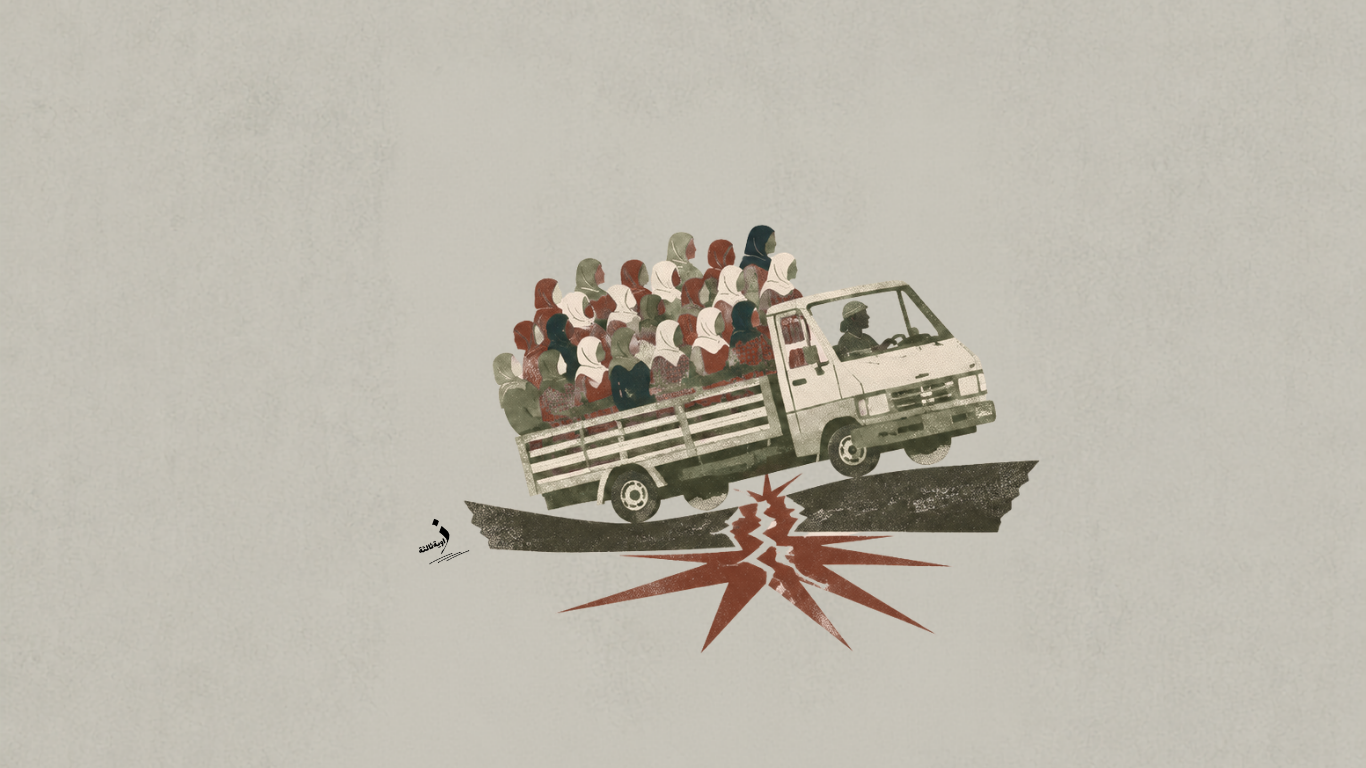
The risks do not stop at rising temperatures alone. A review by Zawia3 of published accidents and official data issued by the Ministry of Labour indicates the recurrence of agricultural worker transport accidents over the past three years, especially in the governorates of Beheira, Menoufia and Minya, while the count documented at least seven major accidents between March 2024 and May 2026, resulting in 23 deaths and no fewer than 95 injuries, most of them rollovers or collisions of small and half-ton pick-up trucks used to transport male and female workers to the farms.
Where is the legislation?
Mai Saleh holds agricultural landowners responsible for a large part of these conditions, considering that occupational safety and health are not among their priorities, which calls for firmer government intervention. She says: “It is not logical for labour laws and national strategies to address only the owners of factories and companies while the agricultural sector is excluded, even though the landowner is also an employer, and those who work for him are wage workers who have the right to a safe working environment.”
She calls for landowners to be obliged to provide the minimum of basic services at work sites, including changing areas, clean water for drinking and personal hygiene, and suitable toilets. She points out that many women workers are even denied the use of the toilet except a limited number of times during the working day, because reaching it takes time that is deducted from the daily wage, which multiplies the suffering of women, especially those with chronic diseases such as diabetes, or pregnant women who need to use toilets frequently.
She also stresses that dealing with heat stress is not limited to starting work in the early hours of the morning, as some landowners have women work from six in the morning, forcing many to leave their homes at three or four at dawn to reach the fields. However, this does not mean shorter working hours; rather, it aims to exploit the first hours of the day before the sun’s heat intensifies, and work then continues for long hours afterwards.
She believes that real protection requires providing shaded resting places, allowing regular breaks, and enabling women workers to drink water, wash their faces and use toilets during the working day. She criticises the conditions in which agricultural labour is transported, stressing that contractors and landowners treat male and female workers as a means of production and not as human beings with rights.
She says: “A vehicle intended for twenty people must not be loaded with sixty or seventy workers who stand the whole way under the sun, which increases the likelihood of vehicles overturning and of accidents turning into mass disasters.” She believes that the recurrence of transport accidents reflects the absence of oversight and of the enforcement of safety standards.
Mai calls for speeding up the issuance of the National Strategy for Occupational Safety and Health, provided that it clearly includes workers in the agricultural sector, as one of the work sectors most exposed to risks, stressing the need to extend the umbrella of health and social insurance to women and men agricultural workers. She explains that the Social Insurance Law theoretically allows agricultural labour to join, but implementation faces obstacles, as many workers hesitate to subscribe for fear of losing the “Takaful and Karama” pension, which calls for a mechanism that allows support programmes and insurance protection to be combined, instead of workers being forced to choose between them.
The director of the Women, Work and Economic Rights Programme stresses that part of the solution lies in enabling unions or bodies representing smallholder farmers and agricultural workers to negotiate with landowners on minimum working conditions, foremost among them working hours during periods of extreme heat.
She believes that if the working day extends to eight hours, it is unacceptable for work to continue for the same length of time during July and August, calling for working hours to be reduced by at least two hours on the hottest days to limit exposure to sunstroke, fainting, heat stress, dehydration, high blood pressure and complications that may extend to damage to kidney function.
She stresses the need to subject agricultural landowners to legal accountability, like other employers, explaining that the Labour Law obliges owners of establishments to provide protection from biological, chemical and physical hazards, and therefore the application of these obligations must extend to the agricultural sector, with fines and penalties imposed on violators, ensuring that employers bear their legal responsibility for protecting their workers.
In the same context, Entessar El-Saeed stresses that the Egyptian Labour Law recognised the risks arising from high temperatures as one of the hazards of the work environment requiring preventive measures, but the climate extremes Egypt has witnessed in recent years impose, as she put it, the need to issue executive regulations or a specialised national guide to protect men and women working outdoors, foremost among them in agriculture.
She considers that these regulations should include clear rules regulating working hours during heatwaves and obliging employers to provide drinking water, shaded resting places and regular breaks, along with establishing mechanisms for rapid response to cases of heat stress and sunstroke at work sites.
Entessar calls for the adoption of an integrated national plan to protect male and female workers from the effects of heatwaves, including developing early warning systems ahead of heatwaves, adjusting working hours during the summer, providing fixed drinking-water points in the fields, and tightening oversight of employers to ensure their compliance with safety procedures, along with integrating agricultural labour into the social protection system.
She calls on the Ministry of Health to intensify awareness campaigns in agricultural areas and to launch mobile medical teams to deal with field workers and train them to recognise the symptoms of heat stress and sunstroke and to follow protocols for dealing with them, which would help reduce the complications and deaths linked to high temperatures.
She notes that a number of countries have already taken similar measures, citing the experiences of Spain and Italy, which halted some agricultural activities during peak hours in heatwaves and imposed restrictions on work when temperatures exceed certain limits, with the aim of reducing the health risks to which workers are exposed.
Serious health effects
Occupational health doctors warn that prolonged exposure to high temperatures may lead to a series of health complications, beginning with heat stress, passing through acute dehydration and salt imbalance, and ending with sunstroke, which may cause loss of consciousness or death if there is no rapid medical intervention.
Dr Tamer Sharaky, a consultant in occupational safety and security, says that heat stress represents a direct threat that may lead to fatal complications such as sunstroke, explaining that this danger occurs when the body’s internal temperature rises as a result of losing large amounts of water and salts through excessive sweating, which prevents the body from performing its vital functions.
He tells Zawia3 that the danger lies in the fact that the condition develops in three stages: it begins with heat cramps resulting from an imbalance of salts, then develops into heat exhaustion, accompanied by severe fatigue, dizziness and heavy sweating, and ends with sunstroke, which may lead to loss of consciousness and the failure of vital organs in the body, stressing that ignoring the early symptoms deprives the affected person of the chance of timely intervention and multiplies the likelihood of death.
Sharaky points out that the initial symptoms usually begin with fatigue, headache, nausea and heavy sweating, along with a rapid heartbeat and a feeling of dizziness, before later developing into cramps and disturbed consciousness. He considers the loss of sweating combined with a rise in internal body temperature to be a serious sign that the affected person has entered the sunstroke stage, which requires urgent medical intervention.
He adds that the direct cause of these cases is prolonged exposure to high temperatures and humidity, especially when doing strenuous physical activity in an open environment. Wearing heavy or unsuitable clothing also multiplies the severity of the risk. He warns that some.
Several countries have begun reviewing occupational safety rules to confront this danger. Countries such as Spain, Greece and Italy have adopted restrictions on outdoor work during severe heatwaves, while Gulf states such as Saudi Arabia and the UAE have expanded the application of bans on work at midday during the summer months. In Egypt, however, there are still no announced protocols obliging agricultural employers to adjust or suspend working hours when temperatures exceed certain limits, even though climate change has become a daily reality imposing itself on millions of workers in the fields.
These risks are multiplied by the nature of agricultural work itself. Women workers do not face the heat alone; they work at tasks that require continuous physical effort, such as bending for hours during the harvest, carrying crates or gathering crops, activities that increase the body’s production of heat and reduce its ability to get rid of it, especially with a lack of breaks or the absence of shaded places.
Recent studies link working in hot environments with higher rates of chronic kidney disease, as a result of repeated fluid loss, as well as increased risks of cardiovascular disease and negative effects on pregnant women, such as a higher likelihood of premature birth and low birth weight.
The effects of heat are not limited to health alone but extend to the nature of the work itself: the higher the temperatures, the lower the capacity to work long hours, while most women workers cannot reduce their working hours because their wages are calculated by the day or by the quantity produced. Thus the trade-off between protecting health and preserving income becomes a daily choice imposed by working conditions, not one made available by public policy.
In conclusion, the crisis of women agricultural workers in Egypt remains a glaring example of absent climate and social justice: while heatwaves escalate and climate change worsens year after year, women continue to bear the largest share of this physical and health burden in silence, under the weight of need and the absence of official protection.