

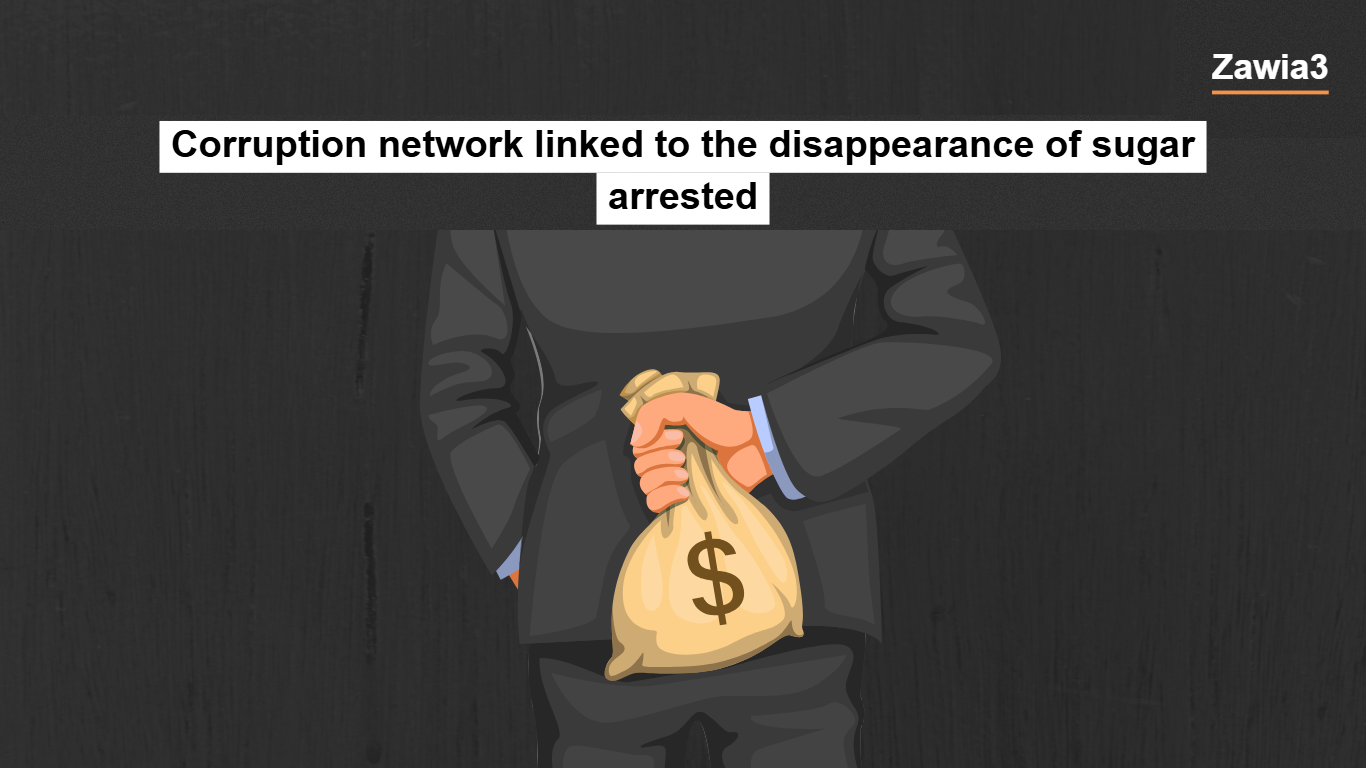
The Administrative Control Authority arrested a number of officials at the Ministry of Supply and Internal Trade and at public and private companies as part of a major corruption case related to the disappearance of sugar and its subsequent return to local markets after its prices rose to unprecedented levels; the price of a kilo on home delivery apps and in the local market reached EGP 50 ($1.62), compared with EGP 12 to 15 ($0.39 to $0.48) last year.
The Egyptian government accuses those arrested of manipulating prices and withholding subsidised goods. The detentions included the Minister of Supply’s adviser for the control and distribution sector, in addition to 9 others working at the Ministry of Supply and at private companies linked to work with the ministry, among them officials of sugar companies and mills.
The 10 officials were detained on the basis of investigations that led to audio and video recordings and to the defendants receiving large bribes. In a statement on the programme “Ala Mas’ouliyati” on Sada El-Balad channel, TV presenter Ahmed Moussa confirmed that the Administrative Control Authority had arrested the officials, and explained that the arrested adviser was responsible for follow-up, control and distribution within the ministry.
900 tonnes of sugar were confiscated at a packaging factory in one of the governorates. In a related context, the Public Prosecution issued a decision to hand over to the Ministry of Supply 590 tonnes of sugar seized during recent campaigns, which had been destined for sale on the black market.
TV presenter Ahmed Moussa said that the Minister of Supply is not involved in this case, and that the arrested adviser has been working at the Ministry of Supply since 2015.
Although the security authorities did not disclose the identity of the Minister of Supply’s adviser for control and distribution who was arrested, merely giving the initials of his name, “A.M.”, social media users revealed his identity and position in the ministry. According to what activists published, the defendant is named Ahmed Mahdi and has held the post for 7 years, after Minister of Supply and Internal Trade Mohamed Ali Moselhy appointed him on 19 January 2017. His appointment was driven by the desire to activate work in all related sectors and improve services, so he was appointed to the post of the Minister of Supply’s adviser for control and distribution, where his task was to ensure the availability of goods and their fair distribution to supply directorates, review the set prices and monitor their correct application.
On 16 November, Counsellor Mohamed Shawky, the Public Prosecutor, issued the first decision to detain sugar traders on the black market. A statement by the Public Prosecution said it had received a report from the General Administration of Supply and Internal Trade Police that a food company, authorised through the commodity exchange to dispense subsidised sugar and put it into circulation in the markets, had withheld tonnes of the commodity and sold them on the black market above their fixed price to make huge profits.
Monopolists Arrested
Following the incident mentioned above, a number of defendants involved in committing this crime were arrested, and 65 tonnes of subsidised sugar were found in their possession. The Public Prosecution opened its investigations into the case and took legal measures, including detaining 3 of the defendants and ordering the arrest and summoning of others. The prosecution also ordered the seized sugar to be sold at the official price.
Investigations and coordination between the Administrative Control Authority and the Ministry of Supply resulted in the detection of violations at a packaging factory in one of the governorates. These violations include selling about 900 tonnes of state-allocated sugar at prices above the set value, tampering with the weight of packages, and failing to print the price on a quantity of about 5 tonnes. These quantities were confiscated, and the related legal procedures are now being completed.
In a related context, the investigations revealed that some mill owners in another governorate had sold quantities of subsidised flour for their personal accounts, manipulated the recording of the quantities produced and lowered the quality of the product in collusion with some officials in the supply directorate. The authority referred the case to the Public Prosecution, which ordered the arrest of the defendants and their referral to the Supreme State Security Prosecution. The necessary investigation procedures were taken, and the prosecution decided to detain the defendants pending investigation.

Stock exchange indices fell collectively at the close of trading today, affected by local and Arab investors’ rush to sell shares. Market capitalisation lost about EGP 27.4 billion, closing at EGP 1.672 trillion, amid trading that exceeded EGP 5.3 billion.

Telecom Egypt announced that internet service had fully returned to normal across the republic, and affirmed that there is no truth to what was circulated on some social media sites about a cut in one of the submarine cables.
In a press statement on Wednesday, the company apologised to customers for this sudden outage, noting that it will compensate affected and unaffected customers alike with an extra 10 GB on all packages.
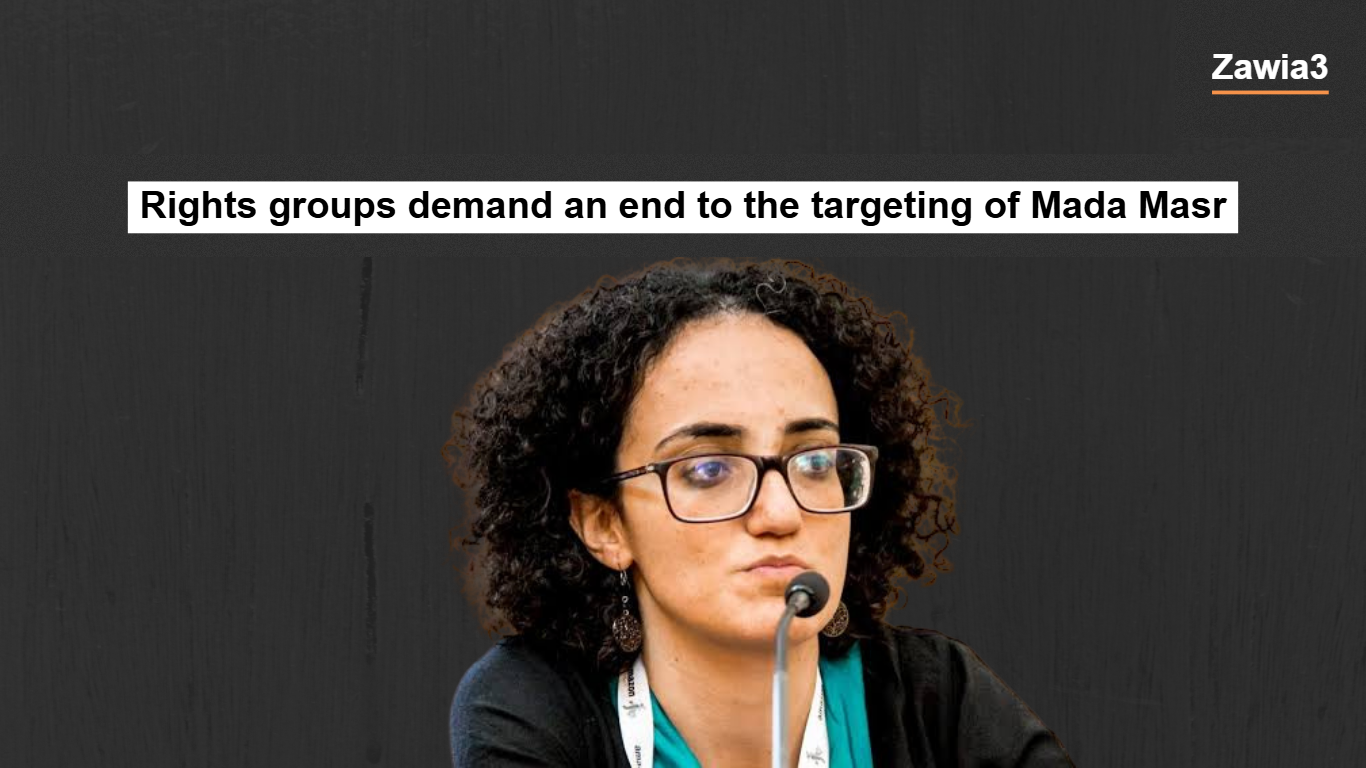
Egyptian rights organisations condemned the Cairo Appeals Prosecution’s summoning of Mada Masr founder and editor-in-chief Lina Attalah for questioning on 6 December, more than a month after the Supreme Council for Media Regulation’s decision to block the website for six months and refer those responsible for it to the Public Prosecution, on the grounds of “practising media activity without obtaining a licence, publishing false news without verifying its sources, misleading the public and harming the requirements of national security”, according to the council’s statement.
The organisations consider that summoning Lina Attalah for questioning is a new link in a series of Egyptian authorities’ targeting and pursuit of journalists and bloggers merely for doing their journalistic work and expressing their opinions, as well as the Egyptian authorities’ desire to tighten control over traditional and electronic media platforms and to block or confiscate them.
The Cairo Appeals Prosecution had summoned Lina Attalah on 28 November to appear for questioning the next day, while Attalah’s defence team has not been able to learn the nature of the charge to this moment. Later, the prosecution postponed the questioning to tomorrow at the request of the defence team. The Supreme Council for Media Regulation had begun investigating the website in mid-October over the publication of a report on the possibility of Palestinian civilians being displaced by the Israeli occupation into Egyptian territory.
The organisations signing the statement said that targeting Mada Masr and its staff is the latest step in the Egyptian authorities’ approach of pursuing and detaining journalists, which has led to Egypt’s decline to 166th out of 180 countries in the global press freedom ranking, as well as its inclusion among the countries that are the world’s biggest jailers of journalists according to the Reporters Without Borders World Press Freedom Index, because of repeated arrests of male and female journalists and security raids on the offices of press and media platforms. For example, journalists Hala Fahmy and Safaa El-Korbeigy have been held in pretrial detention since mid-2022 in case No. 441 of 2022 (Supreme State Security), on charges of spreading false news, because of their support for workers at the Radio and Television Building (Maspero), in addition to the continued detention of other journalists and bloggers.
The signatory rights organisations called on the Public Prosecutor to drop all charges against Mada Masr’s editor-in-chief, immediately release journalists, bloggers and content creators held in pretrial detention for years because of their journalistic work, lift the illegal blocking of independent news websites, and allow all media to work freely without harassment.
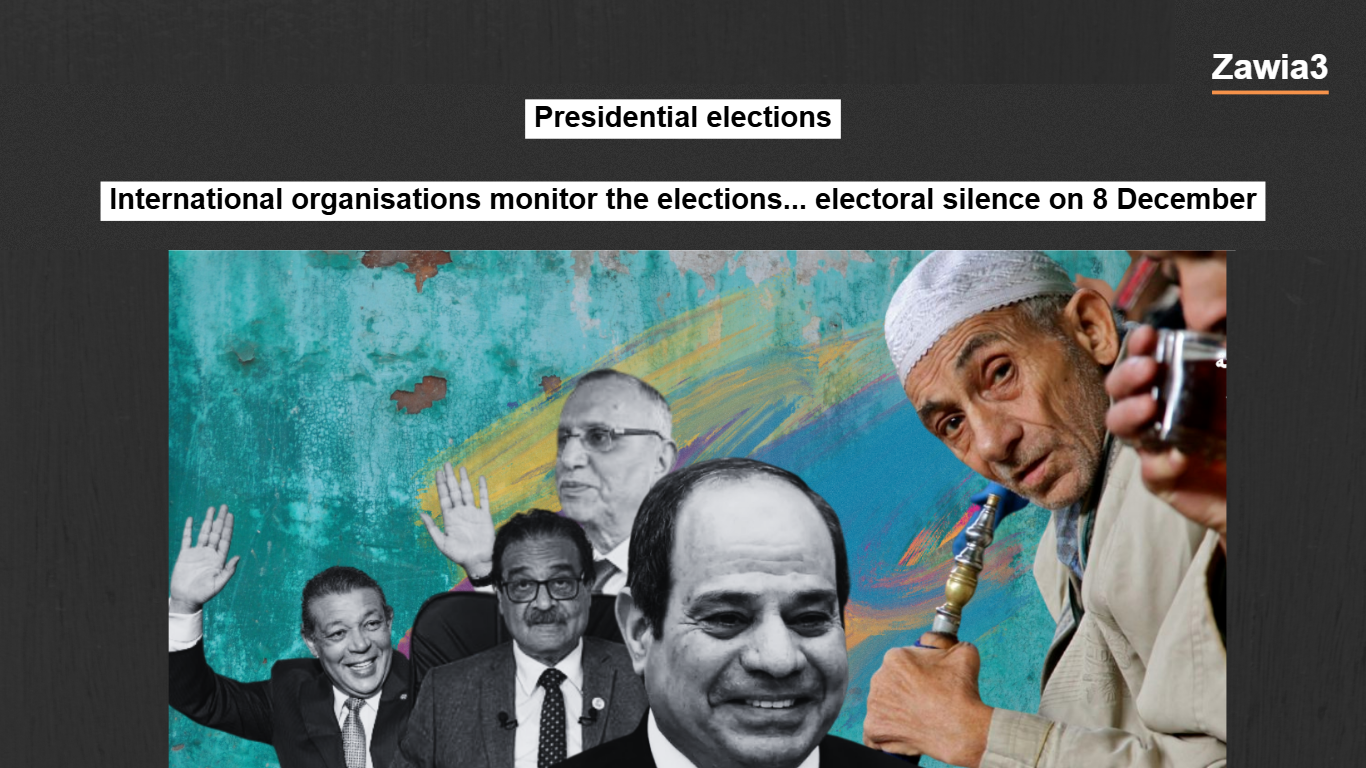
Counsellor Ahmed Bendary, head of the executive body of the National Election Authority, said regarding election monitoring that 14 organisations and 220 international observers had been registered for the presidential election, as well as 62 local organisations and 22,540 local observers, and that 11,631 sub-committees had been allocated in the presidential election.
The National Election Authority had previously rejected the application of the Sadat Association for Development and Social Welfare to monitor the presidential election, despite its meeting all registration conditions and criteria, according to the association’s chairman, Mohamed Anwar Sadat. Sadat had told Zawia3 last September that an official letter had been issued by the Ministry of Social Solidarity confirming the association’s eligibility to monitor the election, given its past experience, eligibility and participation in monitoring all electoral events since its founding in 2004. Sadat affirmed that “the association was rejected and approvals were given to friendly and cooperative associations and councils”.
The National Election Authority set a number of conditions that international and foreign civil society organisations must meet for their monitoring of the presidential election to be accepted, including having a good reputation and being recognised for neutrality and integrity, having election monitoring, human rights or democracy support among the organisation’s original fields of work, and providing a sufficient summary of the organisation, its legal status, its activities and its past experience in monitoring elections or referendums.
Among the foreign organisations announced to monitor the Egyptian election are the Uganda National NGO Forum, Gals Forum International and the Arab Parliament.
Electoral Silence on 8 December
Egypt enters an electoral silence starting on Friday, 8 December, during which no candidate or campaign may talk about the electoral programme or direct voters, in order to leave voters free to choose their candidate.
The presidential election begins next Sunday and lasts for three days, after voting for Egyptians abroad took place last Friday, Saturday and Sunday. 67 million voters will cast their votes in 10,085 polling centres.
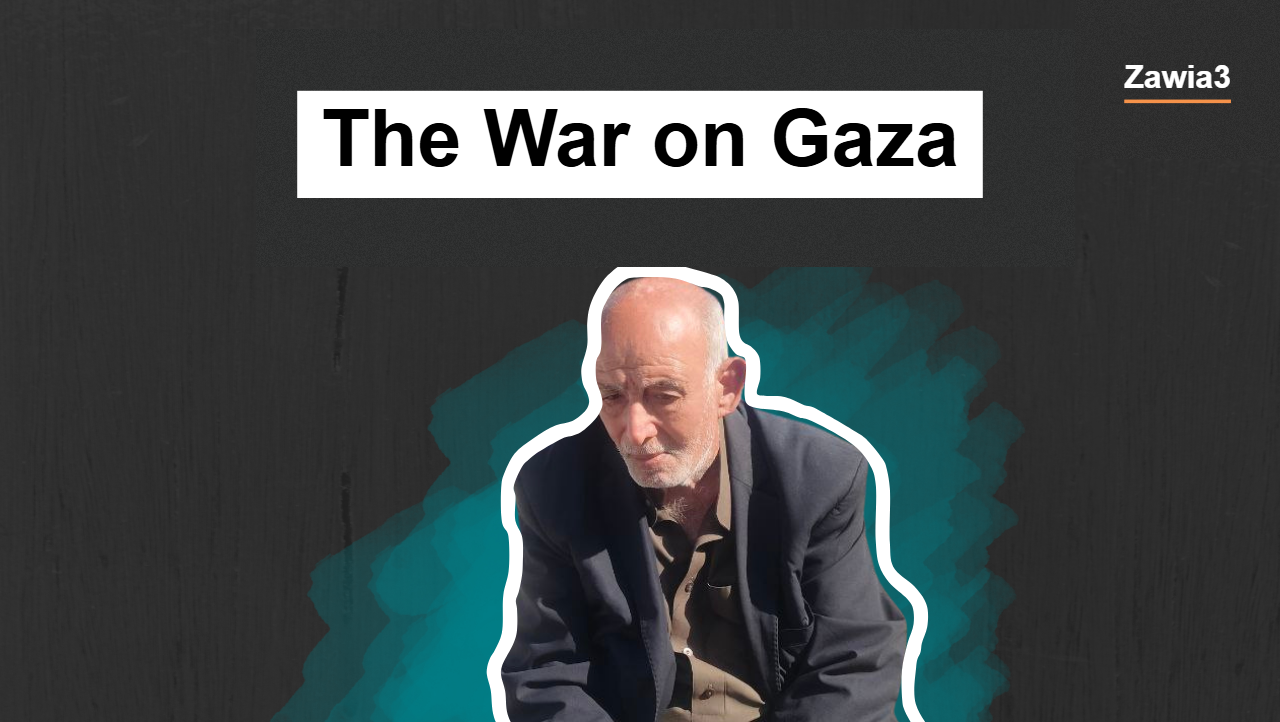
The Occupation Kills 100 in “Jabalia”, and a Mass Grave in “Deir al-Balah”
The Israeli occupation army committed a new massacre at dawn today, Wednesday, by targeting a residential complex in the city of Jabalia, killing 100 Palestinian civilians. Media outlets said that the occupation forces bombed a school sheltering displaced people in Jabalia in northern Gaza, and that Palestinians prepared mass graves in the city of Deir al-Balah to bury more than 45 victims who fell yesterday, Tuesday.
The Ministry of Health said that the hospitals of northern Gaza have gone out of service, noting that there are no health centres other than medical points belonging to the Ministry of Health and the Palestine Red Crescent, and confirming that a mass grave had been dug near the camp market because of the difficulty of burying the dead in cemeteries.
A senior official in US President Joe Biden’s administration told CNN that, as the war in the south of the Gaza Strip enters a new phase, the White House is concerned about how Israeli operations will develop in the coming weeks.
He added that the United States had seriously and directly warned Israel that the Israel Defense Forces cannot repeat the same tactics they used in the north of the Strip and must make more effort to limit casualties.
Palestine Accuses Britain of Complicity in the War of Genocide
The Palestinian Ministry of Foreign Affairs on Wednesday accused Britain of complicity in the Israeli war of genocide against the Palestinian people following its decision to send surveillance aircraft over the Gaza Strip.
It added in a post on its X page that Britain’s decision to send surveillance aircraft over Gaza is complicity in the Israeli genocidal war, but the ministry later deleted the post.
The British Ministry of Defence had announced on 3 December that it intends to conduct reconnaissance flights over the Gaza Strip to provide intelligence to Israel, ostensibly to support ongoing hostage rescue activities.
It added: “The surveillance aircraft will be unarmed, will have no combat role, and will be tasked only with locating hostages.”
For two months, the Israeli occupation army has been waging a devastating war on the Gaza Strip, which by yesterday evening, Tuesday, had left more than 16,000 people killed, including 7,112 children and 4,885 women, and about 44,000 wounded, in addition to massive destruction of infrastructure and an unprecedented humanitarian catastrophe.
The Occupation Raises Taxes, and Netanyahu: Not Because of the War
Israeli occupation Prime Minister Benjamin Netanyahu said at a press conference yesterday evening, Tuesday, that his government’s decision to raise taxes is not aimed at financing the war on the Gaza Strip.
He added that a budget of 30 billion shekels has been set for a full month to cover the needs of the war and its repercussions, which is a large budget, stressing that they must continue to work together as one team and not give Hamas what it wants.
Netanyahu said at the press conference that the military leadership has set a common goal, which is restoring security in the south and the north, and that there are arrangements to deter Hezbollah and win in Gaza.
Netanyahu affirmed his commitment to the residents of the north, the south and the centre to provide security, because the threat of Hamas and Hezbollah is everywhere, noting that he is working closely with Defence Minister Yoav Gallant to eliminate Hamas, free the prisoners and ensure that Gaza does not pose a threat to Israel.
The Israeli Stock Exchange Denies “Profiteering”
The Israeli government denied that there is evidence that some investors profited from prior knowledge of Hamas’s attack in Operation Al-Aqsa Flood on 7 October, after an academic study accused unnamed circles of involvement in corruption.
The study had indicated that investors betting against the Israeli economy made large sums, and that it found significant short selling in the period before the attacks.
But the Tel Aviv Stock Exchange later described the study as “inaccurate” and “irresponsible”.
Researchers Robert Jackson Jr. of New York University and Joshua Mitts of Columbia University said yesterday, Tuesday: “In the days leading up to the attack, traders appeared to anticipate the events to come.”
The two researchers said they had detected a significant increase in the number of investors seeking to sell shares in Israeli companies on the Tel Aviv Stock Exchange.
The exchange said that the authors of the report had miscalculated the amounts, as it showed the value of share prices in agorot, similar to pence, instead of Israeli shekels.
Yaniv Pagot, head of equity trading at the Tel Aviv Stock Exchange, told the newspaper Globes: “So they calculate a profit of 3.2 billion shekels (£680 million), while in practice the profit was only 32 million shekels (£6.8 million).”
He also said that the claims about a sudden rise in trading before the attack are “detached from reality”.
The United States Imposes Sanctions on Settlers
The United States announced on Tuesday that it will not grant visas to extremist Israeli settlers involved in the wave of violence against Palestinians in the occupied West Bank, calling on the Israeli occupation state to make more efforts to protect civilians in Gaza.
The measure is one of the rare concrete reactions by the United States against Israelis since the outbreak of the war about two months ago, noting that US President Joe Biden had urged his ally Israel to protect civilians while promising strong support for the Hebrew state.
For his part, State Department spokesperson Matthew Miller said the measure affects dozens of settlers, without announcing their names. The visa ban also affects their family members. The restrictions do not apply to extremist settlers who hold US citizenship.