On Tuesday morning, the Egyptian parliament held the first sitting of its fifth session, the last of the second legislative term, which will last nine months, at a time when political and party circles are witnessing great controversy over many laws expected to be discussed during this period, most notably the Criminal Procedure Law, which has stirred wide controversy since it was first discussed in National Dialogue sessions and then in parliament’s Legislative Committee, which in turn referred it for general debate. Parliament will also discuss several important laws, including the traffic, labour and human organ transplant laws, amid expectations that amendments to the election regulation and local councils laws may also be discussed.
The Ministry of Parliamentary and Legal Affairs and Political Communication announced earlier this week that President Abdel Fattah El-Sisi, under his constitutional powers, had called the House of Representatives to convene on 1 October to open the fifth session of the second legislative term, and had also called the Senate to convene on Wednesday 2 October to open the fifth session of the first legislative term.
Article 115 of the Constitution stipulates that the President of the Republic shall call the House into its ordinary annual session before the first Thursday of October; if the call is not made, the House convenes by force of the Constitution on that day. The ordinary session lasts at least nine months, and the President of the Republic closes the session with the approval of the House, which may not happen before the state’s general budget is approved.
Article 274 of the internal regulations of the House of Representatives stipulates: “The President of the Republic shall call the House of Representatives into its ordinary annual session before the first Thursday of October; if the call is not made, the House shall convene by force of the Constitution on that day. The ordinary session shall last at least nine months, unless the House began its work on a date that does not allow the said period to elapse, and the President of the Republic shall close the session after the approval of the House, which may not happen before the state’s general budget is approved.”
Article 158 of the Senate’s internal regulations stipulates: “The President of the Republic shall call the Senate into its ordinary annual session before the first Thursday of October; if the call is not made, the Senate shall convene by force of the Constitution on that day, and the ordinary session shall last at least nine months, unless the Senate began its work on a date that does not allow the said period to elapse.”
In his speech at the plenary sitting of the fifth session of the second legislative term, Counsellor Hanafy Gebaly, Speaker of the House of Representatives, pledged that the House would complete drafting legislation that supports citizens’ rights and would strengthen its oversight role, stressing the importance of cooperation between the legislative and executive branches as a guarantee of development. Foreign policy also emerged as an important theme of the sitting in light of current regional tensions, as Gebaly affirmed support for the Palestinian cause, pointing to the violations of the Israeli occupation forces and Egypt’s support for the Palestinians, and praised the Egyptian president’s stance against liquidating the cause.
In another context, he warned about the situation in Lebanon, describing it as a violation of sovereignty, praised the decision to provide medical aid and called on the international community to stop Israeli violations. He affirmed Egypt’s support for Libya’s stability and for helping Sudan, and criticised Ethiopian policies on the Grand Ethiopian Renaissance Dam, highlighting the importance of Egypt’s water security. He thanked President Sisi for his wise leadership, affirming support for efforts to achieve peace and development in the region.
What Do Egyptians Expect from Parliament?
The fifth session, which closes parliament’s second and final legislative term, is expected to see the discussion of many laws, foremost among them the Criminal Procedure Law referred by the Legislative Committee in the fourth session. According to its legislative agenda, the House will also discuss the unified cooperatives law, a draft law amending some provisions of the Traffic Law issued by Law No. 66 of 1973, amendments to some provisions of Law No. 5 of 2010 on regulating human organ transplants, amendments to some provisions of the Universities Regulation Law issued by Law No. 49 of 1972, and amendments to some provisions of Law No. 175 of 2018 on combating information technology crimes, which was referred to a joint committee of the Communications and Information Technology, Constitutional and Legislative Affairs, and Defence and National Security committees.
Regarding the House’s legislative agenda for the new session, MP Irene Saad tells Zawia3 that “the Criminal Procedure Law is at the top of the legislative agenda; it is one of the most important and largest laws, and its discussion is expected to continue extensively. The House is also expected to discuss the medical liability law, which is considered one of the vital social laws and is supposed to address important issues relating to the responsibilities of doctors and health practitioners, aiming to protect patients’ rights and ensure safe and effective medical services. Issuing this law will strengthen citizens’ trust in the health system.”
She stresses that the House is working hard on preparing these two laws, even during recess, which shows the members’ real commitment to producing this legislation in the best possible form, noting that it is difficult to predict the legislative agenda at present, but in general it can be said that the agenda is full of laws.
For his part, Abdel Moneim Imam, an MP and head of the Adl (Justice) Party, tells us that the criminal procedure, labour and election laws are at the top of the House’s legislative agenda in the current session, while the economic file is also at the forefront as a priority for Egyptian citizens at present, to ease the financial burdens on the street in light of successive crises.
He adds: “The economic file will be the focus. We are moving towards a new tax system to achieve justice, and I expect the amendments to include important laws such as the value-added tax law and the income tax law. We must be careful, because any tax increase will negatively affect citizens who are suffering from living burdens. There are more than 10 to 12 laws related to the economy that directly or indirectly affect expenditure and all goods and services. We must be aware of the impact of these laws on people’s daily lives. I hope the government succeeds in not increasing burdens but rather seeks to ease them on citizens, especially given the measures Egypt is adopting with the International Monetary Fund. We must also look for real solutions that ease the burden on lower-income groups, and it is important to take into account the reality of citizens suffering from rising prices.”
Time Bombs Under the Dome
The Criminal Procedure Law, which the House’s Legislative Committee approved last September, has stirred public controversy because of provisions that observers and rights advocates see as restricting freedoms, including Article (267) of the draft law, which bans publishing news about the proceedings of hearings, and Article (266), which prohibits transmitting or broadcasting hearings by any means except with written approval from the head of the circuit after permission from the Public Prosecution.
Also of concern are Article (15), which allows criminal courts at both levels or the Court of Cassation to bring a criminal case against a perpetrator if acts occur outside the hearing that could influence witnesses or breach the court’s orders, and Article (13), which gives the first-instance criminal court the right to add new defendants to the case and refer them to the Public Prosecution for investigation, in addition to a number of articles some consider harmful to justice, relating to the expansion of the powers of judicial police bodies and granting them investigative powers in detention centres.
For his part, Egyptian journalist and politician Khaled Dawoud believes that the Criminal Procedure Law should be a top priority on parliament’s agenda during the current session, given its direct connection to a crisis concerning freedoms, pretrial detention procedures and public rights and freedoms. In light of the discussions of the Legislative Committee, and before it the National Dialogue committee, it was expected that restrictions on freedoms and citizens’ rights would be reduced and legal guarantees provided on pretrial detention; but what happened, in light of the previous discussions, was an expansion of measures that place restrictions on citizens. The agenda of priorities has therefore changed completely, and it has become necessary in the coming weeks to open a public discussion with the aim of reconsidering all the amendments made to the law before the end of the fourth session.
Dawoud tells Zawia3: “All the amendments must be reconsidered, with a commitment to the recommendations issued by members of the National Dialogue council regarding the pretrial detention articles, and the law must be given a chance to be discussed widely, away from the way it was presented and discussed in the Legislative Committee in the last session, and away from the accusations the committee levelled against anyone who criticised the law of trying to stir instability, or questioning their patriotism, and other accusations contained in the Legislative Committee’s various statements.”
He adds: “We hope parliament will take its time in examining the law, discussing it widely and taking all opinions into account, while stressing the need to benefit from the recommendations of the National Dialogue committee and of the National Human Rights Strategy. There is consensus on the need to review the articles on pretrial detention in order to protect citizens’ rights, not to impose more restrictions.”
In light of the recent call by the National Dialogue committees to discuss converting in-kind subsidies into cash subsidies, Dawoud expects parliament to take up the issue extensively, hoping it will take its time in discussing it, especially since it directly affects the interests of ordinary citizens; estimates indicate that about 70 million citizens, all of them from the poorer classes, receive in-kind subsidies monthly, which obliges parliament to reconsider this demand, especially given the difficult economic conditions citizens are going through.
According to Dawoud, the next parliament should look for alternatives to increase sources of income without imposing more burdens on citizens through price increases, cancelling subsidies or similar measures that affect the vast majority of low- and middle-income people, and should examine a mechanism for higher-income groups to share the costs of the economic crisis, for example by considering a capital gains tax. This is necessary given that the poor and low-income people have borne many of the burdens of the crisis in the past period; parliament must pass legislation to involve the wealthiest groups in this system and, in return, ease the burden on the neediest groups.
Egyptian MP Diaa El-Din Dawoud warns that abolishing in-kind subsidies, if approved, could have dire consequences in terms of rising anger and citizens’ dissatisfaction with the government’s performance, especially in light of unprecedented increases in the prices of basic goods, noting that converting in-kind subsidies on goods and products, especially foodstuffs already tied to the dollar exchange rate, places additional burdens on citizens relating mainly to their food, particularly the strategic goods citizens fundamentally need.
Dawoud said in a previous statement to Zawia3 that citizens’ demands in the 25 January and 30 June revolutions were closely linked to achieving social justice and social security, and that the collapse of that system means placing the entire state in confrontation with citizens. He adds: “I think no one can bear the security cost that could result from any kind of social unrest caused by deteriorating economic conditions, even though people have endured shocks, earthquakes and volcanoes as a result of the mismanagement of the economic file in recent years.”
Diaa El-Din Dawoud also affirmed his categorical rejection of the proposal to convert in-kind subsidies into cash, since it was raised in parliament in 2016, expecting the government not to take such a step any time soon given its serious repercussions on social peace, citing the hesitation over raising the price of subsidised bread and the government’s inability to approve the increases until after about three years of discussions.
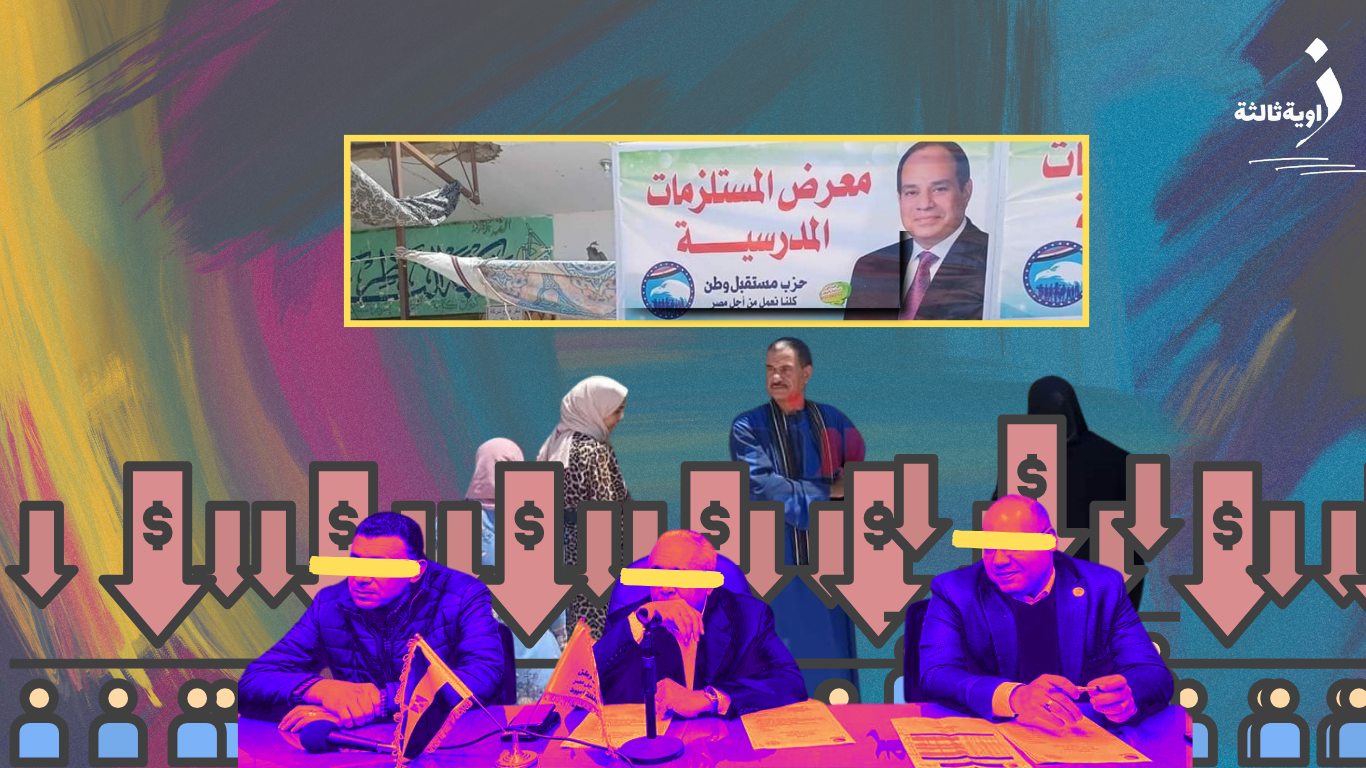
It is worth noting other political moves by official bodies aimed at paving the way for abolishing in-kind subsidies: on Sunday evening, the Coordination of Party Youth and Politicians held a seminar entitled “How cash subsidies better target those entitled… cash or in-kind?”, which presented the advantages of shifting from in-kind to cash subsidies and reviewed the economic and social goals associated with this shift. Participants in the salon focused on how to improve economic efficiency through cash subsidies, stressing that it could reduce waste and corruption in the goods distribution system, and noted that in-kind subsidies often lead to distribution problems that negatively affect the actual beneficiaries. The speakers stressed the importance of ensuring that cash subsidies reach the neediest groups, which requires developing effective mechanisms to monitor the distribution of subsidies.
An Absent Oversight Role
During the last session (October 2023 – July 2024), the House passed about (175) laws containing (1,805) articles, most notably the law increasing the cost-of-living allowance for employees, increasing the exceptional grant for public sector workers, and the law granting facilities to Egyptians abroad, in addition to amendments to some laws relating to imports and social insurance. The House also passed laws relating to investment, child protection and reconciliation in building violations.
Regarding international agreements, the House discussed and approved (38) agreements aimed at supporting the neediest areas and strengthening the national economy. On the oversight front, the House discussed (2,016) oversight tools in plenary sessions, while the specialised committees held (2,327) meetings and discussed (1,782) briefing requests, along with a number of field visits to examine actual problems.
The performance of the Egyptian parliament faces strong criticism over its weak oversight role and the mismatch between legislation and the aspirations of the Egyptian street, while recent opinion polls point to declining public trust in parliament. A poll conducted by Akhbar El-Ghad newspaper attributes this to legislation described as aimed at increasing the financial burden on ordinary citizens by raising the prices of basic services and utilities that affect everyone’s daily life in Egyptian society. Other laws also stirred great controversy because of what poll participants described as laws restricting freedom of expression and shackling citizens’ rights, which created a wave of public anger towards MPs, as citizens believe these laws did not take their interests into account as much as they served the interests of the political and government elite.
Regarding parliament’s performance in previous sessions, Khaled Dawoud believes that parliament, because of the election laws under which its members were elected, did not play any oversight or legislative role in a way that allowed wide and free discussion, given the majority control of loyalist parties in the House. Over five years, parliament saw no real interpellations or questions to the government, which is strange and perhaps happening for the first time. He added: “We hope that among parliament’s priorities in its final session will be reconsidering, as part of its legislative agenda, the election and parliamentary councils laws and returning to proportional lists, in the hope of electing a better and more diverse parliament in the next elections; otherwise we will find ourselves facing a new copy of the current parliament, which considers its role limited to approving the agenda the government asks of it, without exercising any real legislative or oversight role, especially regarding government spending decisions, which have become a priority in light of the economic crisis we have recently been living through.”
Talaat Khalil, a member of the Conservative Party’s presidential council and a leading figure in the Civil Movement, says parliament has not dealt well with the harsh conditions Egyptian citizens are going through. Citizens have been squeezed by many economic matters that parliament did not address properly, especially by some government bodies, without these being dealt with appropriately. He stresses: “Today, there is no accountability for the government for failing to attract investment, which has led to a dangerous rise in unemployment.”
He adds: “Parliament has not dealt well with vital issues such as the Renaissance Dam crisis; we have not heard of any move by parliament on this issue, which concerns Egypt’s national security and is an existential battle. Parliament has also not confronted the problem of the debts and loans the government obtains, and always approves loans without accountability, which has put us in an unprecedented crisis over how to repay these debts. Nor has parliament exercised its oversight role over the government’s sluggish performance in all areas of life, whether regarding the continuous rise in the prices of goods and services or the government extravagance in El-Alamein and festivals that burdens the state’s general budget.”
He continues: “There are also external issues that threaten national security, such as the situation in Sudan and Gaza, which parliament does not address in any way, despite their great importance to Egyptian national security, and we have not seen any accountability for the government over how it deals with these files.”
Regarding the legislative agenda for the new session, headed by discussions of the Criminal Procedure Law, Khalil says: “As for the Criminal Procedure Law, it is one of the bad laws passed in the last ten years. This law should aim to protect the rights of the accused, but what is happening is the imposition of abnormal surveillance on citizens and granting the executive authorities broad judicial powers. Egyptian citizens are suffering severely, and parliament does not confront their challenges. I expect these problems to continue in the coming sessions, but I hope we can achieve positive change in the future.”
In a related context, parliamentary writer Mahmoud Nafady attributes parliament’s retreat from its oversight role to the electoral system, saying during a seminar held by the Ra Center for Studies last January that “the electoral systems Egypt has followed have not produced strong parliaments, for reasons linked to the House’s ability to perform its role on its own.” Nafady expected that the 2025 parliamentary elections may combine the absolute list, proportional and individual systems, stressing that the formation of the unified national list in the current parliament’s elections, which included 18 parties, negatively affected the existence of real opposition under parliament’s dome, and saying that this list did not reflect the state of the political elites in Egypt.
Criticism over the Rights and Freedoms File
Parliament faces criticism over the human rights file, as well as over laws that represent an economic burden on citizens. A study by the Maat Foundation for Peace, Development and Human Rights indicates that the House of Representatives actually achieved only 9% of what was expected of it over more than two years regarding its role under the National Human Rights Strategy, by approving three pieces of legislation, a very slow rate, while it succeeded in raising discussion on 10 other topics, representing 30% of the total targeted topics, and about 61% of the total targeted legislation was not addressed at all, which ultimately reflects a notable shortfall in the House’s performance towards achieving the required goals.
In contrast, the National Human Rights Strategy aims to issue and amend some (33) pieces of legislation serving the targeted results in the strategy’s four axes, so the study relies on tracking what the House has done regarding this legislation, whether at the proposal, discussion or drafting stage, up to the laws actually issued, in order to measure the extent of the House’s success in carrying out its role in achieving the national strategy’s goals.
The study indicates that despite the strength of party representation in the House, attention to the legislative track of the National Human Rights Strategy was completely absent from the interest of the political parties represented in parliament: while the legislative track of the national strategy targeted about 33 pieces of legislation, the draft laws discussed, whether issued or still under discussion, number (13 draft laws), and it turns out that only one party submitted a draft law among those targeted in the strategy, namely the draft law regularising the status of domestic workers, submitted by MP Hala Abu El-Saad of the Modern Egypt Party.
In conclusion, the fifth session of the second legislative term of the Egyptian parliament represents an important stage, with expectations that discussions will focus on vital laws such as the Criminal Procedure Law, which attracts wide attention because of its potential impact on freedoms. In addition, pressing economic files on the future of subsidies and ways to enhance social justice top the agenda.
Amid the current economic challenges citizens face, many Egyptians are watching parliament’s performance during this session, with hopes that it will play an effective role in oversight and in holding the government accountable. Citizens also expect parliament to continue discussing issues related to citizens’ rights and national security, and to work towards fulfilling the people’s aspirations in a way that helps rebuild trust in the legislative institution.