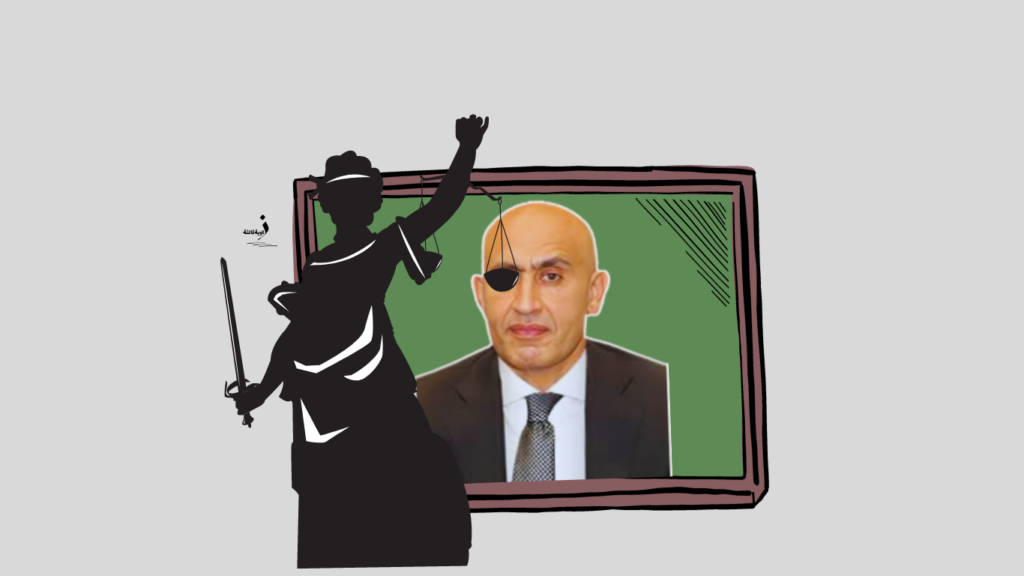

A segment of Egyptian teachers faces a hazy future after the decision of the Minister of Education and Technical Education, Mohamed Abdel Latif, last August, as he indicated the cancellation of some subjects at the general secondary stage and the marginalisation of other subjects from the calculation of the student’s total score. Teachers who spoke to Zawia3 believe that this decision will not only affect the educational structure but directly threatens their future, as their career path depends on teaching those subjects, which has prompted them to file a number of lawsuits against the minister’s new decisions.
The Minister of Education, Mohamed Abdel Latif, announced the new amendments to the secondary stage, which are to be applied from the current 2024/2025 academic year. In the first year of secondary school, students study six core subjects instead of ten the previous year. The integrated science curriculum is being applied for the first time, replacing the chemistry and physics curricula, in addition to redesigning the geography subject so that it is cancelled from study in the first year of secondary school and becomes a specialised subject for the literary track the following year. The second-year secondary subjects after the amendment include six subjects instead of eight. Under the new system, third-year secondary students study five subjects instead of seven and are divided into three tracks: science, mathematics and the literary track, while the second foreign language remains in all three years as a pass/fail subject not counted in the total score.
With no clear plans to retrain them or provide professional alternatives, teachers are now in a state of anxiety and fear of the unknown, as they suddenly found themselves, as they describe it, in a situation that threatens their job and livelihood stability.
Will Legal Changes Happen?
Ali Ayoub, lawyer for a group of teachers in their case against the minister’s decisions, stresses that teachers have the legal right to object to the decisions under the Egyptian Constitution, especially in the event of intervention by the Cabinet or the Presidency, or if the minister’s decisions are ill-considered. In the current circumstances, legal changes in education policies are expected, aimed at protecting teachers from decisions that may suddenly affect their jobs.
He adds, speaking to Zawia3, that seven lawsuits have been filed by teachers from (Cairo, Giza, Tanta, Mansoura, Beheira, Zagazig and Alexandria), and by some teachers from the Canal cities and Upper Egypt, with the remaining appeals still being filed. The first hearings will be held on 1 October.
He explains: “There are those who see the amendments as a way to relieve Egyptian families of the burden of private tutoring, but they forget that Egypt’s education legislator added statistics instead of the humanities. Where are the savings in deleting the specialised subject and adding a subject that has no connection whatsoever to the literary specialisation?”
He continues: “What we learned from the science of logic is that every premise has results, and I see that the results of these decisions are harmful and we will all reap them: teachers, university professors and students. They will also affect the entire educational process as well as scientific research,” pointing to partial unemployment among non-appointed teachers, who worked hard without waiting for their right to appointment.
According to the text of the lawsuit, a copy of which Zawia3 obtained, the lawyer says: “Changing the career path and job title of the teacher appointed for these subjects because they are no longer needed is an insult, and the hiring of teachers in those specialisations will also stop.”
The Court of Cassation lawyer bases his lawsuit on Article 19 of the Constitution, which states: “Education is a right for every citizen. Its goal is to build the Egyptian personality, preserve national identity, root the scientific method of thinking, develop talents and encourage innovation, establish civilisational and spiritual values, and lay down the concepts of citizenship, tolerance and non-discrimination. The state is committed to taking its goals into account in education curricula and methods, and to providing it in accordance with international quality standards.”
Article 22 of the Egyptian Constitution, as amended in 2019, states: “Teachers, faculty members and their assistants are the main pillar of education. The state guarantees the development of their scientific competencies and professional skills, and the care of their material and moral rights, in a way that guarantees the quality of education and the achievement of its goals.” This contradicts the new decisions, which affect the professional and economic rights of teachers of the second foreign language, geology, geography, psychology and philosophy.
Regarding the grounds for challenging these decisions, Ayoub stresses in his lawsuit that the whole matter rests on the absence of the element of cause in the challenged administrative decision: “It is a settled principle that every administrative decision has a set of elements that must be present when it is issued, namely the elements of competence, subject matter, form and procedures, cause, and purpose, and each of these elements, when absent, constitutes a defect that taints the decision and is a ground for its annulment.”
He continues: “Studying the element of cause in the administrative decision is of great importance that imposes itself on reality for several considerations. The first is that the element of cause is the first component of the administrative decision, and its absence or invalidity is considered a form of illegality, so the decision becomes void and can therefore be annulled. It is also a guarantee and a presumption that the administration’s intervention has what warrants it, because administrative decisions in most cases involve limiting individuals’ freedoms and harming their financial and moral positions. In addition, it is one of the most important means of limiting the administration’s deviations and its abuse of its authority, and oversight of it reduces the administration’s discretionary power through oversight of the appropriateness of the decision.”
The lawyer also argues in his lawsuit that the decision violates Article 26 of Law No. 139 of 1981, known as the Education Law, which states: “The study subjects in general secondary education consist of compulsory subjects and elective subjects. The determination of these subjects and the number of elective subjects the student must pass successfully shall be issued by a decision of the Minister of Education and Technical Education after the approval of the Supreme Council for Pre-University Education and the approval of the Supreme Council of Universities.”
Mockery over the Cancellation of French
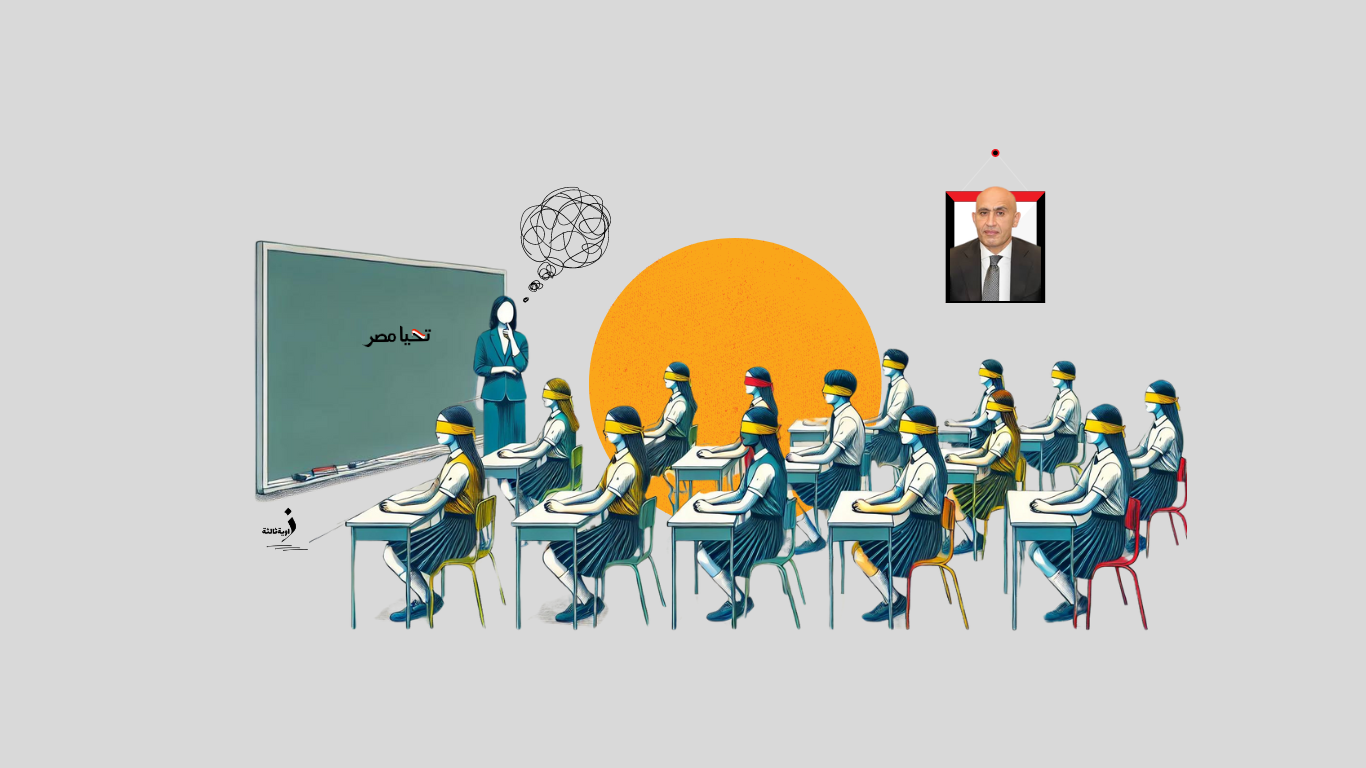
About 700 teachers of French (as a second foreign language), geology, geography, philosophy and psychology contacted us after we published a report titled “Cancelling Subjects from Thanaweya Amma in Egypt: A Step Towards Change or a Reduction of Education?” last August. They have moved to file lawsuits to annul the new decisions of the Minister of Education, which began to be applied from the current semester.
In their appeal to Zawia3, the teachers point to the need to adopt their cause, which they link to economic and social rights, as they suffer from deteriorating salaries and living conditions, which pushes some of them to work in private tutoring to secure a minimum standard of living and increase their income. In addition, the Egyptian education system urgently needs to hire about 20,000 male and female teachers annually, according to a recent report prepared by the Egyptian Initiative for Personal Rights, based on statements by former Minister of Education Reda Hegazy. This constitutes an additional burden on appointed teachers or those contracted for fixed periods, as they must fill the persistent shortage in teacher numbers by teaching the largest number of students and increasing the number of teaching hours assigned to each teacher (according to the initiative, the average weekly working hours of male teachers reach about 48 hours, while those of female teachers reach about 47 hours a week).
Commenting, Mohamed Khalil, a French teacher from Kafr El-Dawar in Beheira Governorate, says he has worked for 26 years, but the new decision to marginalise the second language from the final total, even though only a few days have passed since the start of the new academic year, has changed the importance of what he offers in the eyes of students and their families, and he has become an object of ridicule. He adds: “The administrative staff who work with us in schools mock us, pointing out that French no longer has any value worth mentioning, and as a result we have suffered very bad psychological and health consequences.”
Khalil points to the economic impact of the minister’s decision, stressing that he and his family of seven, of which he is the sole breadwinner, will be negatively affected, as his salary of EGP 5,000 barely covers the costs of electricity, water, gas and the house rent. He continues: “I am now looking for additional work after the school day ends, to increase my income.”
The Cairo government has sought to solve the teacher shortage crisis, as former Minister of Education Reda Hegazy announced in 2022 the start of a fixed-term contract appointment system through competitions (the appointment of teachers became subject to the procedures applied in the civil service system, including the competition system), in a plan to appoint 150,000 teachers over five years. Despite the many competitions, which were marred by some violations that we previously documented at Zawia3, teachers told us that some of those who passed these competitions did not receive their full salaries, which the government estimated at about EGP 6,000, and the salary, before insurance and tax deductions, reached about EGP 4,000. According to the teachers’ testimonies we reported in a previous report titled “No Place for the Overweight and the Pregnant… Lost Entitlements for Egypt’s Teachers“, the government has stumbled in paying their salaries regularly, to the point that some of them received a salary every three months, which also affects the economic rights of this segment of teachers.
The government has acknowledged the acute shortage of teachers, according to what former Minister of Education Tarek Shawki announced before Parliament, when he stated that the pre-university education system in Egypt, in its various stages, needs about 323,000 male and female teachers. Meanwhile, the head of the Teachers Syndicate, Khalaf El-Zanaty, announced at one of the 2023 national dialogue sessions that the shortage of teachers had reached about 400,000 male and female teachers.
Professional Dangers
Hasnaa Salah Eldin, a French teacher from Beni Suef Governorate, points out that she works under a contract at a private school. She says: “French has been marginalised and removed from the total score in the secondary stage, in addition to being cancelled completely from the preparatory stage. The decision was like the end of the dreams of all teachers who sought to provide real value by teaching this language, which represents a bridge to keeping pace with developments in a world open to languages and technology.”
She adds: “For more than 15 years, they promised us that French would be applied as a second language in schools. In the year this decision was supposed to be applied to the preparatory stage, we were surprised that French was cancelled altogether, and this is a destruction of the future of teachers specialised in teaching it.”
She explains that male and female teachers who have been dismissed from private schools face a harsh reality, as they are asked to look for other jobs. She notes that she spent a great deal during her years of study and after graduating in 2007 to master teaching French textbook series for all school stages, but this experience is no longer of any use, especially with expectations that the number of second foreign language teachers will be reduced, leaving them without jobs.
Ahmed Abdel Hamid, a French teacher with 20 years of teaching experience, speaks of his suffering after his contract with the private school where he worked was cancelled. He says: “I was not appointed to any government job, but worked under a contract at a private school. After the decision to marginalise French, my employer ended my contract. There has been no government appointment since the decision to cancel the assignment of graduates of faculties of education at the end of the 1990s. Whenever I apply for a teacher recruitment competition, the answer is always that they do not need French specialists.”
He adds: “The situation has become unstable for us as French teachers. We work in difficult conditions, without job guarantees or opportunities for appointment in government schools.”
According to data from the Annual Statistical Book for 2023/2024 issued by the Ministry of Education, the number of teachers has declined in recent years. Comparing the 2019/2020 and 2023/2024 academic years, the number of teachers in the former was about 1,018,773, while it shrank in 2023/2024 to about 922,628 teachers. Meanwhile, the number of students increased during that period: in 2019/2020, the number of pre-university students in Egypt was about 23,567,060, rising to 25,657,984 in the 2023/2024 academic year. The government statistical book omitted the number of teachers in the various specialisations, so we could not establish the official number of teachers of the subjects covered by the Minister of Education’s recent decisions.
According to a data analysis carried out by the Egyptian Initiative for Personal Rights in its report on the conditions of male and female teachers in Egypt, based on the annual bulletin of employment, wages and working hours statistics issued by the Central Agency for Public Mobilization and Statistics, the education sector is at the bottom of the wage scale in Egypt. There is a wage disparity, calculated weekly, between male and female teachers, as the average wage of male teachers is about EGP 631, compared with about EGP 548 for female teachers, even though women make up the majority in the teaching sector. The report also pointed to teachers working under the contract (per-class) system, who are paid EGP 20 per class, with a maximum of 24 classes a week, which means the salary may reach a maximum of only EGP 1,920 a month for a teacher who completes all classes, which differs from the government’s announcement that the minimum wage is EGP 6,000 a month.
Zawia3 obtained audio recordings of officials in the education sector in Sharqia Governorate (through the teachers we spoke with), which reduce the role of the teacher in secondary education to that of a “facilitator” for students inside classrooms, while one of the recordings indicated that teachers must not show discontent with the minister’s decisions on contracting newly graduated teachers under the per-class system. Another recording shows an administrative directive to school principals to assign the maximum possible number of classes to teachers, as the official says: “There is no ministerial circular stating that the maximum number of classes is 15 per teacher. You must raise the number of classes for each teacher to 20 and 25, so that there is no shortage in classrooms.”
An Unacceptable Situation
Mahmoud Zaki, a psychology teacher from Minya Governorate in Upper Egypt, describes what is happening as a disaster. He explains: “French teachers have become jobless after the subject was marginalised in Thanaweya Amma and cancelled from the preparatory stage, which means that some of them receive salaries without having actual duties, which violates the law. As for marginalising psychology in Thanaweya Amma, this is a scientific crime against Egypt and its students, as psychology is not merely a theoretical study but life content that touches all aspects of life. Ignoring it is a neglect of educating students and preparing them for life (at a time when the government is launching a national human development initiative).”
Zaki goes further in his conversation with us, criticising additional decisions the Minister of Education has spoken about, as he believes that the minister’s insistence on the “bubble sheet” system and multiple choice in secondary school exams amounts to an ongoing disaster. According to him: “This system has led to the worsening of cheating, and we as teachers have not been able to control it. Students get fictitious grades that do not reflect their real level. On the other hand, applying statistics to literary track students is illogical; statistics is a purely scientific subject that suits the inclinations of science track students. Imposing it on literary track students contradicts educational approaches compatible with students’ abilities.”
Mohamed Mostafa, a geology teacher from the city of Tanta in Gharbia Governorate, speaks about the impact of the Minister of Education’s decision to cancel geology from the Thanaweya Amma system. He says: “The minister’s decision to cancel geology is strange, given the importance of geology, which relates first and foremost to knowing the country’s resources and economy. This science is taught in all Arab countries, such as Saudi Arabia, where it is taught over three years in the first, second and third years of secondary school.”
He explains: “In Egypt, geology is taught for only one academic year (the final year of Thanaweya Amma), and now it has been deleted completely,” pointing to the cost of the university fees charged to students of those departments, which, according to him, have reached EGP 25,000 a year, meaning that total fees over four years exceed EGP 100,000.
He continues: “I am married and responsible for a family, there are no government appointments, and I relied entirely on private tutoring. This decision affects me personally and affects the future of students in Egypt.”
Teachers are awaiting the hearing of the lawsuits before the courts, in an attempt to annul Ministerial Decision No. 138, which they describe as “catastrophic” and say did not take into account the social and economic dimension, hoping that it will be amended or that their situation, which has become unstable as a result of decisions by the authorities that they describe as “ill-considered”, will be reconsidered.