
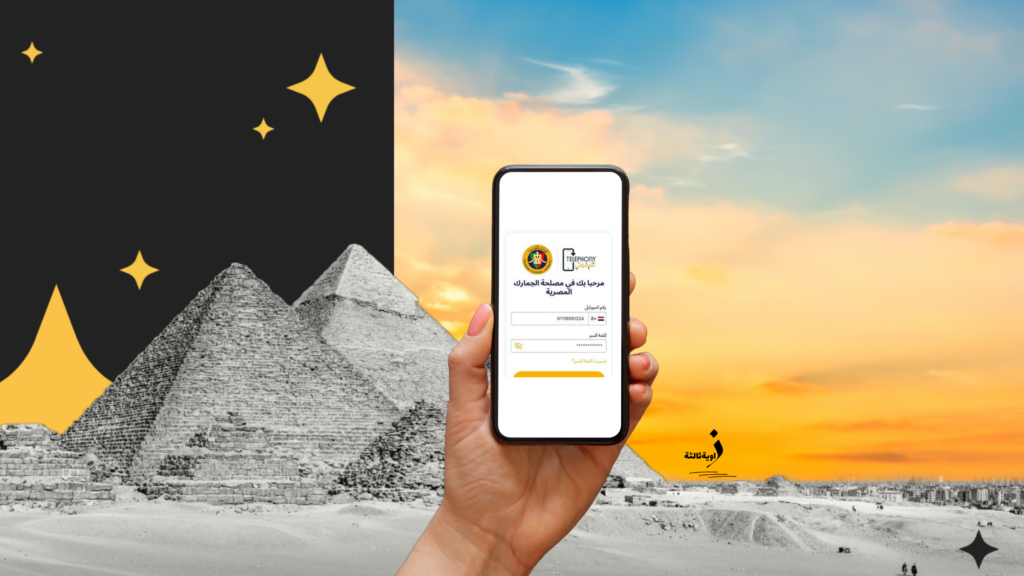

Egypt’s new system for registering imported mobile phones and collecting the taxes and fees due on them has triggered an argument over who should bear the cost of regulating the market. The government presents the measure as a way to curb smuggling and support local manufacturing. Consumers, retailers and some economists fear higher prices and weaker sales at a time when household budgets are already stretched.
The system began on 1 January 2025 through the Telephony app. Officials put the combined taxes and charges on liable imported phones at up to 38.5% of the device’s assessed value, while maintaining that the rates themselves had not changed. The new element is the registration and enforcement mechanism, rather than the creation of a single new customs tax.
For consumers, the distinction offers little reassurance if enforcing the charges means paying substantially more for a phone. For the government, it is the basis of its claim that legitimate manufacturers and importers need protection from undeclared imports.
At the system’s launch, one personal-use phone brought by an arriving traveller could receive an exemption. The January 2025 official guidance required that exemption to be recorded at customs on arrival. It also said the system would not apply retrospectively to phones already activated with an Egyptian SIM before 1 January 2025. The arrangements included a 90-day grace period; non-payment where charges were due could lead to a device being blocked from Egyptian mobile networks.
Economist Elhami El Merghany, deputy leader of the Socialist Popular Alliance Party, sees the controversy as part of a deeper problem in the tax system. He tells Zawia3 that planned tax receipts of around EGP 2 trillion for 2024/25 amount to approximately 11.8% of GDP, leaving the government heavily dependent on borrowing.
In his calculations, taxes account for 36.5% of total financing resources and domestic and external borrowing for 51.4%. Those figures use a broader financing measure that includes borrowing; they should not be confused with the share of taxes in ordinary budget revenue.
El Merghany argues that the state increasingly turns to indirect taxes, which account for a large portion of receipts, while collecting too little from income and corporate profits. He cautions that taxation alone cannot resolve the shortage of foreign currency: production, exports and tourism are what generate foreign exchange.
Economics professor Karim El Omda takes a different view. He says inflation and the rising cost of dollars have encouraged informal trading, including travellers bringing phones into Egypt for resale. An economic activity of that scale, he argues, needs rules and enforcement.
“When smuggling is used commercially, it creates a parallel market competing with the official market,” he says, arguing that this disadvantages authorised businesses that pay taxes. He gives the example of travellers buying several phones, particularly in Dubai, and selling them in Egypt at a profit that can reach EGP 10,000 per device—enough, in some cases, to cover their travel costs.
What could change in the local market?
Prime Minister Mostafa Madbouly defended the policy at a press conference, saying devices entering Egypt should fall under the country’s tax and fee system. He said five international companies had opened local phone-manufacturing facilities but were facing competition from large volumes of smuggled devices.
Madbouly said other countries had adopted similar measures to regulate their markets and support domestic production. He stressed that the policy targeted repeated purchases and commercial activity, rather than imposing extra charges indiscriminately on Egyptians living abroad.
The Finance Ministry likewise said existing rates remained unchanged and that the registration system was intended to reduce smuggling. The transition period would allow people to check amounts due and make payments electronically. The personal-phone exemption had its own customs procedure, while registration and payment could be handled through the app.
Deputy Finance Minister for Tax Policies Sherif El Kilany estimated that 95% of phones entering the Egyptian market came through smuggling, with only 5% paying the required charges. He put the value of smuggled devices at roughly EGP 5 billion a month, or EGP 60 billion a year. These are the deputy minister’s estimates, rather than independently established market shares.
El Kilany said the system would notify owners of liable devices of the charges and allow up to 90 days for payment before restricting access to Egyptian mobile networks. A block on mobile-network service is distinct from the physical device becoming unusable for every purpose.
El Merghany expects the collection system to put pressure on both traders and customers. He wants local alternatives that can meet demand at acceptable prices and quality, while the government points to international brands already manufacturing in Egypt.
“We hope to see a good local product capable of meeting market needs and reducing our dependence on imports,” he says. “We hope that approach extends to all goods.”
He warns of a short-term slowdown, but says it is too early to measure the policy’s effect. A meaningful assessment would require at least three months of data, comparing the first quarter of 2025 with equivalent periods in earlier years.
Mahmoud Ali, a Cairo mobile-phone shop owner, reports an immediate decline in sales. Customers have become more hesitant, he says, and some owners of imported phones are delaying activation because they fear additional charges.
“The market was already suffering from a slowdown because of economic conditions, and this decision has made matters worse,” Ali says. He fears continued losses could force retailers to close.
Sara Hassan, a 30-year-old government employee from Giza, supports local manufacturing in principle. Her concern is whether the alternatives available to consumers can meet their needs before the additional cost is imposed.
She says a good locally made product would reduce dependence on imports, but feels consumers are being asked to pay first and wait for the promised benefits. Her doubts about availability reflect her experience as a consumer; they do not mean no phones are being manufactured in Egypt.
Ibrahim Hammam, a trader in Sohag, also fears a deeper slump. He asks how he can persuade customers to buy imported devices once the charges are added. Talk of supporting local production, he says, will not reassure traders unless suitable alternatives are readily available.
El Omda counters that bringing four or five phones into the country for resale is a commercial activity, not simply personal use. In his view, enforcing existing rules inevitably provokes objections from those who benefited when those rules were not applied.
He also argues that a substantial portion of undeclared imports consists of expensive devices bought by consumers who can afford the charges. He cites iPhones priced between EGP 50,000 and EGP 110,000 and estimates that roughly half of more than a million phones recently activated by traders were iPhones. Those figures are his account of market activity, rather than verified sales data.
El Omda believes a country with more than 100 million people needs a much stronger electronics industry. He estimates demand at 15–20 million phones annually and points to existing factories and plans for further production facilities.
He supports higher taxation of luxury consumption, comparing premium phones with expensive cars and yachts. His argument is that consumers able to afford such goods can also contribute more in taxes, while restrictions on luxury imports may ease pressure on foreign currency.
Anger over cost and accountability
The announcement has also generated criticism and satire on social media. Some users reported being shown charges exceeding EGP 40,000 on imported devices. Such individual reports illustrate the anxiety around the rollout but do not establish that every assessment was correct or that all users faced the same bill.
In a Facebook post, Fawzy El Ashmawy questioned the government’s industrial-policy argument. He asked which factories were operating, what models and specifications they produced, how their output compared with local demand, and whether the duties were the best way to develop the industry.
Mohamed Abdel Sattar focused on accountability. If the authorities themselves estimated smuggling at 95% of the market, he argued, they should explain why the agencies responsible for preventing it and the traders involved had not been held to account. He criticised an approach that he felt shifted the burden onto ordinary buyers.
Sherine Zaki questioned the government’s enforcement priorities, comparing the attention paid to phones with other smuggling controversies. Omar El Qady asked whether phone taxes could meaningfully repair the economy and challenged claims that adequate local alternatives were available. He also criticised the price gap between Egypt and overseas markets and expressed concern about restrictions on consumer choice.
Their objections go beyond the purchase price of a device. They reflect doubts about whether the costs of enforcement and industrial development are being shared fairly—and whether consumers can see a clear benefit in return.
A wider argument over taxation
The phone dispute comes amid a broader rise in tax collections. Figures reported for the first five months of fiscal year 2024/25 put receipts at approximately EGP 714.3 billion, up 38.4% from EGP 516.1 billion in the comparable period a year earlier. Egypt’s fiscal year runs from July to June.
The Finance Ministry’s 2024/25 Citizens Budget sets tax revenue at approximately EGP 2.022 trillion, compared with an estimated EGP 1.530 trillion in the 2023/24 budget. The figures are budget estimates, not completed-year collections. Tax receipts account for about 77% of the EGP 2.625 trillion in planned ordinary revenue, a different denominator from financing resources that also include borrowing.
The original 2024/25 budget proposals also envisaged employment-income tax receipts rising to EGP 170.7 billion from EGP 134.9 billion in 2023/24. These targets concern the fiscal year running from July 2024 to June 2025.
El Merghany argues that reliance on indirect taxation bears particularly heavily on low-income households. He advocates higher top income-tax rates, taxation of wealth and speculative gains, and more effective property-tax collection as alternative sources of revenue.
In his view, indirect taxes are an easier option for the government, but one whose effects on purchasing power and market activity are too often overlooked.
The government regards enforcement and local manufacturing as necessary elements of economic reform. For consumers and small retailers, however, the immediate question is more practical: how much more can people afford to pay, and when will the benefits of the policy become visible in the products and prices available to them?