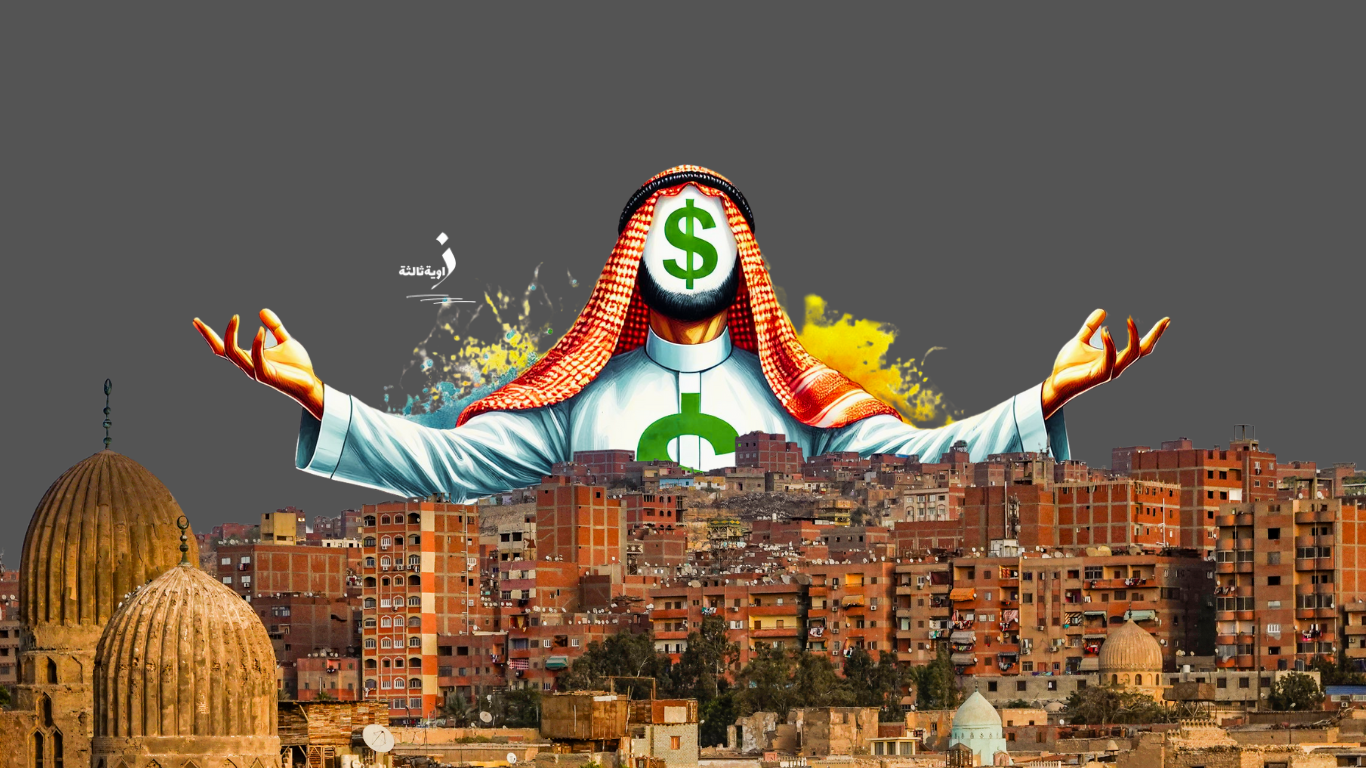


Amid the economic crisis battering Cairo, workers’ voices rise like a muffled scream, expressing their daily suffering in the face of growing exclusion. Despite repeated promises of development and economic renaissance, these workers stand on the edge of despair, trapped between inflation that devours their incomes and managements that ignore their most basic rights.
At “Roaya Contracting”, years of suffering passed without raises or incentives for employees, and the latest decision to halt salaries came as the straw that broke the camel’s back. One worker says: “Life is no longer bearable, and promises do not satisfy hunger.”
The scene is not limited to one company but is repeated in other ministries and companies, where wages have become frozen inside the corridors of closed administrations. These workers are not only calling for better financial conditions; they are demanding something deeper: justice and dignity in their homeland.
In this context, the protests by workers at “Roaya Contracting” came as the latest expression of anger at managements’ intransigence, as workers stopped work in protest at not receiving the annual raises and incentives due to them for four to five years, in addition to their salaries being halted for a whole month. These protests are not an isolated case but part of a worsening labour crisis.
On 2 September, dozens of employees stood in front of the Ministry of Agriculture, expressing their discontent at not being paid their salaries for long periods despite being officially appointed, reflecting a crisis in government jobs as well. These protests did not stop at these two incidents, as two other companies joined the scene: El Nasr Spinning, Weaving and Knitting Company “Shorbagy” and Samanoud Weaving Company, where workers came out demanding their most basic rights to salaries and the incentives due to them.
These protests reflect a double dilemma for workers in Egypt: on the one hand, they face inflation that devours the value of their salaries, and on the other, managements that ignore their basic rights. Amid these crises, there is a clear absence of any role for the authorities and managements in addressing these thorny files, leaving workers in a daily confrontation with growing economic pressures.
Accumulated Debts
On the morning of 8 September, an employee in his fifties, who preferred not to disclose his name, stood in front of the main gate of Roaya Contracting, which came under the umbrella of the “Pioneer” group, active in securities and marketing and owned and chaired by businessman Walid Zaki, a prominent member of the Nation’s Future Party and former chairman of Modern Sport Club “Future”. The man stood with features expressing his and his colleagues’ suffering at the company, due to difficult living conditions and unfair treatment by the management, which apparently began when the company joined the “Pioneer” group.
The employee, a father of three married daughters with higher education, tells Zawia3 that he still suffers from debts accumulated from preparing for his daughters’ marriages and their education. Despite all this, the company continues to ignore his rights and those of his fellow workers. He voices one of the most prominent complaints the workers have made, concerning the physical and psychological suffering they endure when travelling to Cairo to collect their salaries. He explains that he and the workers organised this protest from 8:30 am to 2:30 pm, demanding annual raises, company profits, insurance and medical cards.
The Roaya Contracting employee explains that the workers submitted a memorandum containing their demands to the project manager, but he refused to sign for its receipt. The next day, the company sent a memo stating that nine of the workers who took part in the protest, including him, would be investigated, accusing them of inciting a strike.
He explains: “The company works at several sites, including Telal Sokhna, Telal North Coast and Stone Park in Katameya. However, a new company was created under its cover under the name ‘Cluster’, and offers were made to some managers to transfer them to the new company with financial compensation for the years they had worked.” He adds that this decision angered the workers, as no similar offers were made to them, and they firmly refuse to be transferred to the new company without obtaining their rights.
Among the most prominent demands the workers insist on, the employee mentioned the annual raises they have not received since 2021, the medical cards, which have not been activated since 2023, and social insurance, as there are years for which social insurance contributions have not been paid. They are also exposed to harsh working conditions, without the prescribed safety rules, in extremely hot mountainous and desert areas.
The employee stresses that his current salary after 11 years of working for the company is only EGP 9,000, plus EGP 1,000 as a food allowance, a salary that does not reflect the long years he has spent in service or cover his needs and accumulated debts.
He insists that the management, especially the project manager, constantly ignores the workers’ demands and rights, as the project manager has stated more than once: “This is what is available, and you can leave.”
Despite this ill-treatment, the workers remain determined to obtain their rights, and the same source filed a complaint with the labour office in 2015 together with a group of 30 workers, which is still pending before the courts to this day.
“Nation’s Future” Is the Password
According to the Center for Trade Union and Workers Services, a non-governmental organisation concerned with workers’ rights in Egypt, the demands of the workers who organised the protests, numbering about 200, boil down to paying the annual raise, halted since 2019; restoring the medical insurance the management cancelled in 2023; paying the annual profits, halted since 2017, and the cost-of-living bonus, halted since 2018; in addition to settling the insurance years for which the company did not insure the workers, which vary from one worker to another and range between two and six years.
The Center stresses that the workers who organised the protest ended it that night, and then at the end of the shift drafted the above-mentioned demands in a memorandum agreed among themselves and submitted it to the company’s management on 9 September, awaiting the management’s response in the coming days. Last year, 30 workers had filed a complaint with the labour office with the same demands, which has not been decided to this hour. These workers receive wages averaging EGP 5,000, which is below the minimum wage set by a decision recently issued by the President of the Republic.
On the causes of this crisis, the Center says that the workers’ suffering and the company’s violation of their rights began after the company came under the umbrella of the “Pioneer” group, which is active in securities and marketing and is owned and chaired by businessman Walid Zaki, a prominent member of the Nation’s Future Party, which is close to the authorities, and chairman of Future sports club. The Center called for an urgent response to the demands of the workers at Roaya, and condemned the state’s bias towards businessmen, especially those belonging to the Nation’s Future Party.
Enforced Disappearance
In Samanoud, located in Gharbia Governorate and home to Samanoud Weaving Company, which was founded in 1974 and since its inception was affiliated with Misr Spinning and Weaving Company, an Egyptian government company in the city of Mahalla in the same governorate, the male and female workers of Samanoud Weaving had previously announced a strike, in an escalatory step they saw as legitimate, to win their right to the application of the minimum wage, at a time when the management chose direct escalation against the workers after previously refusing to grant them their rights. It announced the suspension of ten of them from work and referred them for investigation: “Hisham Ibrahim El-Said El-Banna, Mohamed Saber Mahmoud El-Helw, Mohamed Seddik El-Bastawisi, Tamer Ragab Akil El-Degla, Hamdy Zein El-Abdeen Ibrahim Shaboun, Hanem El-Sayed Mohamed El-Gohary, Samah Mohamed El-Sayed, Hend Farouk Mohamed Abdel Aal, Nour Mohamed Hassan Abou El-Naga and Soad Abdel Hamid Abdel Moneim El-Erian”. The management did not stop there, withholding their salaries for August, while paying security staff their salaries for the same month.
Security forces intervened and detained eight of the workers, who were forcibly disappeared for days, with security forces refusing to disclose their place of detention, until they were brought before the East Tanta Prosecution in Case No. 7648 of 2024, Samanoud Administrative, and their detention was suddenly renewed for 15 days without informing their lawyers. Then, on 1 September, the East Tanta Misdemeanour Appeals Court decided to release the workers on bail of EGP 1,000 each, except for Hisham El-Banna, a labour leader at Samanoud Weaving, whose detention continued until the prosecution eventually released him. However, the crisis continues and negotiations are under way on raising incentives and paying dues, according to the Center for Trade Union and Workers Services.
According to a worker at Samanoud Weaving, while workers face the spectre of security intimidation, they still face a hazy future, as the scenario of suspending workers is repeated with a premeditated intention to present orders for their dismissal to the court at a later time. This shows that the management has a premeditated intention to punish him and his colleagues for protesting and demanding their legitimate rights; they were also facing charges of disrupting work and inciting others to do so, which caused losses to the company.
The worker, who refused to give his name for security reasons, adds that “the crisis began when, at a time when we had been demanding the application of the minimum wage since last May, we were surprised by the management announcing the transfer of the company’s ownership to a new investor without legally improving our financial conditions. This announcement raised concern about our professional future, given the management’s refusal to apply the decision before the acquisition, whose details remain vague and undefined.”
He adds: “We faced neglect from the responsible authorities, including the Ministry of Labour, which forced us to resort to a strike, and the security response came quickly, as is usual in confronting labour movements in recent years. Meanwhile, the management tried to calm the situation by issuing a statement raising incentives to EGP 200 for workers and EGP 100 for administrative staff, which showed its clear refusal to apply the minimum wage decision.”
Journalist and trade union activist Eman Ouf, who follows the labour file, speaks about the crisis of Samanoud Weaving’s male and female workers. She says: “The company is facing an acute crisis, as the workers, numbering about 600, including more than 350 women, were surprised by the management’s refusal to apply the minimum wage approved by the President of the Republic. The management justified this by saying the company is struggling, and it sent a letter to the Ministry of Manpower and the Ministry of Planning on this matter. There was no response, despite the workers submitting numerous complaints to the labour office and the Ministry of Manpower. As a result, the workers decided to begin a strike and sit-in inside the company on 14 August, which brought work to a complete halt.”
Ouf gives her testimony from the factory site, where she went in solidarity with the striking workers: “The MP for the constituency, Leila Abou Ismail, visited the workers and threatened them with closing the company if they continued the strike. So we decided, as part of our journalistic and solidarity role, to visit the workers and learn about their conditions. From the moment we arrived, we found the company under heavy security guard, with Central Security Forces surrounding it on all sides. We tried to meet the chairman of the board, Major General Saad El-Din Abdel Rabbo, but the management refused, claiming he was not there. When we asked to meet the managing director, Abdel Halim El-Naggar, we learned that he had been at the company but left as soon as he learned that journalists had arrived.”
She adds: “We waited for more than an hour in the heat of the sun to no avail, and after that we managed to speak to the women workers as they left the factory. The women were afraid, as security forces were trying to prevent them from talking to us. Despite that, they told us about their tragic conditions. One of them confirmed that they had not received the minimum wage until June 2024, although it was approved in January. The women explained that they suffer from low salaries that do not exceed EGP 3,300, which barely covers basic living expenses, as the latest increase in the minimum wage was not applied to them.”
She continues: “The women workers suffer greatly from rising prices, as most of them are the main breadwinners for their families. One of them told me that she supports four children, two of whom are at university, and cannot afford their education expenses. Another said she buys chicken in instalments because she cannot pay for it all at once. And some suffer from chronic diseases and cannot buy the necessary medicines. Their humanitarian conditions are getting worse day by day, which pushes them to continue the protest and the sit-in.”
According to the Center for Trade Union and Workers Services, Samanoud Weaving Company has 550 workers, including more than 320 women, most of whom rely heavily on this work as the main source of income for their families, as some are the sole breadwinners or share the burden with husbands who work irregularly. The average wage at the company is EGP 3,500 for a worker who has spent more than twenty years in its service, including all incentives and benefits, while the basic wage, without any additions, does not exceed EGP 2,000.
The Center spoke with eyewitnesses who were present at the arrests of the workers, and they confirmed that the arrests were marred by many violations, most notably security forces leading away labour leader Hisham El-Banna blindfolded and handcuffed in front of his family members, women being taken away in their nightclothes, and a security member slapping the son of one of the women workers, a child under 18, for clinging to his mother’s clothes, among other violations that do not comply with the law, the Egyptian Constitution and the relevant international conventions.
The Center expressed its deep regret at the deterioration of the workers’ conditions, and condemned what it called the continued violations of their rights, including resorting to security solutions, fabricated charges and the use of pretrial detention as a punitive tool, warning that such practices will only undermine the rule of law and threaten social stability.
Ministry of Agriculture Workers
More than 50 workers who received appointment decisions in the ministry’s directorates scattered across the country gathered, sitting on the ground opposite the Ministry of Agriculture in the Dokki district of Giza. They are suffering from obstruction in the payment of their salaries, which have been delayed for some of them by nearly three years and for others by a year and several months, after they had dreamed for years of being made permanent in the jobs they had worked in on temporary contracts; but it seems that conditions worsened once they were made permanent.
According to accounts from the workers, most of whom were made permanent in late 2021 and who spoke to Zawia3, they have not received their salaries to this day, under the pretext that “the financial release has not arrived from the Ministry of Finance”, which forced them to file lawsuits to claim their financial rights. After that, the employees resorted to demonstrating at the beginning of this month in front of the headquarters of the General Authority for Agrarian Reform in Dokki, demanding a solution to their crisis, which began with a temporary contract, then permanent appointment by court ruling, then joy lost with the denial of their salaries.
Demands for Equality
Another scenario shows the successive crises hitting workers in public and private sector companies, as the workers of El Nasr Spinning, Weaving and Knitting Company “Shorbagy”, affiliated with the Holding Company for Cotton, Spinning, Weaving and Clothing under Egypt’s Ministry of Public Business Sector, are suffering a crisis in receiving the annual grant.
According to the workers, workers at the Helwan complex, into which their company was merged, receive six and a half months’ pay as an annual grant, while they receive only five months. They also demand lifting the freeze on the union’s bank account and the return of the company’s union committee to make it easier for members to obtain their dues.
According to a report prepared by the “Committee for Justice“, an independent human rights organisation based in Geneva, the workers’ demands were met with repression and threats from the unit supervisor to summon National Security against the protesting workers. Their demands also included raising incentives and wages on a par with Helwan complex workers and implementing the proposed financial merger programme after the “Shorbagy” company was merged into the Helwan complex. After their escalatory steps, the workers, according to the report, received promises from the management to hold a meeting attended by representatives of the General Union in the presence of the workers to negotiate their demands.
Zawia3 spoke to Ahmed Abdel Latif, a lawyer at the Court of Appeal, who stresses that Labour Law No. 12 of 2003 regulates strikes in a number of its articles, and indicates in Article 195 that the strike period is counted as unpaid leave for the worker.
He adds that a worker may not organise a protest except after the approval of the competent legal authorities, in accordance with the law on demonstrations or peaceful assemblies, explaining that this law sets out the procedures for organising protests, including submitting a request to the competent authorities and notifying them of the protest, and if a protest is organised without official approval, the worker faces legal accountability and detention.
Abdel Latif points out that there is an article in the International Covenant on Economic, Social and Cultural Rights, which Egypt has signed, stipulating that striking is a legitimate right of workers, contrary to what is stated in Labour Law No. 12 of 2003, as amended by Law No. 180 of 2008, which regulates the relationship between workers and employers, and that a number of the law’s articles grant workers the right to organise strikes, explaining that Articles 192 to 194 regulate this right, and what applies to the public sector regarding strikes also applies to the private sector.
Zawia3 sought to contact an official source at the Ministry of Labour to respond and discuss the ministry’s view of these protests and its role in resolving the crises between companies, employees and labour offices, but we had not received a response by the time of publication.
These labour protests reflect a clear picture of the economic crisis Cairo is going through, as the economic policies pursued in recent years have worsened the suffering of the working classes. The continuous rise in the cost of living due to accelerating inflation, in parallel with austerity policies and the restructuring of government subsidies, has weighed heavily on Egyptian citizens, especially groups that depend mainly on a fixed income, such as workers. In this context, the salaries and incentives that used to be granted are no longer sufficient for their basic needs, and with some companies and institutions refusing to pay annual raises or overdue salaries, conditions have worsened significantly.
New crises are surfacing, proving that what is happening is not merely problems in the management of some companies or poor distribution of resources, but a direct result of the current economic system, which relies on policies focused on major investments and national projects without addressing the structural problems suffered by sectors such as labour and employment. This raises questions about whether workers in these protests are expressing only material demands, or also a deep sense of exclusion from the development being promoted, as they and others have not received the fruits of the economic growth the government promised; on the contrary, they have found themselves in direct confrontation with greater economic burdens without real opportunities to improve their conditions.