
On 24 November, the Egyptian Senate approved lifting the immunity of member Ahmed Diab over accusations linked to the death of footballer Ahmed Refaat. The decision came after extensive discussions within the chamber about the circumstances of the case, which sparked wide controversy in sporting and political circles.
The case of player Ahmed Refaat was not the first to be linked to the names of politicians in Egypt: the corridors of sports clubs hold behind-the-scenes stories with deeper dimensions and conflicts the public may not see. Such was the case of the late footballer Ahmed Refaat, who entered a crisis that touched his feelings and his relationship with his club, culminating in an unequal confrontation with MP Ahmed Diab, the former president of Modern Sport club.
Ahmed Refaat, who lived trying to prove his skill and dedication, faced exceptional pressures from officials who had no connection to sport so much as being instruments of personal interests and political influence, and the relationship between Ahmed Refaat and his club president revealed some of the crises players experience in sports clubs.
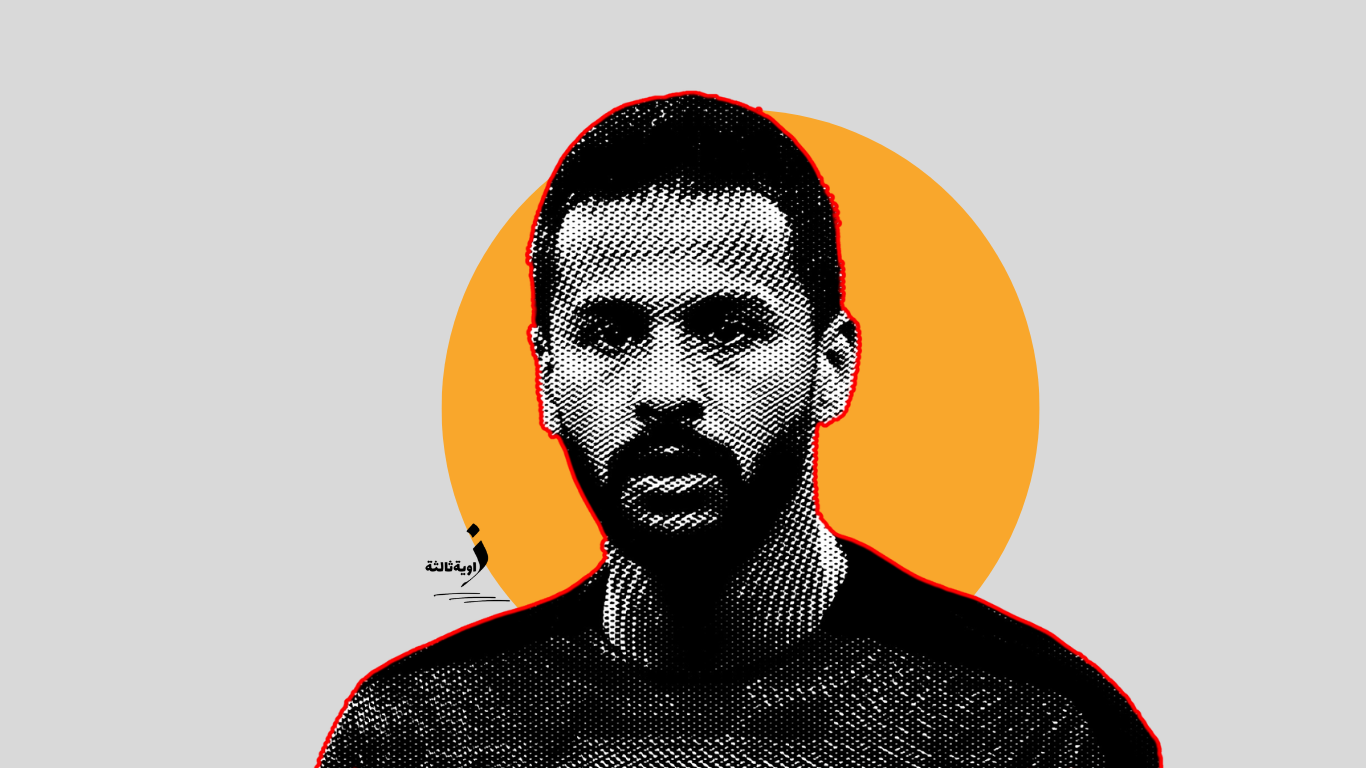
Ahmed Refaat’s story raises big questions about the state of Egyptian clubs and sheds light on the negative impact of politicians’ interference in sport. Does this interference hinder players’ careers, pushing them into dark corners that leave harsh psychological and professional scars? Do political interests intertwine with decisions that affect clubs and the sports scene negatively? And what are the potential negative effects of this overlap?
In this investigation, we relied on analysing samples of the boards of directors of sports clubs in Egypt, with the aim of shedding light on the facts and revealing the number of politicians who hold leadership positions and the extent of their influence on the sports scene.
The investigation analysed data on 107 members of the boards of 16 sports clubs, including prominent clubs such as Al Ahly, Zamalek, Al Masry, Al Ittihad of Alexandria, Ismaily, Gezira, the Shooting Club, Arab Contractors, Smouha, Ceramica Cleopatra, Misr Lel Makkasa, Modern Sport, El Nady, Heliopolis, Tersana and Gezirat El Ward in Mansoura.
The investigation focused on reviewing the role politicians play in sports clubs, the consequences that may result from this overlap between politics and sport, and its impact on the nature of sporting decisions and paths.

We identified 27 political figures distributed across the boards of several sports clubs in Egypt, where they hold prominent leadership positions.
Al Ittihad of Alexandria tops the list with four politicians in its administration, most notably Mohamed Mosilhy as club president, alongside board members Ibrahim Shaaban, Mohamed Salama and Ismail Mohamed, all of whom belong to the Mostaqbal Watan (Nation’s Future) Party.
In second place, Al Ahly and Al Masry are tied with three politicians each. Al Ahly includes the late vice-president El-Amry Farouk, whose post has not yet been filled, MP Mohamed El-Garhy and former player Hossam Ghaly, as members of the House of Representatives. Al Masry includes its president, Kamel Abou Ali, known as one of the funders of the Mostaqbal Watan Party since its founding, in addition to El-Hosseiny Abou Qamar, a former MP and the club’s vice-president, and Emad El-Bersha, deputy head of the housing committee.
Other clubs also include prominent political figures. Ismaily includes Farag Amer, a former MP and the club’s vice-president, while Zamalek includes Hossam El-Mandouh, treasurer and member of the House of Representatives. The Shooting Club is headed by former petroleum minister Abdallah Ghorab, and also includes Heba Mamdouh as a board member and women’s secretary of the Mostaqbal Watan Party.
Smouha club in Alexandria is headed by MP Farag Amer, and Omar Khamis El-Ghoneimy, the former Mostaqbal Watan Party secretary in Alexandria, holds a leadership position in it. At El Nady club, MP Mohamed Mostafa El-Sallab heads the board, with Sherif El-Sherbiny, the current housing minister, as a board member. Heliopolis club is headed by Mostaqbal Watan MP Amr El-Sonbaty, and Karim Salem, a former MP, holds the post of treasurer.
Ceramica Cleopatra club is distinguished by being headed by Tarek Abou El-Enein, son of businessman, MP and parliamentary committee deputy head Mohamed Abou El-Enein, who owns the club and chairs its board. Misr Lel Makkasa is headed by Walid Howeidy, a member of the Senate.
At Gezira club, MP Nevine El-Taheri is a board member, while Tersana club is headed by MP Tarek Saeed Hassanein. At Gezirat El Ward club, Tarek Abdel Hady holds the post of president. Despite the controversy surrounding Modern Sport club after the departure of MP Ahmed Diab, it was taken over by Walid Daabes, a member of the Senate, with his son, Dr Tousson Daabes, as vice-president.
This map reveals a prominent role for the Mostaqbal Watan Party in dominating the administrations of sports clubs, including the founding of Future FC, which has lost its original link with the party over time. These dynamics reflect the major overlap between politics and sport and its impact on clubs’ decisions.

Bypassing the Law and the Impact of Influence
Although the Egyptian Constitution, in its Article 103, stipulates that a member of the House of Representatives must devote himself to the duties of membership, some MPs still hold leadership positions in sports clubs, raising questions about their compliance with the laws that prohibit combining jobs and making material gains. Article 8 of the House of Representatives Law stipulates “a prohibition on combining membership of the House with any other job that achieves material gains or exploitation of influence”; accordingly, MPs are barred from holding outside positions, whether in the government or private sector, including in sports clubs.
In a related context, Talal Abdel Latif, an expert on sports regulations, tells Zawia3 that Article 103 of the Constitution requires the MP to devote himself fully, and wonders about the extent to which this article affects politicians’ entry into sport, noting that regulations, although not absolute like religious texts, are subject to a certain logic.
He explains that the 2017 law prohibits mixing politics with religion in clubs, although this law has not yet been activated, noting that the Muslim Brotherhood had exploited youth centres to attract young people to its ranks, but with its departure new strategies began that rely on MPs’ presence on club boards to attract voters.
Abdel Latif also stresses the need to prevent judges from holding positions in club administrations, as is done with politicians, noting that there is an old bill to prevent judges from participating in club boards, and although parliament approved it, it has not been activated yet, adding that activating this law is necessary to achieve balance and prevent conflicts of interest.
He proposes setting strict criteria for selecting members of club boards, noting that the person who holds such positions should be a qualified sportsperson, and calling for making use of the faculties of physical education in Egypt to train young cadres capable of running clubs.
In our data-driven investigation, the observation was not limited to the presence of politicians; it also emerged that chairmen and board members of private companies that own sports clubs hold leadership positions within those clubs, which opens the door to conflicts of interest. For example, Mohamed Mohsen Salah, chairman of the Arab Contractors company, holds the post of president of Arab Contractors club, while the club’s board members are also members of the company’s board, which represents a breach of these clubs’ original objectives.
Conflicts of Interest in Clubs
Politician and former MP Gamal Zahran tells us that the presence of ministers, former generals and government employees on club boards represents a clear conflict of interest and negatively affects the integrity of government and parliamentary work, calling for firm measures to ensure that positions are not exploited for personal gain, with adherence to the rules of transparency and integrity, and pointing to the example of members of the Arab Contractors company’s board who hold positions in the club, as well as some former ministers and generals.
Commenting on the presence of the Mostaqbal Watan Party in the sports arena, he says: “It is unreasonable for the head of a party also to be the speaker of the Senate,” noting that the US president resigns from any party position when taking office to ensure the separation of powers, and stressing that parliament needs constitutional protection to ensure its members devote themselves to their parliamentary duties away from any government interference.
He adds: “Parliament must be able to monitor the government and hold it accountable transparently, not become a protector of its interests; the relationship between the government and parliament must be built on accountability, not on corruption and covering up abuses.” He explains that political parties such as Mostaqbal Watan should focus on defending the people’s interests and holding the government accountable instead of engaging in economic activities that may expose them to corruption, with the need for transparency in their financial resources, adding: “Commercial work is not permissible for politicians, because it opens a door to corruption, and officials must devote themselves to their political duties to ensure integrity.”
He stresses that “devotion to political work is the basis of sound democracy, and politicians must be role models of integrity and service to the people, without being exposed to suspicions of conflicts of interest”.
In conclusion, it is worth highlighting that this is not the first time controversy has arisen over the presence of politicians, especially members of the House of Representatives, in clubs: in 2018, the arena witnessed sharp disputes over this overlap, and the matter has not yet been settled, which reveals intertwined interests and the difficulty of separating politicians from the pitches. Some politicians and their relatives have also been involved in controversial cases, most notably the incident involving the son of Tersana club’s president, Mohamed Tarek Saeed Hassanein, a member of the club’s board, who was accused of assaulting a famous TV presenter, prompting the prosecution to summon him for questioning. This reflects a picture of exploitation of influence and conflicts of interest in sport.