
In 2010, Mohamed Refaat bought an apartment in the youth housing project at Kilometer 26 west of Alexandria, known as the Al-Ahly Bank housing, to live in it safely with his wife and raise their children; but what the family had not reckoned with was that their life would be turned upside down, to be lived under constant threat and anxiety, months after the opening of the Field Marshal Fouad Abu Zikry Axis in Alexandria on 5 December 2022, in the presence of President Abdel Fattah El-Sisi.
In April 2023, Mohamed, like other residents, was taken by surprise by the issuance of Alexandria Governor’s Decision No. (146) of 2023 on dealing with the situation of the occupants of the Kilometer 26 housing, which was based on a letter issued by the Presidency of the Republic on 27 November 2022 that included a study for evacuating about five thousand housing units in the El-Zeraa El-Bahary area, with its residents to be resettled in the projects of “Bashayer El-Kheir” and “Masharef El-Amreya”, and on the decisions of meetings held by the Cabinet in December 2022 and January 2023 to follow up on urban planning projects in the west of the governorate, which included taking an inventory of the Kilometer 26 housing and determining its legal status.
Subsequently, an official committee went to the subsidised youth housing projects located at the start of the North Coast within the Agami district (Kilometer 26 on the Alexandria–Matrouh road) and carried out an inventory and field survey of the subsidised housing units; when Mohamed and a number of his neighbours asked about their fate, employees of the Agami district informed them that the housing would be demolished and the residents moved to the “Bashayer El-Kheir” and “Masharef El-Amreya” projects.
A few days after the inventory, residents were surprised by the arrival of vehicles and workers belonging to the Agami district, in a campaign documented in videos obtained by “Zawia3”, during which they removed the wooden doors, windows, sinks and toilets from the housing units that had not yet been sold; Alexandria Governorate had put up for sale in July 2018 399 housing units, which it said were the total remaining subsidised youth units at Kilometer 26, but it was unable to sell all of them.
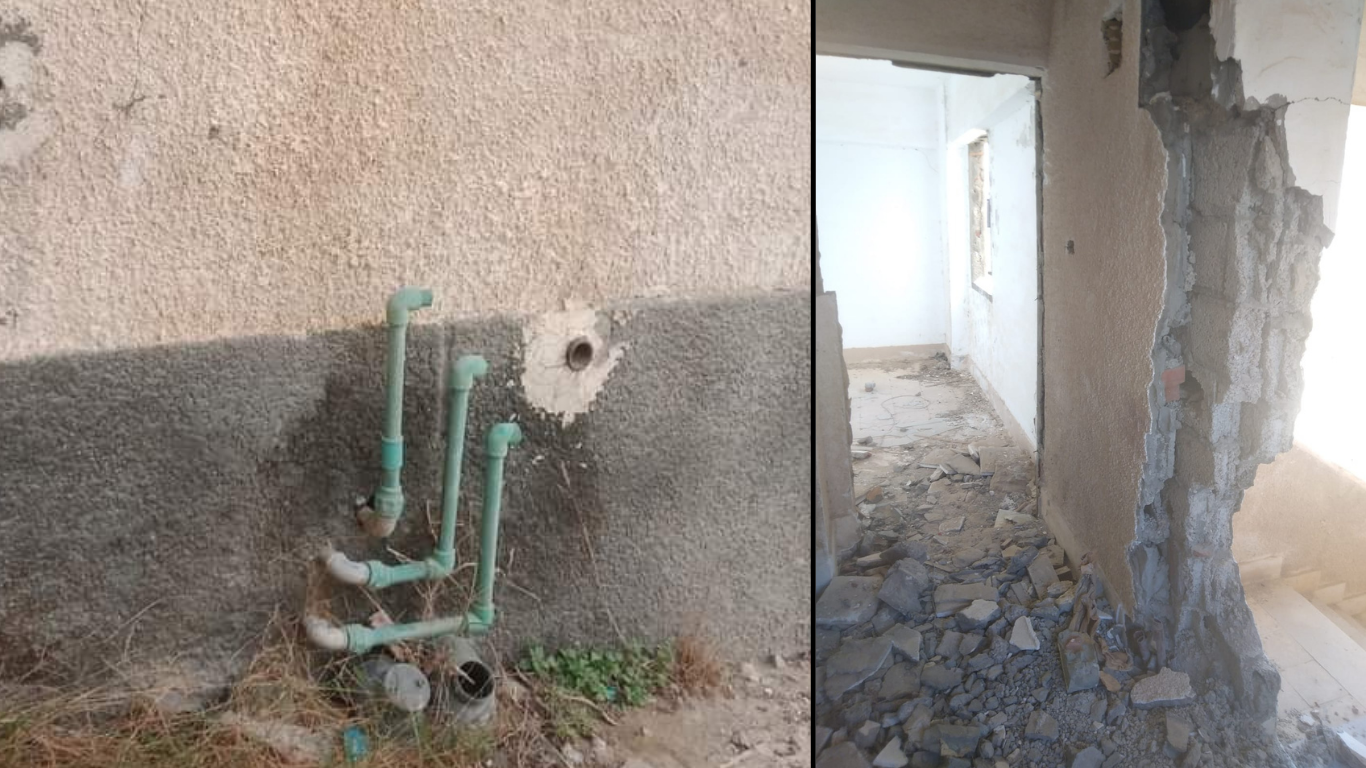
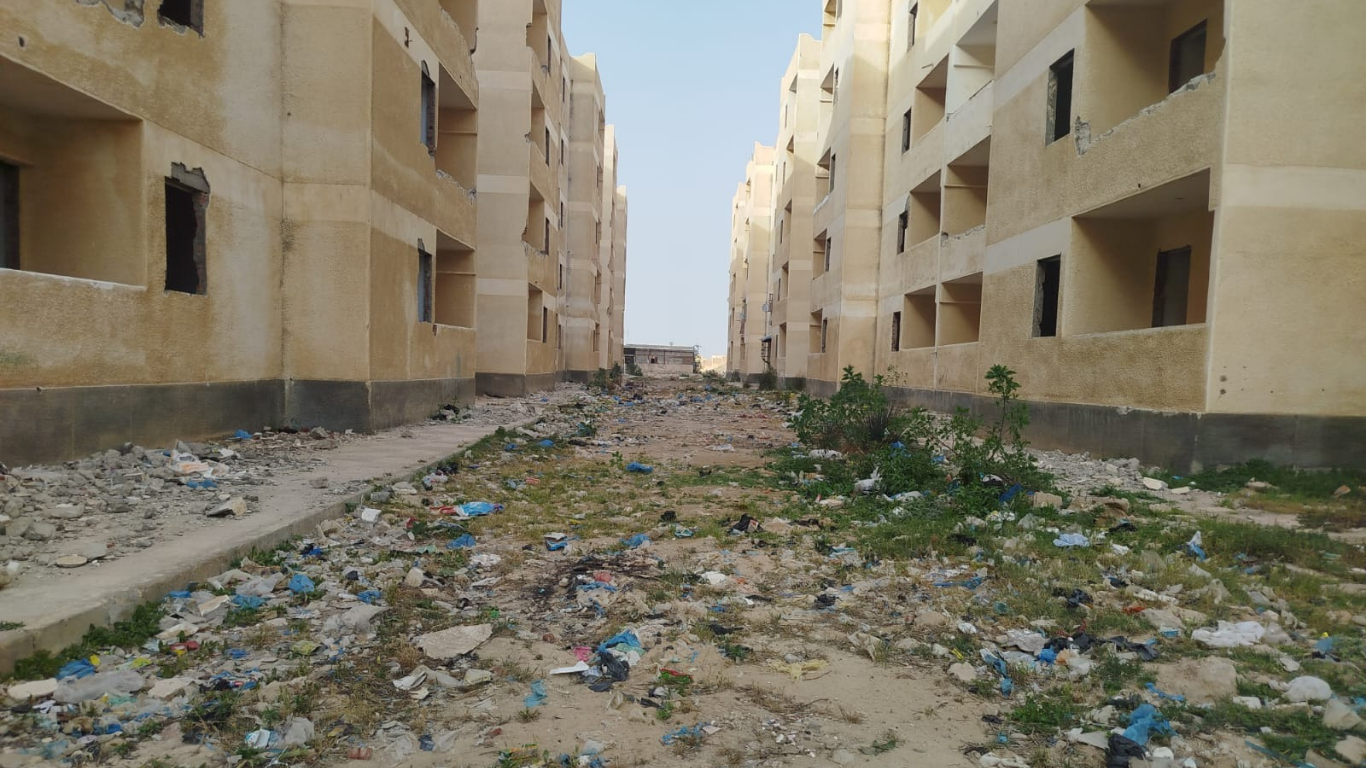
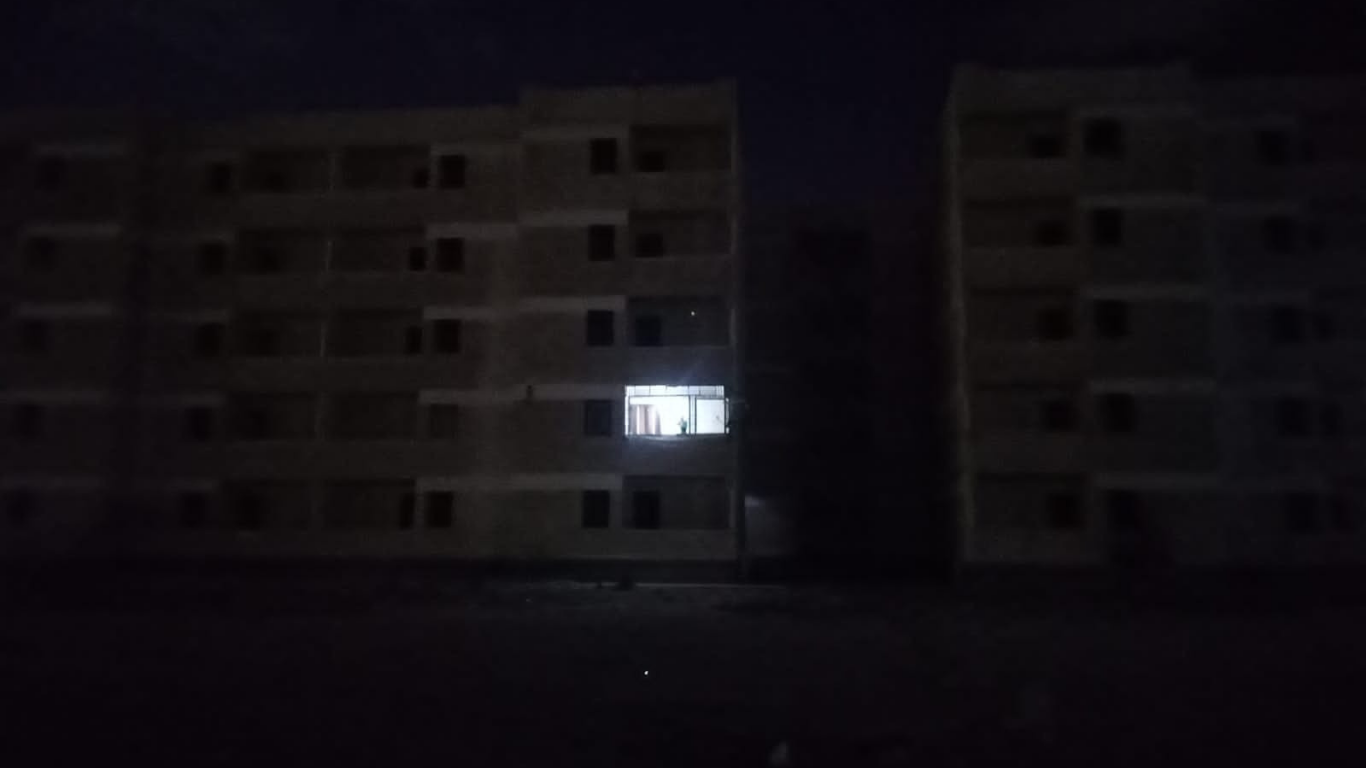
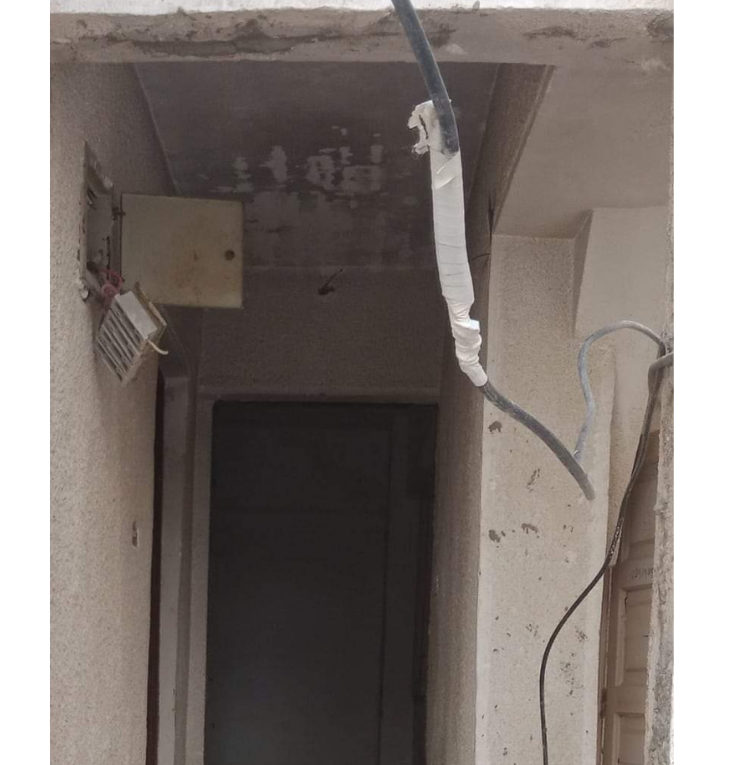
Meanwhile, the governorate cancelled the security and guarding system for the project, and soon a series of incidents of robbery, looting and mass vandalism hit the sold housing units whose owners were not living in them at the time: thieves removed their doors and windows and looted their furniture, amid a complete absence of security. Nor did matters stop there, as the perpetrators went on to steal an electrical transformer, high-voltage cables, water pipes and the pumping motors owned by the residents living in their apartments, out of a total of about 500 sold units, only a few of which were actually occupied. When some of the residents tried to confront the thieves, they were threatened with knives, and the residents received no security response to their reports to the emergency police line, according to their testimonies to “Zawia3”.
Amid this, the electricity supply and the pumping of drinking water were cut off from entire residential buildings, which were no longer fit to live in, so their owners were forced to abandon them and rent alternative apartments, bearing heavy financial burdens, while the abandoned units turned into criminal hotspots for attacks on the remaining residents, who tried to address officials in the Agami district and Alexandria Governorate and the members of the House of Representatives for their constituency without reaching practical solutions, as Mohamed recounts to “Zawia3”.
The situation remained as it was for about three years amid ambiguity, with assurances from district employees that the plans to move residents to the “Bashayer El-Kheir” project had been cancelled for the time being, and with the possibility that the housing would be demolished in the future for development purposes, without any official announcement clarifying the fate of the residents or the mechanisms for compensation or resettlement, which has inflicted social and economic harm on the families, as Mohamed affirms.
He tells “Zawia3”: “Since 2023, we have been surprised by directives to halt property transactions without any announced official decision being issued, which has prevented the installation of electricity meters in the sold units or applying for a landline telephone and home internet, and the installation of natural gas in the homes was refused; we can also no longer draw up official sale contracts for the units and register them at the Real Estate Registry, amid a major decline in the market value of the units.” He explains that the area suffers from a serious deterioration in basic services, as drinking water is cut off daily for more than 20 hours during the summer, in addition to the absence of public services, markets, utilities and regular transport, while the remaining families live in conditions that lack the bare minimum requirements of a decent life.
Mahmoud Ahmed, one of the owners of units in the youth housing at Kilometer 26, explains that the housing was built in 2010 as part of the youth housing project under former President Mohamed Hosni Mubarak, a national programme launched to provide subsidised housing units for young people, and that the project comprises 29 buildings with a total of 1160 units, at about 40 units per building distributed over two entrances. Allocation continued through public lotteries until 2018, but it resulted in the sale of only about 500 units, while the rest of the units remained empty.
He recalls that from its first years the project suffered from the absence of basic services, as the gas and telecommunications networks were not completed and transport remained limited, which led citizens to refrain from applying for the remaining units, so population density remained low, with a limited number of families in each building, while a security company, commissioned by the governorate, took charge of securing the unoccupied units. But the situation changed in late 2022 with reports of a plan to evacuate the housing and move its residents to the “Bashayer El-Kheir” project, then the issuance of Governor’s Decision No. 146 of 2023 and the start of the field inventory, followed by the Agami district ending its contract with the security company and moving the doors, windows and contents of the unallocated units to the district’s warehouses, which the residents considered a sign that the evacuation was imminent.
He tells “Zawia3”: “Ending the guarding led to a wide wave of thefts and vandalism that included the main electricity transformer, electricity cables, and water and sewage pipes, in addition to break-ins into some units owned by citizens and the theft of their contents, which made the buildings an unsafe environment, so the residents were forced to close off the corridors with white-brick walls and organise night guard shifts to protect themselves and their property.” He recounts how he was forced to leave the project about three years ago and rent an apartment at a rental value of EGP 3500, especially since staying requires high costs to reconnect utilities and repair the damage, beyond the means of most residents, pointing out that the owners ran up against the halt on transactions in their units, which prevented them from obtaining electricity and water meters or completing some administrative procedures, at a time when development work on the project had stopped.
Despite the repeated complaints that the residents submitted to the governorate, the Prime Minister’s Office, local officials and a member of the House of Representatives to present the crisis, they have not received, according to him, a decisive response clarifying the future of the project in terms of development, demolition or resettlement. Mahmoud affirms that the residents’ demands are to settle the fate of the project after years of ambiguity, and to rehabilitate the utilities and secure the area if the state intends to keep it, or to announce a clear plan for its future that preserves the owners’ rights and puts an end to their suffering.
Alexandria Governor’s Decision No. (146) of 2023 had formed a committee headed by the director of the Housing and Utilities Directorate, with members representing governmental, military, academic and technical bodies, among them the Northern Military Region, the Social Solidarity Directorate, the Real Estate Registry, the Survey Directorate and the Real Estate Tax Authority, in addition to real estate valuation experts and members of the governorate’s legal, engineering and housing departments. The decision tasked the committee with establishing the legal mechanism for dealing with the occupants of the Kilometer 26 housing, including determining the cases to be moved to the “Masharef El-Amreya” project, or the payment of social compensation or a subsidy according to brackets linked to the legal nature of the occupancy of the units, in preparation for evacuating the housing, based on the results of the inventory prepared by the committee formed under Decision No. (68) of 2023.
The decision also tasked the committee with determining the final price of the properties in the Kilometer 26 housing area according to market value, and with referring the inventory data to the committee responsible for reviewing citizens’ ownership contracts in the “Bashayer El-Kheir” urban development areas, to complete the procedures relating to the ownership of the units. The decision stipulated that the committee would begin its work as of 27 April 2023 and submit a report on its findings and recommendations to the governor no later than 11 May 2023, with the decision taking effect from the date of its issuance on 18 April 2023.
A forced exit from the apartments
For 14 years, housewife Yomna Anas (a pseudonym) lived with her family in her marital apartment in the youth housing project at Kilometer 26, which she received in 2010; but with the escalation of theft and thuggery during 2023, the residents left the building she lived in, until she and her two children became the only people living in the building, and she insisted on staying for two years until her electricity and drinking water were cut off after the pipes and the electricity transformer were stolen.
The robberies were not limited to the empty units but extended to occupied apartments: she recounts that unknown persons broke into the home where she was living with her two children and threatened her with a knife amid the absence of security, which prompted her to file official police reports that she says produced no tangible results, before she was forced to leave the building for her own safety and that of her two children and rent another apartment in an inhabited building within the housing, around which its residents had built a stone wall and an iron gate that provide a measure of protection, as she recounts to “Zawia3”.
She says: “Although we have not received an official notification regarding the demolition of the housing, most of the buildings, including the building I lived in, have lost the basics of life after their utilities were vandalised and stolen and their water and electricity were cut off, becoming nothing more than empty buildings.” She recalls how the situation was different when she received the apartment, as the area was secured by a security company that provided a measure of stability, until the district carried out an inventory of the units about three years ago and recorded the residents’ data; however, according to her account, this coincided with the removal of the security system and a wide wave of thefts that hit the apartments and caused major damage to the buildings. She affirms that the residents demand nothing but the provision of a minimum of security and services, or the announcement of a clear position on the area’s future, instead of being left in a state of ambiguity and constant threat.
More than ten years ago, Bassam Mohamed bought a housing unit in the youth housing project at Kilometer 26, hoping to settle there with his family, made up of his wife and four children, but he was forced to leave it in 2013 and rent another home under the new rent system because of the deteriorating security situation inside the project. He recounts that the units became subject to repeated thefts, as the thieves are not content with doors and windows but also seize household appliances, sewage pipes and iron pipes, affirming that four wooden doors and a number of its contents were stolen from his apartment, and that he found no effective response after filing a report about the incident at the police station.
He tells “Zawia3”: “Fear for my children was the main reason we left the housing; I was not prepared to risk my family’s safety, so I had to bear the burden of rent despite the great financial pressure it represents.” He believes that the continuation of thefts in this way raises questions about how the perpetrators come and go without any deterrent, expressing his belief that there was negligence or collusion that allowed these incidents to continue, without directly accusing any particular party. Nevertheless, Bassam still hopes to return to his apartment, which he chose as a home for his family, and hopes that the governorate and the security authorities will work to solve the area’s problems and create the conditions for the owners to return to their units, especially since paying rent alongside the cost of living is a heavy burden on low-income families.
“Zawia3” obtained a copy of a collective complaint submitted to the Governor of Alexandria by a number of unit owners in the youth housing project (the Bank housing) at Kilometer 26 on the Alexandria–Matrouh road, in which they affirmed that they bought their units in 2010, but the project was never completed by selling all the units or providing basic services to its residents. The owners explained that in March 2023 the Agami district ended its contract with the security company responsible for securing the project, and this was followed by the removal of the doors and windows of the unallocated units and the emptying of their contents, which they considered the reason the project was exposed to vandalism and public money was wasted. According to the complaint, the project comprises 29 buildings with a total of 1160 units, while the inhabited units in each entrance number no more than between two and four out of about 20 units, pointing out that the fact that most of the units have been left open and empty has turned them into a shelter for stray animals and some outlaws, which has affected the security and living conditions of the remaining residents.
The complainants also stated that employees of the Agami district circulated information about moving the project’s residents to the “Bashayer El-Kheir” areas, at the same time as the units were being emptied and more than one inventory of the owners’ names was carried out, based on Governor’s Decision No. 146 of 2023 and a decision issued by the Cabinet, which coincided, according to them, with the project being hit by thefts that targeted the water, sewage and electricity networks and the rest of the utilities, leaving living there without the basic necessities of life. The owners asked the governor to intervene to find a solution to their situation, pointing out that a number of them had been forced to rent alternative homes, affirming that the situation had been stable before these developments, and stating that they had attached to the complaint photos that they said document the emptying of the units and the current state of the buildings, in addition to previous complaints about the crisis.
An illegal ban on disposal
In the same context, human rights lawyer Mohamed Ramadan Abu Baybars affirms that the youth housing at Kilometer 26 west of Alexandria is one of the economic housing projects established under former President Hosni Mubarak, and that the project comprises 29 buildings with a total of 1160 units, about 500 of which have been distributed since 2010 while the rest remain vacant. He explains that the occupied units are owned by their holders under final ownership contracts, and that their low prices when they were put on the market were due to their location in what was then a remote area, but they acquired great investment value after the construction of the Abu Zikry Axis and the projects that accompanied it, among them a hotel, the “Alex West” compound and the Saudi Hospital, which made the residents believe that the area had become a target for evacuation, amid what he described as a “policy of squeezing” that began with the disappearance of the security company tasked with guarding the project and the absence of security that followed.
He reveals to “Zawia3” that the squeeze also included imposing restrictions on disposing of the units, by halting sale and purchase procedures and issuing instructions to Real Estate Registry offices not to issue powers of attorney relating to them, in addition to some utility companies refusing to deal with the owners, at the same time as committees were formed to take inventory of the properties, which the occupants considered a prelude to the issuance of an expropriation decision. He considers that the inventory work, coupled with talk of compensation and moving the residents, is a clear indicator of an intention to demolish or evacuate, but that it is no substitute for the issuance of an announced administrative decision that can be relied on legally.
He says: “The legal framework governing such cases is the Law on Expropriation for Public Benefit No. 10 of 1990, as amended by Law No. 187 of 2020, which exhaustively specified the projects for which the state may expropriate property, such as the construction of roads, water, sewage and energy projects, bridges, transport and urban planning, in addition to whatever any other law may consider public benefit works.” He adds that the state previously resorted to demolition decisions and administrative evacuation in limited cases, while recent years have seen an expansion in the use of decisions to expropriate for the public benefit, considering that some of these decisions are justified by announced projects while the actual aim, in his opinion, is to implement investment projects, which makes challenging them more legally complicated.
But Abu Baybars believes that the status of this housing remains legally unresolved, as no official decision to expropriate for the public benefit has been issued; rather, there are decisions and procedures pointing to the evacuation of residents and the inventory of units, without clarity on the final legal basis on which the administrative authority will rely. He stresses that imposing a ban on property transactions in the units, if proven, is an illegal measure, especially since most residents hold final ownership contracts that give them full ownership rights and contain no provisions allowing them to be prevented from disposing of their units, describing any decision of this kind as an “unjust decision” aimed, in his view, at squeezing the residents and pushing them to leave the area.
“Zawia3” obtained a copy of one of the ownership contracts for units in the national youth housing project in the Kilometer 26 area of the Agami district, concluded on 30 December 2010 between Alexandria Governorate as seller and one of the beneficiaries as buyer. The contract shows that the unit was sold under a system of full ownership of the buildings, while the land on which the project stands remained owned by the state, as part of its private property allocated for building the units of the national youth housing project. According to the contract, the unit’s area is 63 square metres, and it consists of two rooms, a living room, a kitchen and a bathroom, located on the ground floor of building No. 7, entrance No. 2, in the Kilometer 26 area of Agami. The contract stipulated that the total value of the unit was 64,469 pounds, including government support of 25,000 pounds and support from Alexandria Governorate of EGP 4,463, while the buyer paid 35,000 pounds in cash, so that the unit was fully paid for.
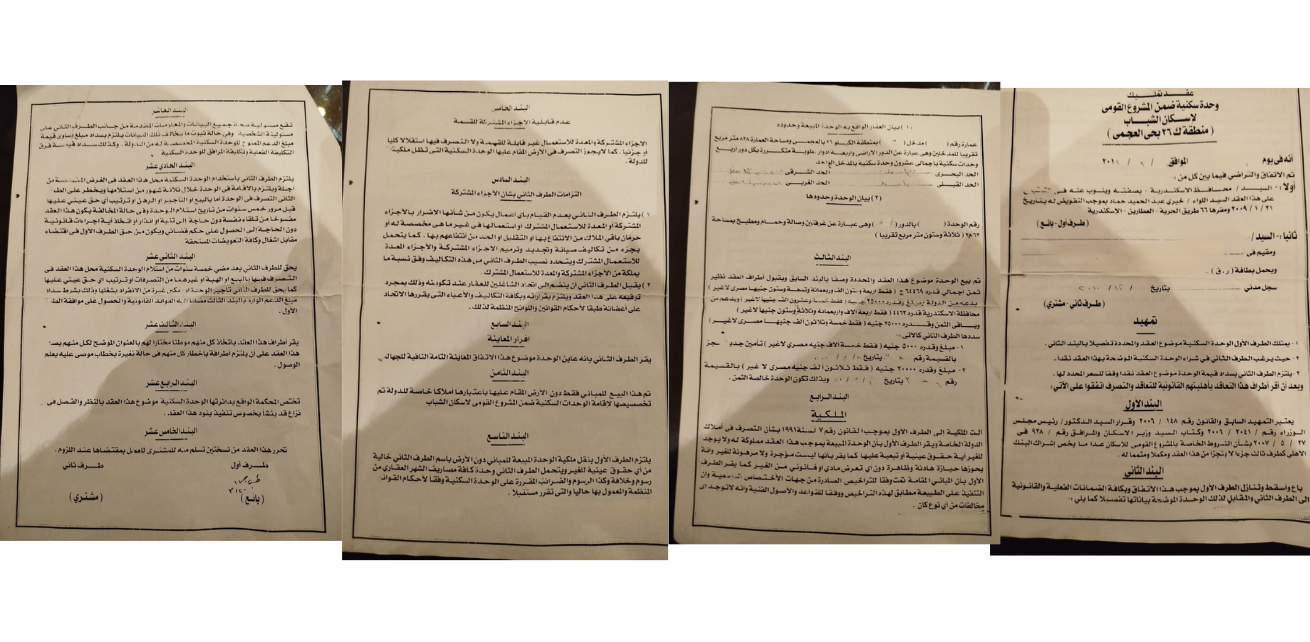
The contract included the governorate’s acknowledgement of its ownership of the unit and that the unit was free of any in-rem rights of third parties, mortgages or violations, and that the buildings were constructed in accordance with official permits and approved technical rules. The contract obliged the owner to use the unit for residential purposes and to live in it within three months of receipt, and prohibited disposing of it by sale, lease or mortgage, or establishing any in-rem right over it, for five years from the date of receipt, failing which the contract would be deemed automatically rescinded. In return, the twelfth clause stipulated the owner’s right, after five years have elapsed, to dispose of the unit by sale, gift or otherwise, or to establish any in-rem right over it, as well as to lease it or allow others to occupy it, on condition of paying the value of the government support plus legal interest and obtaining the approval of the selling party. The contract also made the buyer responsible for paying the Real Estate Registry fees and the taxes and fees levied on the unit, and obliged him to join the occupants’ union and contribute to the maintenance of the common parts, with the court in whose jurisdiction the property lies competent to hear any dispute over the implementation of its clauses.
As part of the right of reply, and seeking to clarify the legal position of the youth housing at Kilometer 26, “Zawia3” tried to contact the Governor of Alexandria, Ayman Mohamed Attia Ibrahim, and the governorate’s Secretary-General, Mohamed Salah; it also contacted the governorate’s media spokesperson, Mohamed Fouad, who promised to get back in touch and provide a response, which has not happened to date.
However, a parliamentary source, who declined to be named, confirmed to “Zawia3” that all the youth housing buildings at Kilometer 26 west of Alexandria, known as the Al-Ahly Bank housing, are on their way to demolition, and that there are no current plans to keep and develop them, pointing to discussions and negotiations with officials aimed at providing alternative housing for the apartment owners.
Between the residents’ testimonies, the official documents and the ownership contracts, the fate of the youth housing at Kilometer 26 remains suspended between a reality that keeps deteriorating and a future whose contours have not been settled. After years of inventories and talk of evacuation and development, about 500 owners are still waiting for an official announcement determining the fate of their homes and their rights. As of the time of publication of this report, “Zawia3” had not received a response from Alexandria Governorate to its contents, leaving the residents’ questions about the legality of the procedures, the securing of the area and the future of the project without public answers.