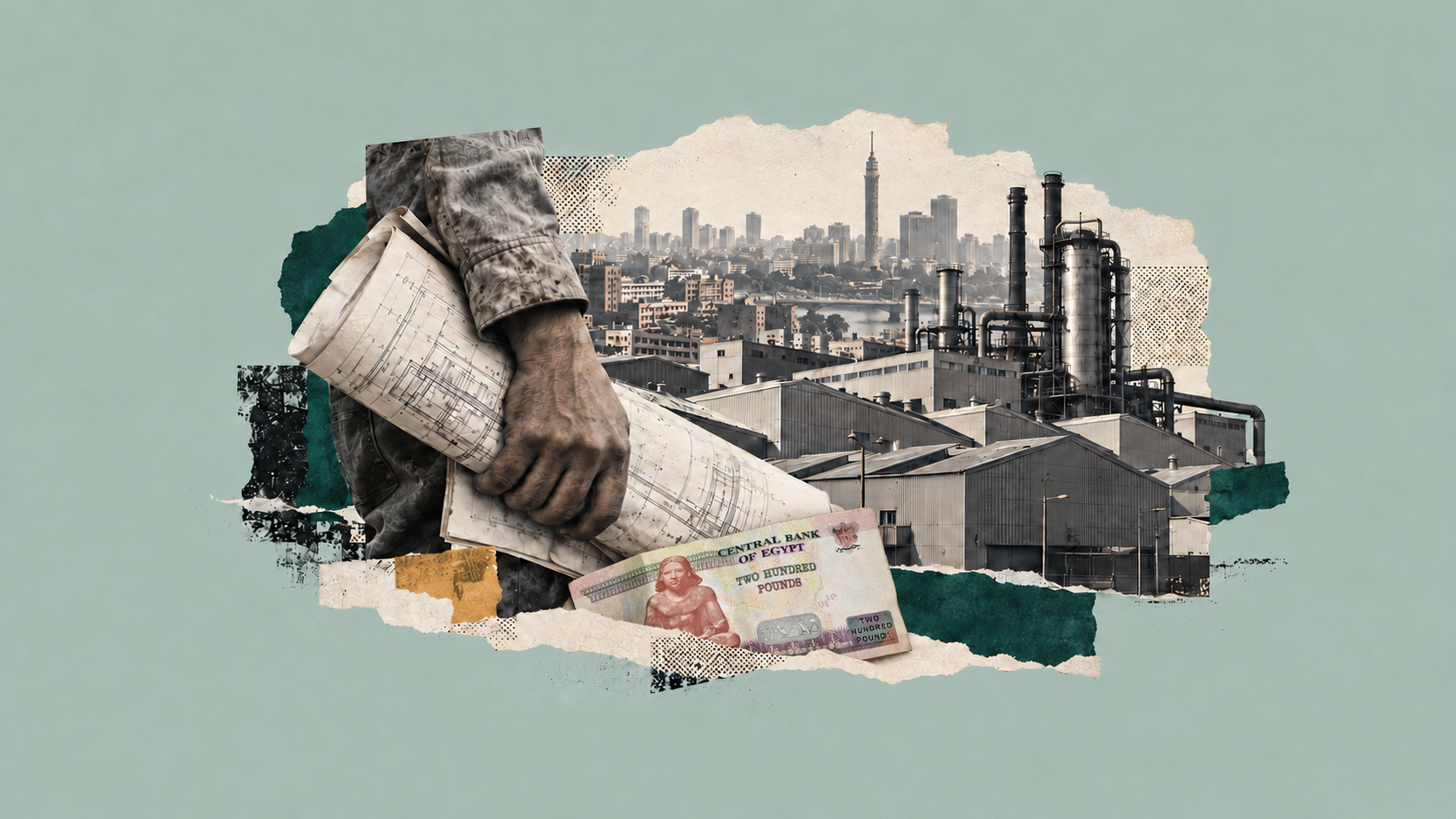

In one of Cairo’s markets, Gihan, a woman in her fifties, moves between the shelves of food goods, examining the prices carefully before returning a small bag of nuts to its place, muttering: “Expensive.” This was not her situation years ago, when she and her husband prepared for the month of Ramadan without worry, buying meat and the finest kinds of dates and nuts as part of the family’s Ramadan rituals. But after he was retired on a pension in 2019, he came to receive EGP 5,600 after sporadic increases, compared with his previous salary of EGP 18,000 while he worked at the Petroleum Authority. Gihan says sorrowfully: “The pension barely covers the bills, prices are doubling, and the cooking oil alone now needs a budget… Nuts have become luxuries we do not dare to think about.”
Gihan is not alone in this predicament; millions of retirees in Egypt face a similar reality, having moved from a life commensurate with their salaries to another that is out of step with rising prices. With the arrival of Ramadan, the burdens multiply with invitations to meals and family gatherings, while the minimum pension remains at EGP 1,495, a quarter of the minimum wage in the public sector (EGP 6,000) and below the minimum for the private sector (EGP 7,000). How do pensioners adapt to this glaring disparity? And is there any prospect of a solution to their crisis?
The challenges of the pension and ways of coping
While Gihan tries to face rising prices by saving some money before the arrival of Ramadan, Ragaa Saad, a woman in her sixties, chooses to search for special offers to save what she can on the necessities of the holy month, relying on her meagre pension and the pension of her late husband, which she shares with her daughter who is still studying. Ragaa says: “My life was not like this before retirement. I worked as an administrator at the Ministry of Education with a salary of EGP 4,000, and my husband was an employee at the governorate. After 38 years of work, I retired with a pension of EGP 1,900, while my husband’s pension started at EGP 2,000. Today, after successive increases, my pension has become EGP 3,450 and my husband’s pension EGP 4,800, but these increases do not keep pace with prices. We used to live comfortably, but now we barely manage to provide the basics.”
Adapting to the high cost of living was not Ragaa’s only problem; it extended to securing the future of her last daughter, whose preparations for marriage have stalled for two and a half years, after she had managed to marry off her three other children while she and her husband were working. “I can no longer save as I did before. I was forced to join a savings association, and I pay EGP 3,000 a month from the pension just to be able to prepare my daughter’s trousseau.”
Gihan, for her part, asks: “Why does the government raise the minimum wage for employees while pensioners are left out of the calculations? As if we were old people without responsibilities! Whoever retires today has children in schools or universities, and perhaps marriage responsibilities, as well as health costs that increase with age.”
Ragaa agrees with her, saying: “Medicines alone consume EGP 3,000 a month because of my chronic illnesses, in addition to electricity and water bills that rise without stopping. We are not living in luxury; we are only trying to carry on.” Under these conditions, millions of families find themselves caught between limited pensions and increasing expenses, which makes merely meeting basic needs a daily challenge, especially in seasons that require greater spending, such as Ramadan.

Why do prices swallow any increase?
Despite successive increases in pensions, retirees find themselves unable to keep pace with inflation, as the minimum pension rose gradually from EGP 500 in 2018 to EGP 1,495 in January 2025. Although annual increases are estimated at 15% under the Insurance Law, prices exceed them by far, which strips these increases of their real effect.
Data from the Central Agency for Public Mobilisation and Statistics indicate that the prices of basic goods saw an annual rise of 20.2% up to January 2025, with meat and poultry prices rising by 22.3%, fish by 18%, and dairy, cheese and eggs by 20.8%, while fruit prices jumped by 50%. These increases make Ramadan, which relies on abundant tables and family gatherings, a real challenge for pensioners, who have become unable to provide its basic requirements.
Mahmoud, 61, who took early retirement in 2013, says: “My income was variable but good, and when I retired myself on a pension I did not imagine that the situation would reach this point. Now, with my pension at EGP 2,600, I have been forced to change my lifestyle completely. We used to gather as an extended family around Ramadan tables, and today I can barely invite only my children, as meat and basic goods are no longer within reach.”
Economic researcher Mai Kabil explains that the real problem lies in the fact that inflation swallows any annual increase in pensions. She adds: “Although the annual inflation rate fell to 23% in January 2025, compared with 28.2% last year, it is still much higher than the rate of increase in pensions, set at only 15%, which means that pensioners’ purchasing power is eroding instead of improving. The problem is not only high prices, but the continuous accumulation of these increases, which makes each year harder than the one before.”
Despite the amendments made to the Insurance Law in recent years, this gap between pensions and prices continues to widen, imposing a more complicated reality on a broad segment of retirees, especially in seasons that require additional spending.
Will the demands to raise the minimum pension be met?
In August 2019, Social Insurance and Pensions Law No. 148 was passed, linking pension increases to the inflation rate but setting a ceiling on the increase at 15%, even though inflation rates exceeded this limit by far. In February 2023, annual inflation reached 30%, double the maximum set for the annual increase, according to a research paper issued by the “Egyptian Initiative for Personal Rights”, which criticised this restriction as failing to keep pace with changing economic conditions.
This disparity has led millions of pensioners, who number 11.5 million people, to demand equality with state employees by raising the minimum pension to a level that guarantees a decent life. Gihan, one of the retirees we spoke to earlier, says: “The government grants state employees additional months as bonuses, while we get nothing. This is our money, which was deducted from us throughout our working years, and we could have invested it ourselves in deposits or projects. But we were forced to put it in the pension fund, and today it has lost its value because of inflation.”
In a legal step, Ahmed El-Araby, head of the “General Federation of Pensioners’ Unions”, filed a lawsuit demanding that the minimum pension be raised to EGP 6,000, in line with the minimum wage in the government sector, but the case was postponed to March 2025, leaving pensioners waiting.
As for the feasibility of implementing this demand, economic researcher Mai Kabil says: “Theoretically, EGP 6,000 as a minimum pension is a fair demand, as it barely suffices to cover basic needs, especially given the rising costs of medical treatment. But practically, it requires restructuring the labour market and social insurance. The current insurance system relies on workers’ contributions, while the proportion of insured people does not exceed 44% of the waged labour force. Many work outside the insurance system, or their income is registered at less than its real level, which weakens the fund’s ability to bear large increases.”
As for the demand to abolish the 15% ceiling on annual increases, the research paper of the “Egyptian Initiative for Personal Rights” indicates that setting a maximum may be necessary to protect the insurance system from collapse in cases of high inflation, but that it should be accompanied by a mechanism that enables the government to intervene to provide additional support to pensioners in economic crises.
Exceptional grants
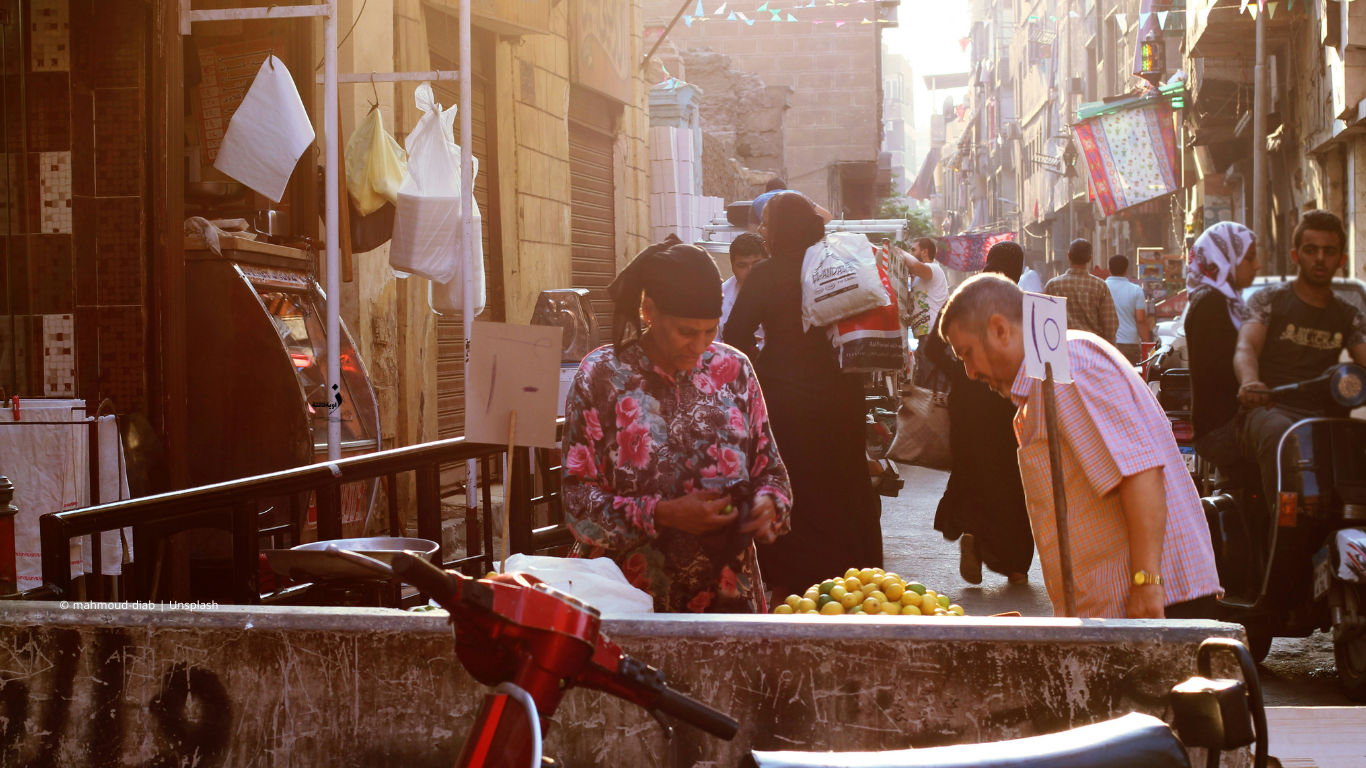
To face the burdens of living, the government sometimes resorts to providing exceptional grants, the latest of which was the presidential decision issued in September 2023 raising the cost-of-living allowance to EGP 600 instead of EGP 300, covering all employees of the state administrative apparatus, economic authorities and public sector companies, in addition to pensioners, bringing the total number of beneficiaries to 11 million citizens.
But this assistance, which is presented as a set of relief measures, remains of limited effect in the face of the continuous rise in prices. On occasions such as the month of Ramadan, pensioners look forward to exceptional increases that ease the economic pressure on them, but these hopes often collide with reality. In 2021, reports circulated of a Ramadan grant for pensioners, which the National Organisation for Social Insurance quickly denied. In February 2025, statements by officials spread about a new social protection package that would include raising the minimum for salaries and pensions, with assurances that it would be an exceptional step to help citizens ahead of Ramadan.
But when the details of the package were announced on 27 February 2025, pensioners’ hopes were dashed, as it did not include an additional increase for them, and was limited to applying the scheduled annual increase of 15% as of July 2025. The Minister of Finance explained that the Insurance and Pensions Fund would announce the increase later, without clear details about the implementation date or the extent of its impact on pensioners’ purchasing power.
Ragaa Saad, one of the retirees, expressed her frustration, saying: “Ramadan has started and we have not received any increase, not even in ration supplies. As for the annual increase, how can it be only 15% after a year and four months have passed! The solution is to set a fair minimum for pensions, as happens with employees.”
Despite the continuous demands to raise the minimum pension and to adjust the mechanism for increasing it in line with inflation, government decisions remain slow, leaving pensioners facing an economic reality that only grows more difficult. With every annual increase, its effect fades under the weight of soaring prices, which makes the biggest challenge not receiving temporary support, but finding sustainable solutions that preserve this group’s right to a decent life.